

The Arctic, a landscape of breathtaking beauty and formidable challenges, has historically demanded unparalleled ingenuity from its inhabitants. For thousands of years, indigenous peoples of the polar regions developed sophisticated strategies and tools to thrive in an environment where survival hinged entirely on a deep understanding of nature and masterful hunting skills. Their traditional arctic hunting weapons were not merely instruments; they were extensions of their will to survive, crafted with precision and purpose.
This exploration will delve into the remarkable arsenal of traditional arctic hunters, examining the design, materials, and cultural significance of the tools that allowed them to secure sustenance, clothing, and shelter. From the iconic harpoon to the versatile atlatl, each weapon tells a story of adaptation, innovation, and an intimate connection with the natural world.
Survival in the Arctic was never a sport; it was a daily imperative. Hunters faced extreme cold, vast distances, and formidable prey, from agile seals to massive whales and powerful polar bears. The success of a hunt directly impacted the survival of entire communities, making the development and mastery of effective hunting tools absolutely critical.
The scarcity of resources in the Arctic meant that every material was precious and utilized to its fullest potential. Weapons were meticulously fashioned from bone, antler, ivory, stone, driftwood, sinew, and animal hides. The ability to transform these raw materials into highly effective tools is a testament to the incredible craftsmanship and resourcefulness of arctic peoples.
The Cornerstone: The Harpoon
Perhaps no weapon is more emblematic of arctic hunting than the harpoon. Essential for hunting large marine mammals like seals, walruses, and whales, the harpoon was a complex and highly specialized tool designed for both striking and retrieving prey in icy waters. Its design varied across regions and cultures, but the core principle remained consistent.
A key innovation was the toggling head harpoon. Unlike a fixed spear, the head of a toggling harpoon detached from the shaft upon impact and turned sideways inside the animal, creating a secure hold. This prevented the animal from escaping and allowed the hunter to retrieve it using a strong line attached to the harpoon head.
Harpoons were typically launched from kayaks (qajaq) or from the edge of ice floes. For seal hunting at breathing holes, hunters would often wait for hours, sometimes days, enduring extreme cold, before striking with incredible speed and accuracy when a seal surfaced.
The harpoon system involved several critical components: a long shaft, often made of driftwood; a sturdy line, typically braided from sinew or hide, connecting the head to a float (often an inflated seal bladder); and the toggling head itself, crafted from bone, ivory, or antler, often with a sharpened stone or metal tip. The float served to tire the animal and mark its location.
The harpoon was not just a tool; it was central to the identity and survival of coastal arctic communities. Its mastery was a rite of passage, and its design reflected generations of accumulated knowledge about marine life and hydrodynamics.
The Ancient Power: The Atlatl (Spear Thrower)
Before the widespread adoption of the bow and arrow, and alongside the harpoon, the atlatl, or spear thrower, was a primary projectile weapon across many indigenous cultures, including those in the Arctic. This ingenious device dramatically increased the leverage and velocity of a thrown spear or dart.
The atlatl is essentially a stick with a hook or socket at one end that engages the butt of a dart. By extending the hunter’s arm, it provides a longer lever, allowing for a much more powerful and accurate throw than could be achieved by hand alone. This meant hunters could strike prey from a greater distance with significant force.
Arctic atlatls were primarily used for hunting caribou, muskox, and sometimes even birds or seals from shore. The darts themselves were often lightweight and flexible, tipped with barbed points made from stone, bone, or antler. The combination offered a silent, effective hunting method crucial for wary prey.
The atlatl represents an ancient technology, dating back thousands of years, demonstrating the early human understanding of physics and mechanical advantage. Its presence in arctic archaeological sites highlights its enduring utility in diverse environments.

Precision and Range: Bows and Arrows
Bows and arrows eventually became prevalent in many arctic regions, offering a superior range and accuracy for land hunting, particularly for large herds of caribou. Arctic bows were often composite bows, constructed from multiple layers of wood, bone, or antler, reinforced with sinew backing to increase their power and resilience in cold temperatures.
The construction of an arctic bow was a painstaking process, requiring skilled craftsmanship. Sinew, typically from caribou tendons, was painstakingly dried, shredded, and then glued onto the bow’s back, acting like a natural spring. This allowed the bow to store more energy and deliver a powerful shot.
Arrows were also meticulously crafted, with shafts made from straightened driftwood or bone. Arrowheads varied depending on the target: blunt heads for stunning birds or small game without damaging pelts, and barbed, sharpened points of stone, bone, or antler for larger animals like caribou and muskox.
The bow and arrow allowed hunters to engage prey from a safer distance, reducing the risk of confrontation with dangerous animals. It also enabled more efficient hunting of migratory herds, providing a consistent food source for inland communities.
Essential Tools: Knives and Lances
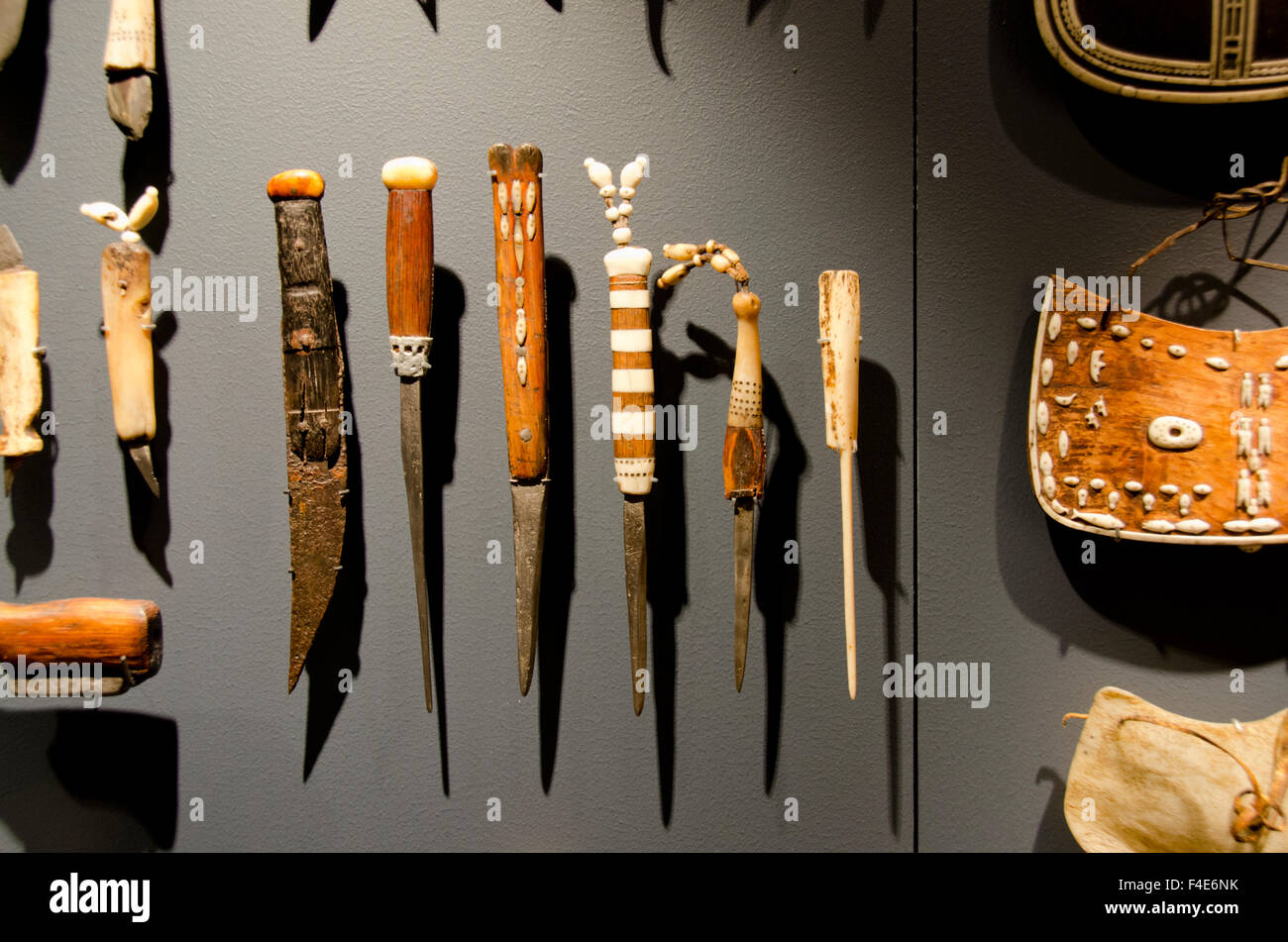
Beyond projectile weapons, a range of cutting and thrusting tools were indispensable for arctic survival. Knives were multi-purpose, used for everything from preparing game and processing hides to carving other tools and everyday tasks.
The ulu, a crescent-shaped knife with a handle, is perhaps the most famous arctic knife. Traditionally used by women, its design is perfect for skinning, butchering, and preparing food. Its rocking motion and sharp edge made it incredibly efficient. Men also carried various utility knives, often with straight blades and sturdy handles.
For close-quarters encounters with large, dangerous animals like polar bears or muskoxen, hunters relied on lances or thrusting spears. These were typically long, sturdy shafts tipped with large, sharp points of stone, bone, or, later, metal. They required immense courage and skill to wield effectively.
Clever Concealment: Traps and Snares
While not weapons in the traditional sense, traps and snares were crucial for securing smaller game and furbearers, providing essential supplementary food and valuable pelts for clothing and trade. Their use demonstrated another facet of arctic ingenuity: understanding animal behavior to lure and capture.
Hunters employed various types of traps, including deadfalls – heavy logs or stones rigged to fall on an animal – and snares made from sinew or hide, set along animal trails. These passive hunting methods allowed hunters to maximize their efforts, securing resources while focusing on larger game.
Trapping was particularly vital during lean times or for specific resources like arctic fox or hare, whose furs were critical for warmth in the extreme cold. The knowledge of where and how to set traps effectively was passed down through generations.
Other Ingenious Aids: Slings and Decoys
Simpler yet effective, slings were used for hunting birds and small game, demonstrating that even basic physics could be harnessed for survival. A well-aimed stone from a sling could bring down a bird for a meal.
Decoys and blinds were also integral to successful hunting. Hunters would craft realistic decoys of seals or birds to attract prey, or build snow blinds to conceal themselves while waiting for game. These tools, combined with an intimate knowledge of animal behavior, significantly increased hunting success rates.
The Art of Craftsmanship: Materials and Techniques
The creation of these weapons was an art form, born from necessity. Bone, antler, and ivory were meticulously carved, ground, and polished using stone tools, then later metal. These materials were strong, durable, and readily available in various forms.
Stone tool making, or flintknapping, was a highly skilled craft. Chipping and shaping specific types of stone into sharp points for arrowheads, spearheads, and knife blades required immense precision and understanding of material properties. Grinding stones were used to sharpen and refine edges.
Wood was a scarce commodity in many parts of the Arctic, often limited to driftwood washed ashore. Every piece was valued and utilized, often laminated or joined together to create longer shafts or stronger bows. Sinew and hide processing were also complex tasks, involving cleaning, drying, and braiding to create strong lines, bindings, and bowstrings.
These traditional crafting techniques were not merely practical; they embedded a deep respect for the materials and the animals from which they came. The process itself was a form of cultural transmission, passing vital skills and knowledge from elders to younger generations.
Adaptation and Innovation Over Time
Traditional arctic hunting weapons were not static; they continually evolved. Designs were refined based on experience, environmental changes, and the availability of new materials. The introduction of metal through trade with outsiders, for example, revolutionized cutting edges and projectile points, offering superior sharpness and durability.
However, even with new materials, the underlying principles of design and the deep knowledge of the environment remained paramount. Indigenous hunters seamlessly integrated new technologies while retaining the wisdom of their ancestors.
Cultural and Spiritual Significance
Beyond their practical utility, traditional arctic hunting weapons held profound cultural and spiritual significance. They were extensions of the hunter’s spirit, imbued with a connection to the land and the animals. Respect for prey was paramount; every part of an animal was used, and rituals often accompanied successful hunts to honor the animal’s spirit.
The skills associated with hunting and weapon crafting were central to identity, community cohesion, and the transmission of knowledge. Stories, songs, and traditions often revolved around the hunt, reinforcing cultural values and ensuring the survival of the group.
Modern Context: Preservation and Revival
Today, while modern firearms are commonly used, the knowledge and skills associated with traditional arctic hunting weapons are preserved and, in some communities, revived. These practices connect contemporary generations with their heritage, reinforcing cultural identity and a sustainable relationship with the environment.
Understanding these ancient tools provides invaluable insight into human adaptability, ingenuity, and the deep ecological wisdom of indigenous peoples. They stand as powerful reminders of humanity’s capacity to thrive even in the most challenging conditions.
In conclusion, the traditional arctic hunting weapons represent far more than simple tools for survival. They are masterpieces of engineering, born from an intimate understanding of a harsh environment and an unwavering commitment to community well-being. From the intricate toggling harpoon to the powerful atlatl and the versatile ulu, each item in the arctic hunter’s arsenal speaks volumes about ingenuity, sustainable living, and a profound cultural connection to the land and its creatures. Their legacy continues to inspire awe and respect for the resilience of indigenous cultures.


