
The vast, often unforgiving landscapes of the Arctic have shaped the cultures and traditions of its Indigenous peoples for millennia. Among these rich traditions are the captivating Eskimo traditional games and sports, which are far more than mere pastimes. These athletic endeavors served as crucial training for survival, tests of strength and endurance, and powerful expressions of community and cultural identity.
Often referred to as Inuit games, these activities embody the resilience and ingenuity of Arctic communities. They reflect a deep understanding of the human body’s capabilities and the strategic thinking required to thrive in one of the world’s harshest environments. From breathtaking displays of agility to grueling tests of pain tolerance, each game tells a story of survival, skill, and spirit.
Historically, these games were not just for recreation; they were an integral part of daily life and seasonal celebrations. They prepared hunters for the rigors of the chase, warriors for defense, and community members for the collective effort needed to sustain life. The skills honed in these games—strength, agility, balance, and mental fortitude—were directly transferable to tasks like hunting seals, navigating treacherous ice, and enduring extreme cold.
The spirit of competition was always balanced with a profound sense of community. While individuals strived for excellence, the games also served to unite people, strengthen social bonds, and pass down vital knowledge from one generation to the next. They were occasions for storytelling, feasting, and reaffirming cultural values.
Many traditional Eskimo games emphasize individual strength and power, often pushing the human body to its limits. These tests are not just about raw force but also about technique, control, and unwavering mental focus. They are a testament to the incredible physical prowess developed by Arctic peoples.
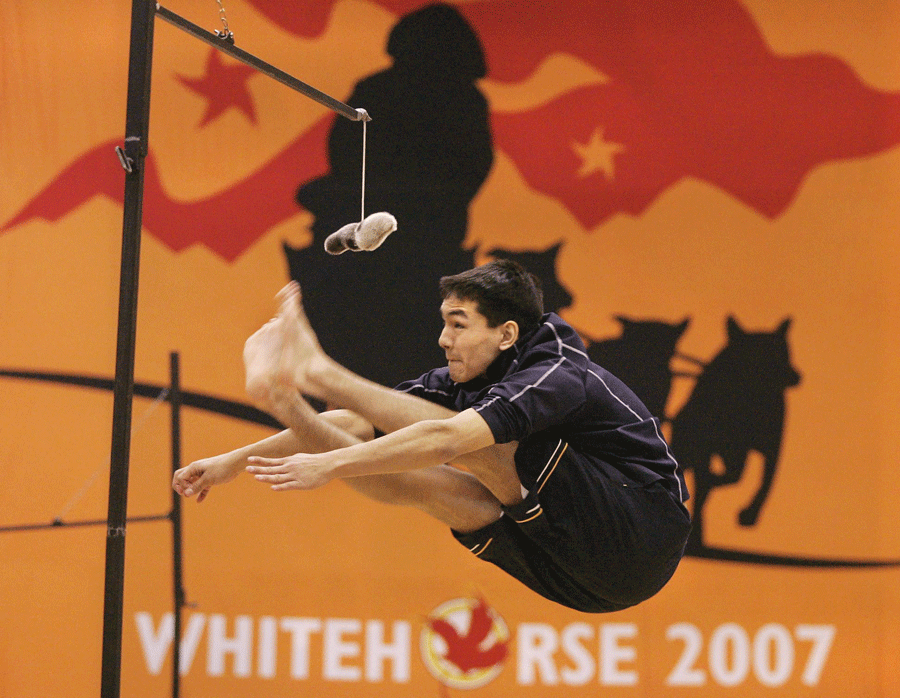
One of the most iconic categories of these games involves various forms of the High Kick. These events showcase incredible leg strength, flexibility, and balance, often requiring athletes to touch objects suspended several feet in the air with their feet.

The One-Foot High Kick requires an athlete to jump off both feet, touch a suspended object with one foot, and land back on the same foot without losing balance. It’s a true measure of explosive power and controlled landing.
Even more challenging is the Two-Foot High Kick, where the athlete jumps, touches the suspended object with both feet simultaneously, and lands on both feet. This demands immense coordination and core strength, often pushing athletes to incredible heights.
The Alaskan High Kick adds another layer of complexity. Here, the athlete starts seated on the ground, grabs one foot with both hands, and then kicks a suspended ball with the other foot, landing back on the original sitting position. This variant tests flexibility, core strength, and precise control.
Beyond the high kicks, other strength-based challenges include the Ear Pull, a grueling test of pain tolerance and neck strength, where two competitors loop a string over each other’s ears and pull until one gives up. While controversial to some, it historically symbolized endurance in harsh conditions.
The Finger Pull involves two competitors interlocking middle fingers and pulling until one releases their grip, demonstrating immense finger and forearm strength. Similarly, the Arm Pull is a seated contest where two athletes lock arms and pull, akin to arm wrestling but with a specific technique.
Perhaps one of the most demanding strength and endurance tests is the Knuckle Hop. In this game, athletes support their entire body weight on their knuckles and toes, moving across the floor in a series of hops. It’s a brutal test of upper body strength, core stability, and pain endurance, mimicking the movements of a seal on ice.
Agility, balance, and flexibility are equally vital in many traditional Eskimo games. These activities often mimic animal movements or require precise body control to navigate challenging scenarios.
The Backbend is a striking display of flexibility and lower back strength. Athletes attempt to bend backward as far as possible, often reaching between their legs to touch an object behind them, showcasing remarkable spinal mobility.
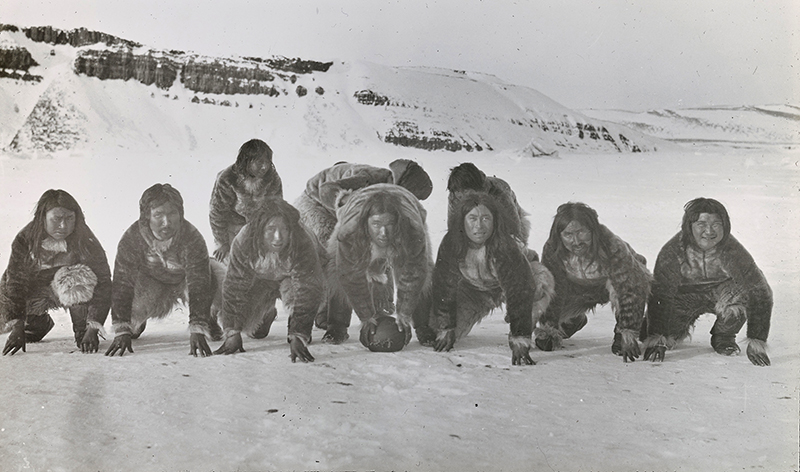
The Seal Hop, also known as the Seal Walk, requires athletes to move across a distance using only their hands and feet, keeping their body low to the ground, much like a seal moving on land. This builds immense core and limb strength, along with agility.

Another strategic strength game is the Leg Wrestle, where two competitors lie on their backs with heads in opposite directions, interlocking one leg. The goal is to flip the opponent over using leg strength and leverage, demanding both power and quick thinking.
The Bench Reach is a flexibility challenge where an athlete sits on a bench or elevated surface and attempts to reach as far forward as possible with their hands, often with specific rules about keeping the back straight, testing hamstring and lower back flexibility.
Some traditional games focus on precision, coordination, and collective effort, reflecting the communal aspects of hunting and survival.
The Blanket Toss, or Nalukataq in some Inuit dialects, is a spectacular community event. Originating from whaling celebrations, a jumper is tossed high into the air by a group of people holding the edges of a large walrus or seal hide blanket. The jumper performs acrobatic feats while airborne, and the ‘bouncers’ on the ground must work in perfect synchrony to ensure a safe and exhilarating experience. It symbolizes the joy and bounty of a successful hunt.
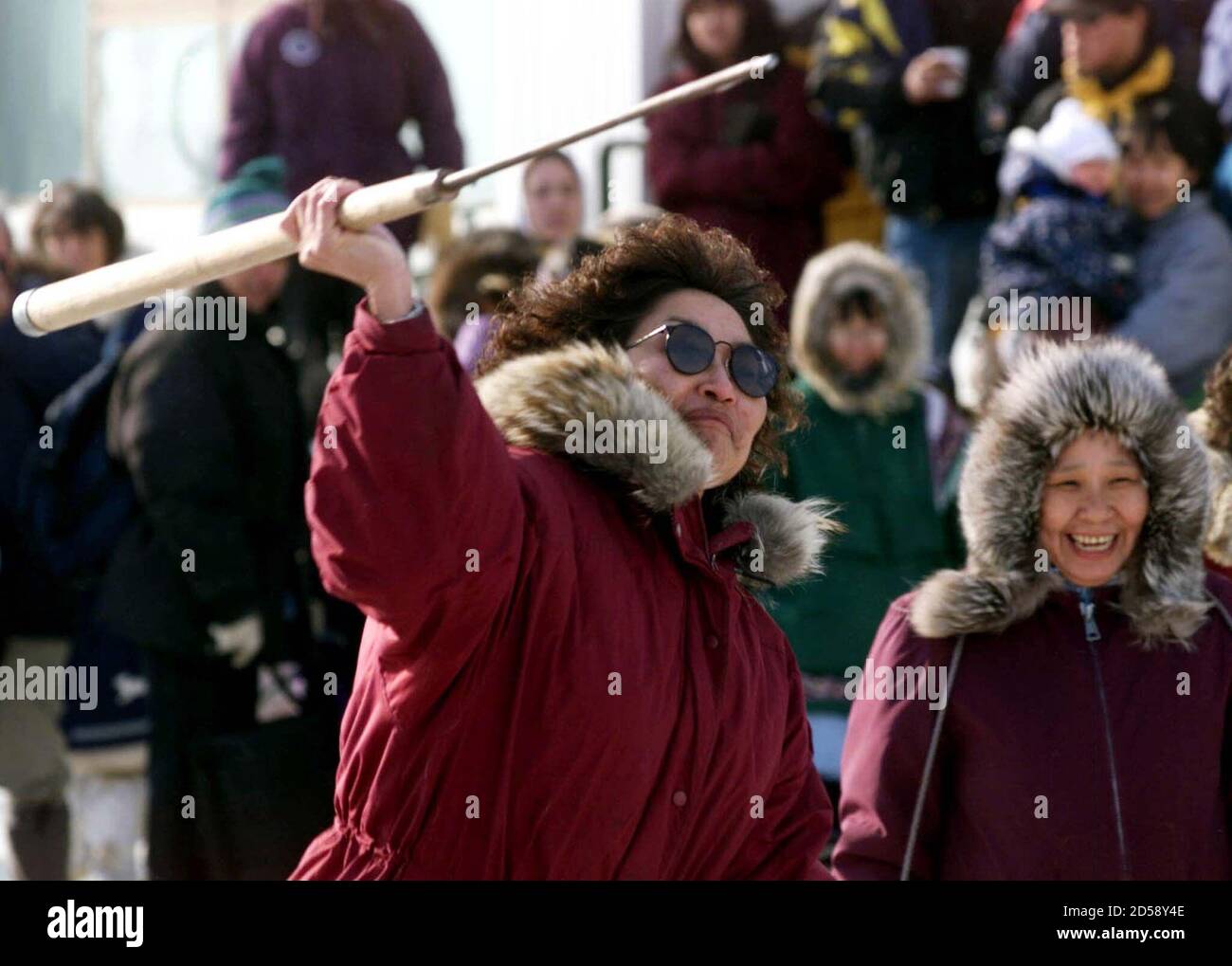
Spear Throwing and Harpoon Target Throw are direct reflections of hunting practices. Athletes demonstrate their accuracy and power by throwing spears or harpoons at targets, honing the critical skills needed to secure food in the Arctic wilderness.
While many traditional Eskimo sports are physical, the underlying cultural context often involves mental fortitude, strategic thinking, and a deep connection to the environment. The discipline required for these physical feats inherently builds mental resilience.
The cultural significance of these games cannot be overstated. They are living archives of Indigenous knowledge, demonstrating how generations learned to adapt, survive, and thrive. They reinforce traditional values such as respect for elders, perseverance, and the importance of collective well-being.
In modern times, there has been a powerful resurgence and celebration of these traditional games. Events like the Arctic Winter Games and the Native Youth Olympics (NYO) serve as crucial platforms for Indigenous youth to connect with their heritage, compete, and share their culture.
The Arctic Winter Games, held biennially, brings together athletes from across the circumpolar North, including Alaska, Canada, Greenland, and other regions. Traditional Arctic Sports and Dene Games (from Indigenous peoples of the Dene Nation) are central to these competitions, providing a global stage for these unique athletic traditions.
The Native Youth Olympics in Alaska, specifically, has been instrumental in preserving and promoting these games among younger generations. It teaches not only physical skills but also discipline, sportsmanship, and pride in one’s cultural identity.
Engaging with traditional Eskimo games offers numerous benefits. Physically, they build incredible strength, flexibility, endurance, and agility. Mentally, they foster discipline, focus, and a remarkable ability to endure discomfort.
Culturally, participation strengthens identity and provides a tangible link to ancestral knowledge and practices. For communities, these events foster unity, celebrate shared heritage, and provide positive role models for youth.
You might be asking: What are some traditional Inuit games? As explored, they include the One-Foot High Kick, Two-Foot High Kick, Alaskan High Kick, Ear Pull, Finger Pull, Knuckle Hop, Blanket Toss (Nalukataq), and many more, each with regional variations.
What is the most popular Inuit game? While popularity can vary, the High Kicks and the Blanket Toss (Nalukataq) are among the most widely recognized and celebrated, often headlining cultural festivals and athletic competitions.
Why are Inuit games important? They are important because they served as essential survival training, fostered community cohesion, transmitted cultural knowledge across generations, and continue to be a powerful expression of Indigenous identity and resilience.
How many Inuit games are there? It’s difficult to give an exact number, as games vary by region and dialect, and new variations or interpretations can emerge. However, there are dozens of distinct traditional games and variations recognized and played across the Arctic.
What is the blanket toss called in Inuit? The blanket toss is commonly known as Nalukataq in many Inuit communities, particularly in Alaska, referring to the whaling festival where it is a central celebratory activity.
In conclusion, the traditional Eskimo games and sports are a profound testament to human adaptability, resilience, and the enduring power of culture. They are not merely historical relics but vibrant, living traditions that continue to inspire, challenge, and unite communities across the Arctic and beyond.
By understanding and appreciating these unique athletic forms, we gain insight into the rich tapestry of Indigenous cultures and the remarkable ways in which physical activity can intertwine with survival, community, and identity. These games remind us of the strength, spirit, and heritage that define the peoples of the Arctic.


