The vast, breathtaking landscapes of Alaska’s Arctic are home to the Inupiat people, an Indigenous group with a rich cultural heritage stretching back millennia. For generations, the Inupiat have thrived in one of the world’s most challenging environments, guided by deep-rooted traditions and a profound connection to their land and resources. Today, their resilience and self-determination are powerfully expressed through a diverse network of political organizations.
These organizations are not mere administrative bodies; they are the guardians of Inupiat identity, the engines of economic development, and the unwavering voices advocating for Indigenous rights and environmental stewardship. Understanding their structure, purpose, and impact is crucial to appreciating the dynamic political landscape of Alaska Native communities.
This comprehensive guide delves into the world of Inupiat political organizations, exploring their historical roots, diverse functions, and the critical role they play in shaping the future of the Arctic.
Before the arrival of Euro-American explorers and settlers, Inupiat societies maintained sophisticated systems of governance. These systems were often decentralized, centered around family groups, villages, and regional alliances, guided by traditional laws, elders, and community consensus. Subsistence living, respectful resource management, and communal well-being were paramount.
The 19th and 20th centuries brought profound changes, including the imposition of external governance structures and the pressures of resource extraction. These external forces often disregarded traditional Inupiat ways, leading to significant social and economic disruption.
The mid-20th century marked a pivotal shift. Faced with increasing threats to their ancestral lands and way of life, Alaska Native peoples, including the Inupiat, recognized the urgent need for organized political action. This collective resolve culminated in a landmark achievement: the Alaska Native Claims Settlement Act (ANCSA) of 1971.
ANCSA was a revolutionary piece of legislation that extinguished aboriginal claims to land in exchange for monetary compensation and the creation of twelve Alaska Native Regional Corporations (ANRCs) and over 200 Alaska Native Village Corporations (ANVCs). For the Inupiat, this act laid the foundation for modern political and economic self-determination.
Among the most prominent Inupiat political organizations are the Alaska Native Regional Corporations. These are for-profit entities established under ANCSA, tasked with managing land and financial assets for their shareholders, who are Alaska Native individuals enrolled in the region.
The primary regional corporation serving the Inupiat people of the North Slope is the Arctic Slope Regional Corporation (ASRC). Headquartered in Utqiaġvik (Barrow), ASRC is one of the largest Alaskan-owned companies and a powerful economic force in the state and beyond.
ASRC’s mission extends far beyond profit. It is deeply committed to enhancing the Inupiat way of life, protecting the environment, and promoting cultural values. Its diverse portfolio includes oil and gas support services, construction, government contracting, and resource development, all aimed at creating sustainable economic opportunities for its shareholders.
Beyond ASRC, other regional corporations also serve Inupiat populations in different areas, such as NANA Regional Corporation (Kotzebue region) and Bering Straits Native Corporation (Seward Peninsula). Each plays a crucial role in its respective region’s economic and social fabric.
Complementing the regional corporations are the Alaska Native Village Corporations. These are also for-profit entities created by ANCSA, but they operate at a more localized level, serving the residents of specific villages. They often manage local land allotments and pursue economic ventures to benefit their village shareholders.
Village corporations work in conjunction with regional corporations, often engaging in partnerships and sharing common goals related to land management, economic development, and cultural preservation within their specific communities.
In addition to ANCSA corporations, many Inupiat communities maintain federally recognized tribal governments. These are sovereign entities with inherent governmental powers, distinct from the for-profit corporations. Tribal governments focus on cultural preservation, social services, and political advocacy.
The distinction between tribal governments and ANCSA corporations is important. Tribal governments exercise governmental authority, providing services such as justice systems, health clinics, and educational programs, and advocating for tribal sovereignty. ANCSA corporations are business entities focused on economic development and shareholder dividends, although their profits often support cultural and social initiatives.
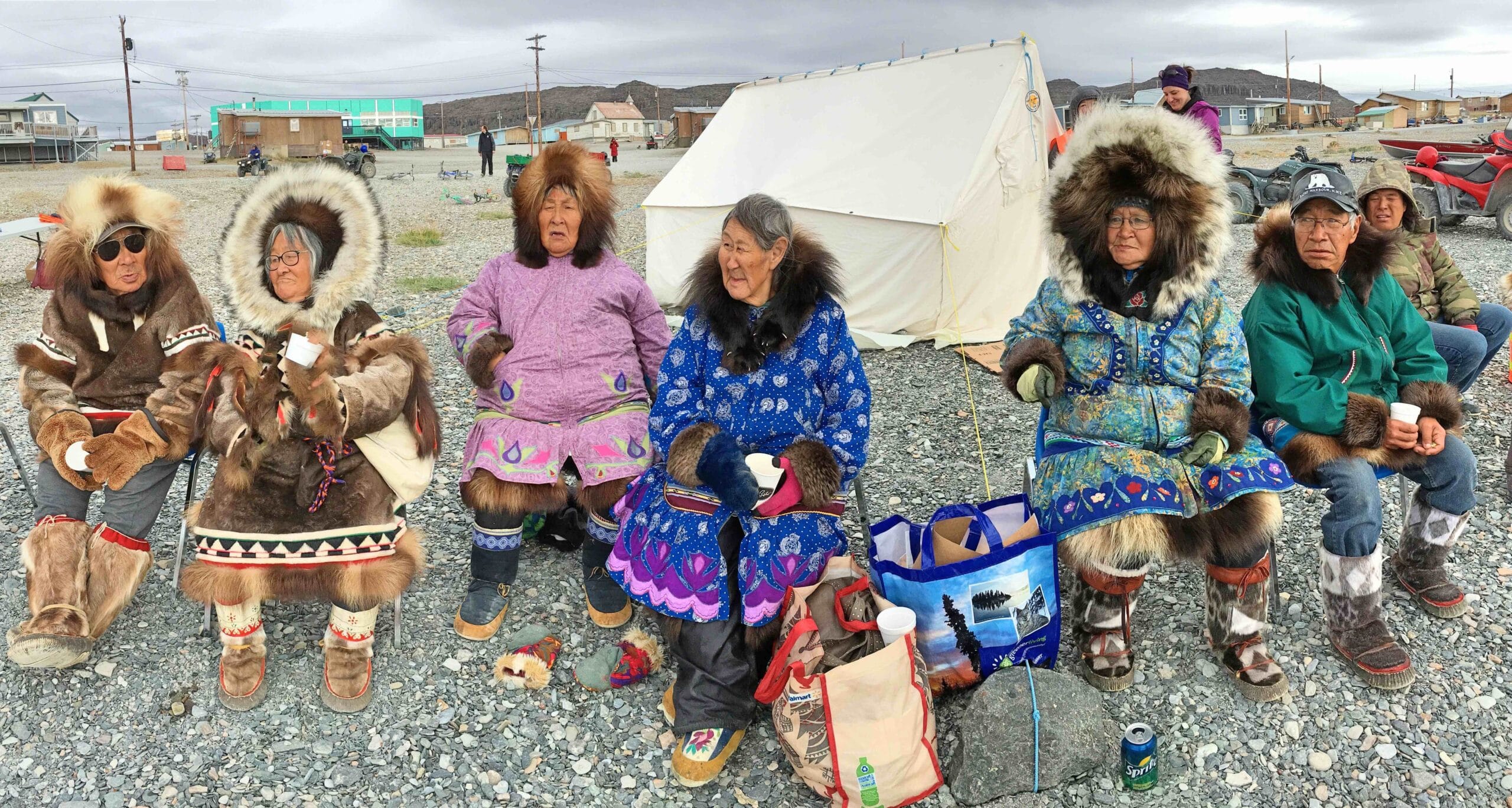
For example, the Native Village of Barrow (Ukpeaġvik Iñupiat Traditional Government) operates as a tribal government, providing essential services and advocating for its members’ rights, often in collaboration with ASRC and other entities.
Beyond the ANCSA corporations and tribal governments, a network of non-profit organizations and associations plays a critical role in supporting Inupiat communities. These organizations often specialize in specific areas, such as health, education, cultural revitalization, and social services.
One unique and powerful Inupiat political entity is the North Slope Borough (NSB). Established in 1972, the NSB is the largest borough in the United States by area, encompassing the entire North Slope region. It is a home-rule municipality with powers similar to a county, providing essential public services like schools, utilities, emergency services, and infrastructure across its vast territory.
Organizations like the Maniilaq Association, based in Kotzebue, provide comprehensive health, social, and tribal services to Inupiat and other Alaska Native residents of the Northwest Arctic Borough. Similarly, Kawerak, Inc. serves the Bering Strait region, focusing on tribal development, education, and cultural programs.
These non-profit organizations often work closely with tribal governments and ANCSA corporations, forming a comprehensive support system that addresses the diverse needs of Inupiat communities.
The collective efforts of Inupiat political organizations are multifaceted, addressing a wide range of issues crucial to the well-being and future of their people.
These organizations are at the forefront of advocating for Inupiat rights at local, state, national, and international levels. They champion issues such as self-determination, subsistence hunting and fishing rights, and the protection of Indigenous lands and resources.
Through their economic ventures, ANCSA corporations generate wealth that is reinvested into communities, supporting scholarships, cultural programs, and infrastructure development. This fosters economic self-sufficiency and reduces reliance on external funding.
Cultural preservation and language revitalization are central to the mission of many Inupiat organizations. They support programs that teach the Inupiaq language, traditional arts, storytelling, and subsistence skills to younger generations, ensuring the continuity of their rich heritage.
Access to quality healthcare and social services is a persistent challenge in remote Arctic communities. Organizations like Maniilaq Association and the North Slope Borough play a vital role in delivering these essential services, from clinics to elder care programs.
With the Arctic experiencing rapid climate change, Inupiat organizations are leading efforts in environmental stewardship and resource management. They advocate for responsible development, monitor environmental impacts, and work to adapt to the changing climate, protecting their traditional homelands and subsistence resources.
Despite their significant achievements, Inupiat political organizations face ongoing challenges. Climate change poses an existential threat, impacting subsistence resources, coastal erosion, and infrastructure. Economic diversification beyond resource extraction remains a priority.
Maintaining tribal sovereignty and navigating complex legal frameworks continue to be central issues. Engaging youth and ensuring the transfer of traditional knowledge and leadership skills are also critical for future generations.
The resilience and adaptability of Inupiat political organizations are testaments to the enduring spirit of the Inupiat people. Their continued advocacy for self-determination, sustainable development, and cultural preservation ensures that the Inupiat voice remains strong and influential in the Arctic and beyond.
Inupiat political organizations represent a powerful and sophisticated network dedicated to the prosperity, cultural integrity, and self-determination of the Inupiat people. From the economic engines of regional corporations like ASRC to the sovereign functions of tribal governments and the vital services provided by non-profits and the North Slope Borough, these entities are indispensable.
They are not just institutions; they are living expressions of Inupiat identity, resilience, and a profound commitment to their ancestral lands and future generations. Their work ensures that the Inupiat continue to thrive, adapt, and lead in a rapidly changing world.
Understanding these organizations offers a crucial insight into Indigenous governance, economic development, and cultural survival in the 21st century Arctic.