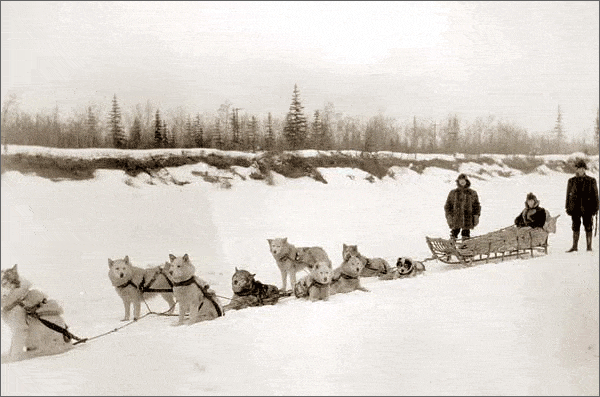

The vast, unforgiving landscape of the Arctic has long demanded ingenuity and resilience from its inhabitants. For the Inupiat people of northern Alaska, one of the most remarkable innovations to emerge from this challenging environment was the dog sled. Far more than a mere mode of transport, the dog sled was a lifeline, a cultural cornerstone, and a testament to the profound bond between humans and animals.
Understanding Inupiat dog sled history is to understand the very fabric of their traditional way of life. It reveals a sophisticated system of travel, hunting, trade, and survival that allowed communities to thrive in one of the planet’s most extreme climates.
The Inupiat: Masters of the Arctic Environment
The Inupiat are an indigenous people whose ancestral lands span across the Arctic regions of Alaska, Canada, and Greenland. For thousands of years, they have adapted to life above the Arctic Circle, developing unique skills and technologies to navigate the frozen tundra and icy seas. Their deep knowledge of the land, weather, and animal behavior is unparalleled.
Before the arrival of modern machinery, movement across this expansive and often barren terrain was a monumental challenge. The solution lay in the power and endurance of specially bred dogs, harnessed to ingeniously designed sleds.
Early Origins of Arctic Dog Sledding
The practice of using dogs to pull sleds is ancient, with archaeological evidence suggesting its origins in Siberia and Alaska dating back thousands of years. As people migrated across the Bering Land Bridge into North America, they brought with them not only their culture but also their invaluable canine companions.
These early sled dogs were robust, intelligent animals, capable of enduring extreme cold and long journeys. They were meticulously bred for strength, stamina, and a cooperative temperament, qualities essential for effective team pulling.
The Indispensable Role of Sled Dogs in Inupiat Life
For the Inupiat, sled dogs were not just tools; they were integral members of the community, often treated with immense respect and care. Their ability to transport heavy loads over vast distances made them critical for nearly every aspect of daily life.
Without dog sleds, large-scale hunting expeditions, trade with distant villages, and even basic family travel would have been impossible or prohibitively difficult. They were the engines of Arctic civilization, enabling mobility and connectivity.
Subsistence and Survival: More Than Just Travel
The primary function of Inupiat dog sleds revolved around subsistence. The Arctic environment is resource-scarce, and successful hunting of caribou, seals, and other game often required traveling significant distances from permanent settlements.
Sleds were used to transport hunters, their equipment, and, most importantly, the harvested meat and furs back to the village. This ability to bring large quantities of food home was directly linked to the survival and prosperity of the entire community.
Hunting and Gathering with Sleds


Imagine a hunting party setting out across the frozen tundra in pursuit of caribou. The dog team would pull their qamutik (traditional sled) laden with harpoons, rifles, camping gear, and supplies. Upon a successful hunt, the sled would then be loaded with hundreds of pounds of meat and hides, a task impossible for humans alone.
Similarly, for fishing through ice or collecting firewood from distant groves, the dog sled provided the necessary leverage and capacity to gather and transport essential resources.
Trade and Communication Networks
Beyond subsistence, dog sleds facilitated vital trade routes across the Arctic. Inupiat communities, while self-sufficient in many ways, often exchanged goods such as furs, tools, blubber, and unique regional items with neighboring groups.
These trade journeys could span hundreds of miles, connecting disparate villages and fostering cultural exchange. Dog teams were the backbone of these early Arctic communication and economic networks.
The Anatomy of an Inupiat Sled: The Qamutik
The traditional Inupiat sled, known as a qamutik, was a marvel of indigenous engineering. Unlike many Western sleds with rigid, nailed constructions, the qamutik was designed for flexibility and durability in extreme conditions.
Materials and Construction
Early qamutiks were often constructed from locally available materials: driftwood, whalebone, or even frozen fish (which would later be eaten!). These materials were lashed together with sinew or hide thongs, allowing the sled to flex and absorb shocks over uneven ice and snow, preventing breakage.
This flexible construction was crucial. A rigid sled would quickly splinter on the treacherous Arctic terrain. The runners were often shod with ice or frozen mud, polished smooth to reduce friction and sometimes waxed with animal fat for optimal glide.
Inupiat Sled Dogs: Breeds and Traits
The dogs used by the Inupiat were specifically adapted to the Arctic environment. While modern breeds like the Siberian Husky are often associated with sledding, the native dogs were ancestors of breeds like the Alaskan Malamute and other robust Arctic spitz-type dogs.
The Majestic Alaskan Malamute
The Alaskan Malamute, named after the Mahlemut Inupiat people, is a prime example of a traditional Arctic sled dog. Known for its immense strength, endurance, and thick double coat, the Malamute was bred for hauling heavy loads over long distances.
These dogs possess incredible stamina and a gentle, loyal temperament when properly trained, making them ideal partners for Arctic travelers.
The Resilient Siberian Husky (and similar native dogs)
While the Siberian Husky is a slightly lighter, faster breed, its ancestors and similar native dogs also played a crucial role in Inupiat history, particularly for quicker journeys or lighter loads. All these Arctic breeds share common traits: dense fur, powerful legs, and an innate desire to run and pull.
The Art of Mushing: Training and Relationship
Mushing, the act of driving a dog team, was a highly skilled art form. Inupiat mushers developed a profound understanding of their dogs, recognizing individual personalities and strengths. The relationship between musher and dog was built on trust, respect, and mutual dependence.
Dog Care and Nutrition
Caring for a dog team was a full-time commitment. Dogs were fed a diet rich in protein and fat, often consisting of seal meat, fish, or caribou, to provide the immense energy needed for their work. Their health was paramount, as a sick or injured dog could jeopardize an entire journey or hunting expedition.
Leadership and Teamwork
Each dog in a team had a specific role. The ‘lead dog’ was crucial, possessing intelligence, courage, and the ability to understand commands. The ‘swing dogs’ helped turn the sled, while ‘wheel dogs’ provided power closest to the sled. A well-trained team moved as a cohesive unit, responding to vocal commands and subtle body language.
Cultural and Spiritual Significance
Beyond their practical utility, sled dogs held deep cultural and spiritual significance for the Inupiat. They were woven into stories, myths, and ceremonies, symbolizing loyalty, strength, and the spirit of the Arctic.
Dogs as Family Members
Children grew up alongside the dogs, learning to respect and interact with them from a young age. Dogs were often housed close to the family dwelling, sharing in the warmth and protection of the community. This close bond fostered a unique interdependence.
Stories, Legends, and Traditions
Many Inupiat legends feature dogs as guides, protectors, or companions on epic journeys. These stories underscored the reverence and gratitude the people held for their canine partners, reinforcing their place as essential elements of Inupiat identity.
Challenges and Adaptations Through Time
The 20th century brought significant changes to the Arctic. External influences, including missionaries, traders, and government policies, began to alter traditional Inupiat life. With these changes came new technologies.
Impact of External Influences
The introduction of firearms, new building materials, and Western goods began to shift some aspects of subsistence and trade. However, the dog sled remained indispensable for much of the century, especially in remote areas.
Modernization and Snowmachines
The most significant shift came with the widespread adoption of the snowmachine (snowmobile) in the mid-20th century. Faster and requiring less daily care than a dog team, snowmachines gradually replaced dog sleds as the primary mode of winter transportation for many Inupiat.
This transition, while bringing new efficiencies, also had cultural implications, altering the traditional rhythm of life and the unique relationship with sled dogs.
Preserving a Priceless Heritage
Despite the rise of modern technology, the legacy of Inupiat dog sledding endures. Today, there’s a strong movement within Inupiat communities to preserve and revitalize this important aspect of their cultural heritage.
Revival Efforts and Cultural Programs
Cultural programs, traditional skills workshops, and dog sledding races (like the famous Iditarod, which draws on these traditions) help keep the knowledge and practice of mushing alive. Younger generations are learning the art of training and caring for dog teams, ensuring that the ancient skills are not lost.
Dog Sledding Today in Inupiat Communities
While not as ubiquitous as they once were, dog sleds are still used in some Inupiat communities for subsistence hunting, trapping, and recreational purposes. They serve as a powerful link to the past, embodying resilience, ingenuity, and a deep connection to the Arctic environment.
Common Questions About Inupiat Dog Sled History
How far could Inupiat dog sleds travel? Inupiat dog sleds could travel significant distances, often covering 20-40 miles a day, and sometimes much more on long expeditions. Journeys spanning hundreds of miles were not uncommon for trade or major hunting trips, though they would take multiple days or weeks.
What were Inupiat sleds made of? Traditional Inupiat sleds (qamutiks) were made from locally available materials like driftwood, whalebone, caribou antlers, or even frozen fish. These components were lashed together with sinew or hide thongs, allowing for flexibility on uneven terrain.
What kind of dogs did Inupiat use? The Inupiat primarily used native Arctic dog breeds, ancestors of what are now known as Alaskan Malamutes and similar robust, powerful spitz-type dogs. These breeds were selected for their strength, endurance, thick coats, and ability to thrive in extreme cold.
Is dog sledding still practiced by Inupiat? Yes, dog sledding is still practiced by some Inupiat individuals and communities, though not as widely as historically. It is maintained for cultural preservation, recreational purposes, subsistence activities, and in some cases, competitive racing.
Conclusion: A Legacy of Resilience and Partnership
The history of Inupiat dog sledding is a profound narrative of adaptation, survival, and a remarkable partnership between humans and dogs. These powerful teams were instrumental in shaping the Inupiat way of life, enabling them to not only survive but thrive in the challenging Arctic landscape.
From facilitating hunting and trade to serving as a vital cultural symbol, the dog sled represents the enduring spirit and ingenuity of the Inupiat people. As communities continue to embrace and revitalize these traditions, the enduring legacy of the Inupiat dog sled will undoubtedly continue to inspire future generations.
It is a reminder that in the harshest environments, the strongest bonds and most innovative solutions often arise from a deep understanding and respect for both nature and the invaluable companions who share our journey.


