
Kinship in the Cold: The Enduring Family Structures of the Eskimo Peoples
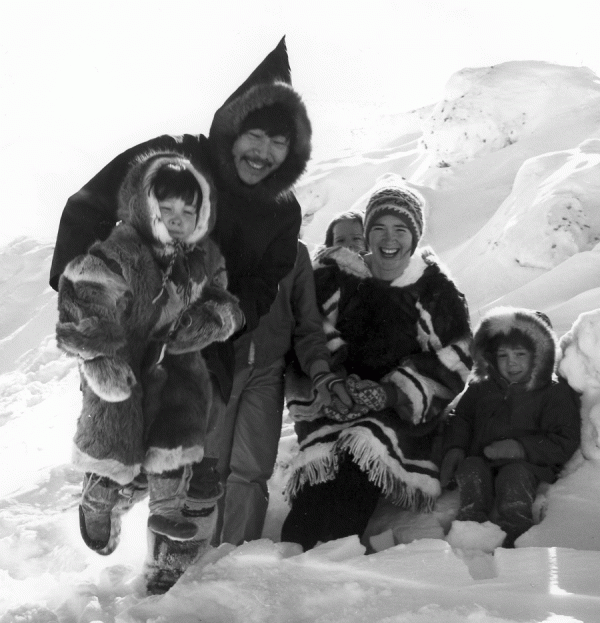
In the vast, unforgiving expanse of the Arctic, where life itself is a testament to resilience, the social structure of the Eskimo peoples has evolved as an intricate blueprint for survival. At its heart lies the family – not merely a unit of procreation, but a dynamic, adaptable, and deeply interconnected system essential for enduring one of Earth’s most challenging environments. While the term "Eskimo" encompasses diverse Indigenous groups across the Arctic, including the Inuit, Yup’ik, and others, their traditional family structures share fundamental principles shaped by the harsh realities of their homeland. This article delves directly into the core elements of this remarkable social organization, highlighting its pragmatic genius and enduring strength.
The Foundational Unit: Necessity and Interdependence
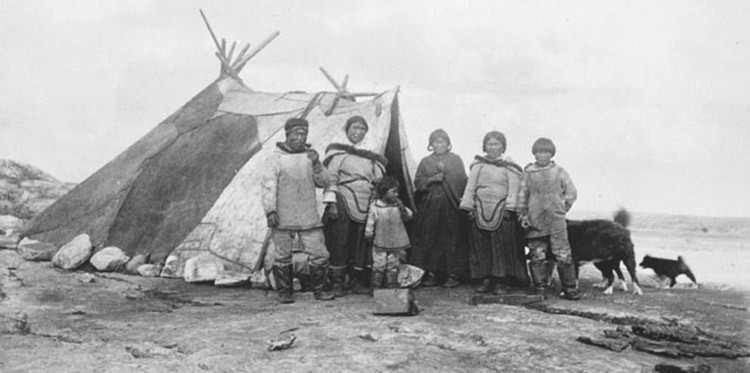
Unlike many Western societies that often prioritize the nuclear family, traditional Eskimo life was typically centered around an extended kin group, or qaniq. This wasn’t a matter of cultural preference alone; it was a fundamental requirement for survival. Individual families, usually comprising a husband, wife, and their children, were the primary economic units, but their viability was intrinsically linked to a larger network of relatives. These networks provided mutual support, shared resources, and collective knowledge crucial for navigating the extremes of the Arctic climate, from extreme cold and food scarcity to the unpredictable dangers of hunting.
The nomadic or semi-nomadic lifestyle, dictated by the migratory patterns of game animals, meant that these family groups were often small, mobile bands. However, the bonds between these scattered groups remained strong through complex kinship ties and reciprocal obligations. A hunter might travel for days, but he would always find refuge and sustenance with a distant relative, knowing that the favor would be returned when needed. This deep-seated interdependence created a social safety net, ensuring that no individual or immediate family was left to face the Arctic’s challenges alone.
Division of Labor and Gender Roles


The stark realities of Arctic existence dictated a clear, yet flexible, division of labor within the family, meticulously designed to maximize efficiency and survival. Men were primarily hunters, responsible for acquiring the large game animals – seals, whales, caribou, polar bears – that provided the bulk of food, fuel, clothing, and tools. This role demanded immense skill, courage, and an intimate knowledge of the land, sea, and animal behavior. A successful hunter was a pillar of the community, his prowess directly translating into the well-being of his family and extended kin.
Women, on the other hand, were the indispensable architects of the domestic sphere. Their responsibilities included preparing and preserving food, sewing and mending clothing (often made from animal skins and requiring expert tailoring for insulation), raising children, and maintaining the warmth and functionality of the home, whether it be an igloo, tent, or sod house. The meticulous work of transforming raw hides into supple, warm garments like parkas and boots was a highly specialized skill, vital for protection against the Arctic’s extreme cold. As anthropologist Diamond Jenness observed, "The women’s contribution to the survival of the group was no less critical than that of the men; indeed, without their skills, the hunters would quickly perish." This division was not about superiority but about complementary roles, each equally vital to the group’s collective survival.
Marriage, Alliances, and Adoption
Marriage, far from being solely an affair of the heart, was a pragmatic and often strategic alliance within Eskimo society. While personal attraction played a role, marriages were frequently arranged by elders to solidify inter-family ties, strengthen hunting partnerships, or ensure the propagation of the family line. These alliances were critical in broadening the network of reciprocal obligations, providing access to different hunting grounds or resources. Polygyny, the practice of one man having multiple wives, was sometimes practiced, particularly by highly skilled hunters. This was not a sign of status in the Western sense, but a practical response to the demands of survival; a successful hunter could support more people, and additional wives meant more hands for processing game, preparing skins, and raising children, thereby strengthening the entire household.
Perhaps one of the most striking features of Eskimo kinship is the widespread practice of adoption. Unlike many societies where adoption is a last resort, it was a common and often celebrated event. Children might be adopted for various reasons: to replace a deceased child, to strengthen ties between two families, to provide a child for a childless couple, or even to redistribute children more equitably among households. Adoption was seen as a way to reinforce community bonds and ensure that every child had a loving home, regardless of biological parentage. The adopted child was fully integrated into the new family, receiving the same rights, responsibilities, and love as a biological child, a testament to the community’s profound commitment to its youngest members.
Child Rearing and the Power of Names
Children were, and remain, the cherished heart of the Eskimo family. They were raised with immense patience, affection, and a strong emphasis on practical skills and traditional knowledge. Discipline was rarely harsh; instead, children learned through observation, storytelling, and gentle guidance. From a young age, they were integrated into the daily rhythms of family life, learning to observe the environment, handle tools, and understand the intricate social protocols of their community. Boys accompanied men on hunts, starting with smaller game, while girls learned the domestic arts from their mothers and grandmothers.
Naming practices held deep spiritual and social significance. A child was often given the name of a recently deceased relative, believing that the spirit and personality of the deceased would be transferred to the child. This practice, known as atigi or "soul-name," created a profound spiritual continuity and ensured that ancestors were never truly lost. The child would be treated with the same respect and affection as the namesake, even being addressed with kinship terms appropriate for the deceased. This system reinforced the connection between generations, linking the living directly to their ancestors and the spiritual world.
Elders: Libraries of Wisdom and Resilience

Elders held a revered position within traditional Eskimo society, their memories and wisdom serving as vital libraries of survival. They were the repositories of knowledge about hunting techniques, weather patterns, migration routes, medicinal plants, and the rich oral traditions and stories that conveyed cultural values and history. Their advice was sought on all important matters, and their experience was crucial in guiding younger generations.
However, the extreme conditions of the Arctic also led to some of the most challenging ethical dilemmas. In times of severe famine or when a group was forced to migrate rapidly, the elderly or infirm might, with their own consent, be left behind to perish. This was not an act of cruelty but a tragic necessity, a collective decision made for the survival of the entire group. It was often a deeply emotional and consensual act, rooted in the understanding that an individual’s inability to contribute could jeopardize everyone. While difficult to comprehend from a modern perspective, it underscores the brutal pragmatism sometimes required for survival in the harshest environment on Earth.
Beyond the Immediate Family: Reciprocal Partnerships
Beyond the immediate family and extended kin, a complex web of reciprocal relationships fortified the broader social fabric. One notable practice was the "seal-sharing partnership" (nukak), where two unrelated hunters would commit to sharing their catch, regardless of who made the kill. This ensured a more stable food supply for both families, mitigating the inherent risks of hunting. Such partnerships could last a lifetime and were considered as binding as kinship ties.
Another practice, often misunderstood and sensationalized in Western literature, was various forms of spousal exchange, sometimes referred to as "wife-swapping" (nuliaqtaq). This was rarely, if ever, recreational. Instead, it served specific, vital social functions:
- Strengthening Alliances: It cemented bonds between families or individuals, creating a powerful social and economic alliance.
- Hospitality: A host might offer his wife to a guest as a sign of extreme hospitality, ensuring warmth and companionship in a harsh environment.
- Spiritual Exchange: In some cases, it was believed to transfer hunting luck or spiritual power.
- Practical Necessity: It could provide companionship during long journeys or ensure care for children if a spouse was absent or ill.
These exchanges were typically consensual, temporary, and understood within a clear framework of social expectations, underscoring the communal and adaptive nature of Eskimo social relations.
Leadership and Community Governance
Leadership within Eskimo society was rarely formalized. There were no chiefs or kings in the Western sense. Instead, influence and authority were earned through demonstrated skill, wisdom, generosity, and an ability to mediate disputes. Highly respected hunters (umialik or "boat owner," often referring to a whaling captain) or shamans (angakkuq) held significant sway, but their power was based on persuasion and example, not coercion. Decisions were typically made through consensus, with extensive discussion until all members of the group, or at least the most influential, agreed upon a course of action. This decentralized form of governance reflected the necessity for individual autonomy within a highly interdependent community.
Modern Challenges and Enduring Resilience
The 20th and 21st centuries have brought profound transformations to Eskimo societies. Contact with Western cultures, the introduction of cash economies, settled communities, formal education, and new technologies have dramatically altered traditional ways of life. Many of the traditional survival strategies that necessitated the unique family structures—nomadism, subsistence hunting, and elaborate reciprocal exchange—have been impacted.
Yet, despite the relentless march of modernity, the core tenets of Eskimo family structure—reciprocity, resilience, and an unwavering commitment to community—endure. While many now live in permanent settlements, work in wage economies, and access modern healthcare and education, the value placed on kinship, the respect for elders, the profound love for children, and the spirit of mutual aid remain strong. Traditional knowledge, though sometimes challenged, is actively being revitalized and passed down. The family remains the primary bulwark against the challenges of contemporary life, providing cultural continuity and a powerful sense of identity.
Conclusion
The Eskimo family, forged in the crucible of the Arctic, stands as a powerful testament to human adaptability and the strength of communal bonds. It is a social blueprint that prioritized survival through meticulous organization, reciprocal obligations, and an unbreakable commitment to kinship. From the pragmatic division of labor and strategic marriages to the profound spiritual significance of naming and the enduring respect for elders, every aspect of their family structure was finely tuned to thrive in an environment that permitted no weakness. As these communities navigate the complexities of the modern world, the foundational principles of their traditional family systems continue to provide a vital source of strength, identity, and resilience, ensuring that the spirit of kinship in the cold will endure for generations to come.


