

Masters of the Ice: Unveiling the Ancient Arctic Way of Life
The Arctic, a land of unforgiving ice and endless snow, might seem an unlikely cradle for human civilization. Yet, for millennia, a diverse tapestry of indigenous peoples – broadly referred to as Eskimo, encompassing groups like the Inuit, Yup’ik, and Iñupiat – not only survived but thrived in this extreme environment. Their ancient way of life was a testament to unparalleled ingenuity, deep ecological knowledge, and a profound connection to the land and sea. Far from being primitive, these cultures developed sophisticated technologies, social structures, and spiritual beliefs that allowed them to flourish where others would simply perish.
The Arctic Canvas: A World of Extremes
Life in the ancient Arctic was dictated by its stark environment. Long, dark winters plunged temperatures to unimaginable lows, while short, intense summers brought periods of continuous daylight and a brief thaw. The landscape itself varied, from the vast, open tundra to the frozen seas teeming with marine life. This challenging backdrop meant that survival was a constant, all-encompassing endeavor, demanding an intimate understanding of weather patterns, animal migrations, and the subtle cues of nature.
The peoples of the ancient Arctic were not a monolithic entity. They spanned vast geographical areas, from Siberia across Alaska and Canada to Greenland, developing distinct dialects, traditions, and hunting techniques adapted to their specific regional ecosystems. However, common threads of adaptation, resilience, and a deep reverence for their environment wove through all their cultures.
The Hunt: The Artery of Existence

At the heart of the ancient Eskimo way of life was hunting. The Arctic offered few plant resources, making meat and blubber the primary source of sustenance, energy, and raw materials. Their diet was remarkably balanced, rich in protein and fat, and crucially, provided all essential vitamins, including vitamin C from organ meats, skin, and occasional berries.
Marine Mammals: The Ocean’s Bounty
Seals were arguably the most vital resource. Ringed seals, bearded seals, and harp seals provided meat, blubber for fuel and food, and skins for clothing, shelter, and tools. Hunting techniques were diverse and highly specialized:
- Breathing Hole Hunting: During winter, hunters would locate seal breathing holes in the ice, patiently waiting for hours, sometimes days, for a seal to surface, striking with a specialized harpoon. This required immense patience and an acute understanding of seal behavior.
- Kayak Hunting: In open water, hunters in their sleek, fast kayaks (qajaq) would pursue seals and other marine mammals, using harpoons with detachable heads connected by a line to a float, preventing the animal from diving and escaping.
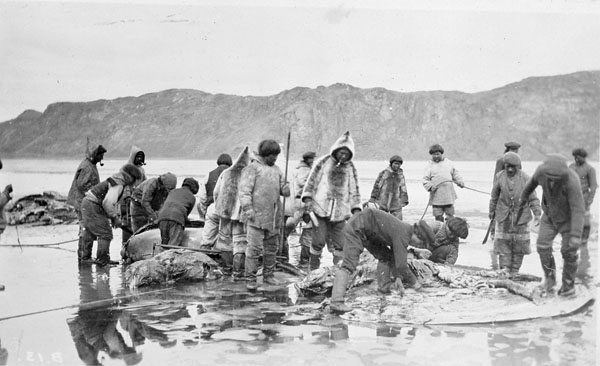
Walrus, massive and formidable, were hunted for their meat, blubber, ivory tusks, and thick hides. Whaling, particularly for bowhead whales and belugas, was a communal effort demanding incredible courage and coordination. The immense resources provided by a single bowhead whale – hundreds of thousands of pounds of meat, blubber, and baleen – could sustain an entire community for months, cementing the whale’s sacred status. Large skin boats called umiaks, capable of carrying multiple hunters, were essential for these dangerous expeditions.
Land Animals: The Tundra’s Gifts
While marine resources were paramount, land animals also played a crucial role, especially for inland groups. Caribou (reindeer) were hunted during their seasonal migrations, often through communal drives into corrals or ambushes at river crossings. Their meat was a staple, their hides provided the warmest clothing, and their antlers and bones were fashioned into tools. Polar bears, formidable predators themselves, were also hunted, though less frequently, for their fur, meat, and fat. Birds, fish (such as Arctic char and salmon), and their eggs supplemented the diet, especially during the brief summer months.

Ingenuity in Innovation: Tools and Technology
The ancient Eskimo people were master engineers, developing an array of specialized tools and technologies perfectly adapted to their environment. Every item was crafted with purpose, efficiency, and an intimate knowledge of materials.
- Harpoons: These were complex, multi-part instruments featuring detachable heads that would separate upon impact, embedding in the animal while the shaft floated free, connected by a line to a float (often an inflated seal bladder). This design prevented the harpoon from pulling out and allowed hunters to track their prey.
- Kayaks and Umiaks: The kayak, a marvel of lightweight, skin-on-frame construction, was a single-person hunting vessel, incredibly stable and maneuverable. The umiak, a larger, open boat, also made of skin over a wooden frame, was used for transporting families, goods, and for communal whaling.
- Sleds (Qamutiik) and Dog Teams: Travel over ice and snow was facilitated by sleds pulled by teams of highly trained dogs. The qamutiik, with its flexible runners, could glide over uneven terrain, a design perfected over millennia.
- The Ulu: This versatile, crescent-shaped knife, traditionally made from slate or bone, was an indispensable tool for women, used for skinning, butchering, cleaning fish, and even cutting hair.
- Oil Lamps (Qulliq): Carved from soapstone, these lamps burned seal or whale blubber, providing essential light, heat, and a means for cooking and drying clothes in the dark, cold interiors of homes.
- Snow Goggles: Carved from wood, bone, or ivory, these goggles featured narrow slits that drastically reduced the glare from the sun reflecting off snow and ice, preventing snow blindness – a simple yet incredibly effective piece of protective equipment.
Shelter and Clothing: Masters of Insulation
Protection from the extreme cold was paramount. The ancient Eskimo developed highly effective shelters and clothing systems.
Shelter:
- Igloos (Snow Houses): While iconic, igloos were primarily temporary shelters used by hunters on expeditions or by families during seasonal movements in winter. Constructed from blocks of compacted snow, their dome shape and snow’s insulating properties created a surprisingly warm and stable environment.
- Semi-Subterranean Houses: For more permanent settlements, especially in Alaska and parts of Canada and Greenland, people built sod or turf houses. These structures were partially dug into the ground, with walls of sod, stone, or whalebone, and roofs covered with earth and snow. A long, cold-trap entrance tunnel prevented heat loss.
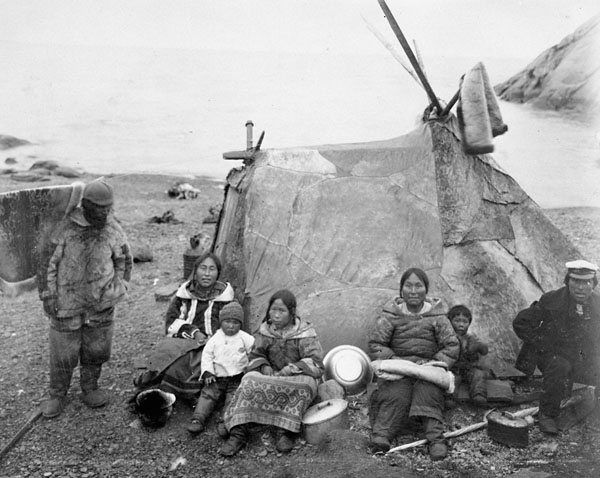
- Skin Tents (Tupiq): During the brief summer months, portable tents made of caribou or seal skins provided shelter, allowing for greater mobility to follow game.
Clothing:
Their clothing was a masterpiece of thermal engineering. Layering was key, and materials were chosen for their insulating and moisture-wicking properties:
- Caribou Skin: Considered the warmest material, caribou parkas (anoraks) were often made with two layers: an inner layer with fur facing inwards for warmth, and an outer layer with fur facing outwards for protection from wind and snow.
- Seal Skin: Durable and relatively waterproof, seal skin was used for boots (kamiks), mittens, and outer layers.
- Bird Skins: For lighter, less bulky garments, some groups used bird skins, particularly those of eider ducks, for their exceptional down insulation.
- Gut Parkas: Made from the intestines of seals or other marine mammals, these garments were surprisingly effective as lightweight, windproof, and waterproof outer layers.
- Boots (Kamiks): Elaborately constructed from seal or caribou skin, often with grass insulation inside, kamiks were designed to keep feet dry and warm in wet, cold conditions.
Social Structure and Cultural Fabric
Ancient Eskimo societies were typically organized into small, nomadic or semi-nomadic family groups, often comprising extended kin. Cooperation and sharing were not merely virtues but necessities for survival. Large game kills, particularly whales and caribou, were meticulously divided among the community, ensuring everyone benefited and fostering social cohesion.
Oral Tradition and Knowledge Transfer: With no written language, knowledge was passed down through generations via oral tradition, storytelling, songs, and practical apprenticeship. Elders held immense respect as repositories of crucial information about hunting grounds, animal behavior, weather patterns, and ancestral wisdom.
Spiritual Worldview: For the ancient Eskimo, the world was not merely a collection of resources but a living, interconnected entity, teeming with spirits and imbued with meaning. Animism was central, with respect shown to all animals, plants, and natural phenomena, each possessing a spirit (inua). Hunters adhered to strict rituals and taboos before and after hunts to honor the spirits of the animals, believing that disrespect would lead to poor hunting in the future.
Shamans (angakkuq) played a vital role as spiritual intermediaries, healers, and guides. They communicated with the spirit world, interpreted dreams, healed the sick, and sought to restore balance between humans and the environment. Songs, drumming, and dances were integral parts of their spiritual practices and daily life, expressing emotions, recounting stories, and connecting individuals to the collective consciousness.
Daily Life and the Rhythm of Survival
Daily life was a relentless cycle of practical tasks, punctuated by periods of intense hunting or travel. Men were primarily hunters, while women were responsible for processing game (skinning, butchering, rendering blubber), preparing food, sewing clothing, raising children, and maintaining the home. Children were integral to the community, learning essential survival skills from a young age through observation and direct participation.
Despite the harshness, there was also time for play, storytelling, games, and artistic expression. Intricate carvings from ivory, bone, and wood depicted animals, spirits, and daily scenes, reflecting their deep connection to their world.
Famine, frostbite, and accidental death were ever-present dangers. Survival was a daily testament to their profound ecological knowledge, their capacity for resilience, and their unwavering spirit of adaptability. Their intimate understanding of the Arctic ecosystem allowed them to extract sustenance from seemingly barren landscapes, turning every resource into a tool for survival and cultural enrichment.
Legacy and Enduring Spirit
The ancient Eskimo way of life stands as an extraordinary testament to human adaptability and ingenuity in the face of extreme environmental challenges. It was a civilization built not on agriculture or grand cities, but on an unparalleled understanding of the natural world and a profound respect for its delicate balance. While modern influences have brought significant changes, the legacy of their ancient knowledge, technologies, and spiritual connection to the land and sea continues to inspire and inform contemporary Inuit, Yup’ik, and Iñupiat cultures, reminding us of the enduring power of human resilience and the deep wisdom embedded in living in harmony with our planet. Their story is not just one of survival, but of thriving with grace and profound respect in one of the world’s most demanding environments.


