For centuries, the Yupik people of Alaska and Siberia have thrived in the harsh Arctic environment. Their survival depended heavily on their ability to hunt effectively, and their ingenuity is reflected in the design and construction of their traditional hunting tools. These tools weren’t just implements; they were extensions of the hunter’s skill, knowledge, and respect for the animals they hunted. This article delves into the fascinating world of Yupik traditional hunting tools, exploring their materials, construction, and cultural significance.
The Foundation of Yupik Hunting Success
The Yupik people’s hunting prowess wasn’t solely reliant on the tools themselves. It was a combination of keen observation, intimate knowledge of animal behavior, and sustainable practices. They understood the migration patterns of caribou, the feeding habits of seals, and the vulnerabilities of various prey. This knowledge, passed down through generations, was as crucial as the tools they wielded.
Materials of the Arctic: Building Blocks of Survival
Yupik hunters utilized readily available natural resources to craft their tools. The harsh environment dictated the materials they could use, leading to innovative applications of bone, ivory, wood, stone, and animal hides.
Sourced from marine mammals like walruses and whales, bone and ivory were prized for their strength and durability. They were meticulously carved into harpoon points, toggles, and various other components requiring resilience.

Driftwood, often carried by ocean currents from distant forests, was a valuable resource. It was used for constructing spear shafts, kayak frames, and arrow shafts. The scarcity of wood made it a precious commodity, carefully conserved and repurposed.
Flint, slate, and other types of stone were used to create sharp blades for knives, spear points, and ulu (a traditional knife used by women). Stone tools were essential for processing game and preparing hides.
Seal and caribou hides provided waterproof coverings for kayaks and boots. Sinew, the strong tendons of animals, was used as thread for sewing and binding tool components together. Its strength and flexibility made it ideal for creating secure and lasting connections.
Key Hunting Tools and Their Uses
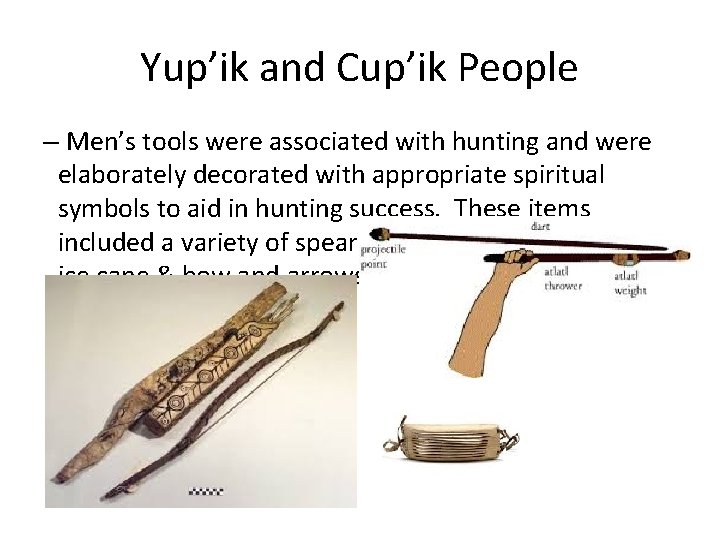
Perhaps the most iconic Yupik hunting tool, the harpoon was used primarily for hunting marine mammals like seals, walruses, and whales. The harpoon consisted of a long shaft, a detachable harpoon head (often made of bone or ivory), and a line attached to the head. When the harpoon struck its target, the head would detach from the shaft and embed itself in the animal, while the hunter retained control via the line.
Spears were used for hunting a variety of animals, including caribou, fish, and birds. They typically consisted of a wooden shaft with a sharpened stone or bone point. Spears were often thrown or thrust at close range.
Bows and arrows were essential for hunting land animals and birds. Yupik bows were typically made of wood, reinforced with sinew. Arrowheads were crafted from stone, bone, or antler, and fletched with feathers for accuracy.
Specifically designed for hunting birds, bird darts were smaller and lighter than spears. They often had multiple points to increase the chances of hitting a moving target. These darts were crucial for supplementing the Yupik diet with avian resources.
Snares and traps were used to capture small game like rabbits, foxes, and ptarmigan. These devices were typically made from sinew, bone, or wood, and were strategically placed in areas where animals were likely to travel.

While not strictly a hunting tool, the ulu was indispensable for processing game. This crescent-shaped knife was used by women to skin animals, cut meat, and prepare hides. Its versatile design made it an essential tool for daily life.
Construction Techniques: Ingenuity in Action
Bone, ivory, and wood were meticulously carved using stone tools and antler chisels. Intricate designs and precise shaping were essential for creating functional and effective tools.
Sinew was used extensively to lash and bind different components together. This technique provided strength and flexibility, allowing tools to withstand the rigors of hunting.
Notches and grooves were carefully cut into tool components to create secure joints and prevent slippage. This ensured that the tools remained intact during use.
Seal oil and other natural substances were used to waterproof wooden and hide components. This protected the tools from the elements and extended their lifespan.
Cultural Significance: More Than Just Tools
Yupik hunting tools were more than just implements for survival; they held deep cultural significance. They were often adorned with intricate carvings and designs that reflected the hunter’s personal beliefs and connection to the animal world. Tools were passed down through generations, carrying with them the knowledge and spirit of their previous owners.
Hunting itself was a deeply spiritual activity. Yupik hunters believed that animals willingly gave themselves to be hunted, and they treated their prey with respect. They performed rituals to honor the animals’ spirits and ensure future hunting success. The tools used in these hunts were imbued with this same respect and reverence.
Preservation and Adaptation in the Modern Era
While modern hunting tools have become more prevalent in Yupik communities, traditional tools and techniques are still valued and practiced. Efforts are being made to preserve this cultural heritage through museum exhibits, educational programs, and community workshops. Some Yupik artisans continue to craft traditional hunting tools, both for practical use and as a way to connect with their ancestors.
Furthermore, the ingenuity and resourcefulness of Yupik toolmaking have inspired modern innovations in outdoor gear and survival equipment. The principles of lightweight design, durable materials, and efficient functionality, which were central to Yupik tool design, are still relevant today.
Answering Common Questions (People Also Ask)
What materials were traditionally used to make Yupik hunting tools?
Yupik hunters primarily used bone, ivory, wood, stone, and animal hides to create their tools. These materials were readily available in the Arctic environment and possessed the necessary strength and durability.
How were Yupik harpoons constructed?
Yupik harpoons consisted of a long shaft, a detachable harpoon head (often made of bone or ivory), and a line attached to the head. The detachable head allowed the hunter to maintain control of the animal after it was struck.
What was the significance of hunting in Yupik culture?
Hunting was deeply intertwined with Yupik spirituality and survival. Animals were viewed with respect, and hunting was conducted with careful observation and sustainable practices.
Are traditional Yupik hunting tools still used today?
While modern tools are common, traditional tools and techniques are still valued and practiced in many Yupik communities. There are efforts to preserve this cultural heritage through various initiatives.
What is an ulu, and what was it used for?
An ulu is a traditional crescent-shaped knife used by Yupik women. It was used for a variety of tasks, including skinning animals, cutting meat, and preparing hides.
Conclusion: A Legacy of Ingenuity and Resilience
Yupik traditional hunting tools represent a remarkable feat of engineering and adaptation. They reflect the Yupik people’s deep understanding of their environment, their resourcefulness in utilizing available materials, and their profound respect for the animal world. These tools are not merely artifacts of the past; they are a testament to the enduring spirit and ingenuity of the Yupik people, a legacy that continues to inspire and inform us today. By understanding the history and significance of these tools, we gain a deeper appreciation for the rich cultural heritage of the Arctic and the remarkable ability of humans to thrive in even the most challenging environments.
The knowledge embedded in these tools and the hunting practices surrounding them also provide valuable lessons in sustainability and resource management, crucial considerations for navigating the challenges of the modern world.
- Yupik hunting tools were crafted from locally sourced materials like bone, ivory, wood, and stone.
- Each tool was designed for a specific hunting purpose, showcasing remarkable ingenuity.
- Hunting held deep cultural and spiritual significance in Yupik society.
- Traditional toolmaking techniques are being preserved and adapted in the modern era.


