
The vast, often challenging landscapes of the Arctic have shaped the cultures of its indigenous peoples in profound ways. Among them, the Yupik people of southwestern Alaska stand out for their rich artistic traditions, particularly their exquisite traditional adornments. These are far more than mere decorations; they are powerful expressions of identity, spirituality, status, and an intimate connection to the natural world.
For the Yupik, every piece of adornment – be it a finely carved labret, a beaded necklace, or an embellished piece of clothing – tells a story. These objects serve as tangible links to ancestors, community, and the spiritual realm, reflecting a worldview where art and life are inextricably intertwined.
The Heart of Yupik Culture: Adornments as Identity and Storytelling
Yupik traditional adornments are deeply embedded in the cultural fabric, acting as visual narratives of a person’s life, achievements, and lineage. They communicate social standing, spiritual beliefs, and even personal journeys, making them vital components of individual and collective identity.
Unlike purely aesthetic jewelry, Yupik pieces often carried specific meanings, symbols, and protective qualities. They were integral to ceremonies, daily life, and rites of passage, marking significant milestones from birth to adulthood.
Natural Materials: A Deep Connection to the Land and Sea

The materials used in Yupik adornments are a direct testament to their ingenuity and profound respect for their environment. Living in a region abundant with marine life and specific land resources, Yupik artists masterfully transformed raw materials into objects of beauty and power.
Common materials include ivory from walrus tusks, bone, driftwood, dentalium shells, feathers, animal teeth, claws, and various types of stone. Each material was chosen not only for its aesthetic qualities but also for its inherent properties and symbolic associations.
For instance, walrus ivory, prized for its durability and smooth finish, often represented the strength and spirit of the walrus itself. Dentalium shells, traded from distant coastal regions, were a sign of wealth and connection to broader networks.
Symbolism and Spiritual Significance in Yupik Artistry
Every design, motif, and material in Yupik adornments holds layers of symbolism. Animals, particularly those central to their subsistence like seals, caribou, and birds, are frequently depicted, often in stylized forms that capture their essence rather than just their physical appearance.
These representations were believed to imbue the wearer with the animal’s spirit or protective qualities. Shamans, in particular, utilized adornments as part of their spiritual regalia, believing they aided in communication with the spirit world and enhanced their healing powers.
Geometric patterns, lines, and dots also carried specific meanings, often representing natural phenomena, celestial bodies, or abstract concepts related to balance and harmony within the Yupik worldview. The placement of these symbols was as important as the symbols themselves.
Types of Yupik Traditional Adornments
Yupik adornments encompassed a wide array of items, each serving distinct purposes and reflecting sophisticated artistry. These included facial adornments, body jewelry, and elaborately decorated clothing.
Labrets (Lip Plugs): A Mark of Identity and Status
Perhaps the most striking and culturally significant Yupik adornments were labrets, or lip plugs. These were worn by both men and, less commonly, women, inserted into perforations made in the lower lip or cheeks. The practice dates back thousands of years and was widespread across Arctic cultures.
Labrets varied greatly in size, material, and design. Early labrets were often simple bone or stone plugs, while later, more elaborate versions featured carved ivory, obsidian, jade, or even glass beads. Their size and ornamentation often signified a person’s age, social status, and achievements, with larger, more intricate labrets worn by respected hunters or elders.
The process of wearing labrets began in adolescence, marking a transition into adulthood and demonstrating resilience. While largely discontinued due to external influences, the labret remains a powerful symbol of traditional Yupik identity and heritage.
Earrings and Ear Adornments
Earrings were another common form of adornment, often crafted from carved ivory, bone, or dentalium shells. They could be simple pendants or elaborate clusters of beads and carved figures, dangling from pierced earlobes.
These pieces often mirrored the motifs found in other adornments, incorporating animal figures or geometric patterns. They were worn by both genders, contributing to the overall visual storytelling of an individual’s appearance.
Necklaces and Pendants
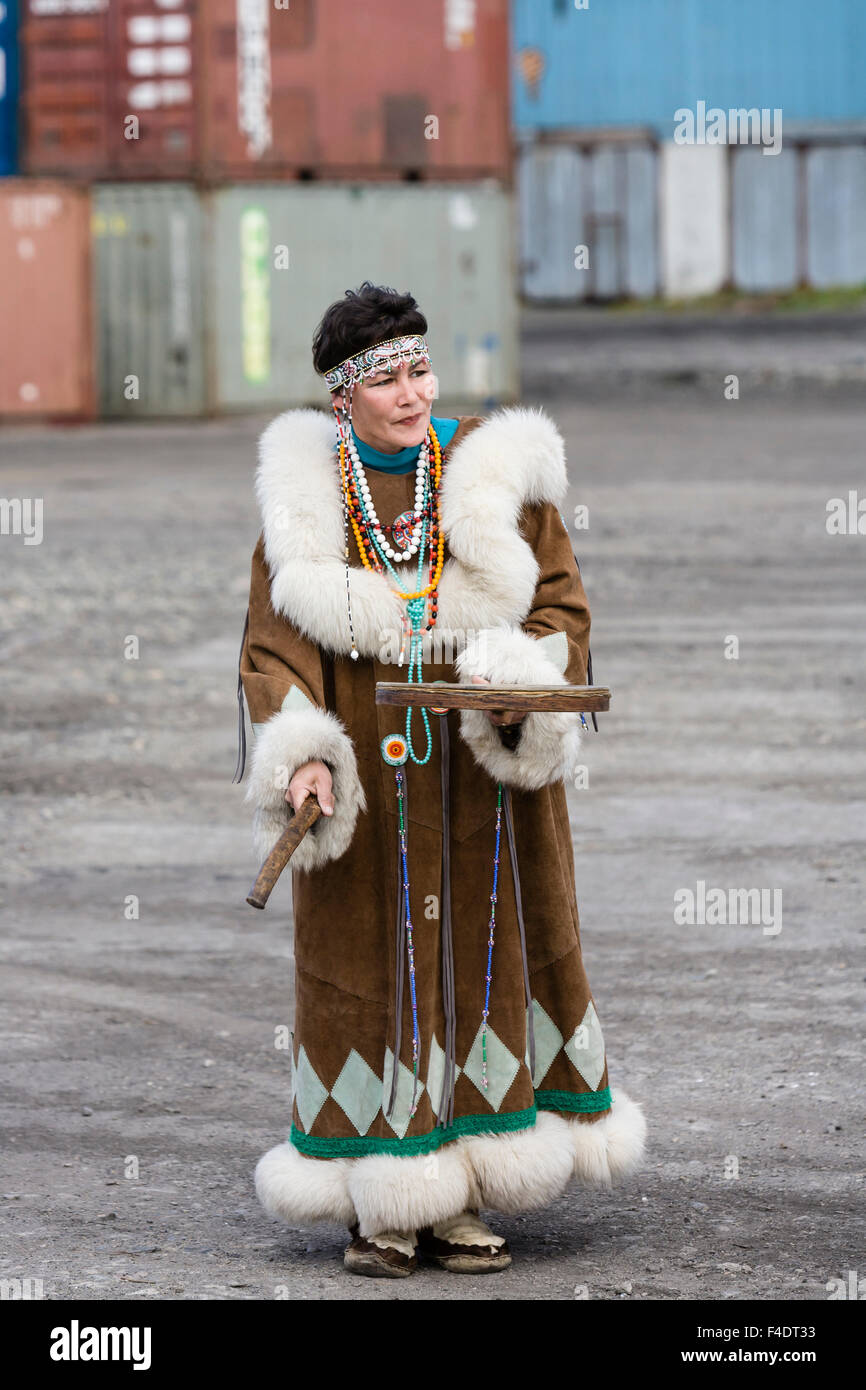
Necklaces were frequently worn, strung with a variety of natural materials. Beads, often made from carved bone, ivory, or imported glass, were highly valued. Dentalium shells, with their distinctive tubular shape, were particularly prized and incorporated into many necklaces and other decorative items.
Pendants, carved from ivory into zoomorphic or anthropomorphic shapes, were also common. These could represent guardian spirits, successful hunts, or family emblems, providing both beauty and spiritual protection to the wearer.
Headwear and Hair Ornaments
Headbands adorned with beads, dentalium shells, or carved ivory pieces were worn, particularly for ceremonial occasions. Hair ornaments, such as combs carved from ivory or bone, were not only functional but also decorative, often featuring intricate designs.
Feathers, especially from birds like eagles or owls, were also incorporated into headwear, symbolizing connection to the sky and spiritual power.
Clothing Embellishments
Yupik clothing, primarily made from animal hides and furs, was often elaborately embellished. Beads, dentalium shells, and small carved ivory pieces were sewn onto parkas, tunics, and boots, transforming functional garments into stunning works of art.
These embellishments served multiple purposes: they added beauty, denoted status, and sometimes provided additional spiritual protection. The intricate patterns created by these sewn-on decorations were often unique to families or communities.
Craftsmanship and Techniques: A Legacy of Skill
The creation of Yupik adornments demanded immense skill, patience, and an intimate knowledge of materials. Carving ivory and bone required specialized tools, often made from stone or hardened copper, and a steady hand.
Beadwork involved meticulous stringing and sewing, often in complex patterns that were passed down through generations. The entire process, from harvesting materials to the final polish, was a testament to the artists’ dedication and mastery.
Adornments in Ceremonial and Daily Life
While some adornments were reserved for significant ceremonial events, many were worn in daily life. Everyday pieces might be simpler, yet still carried cultural weight and personal meaning. Ceremonial regalia, however, would be much more elaborate, designed to impress and communicate powerful messages during dances, feasts, and spiritual rituals.
These ceremonial pieces were often vibrant, incorporating a wider range of materials and complex designs, intended to be seen and admired by the entire community.
Reflecting the Arctic Environment: A Visual Symphony
Yupik adornments are a direct reflection of their Arctic environment. The choice of materials – ivory from marine mammals, bone from land animals – speaks to the resources available and the deep understanding of their ecosystem.
The colors, often muted earth tones complemented by the stark white of ivory or the iridescence of shells, echo the natural palette of the tundra, sea ice, and vast skies. Even the forms, from streamlined animal carvings to functional tools, are inspired by the necessity and beauty of their homeland.
Historical Context and European Contact
The arrival of European traders and missionaries brought significant changes to Yupik culture, including their adornment practices. While some new materials, like glass beads, were incorporated and highly valued, other traditions, such as labret wearing, were often discouraged or suppressed.
Despite these pressures, the core artistic impulses and the desire to express identity through adornment persisted, adapting to new influences while retaining essential Yupik characteristics.
Preservation and Revitalization: Keeping Traditions Alive
In recent decades, there has been a significant movement within Yupik communities to revitalize traditional arts and crafts. Elders and cultural bearers are actively teaching younger generations the skills and knowledge required to create these adornments, ensuring their continuity.
Cultural centers and educational programs play a crucial role in preserving the techniques, stories, and spiritual meanings associated with Yupik traditional adornments. This revitalization is a powerful act of cultural sovereignty and pride.
Modern Yupik Artists and Their Legacy
Today, contemporary Yupik artists are at the forefront of this cultural resurgence. They draw inspiration from ancestral pieces, often found in museum collections or passed down through families, and infuse them with modern interpretations and techniques.
These artists are not just replicating the past; they are innovating, creating new designs that speak to contemporary Yupik experiences while firmly rooted in tradition. Their work ensures that the legacy of Yupik adornments continues to evolve and thrive.
Many modern Yupik artists utilize traditional materials like ivory, bone, and beads, but may also incorporate contemporary elements, creating stunning pieces that resonate with both traditionalists and a broader audience interested in indigenous art.
Where to See Yupik Adornments Today
For those interested in exploring Yupik traditional adornments, numerous museums worldwide house extensive collections. Notable institutions include the Anchorage Museum, the Alaska Native Heritage Center, and various ethnological museums.
These collections offer invaluable insights into the historical breadth and artistic depth of Yupik culture, showcasing pieces that span centuries of artistic endeavor. Supporting contemporary Yupik artists through galleries and cultural markets also directly contributes to the continuation of these vital traditions.
Conclusion: An Enduring Legacy of Beauty and Meaning
Yupik traditional adornments are much more than mere decorative objects; they are profound cultural artifacts that embody the spirit, history, and resilience of the Yupik people. From the powerful symbolism of carved ivory labrets to the intricate beauty of beaded regalia, each piece is a testament to an enduring connection to the land, sea, and spiritual world.
As Yupik communities continue to preserve and revitalize these ancient art forms, they ensure that the echoes of their ancestors’ identities and stories will continue to resonate, inspiring future generations and enriching the tapestry of global indigenous heritage. These adornments remain vibrant expressions of Yupik identity, bridging the past with a dynamic present and future.


