

The Silent Hunter, The Sacred Land: Unearthing Traditional Native American Hunting Methods
In the vast tapestry of human history, few relationships are as profound and enduring as that between Indigenous peoples and the natural world. For millennia, Native American tribes across North America honed a sophisticated understanding of their environment, developing hunting methods that were not merely about survival, but about a deep, reciprocal connection to the land, its creatures, and the spiritual forces that governed them. Far from being primitive, these techniques represent a pinnacle of ecological wisdom, ingenuity, and sustainable living, a testament to a philosophy where humans were not masters of nature, but an integral part of its delicate balance.
To truly comprehend traditional Native American hunting, one must first shed the modern, often industrialized, lens through which hunting is viewed. For Indigenous peoples, the act was steeped in reverence, ceremony, and a profound respect for the animal whose life was taken. "It was not merely a pursuit of sustenance; it was a sacred dialogue," explains Dr. Daniel Wildcat, a Yuchi member and professor, emphasizing the spiritual reciprocity inherent in the hunt. Animals were seen as relatives, their spirits honored, and their sacrifice acknowledged through prayer and ritual. The concept of the "Honorable Harvest" dictated that hunters take only what was needed, waste nothing, and express gratitude for the gift of life provided by the animal. This ethical framework ensured sustainability long before the term entered modern lexicon.
Mastering the Landscape and its Inhabitants
At the heart of these methods lay an unparalleled mastery of observation and an intimate knowledge of the land, its flora, and its fauna. Native hunters were expert trackers, capable of reading the faintest signs: a broken twig, a disturbed pebble, a subtle change in scent, or the barely perceptible shift in wind direction. They understood animal behavior with an almost telepathic insight – the migratory patterns of caribou, the bedding habits of deer, the flight paths of birds, and the precise times fish would spawn.
Camouflage was not just about blending in; it was about becoming an extension of the environment. Hunters used natural dyes, animal skins, and even mud to break up their silhouettes, often moving with such stealth that they seemed to vanish into the landscape. They mastered the art of "calling," mimicking animal sounds to lure prey closer, a skill honed through generations of listening and practice. Patience was an ultimate virtue; a hunter might wait for days, enduring harsh conditions, for the opportune moment to strike, demonstrating a discipline rarely seen in contemporary hunting.


Ingenious Tools and Technologies
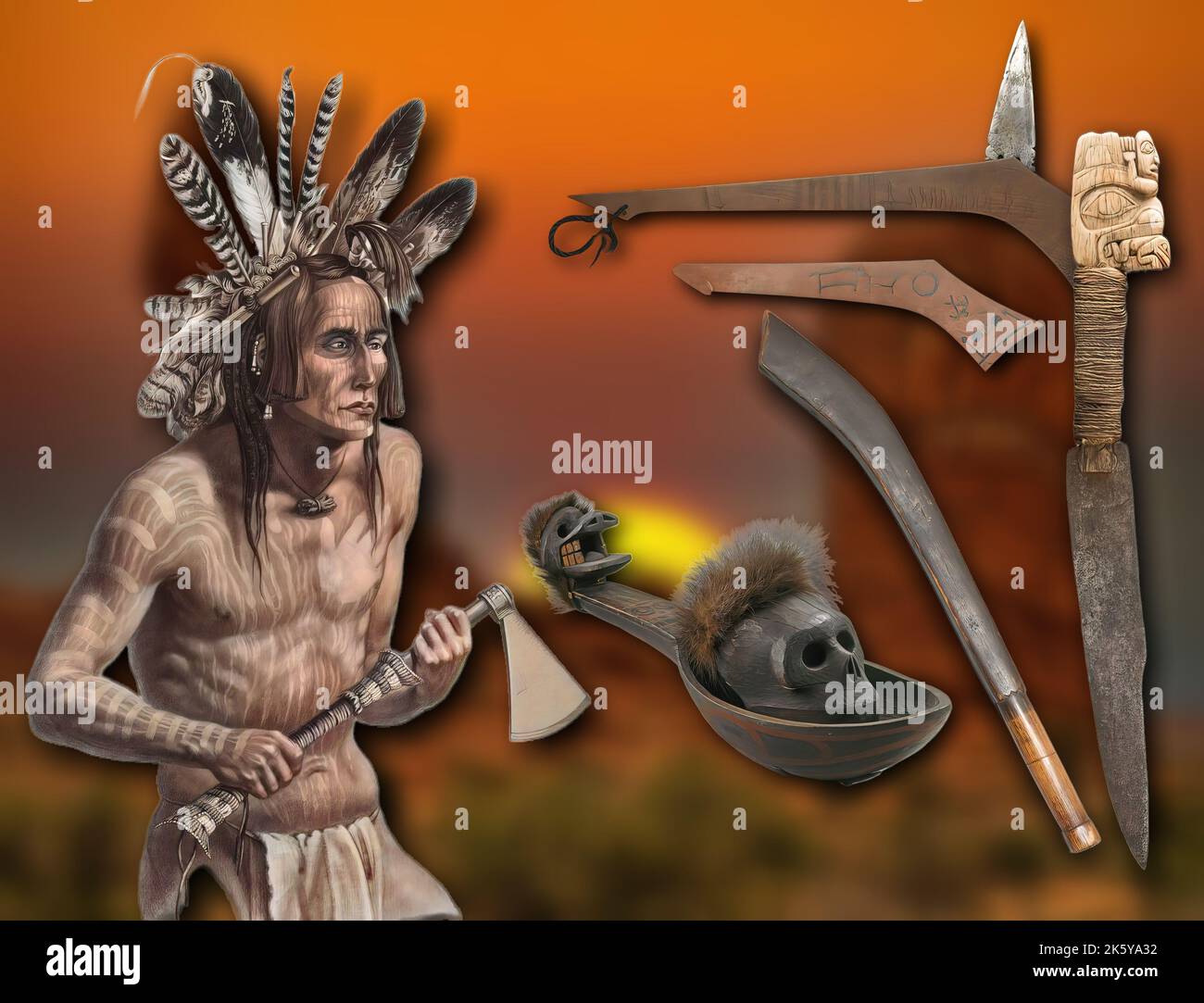
The tools employed by Native American hunters were marvels of craftsmanship and practical design, often made from materials readily available in their environment.
The Bow and Arrow: While the atlatl (a spear-thrower) predates it, the bow and arrow became the quintessential hunting tool across much of North America. Bows were crafted from resilient woods like hickory, ash, or osage orange, often reinforced with sinew for added strength and elasticity. Arrows, typically made from straight-grained wood, were fletched with feathers for stable flight and tipped with meticulously flint-knapped (or later, obsidian) projectile points. The skill involved in creating these tools – from selecting the right wood to precisely shaping the stone points – was immense, turning each weapon into a work of art and a highly effective instrument of survival.
The Atlatl: For thousands of years before the widespread adoption of the bow, the atlatl was the dominant weapon. This simple yet ingenious device, essentially a stick with a hook or socket at one end, allowed a hunter to throw a dart (a long, flexible spear) with significantly greater force and distance than by hand alone. By extending the effective length of the thrower’s arm, the atlatl imparted leverage, dramatically increasing the dart’s velocity and penetration, making it effective against large game like mammoths and bison during earlier periods.
Traps, Snares, and Nets: While large game hunting often garners more attention, smaller game, birds, and fish were crucial dietary components. Hunters utilized a variety of traps and snares, designed to capture animals without damaging their meat or pelts. Deadfall traps, pit traps, and various noose snares were strategically placed along game trails. For waterfowl, intricate nets woven from plant fibers were used, often stretched across waterways or over areas where birds roosted. Fishing methods ranged from bone hooks and lines, to elaborate weirs and basket traps in rivers, and even stunning fish with natural plant toxins in specific situations (used sparingly and with great knowledge).
Diverse Hunting Strategies: From Solitary Stalking to Communal Drives
Hunting methods varied dramatically depending on the prey, the environment, and the cultural practices of the specific tribe.
Individual Stalking and Ambush: For many Woodland tribes and hunters of solitary animals like deer or elk, individual stalking was paramount. A lone hunter, adorned in camouflage and moving silently, would track an animal for hours, sometimes days, waiting for the perfect opportunity to make a clean kill. Ambush techniques involved knowing where animals would graze, drink, or rest, and positioning oneself downwind to intercept them.
Communal Drives and Jumps: On the vast plains, where immense herds of bison roamed, communal hunts were the most efficient and culturally significant method. The most spectacular of these were the "buffalo jumps." Tribes like the Blackfeet, Crow, and Plains Cree would skillfully herd thousands of bison, using knowledge of their migratory routes and terrain, stampeding them over cliffs. Sites like Head-Smashed-In Buffalo Jump in Alberta, Canada (a UNESCO World Heritage site), bear witness to millennia of this practice. Hunters would then process the carcasses en masse, a collective effort that underscored community cohesion and provided an abundance of meat, hides, and bones for various uses. This method required meticulous planning, extensive knowledge of the landscape, and the coordinated effort of entire communities.

Other communal hunts involved surrounds, where hunters on foot or horseback would encircle a herd, gradually tightening the circle to bring the animals within range of arrows or spears. These hunts were often preceded by ceremonies and prayers to ensure success and to honor the animals.
Water-based Hunting: For coastal tribes, particularly in the Pacific Northwest, hunting extended to the marine environment. Whales, seals, and sea lions were hunted from canoes, requiring immense courage, skill, and coordination. Harpoons with detachable heads and long lines were used, and the hunt often involved multiple canoes working together to tire and dispatch the large marine mammals. Fishing, too, was a highly developed art, with tribes building elaborate weirs and traps to harvest salmon and other fish from rivers and estuaries.
The Aftermath: Respect and Utilization
The hunt did not end with the kill. The processing of the animal was as integral and ritualized as the chase itself. The "no waste" philosophy was universally practiced. Every part of the animal was utilized: meat for immediate consumption or preservation (drying, smoking, making pemmican); hides for clothing, shelters, and containers; bones for tools, needles, and weapons; sinew for bowstrings and sewing thread; antlers for tools and ornaments; organs for sustenance or medicinal purposes. This holistic approach ensured maximum benefit from each animal taken, further reinforcing the sacredness of its sacrifice.
Enduring Legacy and Modern Relevance
Today, while modern hunting methods have evolved, the spirit and wisdom of traditional Native American hunting endure. Many Indigenous communities continue to practice subsistence hunting, albeit often with modern tools, keeping alive the traditions, ceremonies, and deep respect for the land and its creatures. These methods offer invaluable lessons in sustainable resource management, ecological stewardship, and the profound interconnectedness of all life.
The traditional Native American hunter was more than just a provider; they were a philosopher, an ecologist, an engineer, and a spiritual guide, all rolled into one. Their methods were a sophisticated dance between human ingenuity and environmental harmony, a testament to a way of life that understood that true sustenance came not from conquering nature, but from living respectfully within its embrace. In a world grappling with environmental degradation and resource depletion, the ancient wisdom of the silent hunter and the sacred land offers not just a glimpse into the past, but a profound blueprint for a more sustainable future.


