
Nestled at the base of the sacred Taos Mountain in Northern New Mexico, the Taos Pueblo Reservation stands as a profound testament to resilience, tradition, and a continuous living history spanning over a millennium. It is not merely a historical site but a vibrant, active community where the Taos Native American people have preserved their ancestral way of life for generations.
This remarkable settlement offers a unique window into indigenous culture, serving as a powerful reminder of the enduring spirit and deep connection to the land held by its inhabitants. Unlike many historical sites, Taos Pueblo is a dynamic, inhabited village, making any visit a truly immersive and educational experience.
The Pueblo’s distinctive adobe architecture, spiritual traditions, and self-governance principles are central to its identity. Understanding Taos Pueblo requires appreciating its multifaceted nature: a home, a cultural beacon, and a symbol of indigenous sovereignty.
Historical Significance: Unveiling the Ancient Roots
The history of Taos Pueblo is as deep and layered as the adobe walls that define it. Archaeological evidence suggests continuous habitation for over 1,000 years, making it one of the oldest continuously inhabited communities in North America. Its strategic location, near the Red Willow Creek and at the foothills of the Sangre de Cristo Mountains, provided both sustenance and defense.
For centuries, the Pueblo people lived in harmony with their environment, developing sophisticated irrigation systems and agricultural practices. Their rich oral traditions recount migrations, encounters, and the development of their unique cultural identity long before European contact.
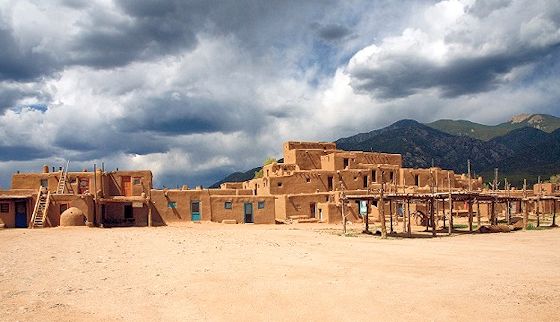
In recognition of its outstanding universal value, Taos Pueblo was designated a UNESCO World Heritage Site in 1992. This prestigious status acknowledges its unique cultural landscape, architectural integrity, and the ongoing preservation of its traditional way of life, making it a pivotal historic landmark globally.
Architectural Marvel: The Iconic Adobe Structures
The most striking feature of Taos Pueblo is undoubtedly its multi-storied residential compounds, constructed entirely from sun-dried adobe bricks. These iconic structures, often photographed and admired, are built from earth, straw, and water, reflecting an ancient, sustainable building technique passed down through generations.
The main dwelling, referred to as Hlauuma (North House) and Hlaanda (South House), are massive, communal buildings that once housed thousands of people. These structures are not merely houses; they are living testaments to communal living and architectural ingenuity, designed to be both functional and protective.
Traditionally, entry to the upper floors was via ladders, which could be pulled up for defense against invaders. Today, while some ground-floor doors have been added for convenience, the essence of this traditional design remains, connecting residents to their ancestors’ practices.
The absence of electricity and running water within the ancient walls further emphasizes the commitment to preserving a traditional lifestyle, allowing visitors to glimpse a world largely untouched by modern conveniences.
A Living Culture: Traditions and Daily Life
Life within Taos Pueblo revolves around a profound respect for ancestral customs, spiritual practices, and the natural world. The community maintains a strong sense of unity, with family and communal obligations at the forefront of daily existence.
The Taos people speak Tiwa, an ancestral Tanoan language, alongside English. Efforts to preserve the Tiwa language are paramount, as it is a vital component of their cultural identity and a direct link to their heritage.

Traditional ceremonies and rituals, deeply rooted in their spiritual beliefs, are integral to the community’s rhythm. While many are private and not open to the public, their existence underscores the ongoing vitality of Taos Pueblo’s spiritual heartbeat.
Art and craftsmanship also play a significant role. Taos Pueblo artisans are renowned for their traditional pottery, intricate jewelry, and beautiful weaving. These crafts are not just economic activities; they are expressions of cultural identity and continuity.
Governance and Sovereignty: Self-Determination
Taos Pueblo operates as a sovereign nation, governed by its own tribal council and a Governor elected annually. This self-governance model is crucial for maintaining their cultural integrity and making decisions that reflect the best interests of their community.
The Pueblo’s commitment to self-determination has been a long and often challenging journey, marked by persistent efforts to protect their land, water rights, and cultural autonomy. Their success in retaining control over their ancestral lands, including the sacred Blue Lake, is a powerful example of indigenous rights advocacy.
Spiritual Heartbeat: Sacred Lands and Beliefs
The spiritual life of Taos Pueblo is deeply intertwined with its surrounding landscape, particularly Taos Mountain and Blue Lake. These sites are considered sacred, central to their creation stories, ceremonies, and overall worldview.
The connection to the land is not merely physical but spiritual, guiding their stewardship of natural resources and shaping their understanding of life itself. Visitors are reminded of this profound reverence, with strict guidelines in place to ensure the sanctity of these areas.
Economic Landscape: Sustaining a Legacy
While maintaining their traditional way of life, Taos Pueblo has also adapted to modern economic realities. Tourism is a primary economic driver, providing income that supports the community and its cultural preservation efforts.
Visitors can purchase authentic Taos Pueblo crafts directly from the artisans, supporting local families and ensuring the continuation of these valuable traditions. This direct engagement fosters a deeper appreciation for the culture and the skill involved.
Planning Your Visit: Respectful Engagement
Can you visit Taos Pueblo? Yes, Taos Pueblo welcomes visitors, but it is crucial to remember that you are entering a living, sacred community. Respectful conduct is paramount to ensure a positive experience for both visitors and residents.
Upon arrival, visitors check in at the visitor center, where they can often arrange for a guided tour led by a Pueblo member. These tours provide invaluable insights into the history, culture, and daily life of the community.
Important visitor guidelines include:
- Photography: Always ask permission before photographing individuals. Certain areas, like the cemetery and specific ceremonial sites, are strictly off-limits for photography.
- Respect Private Homes: Do not enter residential areas without an invitation.
- Silence and Reverence: Be mindful of your noise level, especially during ceremonies or religious observations.
- No Smoking or Alcohol: These are prohibited within the Pueblo.
- Leave No Trace: Help preserve the pristine environment.
By adhering to these guidelines, visitors contribute to the preservation of Taos Pueblo’s unique heritage and demonstrate respect for its inhabitants.
Taos Pueblo vs. Taos Town: Understanding the Distinction
It is important to differentiate between Taos Pueblo and the nearby town of Taos, New Mexico. While geographically close, they are distinct entities. Taos Pueblo is a sovereign Native American community, while the town of Taos is a multicultural municipality with a rich history of its own, blending Native American, Hispanic, and Anglo influences.
Many visitors arrive in the town of Taos and then make the short journey to the Pueblo, experiencing both the broader regional culture and the specific indigenous culture of Taos Pueblo.
People Also Ask: Common Questions Answered
How old is Taos Pueblo? It is one of the oldest continuously inhabited communities in North America, with evidence of settlement dating back over 1,000 years.
Who lives in Taos Pueblo? The Taos Native American people, descendants of the original inhabitants, continue to live and thrive within the Pueblo.
Is Taos Pueblo still inhabited? Absolutely. It is a vibrant, living community where families reside and maintain their traditional way of life.
What language do they speak at Taos Pueblo? The primary ancestral language is Tiwa, a Tanoan language, though most residents also speak English.
What is Taos Pueblo known for? It is renowned for its ancient, multi-storied adobe architecture, its continuous habitation for over a millennium, and its commitment to preserving its unique indigenous culture and spiritual traditions.
Why is Taos Pueblo a World Heritage Site? It was designated by UNESCO for its outstanding universal value as a traditional living Native American community, its unique and well-preserved adobe architecture, and its cultural significance.
Conclusion: A Testament to Resilience and Heritage
Taos Pueblo Reservation is more than just a place; it is a living monument to human endurance, cultural richness, and unwavering spiritual connection to the land. Its ancient adobe walls whisper tales of generations, while its vibrant community continues to shape its future, rooted deeply in its past.
A visit to Taos Pueblo offers not just a glimpse into history, but an opportunity to engage with a living legacy, fostering a deeper appreciation for indigenous cultures and the importance of preserving these irreplaceable treasures for future generations. It stands as a powerful symbol of cultural preservation and a timeless reminder of human ingenuity and spiritual depth.


