
Guardians of the Spirit: The Profound and Enduring Role of Animals in Indigenous Beliefs
Beyond the rustle of leaves or the shadow of wings, for indigenous peoples across the globe, animals are not merely creatures of flesh and bone. They are revered as spiritual guides, ancestors, teachers, and powerful symbols, embodying the deep interconnectedness inherent in worldviews that predate modern civilization by millennia. This relationship is far removed from the anthropocentric lens often found in Western thought, where humanity often stands apart from, and superior to, the natural world. Instead, indigenous cultures frequently view animals as sacred kin, possessing wisdom, power, and an intrinsic right to exist, shaping everything from creation myths and healing practices to social structures and daily rituals.
This profound reverence stems from a holistic understanding of the cosmos, where every element—human, animal, plant, and land—is intricately woven into a vibrant, living tapestry. Animals are seen as carriers of spirit, embodying specific qualities and lessons that guide human behavior and understanding. Their presence in myths, ceremonies, and daily life serves as a constant reminder of humanity’s place within the greater web of life, fostering a reciprocal relationship built on respect, gratitude, and a shared existence.
North America: Bear, Eagle, Wolf, and Coyote
In North America, the bear is a creature of immense reverence, symbolizing strength, healing, and introspection. For many Indigenous nations, including the Lakota, Iroquois, and Ojibwe, the bear is a powerful medicine animal, associated with healing plants and the ability to overcome adversity. Bear medicine societies, such as those among the Iroquois, engage in healing rituals and ceremonies, drawing upon the bear’s perceived knowledge of herbs and its capacity for hibernation as a metaphor for spiritual renewal. Its quiet power and nurturing nature are often seen as lessons in balance and the importance of solitude.
Soaring high above, the eagle is almost universally revered across North America as a messenger to the Creator and a symbol of spiritual vision, courage, and wisdom. Its ability to fly closest to the heavens makes it a potent link between the earthly and spiritual realms. Its feathers, considered sacred, are often used in ceremonies, smudging rituals, and adornments for chiefs and spiritual leaders, signifying honour and a connection to the divine. The Plains tribes, such as the Cheyenne and Sioux, deeply revere the eagle, using its feathers in war bonnets and as tokens of bravery and spiritual insight.
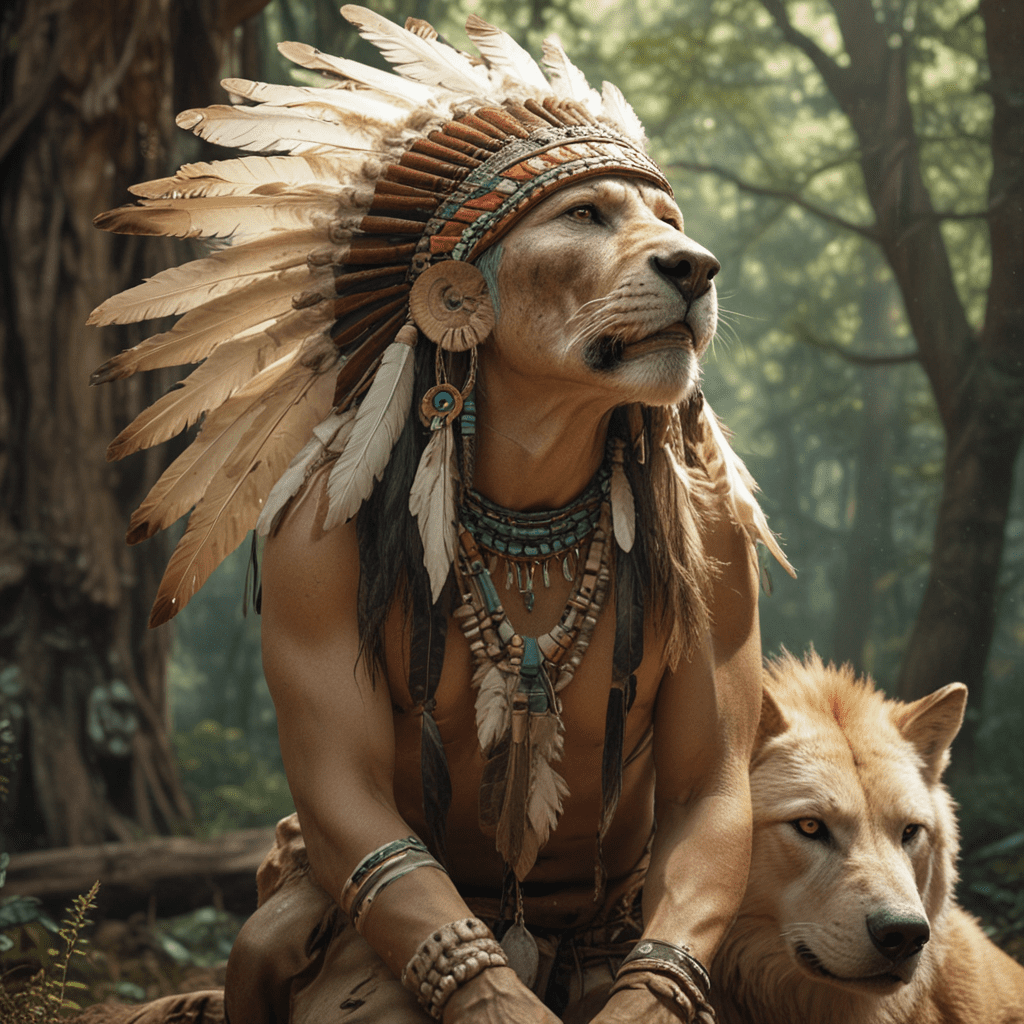
The wolf, often misunderstood in Western lore, symbolizes loyalty, teaching, and intuition in many Indigenous cultures. For the Navajo, the wolf is a pathfinder, a guide through the unknown. For others, it embodies community, the strength of the pack, and the importance of family bonds. Its keen senses and strategic hunting methods are seen as lessons in observation and collective action. Conversely, the coyote often assumes the role of the trickster, a complex figure that appears across numerous North American Indigenous narratives, from the Navajo to the Pacific Northwest tribes. Coyote’s escapades, marked by cleverness, greed, and folly, often impart crucial moral lessons about social norms, the consequences of actions, and the dualities of life, teaching through humor and sometimes harsh reality.
Along the mist-shrouded coasts of the Pacific Northwest, the Raven is the ultimate creator and transformer. For nations like the Haida, Tlingit, and Kwakwaka’wakw, Raven is a cunning, insatiably curious, and sometimes mischievous figure responsible for bringing light to the world, releasing the salmon into the rivers, and teaching humans how to live. The Kwakwaka’wakw people tell tales of Raven stealing the sun, moon, and stars from a selfish old man, bringing them to humanity. The Salmon, for its part, embodies sustenance, perseverance, and the cycle of life. Its annual return upstream against immense odds is a powerful symbol of resilience and the vital interconnectedness of all life.
Amazonian Rainforest: Jaguar and Anaconda
Deep within the verdant labyrinth of the Amazon rainforest, the Jaguar reigns supreme, a creature of unparalleled power and mystery for Indigenous communities like the Yanomami, Kayapo, and Asháninka. The jaguar is often seen as a spirit animal, a shaman’s alter ego, and a gatekeeper to the spiritual world. Its stealth, strength, and nocturnal habits link it to the hidden forces of the jungle and the realm of dreams and visions. Shamans are often believed to possess the ability to shapeshift into jaguars or to commune with their spirits to gain wisdom, protection, or healing power. The intricate patterns of its fur are sometimes mimicked in body paint and textiles, symbolizing a connection to its formidable essence.
Equally potent is the Anaconda, a creature of immense power and ancient wisdom, particularly for groups living along the Amazon’s vast river systems. Its immense size and ability to navigate both land and water make it a symbol of primordial energy, creation, and transformation. Many Amazonian myths feature the Anaconda as a creator deity or a powerful spirit responsible for shaping the landscape and guiding the flow of life-giving waters. Its shedding of skin is a powerful metaphor for rebirth and renewal.
Australia: Dreamtime Ancestors
In the ancient continent of Australia, the Dreaming stories of Aboriginal peoples are replete with animal ancestors who shaped the land, created laws, and brought life into being. The Kangaroo and Emu, iconic Australian animals, are often depicted as ancestral beings who travelled across the land, leaving their spiritual essence in the features of the landscape. Their movements and habits inform many traditional dances, ceremonies, and hunting practices.
Perhaps the most potent animal figure in Aboriginal beliefs is the Rainbow Serpent, a colossal, life-giving deity present in the creation stories of numerous groups across the continent. The Rainbow Serpent is often depicted as residing in waterholes and controlling the rain and water, thus sustaining life. It is both a creator and a destroyer, a symbol of fertility and the awesome power of nature. Its winding path across the land formed rivers and mountain ranges, its scales reflecting the colours of the rainbow, symbolizing its connection to the sky and the earth.
Africa: Elephant, Lion, and Spider

Across the diverse landscapes of Africa, animals hold equally profound spiritual significance. The Elephant, with its immense size, long lifespan, and complex social structures, is revered for its wisdom, memory, and strength by many communities, including the Maasai, Zulu, and San. It symbolizes leadership, family bonds, and a deep connection to the earth. Elephant spirits are often invoked for guidance and protection, and their tusks are sometimes used in ceremonial objects.
The Lion, king of the savannah, embodies courage, nobility, and protection. For the Maasai of East Africa, the lion is a symbol of strength and the warrior spirit. Young Maasai men traditionally demonstrate their bravery by hunting lions, though this practice has largely shifted to conservation efforts. The lion’s spirit is deeply respected, seen as a powerful force in the ecosystem and a guardian of the land.
The Spider, particularly Anansi in West African folklore, transcends its small stature to become a central figure in creation myths and trickster tales. The Ashanti people of Ghana, among others, revere Anansi as a cultural hero, a clever and mischievous character who often outwits larger, more powerful animals. Anansi is credited with bringing stories, wisdom, and knowledge to humanity, and his tales serve as moral compasses, teaching about cunning, perseverance, and the consequences of greed. He is a weaver of destinies, much like the spider weaves its intricate web.
Common Threads and Enduring Relevance
Despite the vast geographical and cultural distances separating these communities, several unifying themes emerge. Animals are consistently seen as spiritual teachers, providing guidance on how to live harmoniously with nature and each other. Their attributes – the bear’s introspection, the eagle’s vision, the wolf’s loyalty, the jaguar’s power – become archetypes for human qualities and aspirations. The concept of interconnectedness, where humans are part of, not separate from, the animal kingdom, is paramount. This worldview often translates into deep respect for wildlife and the environment, influencing sustainable practices long before the term was coined.
Oral traditions, storytelling, and ceremonial practices are the primary vehicles through which these beliefs are transmitted across generations. These narratives are not mere entertainment; they are living repositories of ecological knowledge, ethical codes, and spiritual truths. They ensure that the wisdom embodied by animals continues to guide and inform indigenous life.
However, this intricate tapestry of belief faces unprecedented threats. Habitat loss, climate change, and the encroachment of modern development endanger the very animals that are central to these spiritual traditions. Concurrently, cultural assimilation and the erosion of indigenous languages threaten the oral traditions that preserve these profound connections.
Yet, the wisdom embedded in these ancient relationships offers invaluable lessons for modern society. As Dr. Lena Petrova, an anthropologist specializing in indigenous knowledge systems, observes, "These beliefs are not mere folklore; they are sophisticated ecological and spiritual philosophies that offer a profound alternative to our often-destructive anthropocentric models. They remind us that the health of our planet is inextricably linked to our spiritual health and our respect for all forms of life."
In listening to the whispers of the wild, in understanding the sacred roles animals play in indigenous beliefs, perhaps modern society can rediscover a more balanced and respectful path forward—one that acknowledges our shared kinship with all living beings and honours the guardians of the spirit that have guided humanity for millennia. The enduring legacy of these beliefs is not just a testament to human ingenuity, but a vital reminder of our profound and enduring connection to the natural world.


