
Echoes of Creation: Unearthing the Enduring Wisdom of Native American Origin Stories
Before the written word etched history onto parchment, long before the first European sails touched American shores, the vast continent vibrated with a kaleidoscope of voices, each weaving intricate narratives of how the world, humanity, and all living things came to be. These were the creation stories of Native American peoples – not mere myths or legends, but sacred texts, philosophical treatises, and moral blueprints passed down through countless generations. They are the bedrock of Indigenous identity, connecting people to their land, their ancestors, and the very fabric of existence.
To speak of "Native American creation stories" in the singular is to commit a profound oversight. Across thousands of distinct nations, with hundreds of unique languages and cultures, there exists an astonishing diversity of origin narratives, each as unique and vibrant as the people who tell them. From the icy plains of the Arctic to the sun-drenched deserts of the Southwest, and the lush forests of the Eastern Woodlands, every landscape holds a sacred story, every people a unique genesis. Yet, despite their vast differences, these stories often share profound commonalities: a deep reverence for the natural world, a sense of interconnectedness, and a powerful moral compass.
A Tapestry of Beginnings: Emergence, Earth Divers, and Sky Beings
The sheer variety of these narratives is breathtaking. Anthropologists and ethnographers have categorized them into broad archetypes, though each tribal story remains distinct.
One prevalent type is the Emergence Narrative, particularly strong among the Pueblo peoples and the Diné (Navajo). These stories often describe humanity’s journey from a series of lower worlds, often dark and chaotic, up into the present, lighter world. The Diné, for instance, recount the emergence through four (or sometimes five) distinct worlds, each with its own lessons and challenges, guided by figures like First Man, First Woman, and Changing Woman. As they ascended, the ancestors gathered knowledge, learned to live in balance, and shed the imperfections of the previous realms.
"Our stories are maps," explains Dr. Jennifer Nez Denetdale (Diné), a professor of American Studies at the University of New Mexico. "They tell us not only where we came from, but how to live, how to be in relation to each other, and how to relate to the land." The Diné creation story, with its detailed journey through different colored worlds, mirrors the spiritual and intellectual journey of the people, emphasizing the continuous striving for Hózhó – balance, beauty, and harmony. The Sacred Mountains that define Diné territory are not just geographical markers but tangible reminders of their origin and spiritual obligations.
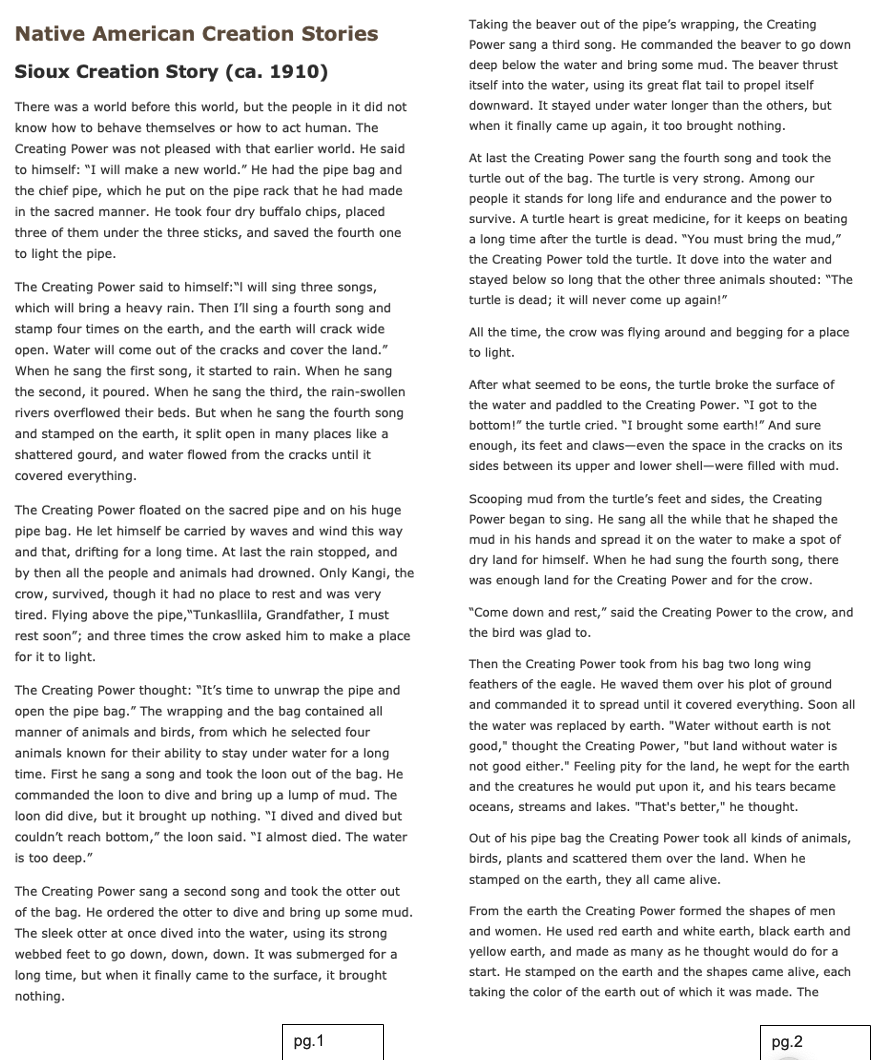
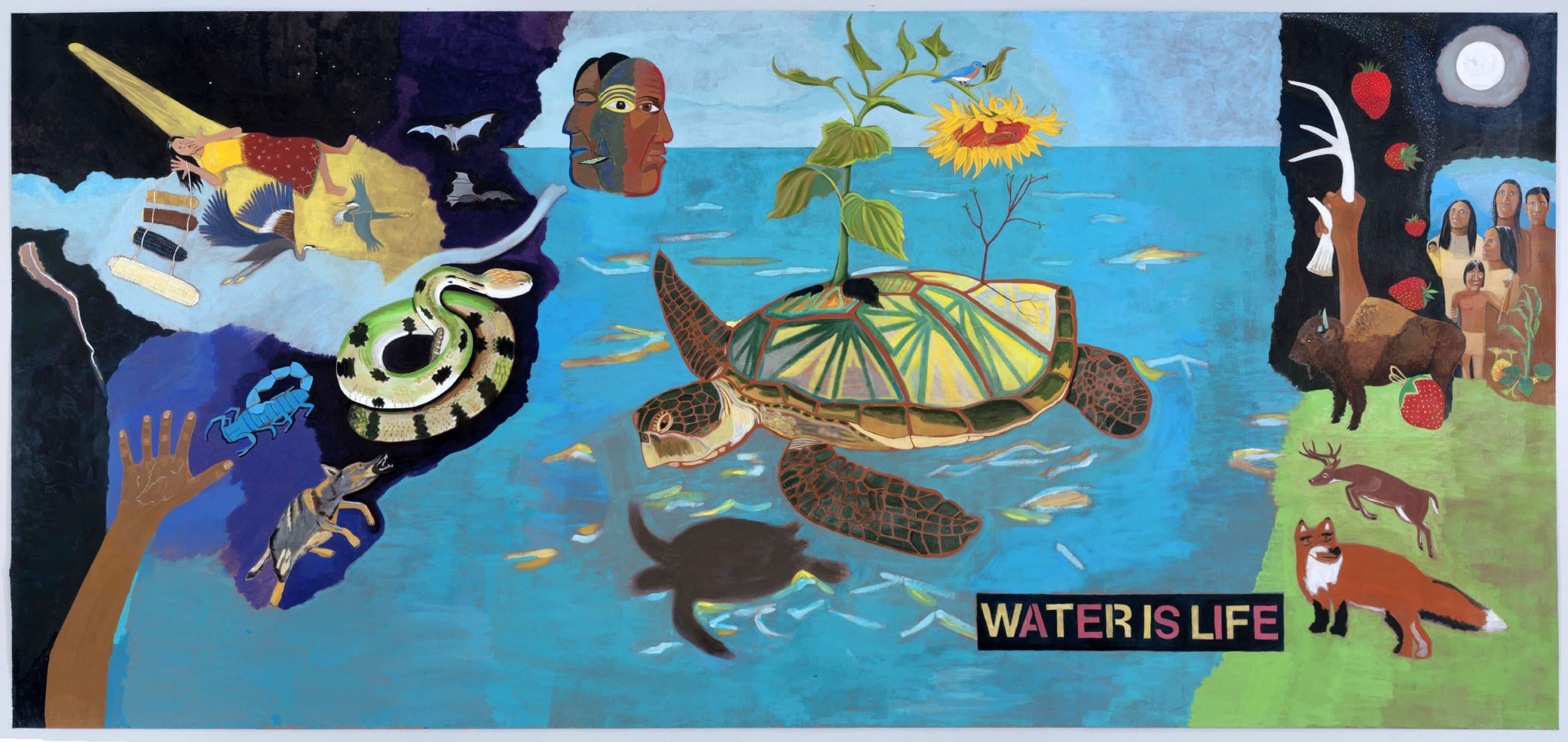
Another widespread type is the Earth Diver Narrative, common among nations of the Great Lakes and Eastern Woodlands, such as the Haudenosaunee (Iroquois), Anishinaabe (Ojibwe), and Cherokee. These tales often begin with a primordial water world. A being, often a Sky Woman, falls from an upper world. Animals, recognizing her plight, try to retrieve soil from the deep waters to create land. A small, humble creature – a muskrat, a beaver, or a turtle – often succeeds, bringing up a bit of mud which, when placed on the back of a giant turtle, expands to form the Earth. This "Turtle Island" becomes the home for all life.
The Haudenosaunee story of Sky Woman is a poignant example. Pregnant and pushed from the Sky World, she falls towards the endless water. Geese break her fall, and a giant turtle offers its back. Various animals dive to bring up mud, with the Muskrat finally succeeding. From this mud, Sky Woman plants the seeds she carried, giving birth to the first plants and eventually her daughter, who in turn gives birth to the twin brothers, Sapling (Good Mind) and Flint (Evil Mind), whose creative and destructive acts shape the world as we know it, creating both beauty and hardship. This duality is central to Haudenosaunee philosophy, acknowledging that both good and bad are necessary for balance.
Then there are stories featuring Creator Beings or World Parents, like the Lakota’s Wakan Tanka (Great Mystery), an overarching spiritual force responsible for all creation, or the various trickster figures like Coyote or Raven, who, through their often mischievous actions, inadvertently shape the world, introduce fire, or teach humans essential lessons. These trickster figures are complex; they are not inherently evil but embody both folly and wisdom, chaos and order, reflecting the unpredictable nature of life itself.
The Land as Sacred Text and Moral Compass
A unifying thread across almost all Native American creation stories is the profound, intrinsic connection to the land. The landscape is not merely a backdrop; it is a living entity, a participant in the creation, and a constant teacher. Mountains, rivers, forests, and deserts are imbued with spiritual significance, serving as tangible links to the ancestral past and the sacred narratives.
"Our land is our identity," states a prominent elder from the Blackfeet Nation. "Our stories are rooted in this land. When you take the land, you take the story, you take our identity." This sentiment resonates across Indigenous cultures. For many, specific geological formations are not just rocks and earth but the petrified remains of ancient beings, sacred sites where creation events unfolded, or places of ongoing spiritual power. The Diné, for example, view their four sacred mountains – Mount Hesperus, Blanca Peak, Mount Taylor, and San Francisco Peaks – as the boundaries of their homeland, established during the creation, each with its own sacred color and spiritual purpose.
These stories often embed moral and ethical instructions for living harmoniously with nature. They teach responsibility, respect, and reciprocity. Humans are rarely depicted as having dominion over nature but rather as an integral part of the web of life, with duties to care for all creation. The concept of "all my relations" (Mitakuye Oyasin in Lakota) reflects this profound interconnectedness, extending kinship to animals, plants, rocks, and spirits.
Purpose Beyond Origin: Law, Identity, and Survival
Native American creation stories are far more than quaint tales explaining "how things began." They serve as complex legal documents, social contracts, and profound spiritual guides. They establish tribal laws, customs, and governance structures. They define kinship systems, roles within the community, and responsibilities towards the environment and future generations.
For example, the Cherokee creation story, which involves a Buzzard creating mountains and valleys by flapping its wings over soft earth, also contains lessons about balance and moderation. Its slow drying process teaches patience and the wisdom of gradual change. The story of the first fire, brought by the water spider, teaches courage, ingenuity, and the importance of even the smallest creatures. These narratives are not static; they are living traditions, constantly reinterpreted and applied to contemporary challenges.
The telling of these stories is itself a sacred act, often reserved for specific seasons, times of day, or ceremonial contexts. They are passed down through oral tradition, from elders to youth, embodying a living history that adapts and endures. This oral tradition is a dynamic, fluid process, allowing for nuances and contextual adaptations while preserving core truths.
Resilience in the Face of Erasure
The historical context of Native American creation stories is inseparable from the trauma of colonization. European colonizers, driven by a belief in their own cultural and religious superiority, systematically suppressed Indigenous languages, spiritual practices, and traditional narratives. Children in residential schools (or boarding schools) were often forbidden to speak their native languages or tell their stories, punished severely if they did. The goal was to "kill the Indian, save the man," to erase Indigenous identity and replace it with Euro-American culture and Christianity.
Despite these devastating efforts, the stories endured. They were whispered in secret, told around campfires, and passed down through generations who risked everything to preserve their heritage. This resilience is a testament to the profound power and necessity of these narratives for Indigenous peoples’ survival and identity.
The latter half of the 20th century saw a resurgence in efforts to revitalize Indigenous cultures, including the telling and teaching of creation stories. The American Indian Religious Freedom Act of 1978, while imperfect, was a crucial step in recognizing and protecting the rights of Native Americans to practice their traditional religions and ceremonies, which are intrinsically linked to their origin stories.
Contemporary Reverberations and Universal Wisdom
Today, Native American creation stories are experiencing a vibrant renaissance. Indigenous scholars, storytellers, and cultural practitioners are actively working to preserve, document, and share these narratives with their own communities and the wider world. They are taught in tribal schools, shared at cultural gatherings, and increasingly, published in books and online, often with careful consideration for what can be shared publicly and what must remain within sacred, internal contexts.
These stories continue to inform contemporary Indigenous movements, from land back initiatives to environmental protection efforts. They provide a framework for understanding Indigenous sovereignty and self-determination, reminding people of their inherent rights and responsibilities bestowed upon them by the Creator in the beginning.
In a world grappling with environmental crises, social fragmentation, and a yearning for deeper meaning, the wisdom embedded in Native American creation stories offers profound insights. They remind us of our interconnectedness with all life, the sacredness of the Earth, and the enduring power of story to guide, heal, and inspire. They are not relics of the past but living testaments to enduring truths, echoing across millennia, inviting all to listen, learn, and reflect on our own place in the grand narrative of creation. The voices of the ancestors, carried through these timeless tales, continue to speak, offering not just an explanation of origins, but a path forward.


