
The Arctic is one of the most unforgiving environments on Earth, a land where survival hinges on profound knowledge and ingenuity. For millennia, the Inuit people have not only survived but thrived in this extreme landscape, largely due to their unparalleled ability to craft clothing that offers supreme protection against biting winds, freezing temperatures, and, critically, moisture.
This article delves into the remarkable world of Inuit waterproof clothing techniques, exploring the ancestral wisdom, sustainable materials, and intricate craftsmanship that created garments unmatched in their effectiveness. Understanding these methods offers a fascinating glimpse into indigenous technology and its enduring relevance.
At the heart of Inuit survival in the cold and wet Arctic lies their mastery of natural materials. Far from modern synthetic fabrics, traditional Inuit clothing relied entirely on resources gathered from their immediate environment, primarily the skins of marine mammals and sometimes birds or fish.
The primary challenge in the Arctic is not just cold, but also moisture. Wet clothing rapidly loses its insulating properties, leading to hypothermia. Therefore, creating garments that were not only warm but also completely waterproof was a matter of life and death.
The Cornerstone Material: Seal Skin
Seal skin was arguably the most vital material for Inuit waterproof clothing. Its natural properties – durability, flexibility, and inherent water resistance – made it ideal for constructing essential garments like parkas (akiak or anorak) and boots (kamik).
The process of preparing seal skin for clothing was labor-intensive and required immense skill. Fresh skins were carefully scraped to remove blubber and flesh, a crucial step to prevent decay and ensure flexibility.
Following scraping, the skins underwent a meticulous drying and softening process. Often, they were stretched and worked by hand, sometimes chewed, to break down the fibers and make them pliable enough for sewing without cracking in the cold.
Different types of seal skin, from various species and ages, were chosen for specific parts of garments, depending on the desired thickness, warmth, and waterproof qualities.
Ingenious Alternatives: Gut Skin
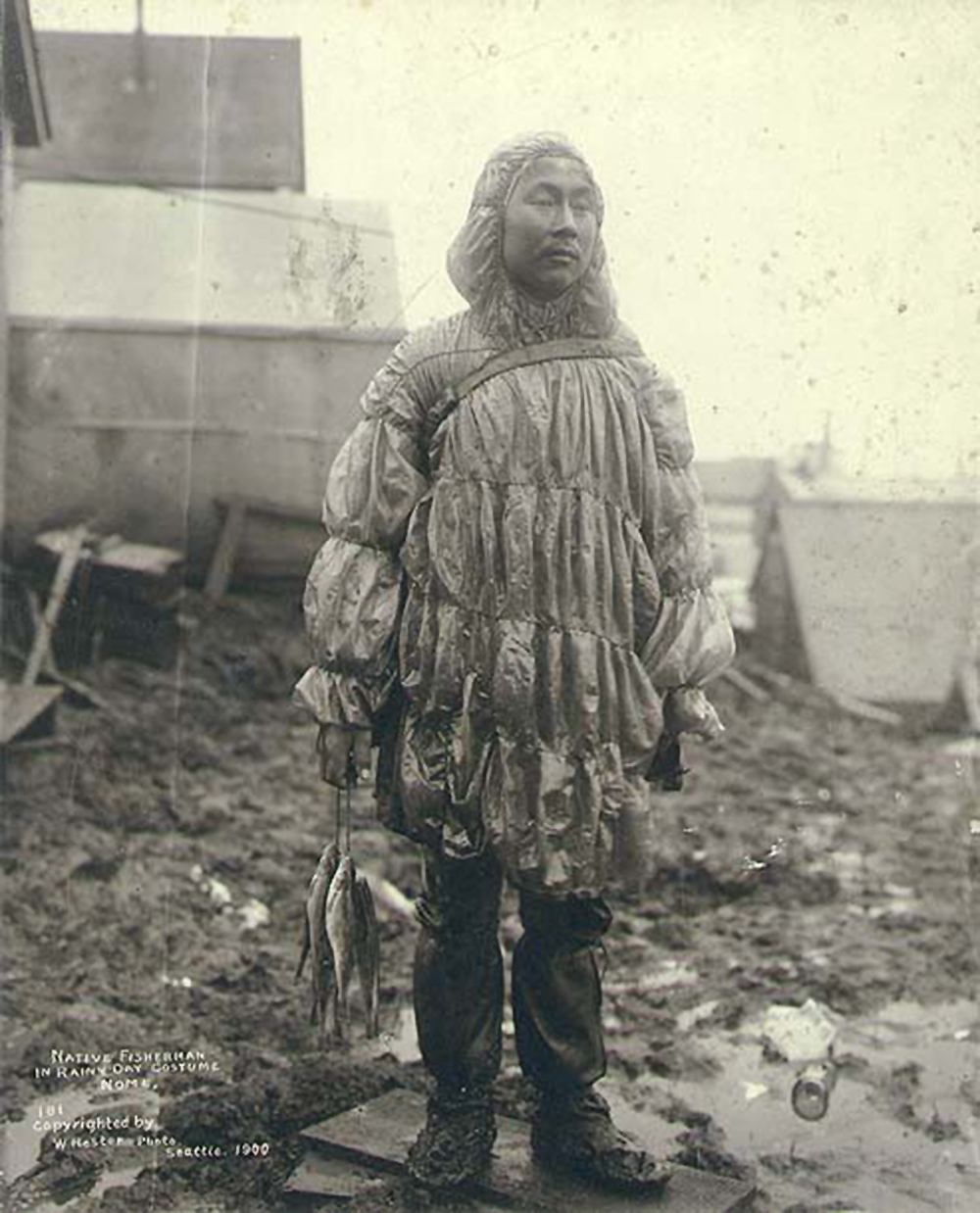
Beyond seal skin, the Inuit also utilized the intestines of seals, whales, and other marine mammals to create incredibly lightweight and transparent waterproof garments, often referred to as gut parkas (imaqtaq).
These gut skins were carefully cleaned, inflated, dried, and then cut into strips. When sewn together, they formed a fabric that was surprisingly strong, windproof, and highly waterproof, perfect for outer layers during hunting or kayaking.
The translucence of gut skin also offered an advantage, allowing some light to pass through, which was beneficial in the often dim Arctic environment.
Other Materials: Bird and Fish Skins
While less common for full garments, bird skins, particularly those from waterfowl like eiders, were sometimes used for their dense down and feathers, providing exceptional insulation. Fish skins, though fragile, were also occasionally processed and sewn for specialized uses or smaller items due to their unique properties.


The Art of Waterproof Stitching
The choice and preparation of materials were only half the battle. The true genius of Inuit waterproofing lay in their stitching techniques. A garment made from waterproof material would be useless if water could seep through the needle holes.
The most famous example is the ‘kamik stitch’ or ‘waterproof stitch’ used for boots. This technique involved two layers of skin and a piece of sinew thread. The needle would pass through the outer layer, but only partially through the inner layer, never piercing all the way through both pieces of skin that would face the exterior.
This meticulous stitching created a seam where the needle holes on the exterior were offset or completely avoided, effectively preventing water penetration. The sinew itself, when wet, would swell, further sealing any microscopic gaps.
Another technique involved using sinew (thread made from animal tendons) that was sometimes pre-waxed with animal fat or simply relied on its natural properties. When wet, sinew swells, creating a tighter seal within the stitch holes.
Seams were often reinforced with additional strips of skin, creating double seams or overlapping flaps that added another barrier against moisture. The precise tension and placement of each stitch were critical.
Layering: The Complete System
Inuit clothing was not just about a single waterproof layer; it was a sophisticated system of layering. An inner layer of fur (often caribou or polar bear) provided exceptional warmth and trapped air, while the outer waterproof layer protected against wind and moisture.
This layering system allowed for adaptability. Hunters could shed or add layers depending on their activity level and the ambient temperature, preventing overheating and subsequent chilling from sweat.
Enduring Legacy and Modern Influence
The principles behind Inuit waterproof clothing continue to inspire modern outdoor gear. While synthetic materials now dominate, the understanding of how to manage moisture, create effective barriers, and design for maximum thermal efficiency owes much to these ancestral designs.
The sustainability of traditional Inuit methods, utilizing every part of harvested animals and creating long-lasting, repairable garments, stands in stark contrast to the often disposable nature of modern fast fashion.
Today, many contemporary designers and outdoor brands study these traditional techniques to develop more effective, durable, and sometimes even more environmentally friendly products. The concept of ‘breathable waterproofing’ also finds a distant echo in the natural properties of processed animal skins.
Cultural Significance and Respect
Beyond their practical utility, these clothing techniques are deeply interwoven with Inuit culture, identity, and respect for the animals that provided sustenance and materials. The knowledge was passed down through generations, a vital part of survival and cultural heritage.
Each stitch, each prepared skin, represents a connection to the land, the animals, and the collective wisdom accumulated over thousands of years. It is a testament to human ingenuity in harmony with nature.
The precision and patience required for creating such garments speak volumes about the dedication and skill of Inuit artisans, whose work ensured the survival and comfort of their communities in one of the world’s most challenging environments.
Conclusion: A Masterclass in Arctic Adaptation
In conclusion, Inuit waterproof clothing techniques are a profound example of human adaptation and innovation. Through the skilled use of natural materials like seal and gut skin, combined with ingenious stitching methods, the Inuit developed a sophisticated system for protection against the relentless Arctic elements.
Their methods offer valuable lessons in sustainable living, material science, and the enduring power of traditional knowledge. Far from being mere historical curiosities, these techniques remain a testament to the brilliance of a people who mastered their environment through deep understanding and unparalleled craftsmanship, continuing to inspire and educate us today.
The next time you encounter modern waterproof gear, take a moment to appreciate the thousands of years of human ingenuity, epitomized by the Inuit, that laid the groundwork for our understanding of how to stay dry and warm in the harshest conditions.


