Inuit art is a testament to the resilience, creativity, and deep cultural heritage of the Inuit people. For centuries, these indigenous communities of the Arctic regions of Canada, Alaska, Greenland, and Russia have expressed their worldview, traditions, and relationship with the land through various art forms. From intricate carvings to vibrant prints and captivating sculptures, Inuit art offers a unique window into a world shaped by the harsh but beautiful Arctic environment.
This article delves into the realm of Inuit art, highlighting some of the most famous works and the talented artists behind them. We will explore the history, significance, and evolution of this art form, providing insights into the cultural context that shapes its creation.
The Historical Context of Inuit Art
Inuit art has ancient roots, with archaeological evidence suggesting artistic expression dating back thousands of years. Historically, Inuit art served practical and spiritual purposes. Carvings were often made from bone, ivory, and stone, used as tools, amulets, or representations of animals and spirits.
The arrival of European traders and missionaries in the Arctic regions during the 19th and 20th centuries brought significant changes. Inuit artists began creating art specifically for trade, adapting their traditional skills to produce carvings and other objects that appealed to the newcomers. This marked the beginning of the commercial Inuit art market.
In the mid-20th century, the Canadian government recognized the economic potential of Inuit art and encouraged its development as a source of income for Inuit communities. Art centers and cooperatives were established, providing artists with materials, training, and marketing support. This initiative played a crucial role in promoting Inuit art to a wider audience and establishing its recognition as a significant art form.
Famous Inuit Artists and Their Works
Kenojuak Ashevak (1927-2013)
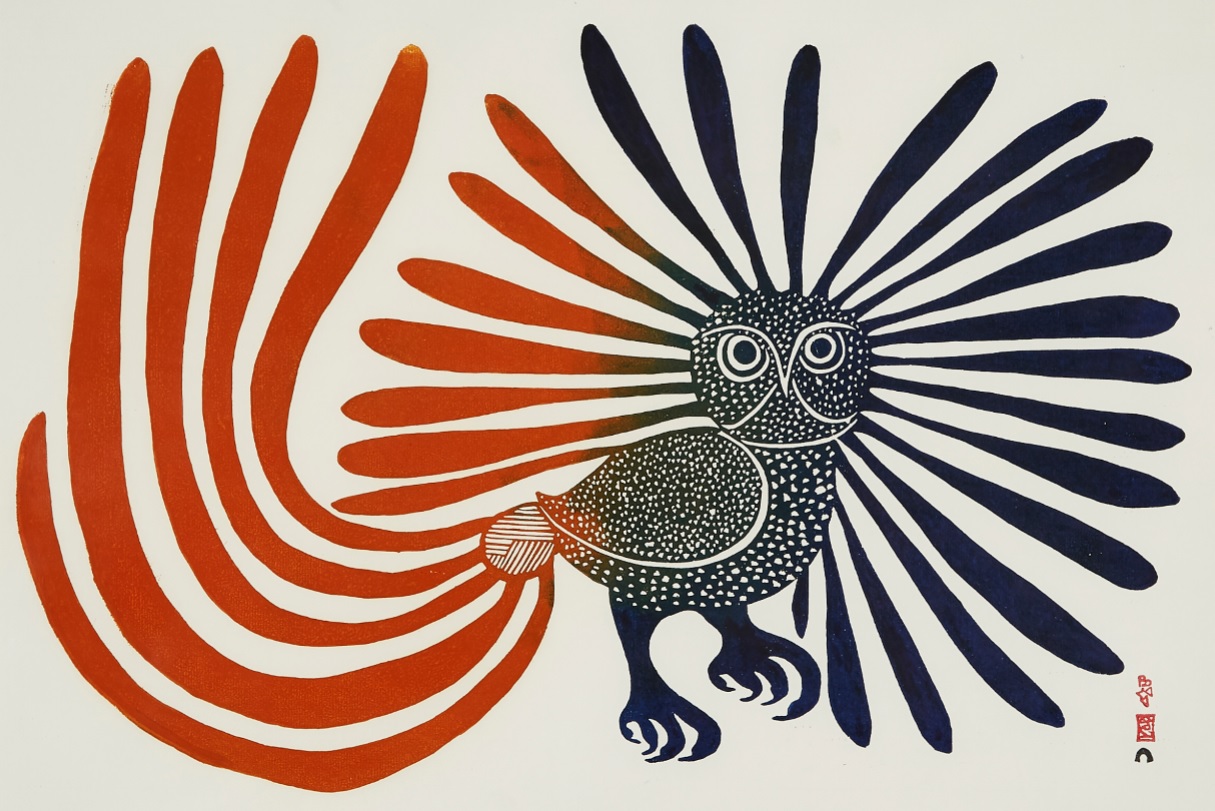
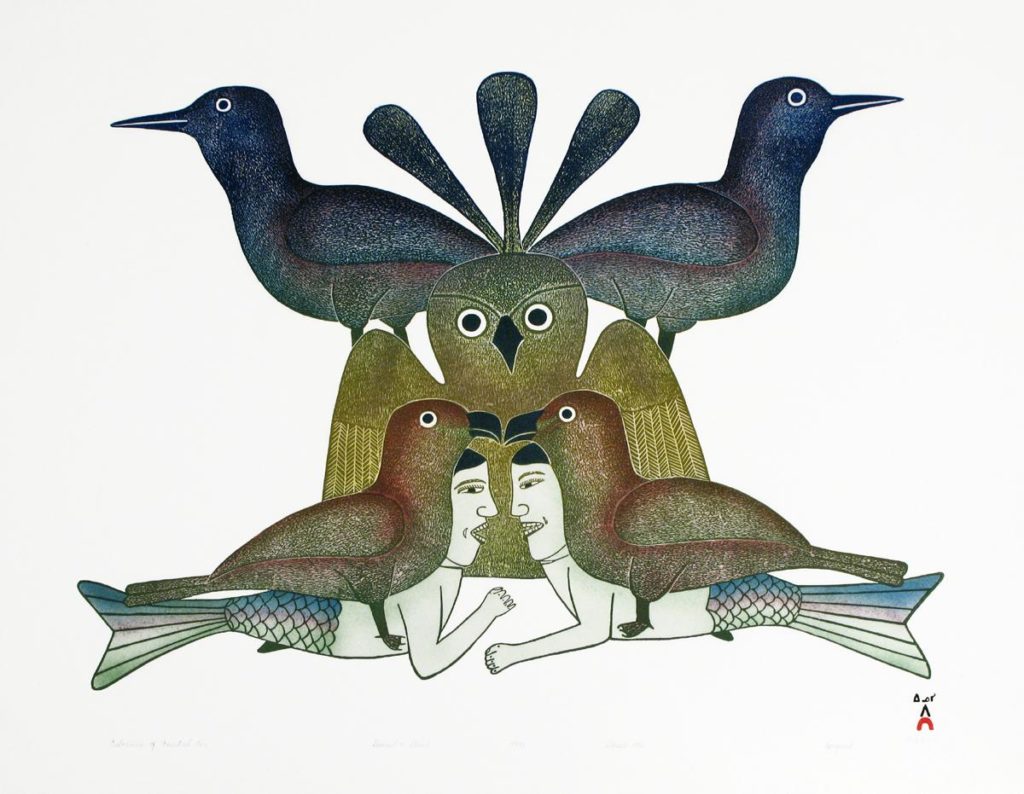
Kenojuak Ashevak is arguably the most celebrated Inuit artist of all time. Born in an Inuit camp in southern Baffin Island, she became known for her vibrant and imaginative prints. Her work often features stylized animals, birds, and human figures, rendered in bold colors and intricate patterns.
One of Kenojuak Ashevak’s most famous prints is ‘The Enchanted Owl’ (1960). This iconic image depicts a stylized owl with intricate feather patterns and a captivating gaze. The print’s vibrant colors and whimsical design have made it a beloved symbol of Inuit art.
Another notable work by Kenojuak Ashevak is ‘Rabbit Eating Seaweed’ (1959). This print showcases her ability to capture the essence of Arctic wildlife in a simple yet elegant composition.
Jessie Oonark (1906-1985)
Jessie Oonark was a renowned Inuit artist known for her large-scale felt appliqué wall hangings. Her work often depicted scenes from Inuit life, legends, and spiritual beliefs. Oonark’s bold use of color and simplified forms created visually striking and powerful images.
One of Jessie Oonark’s most famous wall hangings is ‘Composition with Animals’ (1970). This piece features a variety of Arctic animals arranged in a dynamic and colorful composition. The work reflects Oonark’s deep understanding of Inuit culture and her ability to translate traditional stories into visual form.
David Ruben Piqtoukun (born 1950)
David Ruben Piqtoukun is a contemporary Inuit sculptor known for his innovative and thought-provoking works. Born in Paulatuk, Northwest Territories, he creates sculptures from stone, bone, and antler, often incorporating elements of both Inuit and Western culture.
One of David Ruben Piqtoukun’s most famous sculptures is ‘The Shaman’s Dream’ (1984). This intricate piece depicts a shaman in a state of spiritual transformation, surrounded by animal spirits and symbolic imagery. The sculpture showcases Piqtoukun’s technical skill and his ability to convey complex themes through his art.
Lucy Qinnuayuak (1915-1982)
Lucy Qinnuayuak was a prolific Inuit graphic artist known for her whimsical and imaginative drawings and prints. Her work often featured animals, spirits, and scenes from Inuit mythology, rendered in a distinctive and playful style.
One of Lucy Qinnuayuak’s most famous prints is ‘Woman with Birds’ (1961). This charming image depicts a woman surrounded by a flock of birds, symbolizing the interconnectedness of humans and nature. The print’s delicate lines and whimsical details have made it a favorite among collectors.
Parr (1893-1969)
Parr was an Inuit artist who began his artistic career late in life, but quickly gained recognition for his powerful and expressive drawings. His work often depicted scenes from traditional Inuit life, hunting, and encounters with the spirit world.
A notable work by Parr is his untitled drawing of a hunting scene. This piece captures the intensity and drama of the hunt, showcasing Parr’s ability to convey movement and emotion through his art.
Themes and Motifs in Inuit Art
- Animals: Animals play a central role in Inuit art, representing both sustenance and spiritual significance. Common animal subjects include polar bears, seals, caribou, whales, and birds.
- Hunting: Hunting is a vital aspect of Inuit life, and hunting scenes are frequently depicted in Inuit art. These scenes often portray the skill, courage, and resourcefulness of Inuit hunters.
- Spirits and Mythology: Inuit mythology is rich with stories of spirits, shamans, and supernatural beings. These figures often appear in Inuit art, reflecting the importance of spirituality in Inuit culture.
- Family and Community: Family and community are essential values in Inuit society, and these themes are often reflected in Inuit art. Images of families, children, and community gatherings are common.
- The Land: The Arctic landscape is a constant presence in Inuit art, serving as both a backdrop and a source of inspiration. Images of ice, snow, mountains, and the sea are frequently incorporated into Inuit art.
The Evolution of Inuit Art
Inuit art has evolved significantly over time, influenced by changing social, economic, and cultural factors. While traditional techniques and themes remain important, contemporary Inuit artists are also exploring new materials, styles, and subject matter.
Some contemporary Inuit artists are incorporating modern technology into their work, creating digital art, video installations, and mixed-media pieces. Others are addressing contemporary social and political issues in their art, such as climate change, cultural identity, and social justice.
Despite these changes, Inuit art continues to be a powerful expression of Inuit culture and identity. It serves as a reminder of the resilience, creativity, and enduring spirit of the Inuit people.
Where to See Inuit Art
- The Winnipeg Art Gallery (Winnipeg, Canada)
- The Canadian Museum of History (Gatineau, Canada)
- The Art Gallery of Ontario (Toronto, Canada)
- The Smithsonian National Museum of Natural History (Washington, D.C., USA)
- The British Museum (London, UK)
In addition to these institutions, many commercial galleries specialize in Inuit art, offering a wide range of carvings, prints, and sculptures for sale.
The Importance of Supporting Inuit Artists
Supporting Inuit artists is crucial for preserving Inuit culture and ensuring the economic well-being of Inuit communities. When purchasing Inuit art, it is important to buy from reputable sources that adhere to ethical trading practices and ensure that artists receive fair compensation for their work.
Many Inuit art cooperatives and organizations work to promote and support Inuit artists. By purchasing art from these organizations, you can be confident that your money is directly benefiting the artists and their communities.
Conclusion
Inuit art is a vibrant and compelling art form that reflects the rich cultural heritage of the Inuit people. From traditional carvings to contemporary mixed-media pieces, Inuit art offers a unique perspective on the Arctic world and the human experience.
By exploring the works of famous Inuit artists and understanding the themes and motifs that characterize their art, we can gain a deeper appreciation for the resilience, creativity, and enduring spirit of the Inuit people. Supporting Inuit artists is essential for preserving their culture and ensuring their economic well-being. As you explore Inuit art, remember that you are not only acquiring a beautiful object but also connecting with a rich and meaningful cultural tradition.


