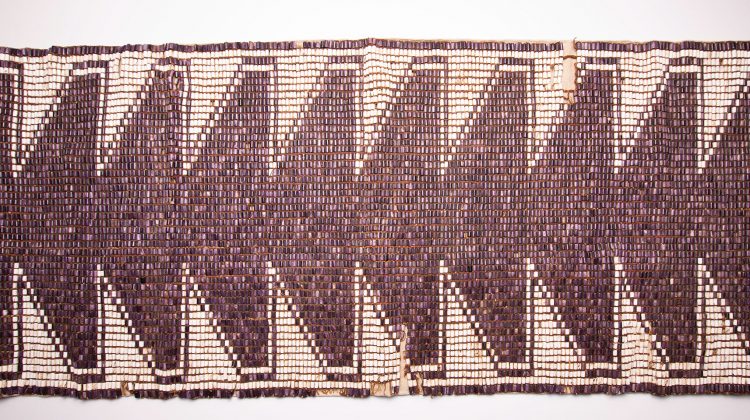
Haudenosaunee Wampum Belts: Sacred Records and Treaty Documents of the Six Nations
Far more than mere artifacts or decorative objects, Haudenosaunee wampum belts are living documents, intricate tapestries of history, law, and diplomacy woven from the very essence of the earth. For centuries, these unique creations have served as the sacred records and binding treaty documents of the Six Nations (Mohawk, Oneida, Onondaga, Cayuga, Seneca, and Tuscarora), embodying their sophisticated governance, profound spiritual beliefs, and enduring relationships with both their own people and other nations. To understand wampum is to peer into the heart of Haudenosaunee sovereignty and an unparalleled system of record-keeping.
At their core, wampum belts are meticulously crafted from cylindrical beads fashioned from the shells of marine mollusks: the white beads from the whelk shell, symbolizing peace, purity, and truth, and the purple (or black) beads from the quahog clam, representing matters of a more serious, political, or often warlike nature, as well as sky, earth, or sometimes sorrow. The painstaking process of harvesting, shaping, drilling, and polishing these tiny shell beads, often using primitive tools, underscores the immense value and reverence placed upon wampum long before they were woven into narrative belts. These beads were not simply currency, as often misinterpreted by early European settlers; they were imbued with spiritual power and cultural significance, functioning as mnemonic devices, legal instruments, and visual representations of oral traditions.
Before European contact, wampum’s primary role within Haudenosaunee society was deeply embedded in their ceremonial, legal, and political structures. Belts were exchanged to validate speeches, seal agreements, confirm kinship ties, and mark significant life events. They were central to the Condolence Council, a ceremony fundamental to the Great Law of Peace (Kaianere’kó:wa), which united the original five nations into the Haudenosaunee Confederacy. Each design, each arrangement of white and purple beads, carried specific meanings, acting as a visual language that complemented and reinforced the spoken word. "Wampum belts are our histories, our laws, and our sacred agreements woven into shell," explains a Haudenosaunee elder. "They are not merely objects; they are living testaments to our ancestors’ wisdom and our nation’s enduring spirit."
One of the most foundational and globally recognized examples is the Two Row Wampum Belt, or Guswenta. This iconic belt, dating back to 1613, records the first treaty between the Haudenosaunee and European newcomers (the Dutch). Its design is deceptively simple yet profoundly symbolic: two parallel rows of purple beads running on a field of white. The white background represents the purity of the agreement and the river of life. One purple row symbolizes the path of the Haudenosaunee people, with their canoes, their laws, and their way of life. The other purple row represents the path of the European people, with their ships, their laws, and their customs. Crucially, these two rows run parallel, never intersecting, signifying a commitment to peaceful coexistence, mutual respect, and non-interference. "The two rows in the Guswenta belt represent our paths, traveling side by side, never interfering with one another," a Haudenosaunee historian clarifies. "It’s a foundational philosophy for how we envision respectful coexistence – a nation-to-nation relationship based on sovereign equality." This principle, articulated centuries ago, remains a cornerstone of Haudenosaunee diplomatic philosophy today.
Another pivotal document is the George Washington Belt, presented by President George Washington to the Haudenosaunee in 1794. This impressive belt, measuring six feet long, signifies the Canandaigua Treaty, an agreement that affirmed Haudenosaunee land rights and sovereignty in what is now upstate New York. Its intricate design features human figures holding hands, representing the unity and friendship between the Haudenosaunee and the United States, along with a longhouse, a central symbol of Haudenosaunee culture and communal life. The presentation and acceptance of such a belt underscored the gravity and binding nature of the agreement for both parties, though the U.S. government’s subsequent actions often failed to uphold the spirit and letter of the treaty. For the Haudenosaunee, however, the belt remains an enduring testament to their historical relationship and the unfulfilled promises made by the nascent American nation.

The Hiawatha Belt, perhaps the most sacred of all, visually represents the very formation of the Haudenosaunee Confederacy. It depicts five figures, traditionally understood to be four squares and a central tree, all connected by a continuous white line. The four squares represent the original four nations (Seneca, Cayuga, Oneida, Mohawk), with the central tree symbolizing the Onondaga Nation, where the central council fire burns and the Peacemaker planted the Great Tree of Peace. The white line signifies the unity and strength of the Confederacy, bound together by the Great Law of Peace. This belt is not merely a historical record; it is a living constitution, a perpetual reminder of the principles of peace, power, and righteousness that govern the Haudenosaunee people.
The true power of wampum belts lies not just in their physical form, but in the oral tradition that accompanies them. This is where the role of the Wampum Keepers becomes paramount. These designated individuals are entrusted with the profound responsibility of memorizing, interpreting, and "reading" the belts during councils, ceremonies, and diplomatic exchanges. They are the living archives, the voices that activate the meaning embedded within the shells. When a wampum keeper unrolls a belt, they are not simply recounting history; they are reactivating a sacred bond, reaffirming a covenant that extends through generations. The belt serves as a tangible prompt, a visual anchor for vast amounts of oral history, legal precedent, and diplomatic discourse. Without the keeper’s voice, the belt’s message remains dormant.
Throughout the colonial period, however, European settlers largely misunderstood or deliberately devalued wampum. Seeing them merely as primitive currency, or trinkets, they often failed to grasp their profound legal and historical significance. This misunderstanding led to the appropriation, theft, and sale of countless wampum belts, scattering these invaluable records across museums and private collections worldwide. For the Haudenosaunee, the loss of these belts was akin to losing sections of their national archives, their land deeds, and their constitutions.
In recent decades, there has been a significant movement towards reclamation and resurgence. Haudenosaunee communities are actively working to repatriate stolen or misplaced wampum belts from museums and private collections, striving to bring these sacred documents home. This effort is not just about physical possession; it is about revitalizing the knowledge and ceremonies associated with them. Educational programs are teaching younger generations the history, language, and cultural protocols surrounding wampum, ensuring that the ancient tradition of "reading" and understanding these belts continues. "These are not just museum pieces; they are our deeds, our constitutions, our sacred agreements," asserts a Haudenosaunee leader. "Bringing them home is about reclaiming our history, our identity, and our future."
Today, Haudenosaunee wampum belts continue to serve as powerful symbols of sovereignty, resilience, and identity. They are not relics of a bygone era but vibrant, living testaments to a sophisticated system of governance and diplomacy that predates and endures beyond colonial impositions. They remind the world of the Haudenosaunee’s enduring nationhood, their commitment to peace, and their unwavering connection to their ancestral lands and traditions. Each belt tells a story, holds a promise, and carries the weight of generations, standing as a testament to the profound wisdom embedded in the sacred records of the Six Nations.