

The terms "Eskimo" and "Inuit" are often used interchangeably, yet they carry distinct meanings, historical baggage, and cultural significance. Understanding the difference is not merely a matter of semantics; it’s about respecting the self-identification of diverse indigenous peoples of the Arctic and acknowledging the complex history of their interactions with external cultures.
At its core, the term "Eskimo" is widely considered outdated and, in many contexts, offensive, while "Inuit" is the preferred and self-designated term for many indigenous groups in Canada and Greenland. This article aims to clarify these distinctions, providing a comprehensive overview of the terminology, history, and the diverse peoples it represents.
The Origin and Evolution of "Eskimo"
The word "Eskimo" is believed to have originated from an Algonquian language (likely Cree or Montagnais), meaning "raw meat eaters" or "snowshoe netters." This etymology, regardless of its exact translation, was applied by outsiders and often carried a derogatory or othering connotation, focusing on perceived dietary habits or tools rather than self-identity.
Historically, European explorers, traders, and later, colonial administrations adopted "Eskimo" as a blanket term for all indigenous peoples inhabiting the vast Arctic regions of North America and Greenland. This broad application ignored the significant cultural, linguistic, and geographical diversity among these groups.
For decades, the term was pervasive in Western literature, anthropology, and popular culture, often perpetuating stereotypes. However, as indigenous rights movements gained momentum in the latter half of the 20th century, the problematic nature of externally imposed labels became increasingly apparent.

Why "Eskimo" is Problematic
The primary reason "Eskimo" is considered offensive by many is its external origin and the implied lack of self-determination. It was a name given to them, not chosen by them. Furthermore, its potential derogatory meaning in some Algonquian interpretations contributes to its rejection.
Many indigenous communities, particularly in Canada and Greenland, actively campaigned against its use, advocating for their own self-chosen names. The term became a symbol of colonial imposition and cultural insensitivity.
Introducing "Inuit": A Term of Self-Identification
"Inuit" (singular: Inuk) is an endonym, meaning it is the name people use for themselves. In the Inuktitut language, "Inuit" translates to "the people." This term is widely recognized and preferred by the indigenous populations of the Canadian Arctic and Greenland.
The acceptance and widespread use of "Inuit" in Canada and Greenland reflect a significant step towards decolonization and cultural affirmation. It signifies respect for their heritage, languages, and distinct identities.
In Canada, the national organization representing Inuit is Inuit Tapiriit Kanatami (ITK), which translates to "Inuit are united in Canada." This organization has been instrumental in advocating for Inuit rights and promoting appropriate terminology.
The Broader Arctic Picture: Beyond Inuit and Eskimo
It’s crucial to understand that while "Inuit" is the preferred term for many, it does not encompass all Arctic indigenous peoples. The Arctic is home to a diverse array of distinct groups, each with their own languages, cultures, and self-designations.
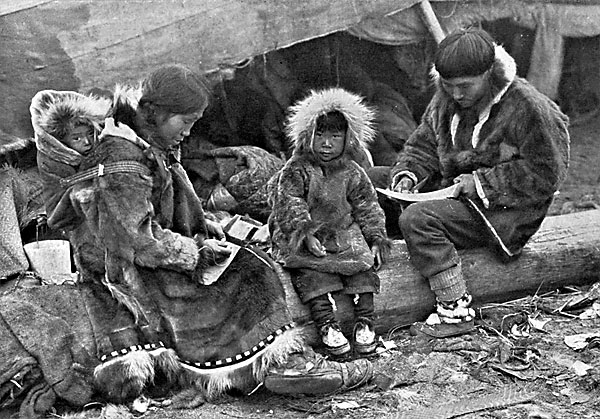

- Inuit: Primarily found in Canada (Nunavut, Nunavik, Nunatsiavut, Inuvialuit Settlement Region) and Greenland (Kalaallit). They speak various dialects of the Inuktitut language.
- Yupik: Predominantly located in Alaska and Siberia. This includes several distinct groups such as Central Alaskan Yup’ik, Alutiiq (Sugpiaq), Siberian Yupik, and Naukan Yupik. They speak languages from the Yupik branch of the Eskimo-Aleut language family.
- Iñupiat: A group of Alaskan Natives who primarily inhabit the northern and northwestern regions of Alaska. They are culturally and linguistically related to the Canadian Inuit and speak the Iñupiaq language.
- Kalaallit: The indigenous people of Greenland, who are ethnically Inuit. Their language is Kalaallisut, a dialect of Inuktitut.
Linguistic Connections: The Inuit-Yupik-Unangan (Eskimo-Aleut) Family
From a linguistic perspective, the languages spoken by Inuit, Yupik, and the Aleut (Unangan) peoples belong to the Inuit-Yupik-Unangan language family, sometimes still referred to as the Eskimo-Aleut family. This linguistic grouping acknowledges shared ancestral roots without endorsing the problematic "Eskimo" label for the people themselves.
Within this family, there are two main branches: the Aleut languages and the Eskimo languages. The Eskimo branch further divides into the Inuit languages and the Yupik languages. This distinction highlights the close relationship while recognizing separate linguistic and cultural identities.
Geographical Distribution and Cultural Diversity
The indigenous peoples of the Arctic span vast territories across four countries: Russia (Siberia), the United States (Alaska), Canada, and Denmark (Greenland). Despite shared adaptations to Arctic environments, their cultures, traditions, and socio-political histories are incredibly diverse.
For example, Alaskan Natives encompass a wide range of indigenous groups, including Yupik, Iñupiat, Aleut, Athabascan, Tlingit, Haida, and Tsimshian. While some Alaskan groups, like the Iñupiat, are closely related to Canadian Inuit, many others are not. Therefore, using "Inuit" as a blanket term for all Alaskan Natives is incorrect.
The Importance of Respectful Terminology
Using appropriate terminology is a fundamental aspect of cultural respect and reconciliation. It acknowledges the right of indigenous peoples to self-identify and to reclaim their narratives. When in doubt, it is always best to use specific group names (e.g., Inuit, Yupik, Iñupiat, Kalaallit) or to ask individuals how they prefer to be identified.
The shift from "Eskimo" to "Inuit" (and other specific terms) reflects a global movement towards greater awareness of indigenous rights and the legacy of colonialism. It encourages a more nuanced understanding of diverse cultures rather than relying on generalized, externally imposed labels.
Answering Common Questions: People Also Ask
Are there still people who identify as Eskimo? While the term is largely rejected by many indigenous organizations and individuals, especially in Canada and Greenland, some elders or communities, particularly in parts of Alaska, might still use it or be familiar with it. However, it is generally advised to avoid its use due to its controversial nature and the preference for self-identified terms.
What is the correct term for native Alaskans? "Alaskan Natives" is the most appropriate umbrella term for all indigenous peoples of Alaska. For specific groups, terms like Yupik, Iñupiat, Alutiiq, or Athabascan are used.
What about the Aleut people? The Aleut (or Unangan) are distinct indigenous people of the Aleutian Islands and parts of mainland Alaska and Siberia. They belong to the broader Inuit-Yupik-Unangan language family but are a separate cultural and linguistic group from both Inuit and Yupik.
Is it offensive to say ‘Eskimo’? Yes, for many, particularly in Canada and Greenland, it is considered offensive or at least highly inappropriate. It is best to use "Inuit" for Canadian and Greenlandic peoples, and specific group names (like Yupik or Iñupiat) for others, or the broader "Alaskan Natives" when referring to indigenous peoples of Alaska.
Conclusion: Embracing Specificity and Respect
The distinction between "Eskimo" and "Inuit" is a powerful lesson in the importance of language, history, and cultural sensitivity. While "Eskimo" served as a historical, albeit problematic, blanket term, "Inuit" represents a vital reclaiming of identity for many indigenous peoples of the Arctic.
Moving forward, it is essential to embrace specific, self-identified terminology: "Inuit" for the people of the Canadian Arctic and Greenland, "Yupik" for various groups in Alaska and Siberia, "Iñupiat" for specific Alaskan communities, and "Alaskan Natives" as a broader term for all indigenous peoples of Alaska.
By choosing our words carefully and educating ourselves on these distinctions, we contribute to a more respectful and accurate understanding of the rich and diverse cultures that thrive across the Arctic landscape.


