Echoes in the Ice: The Enduring Spiritual Tapestry of the Inuit
Far beyond the frozen horizons, where the land meets an endless expanse of ice and sky, lies a spiritual tradition as profound and resilient as the environment that shaped it. The spiritual belief system of the Indigenous peoples often broadly referred to as "Eskimo" – encompassing groups like the Inuit, Yup’ik, and Inupiat across the Arctic regions of North America and Greenland – is a sophisticated tapestry woven from animism, shamanism, and a deep reverence for the interconnectedness of all life. It is a worldview born of necessity, sustained by oral tradition, and profoundly integrated into every aspect of daily survival, hunting, and community.
At its core, Inuit spirituality is animistic. This means that spirits, or inua, are believed to inhabit not just humans and animals, but also inanimate objects, natural phenomena, and even concepts. The wind, a mountain, a stone, the sea, a tool, or a story – each possesses an inua, a life-force or soul that grants it agency and significance. This belief fosters a profound respect for the environment, viewing it not as a collection of inert resources, but as a living, breathing entity populated by conscious beings. The world is alive, teeming with spirits that can be benevolent or malevolent, helpful or harmful, depending on how they are approached and respected.
This animistic worldview mandates a life lived in constant awareness of the spiritual dimension. Every action, particularly those related to hunting and resource gathering, is imbued with spiritual significance. The success of a hunt, for instance, is not merely a matter of skill but of the animal spirit choosing to offer itself to the hunter. Therefore, gratitude, respect, and adherence to specific taboos are paramount. After a successful hunt, rituals are performed to honor the animal’s spirit, ensuring its journey back to the spiritual realm and its eventual reincarnation. These practices, passed down through generations, reinforce the cyclical nature of life and the delicate balance between humans and the natural world.
The Pantheon of Spirits: Sedna, Sila, and the Tuurngaq
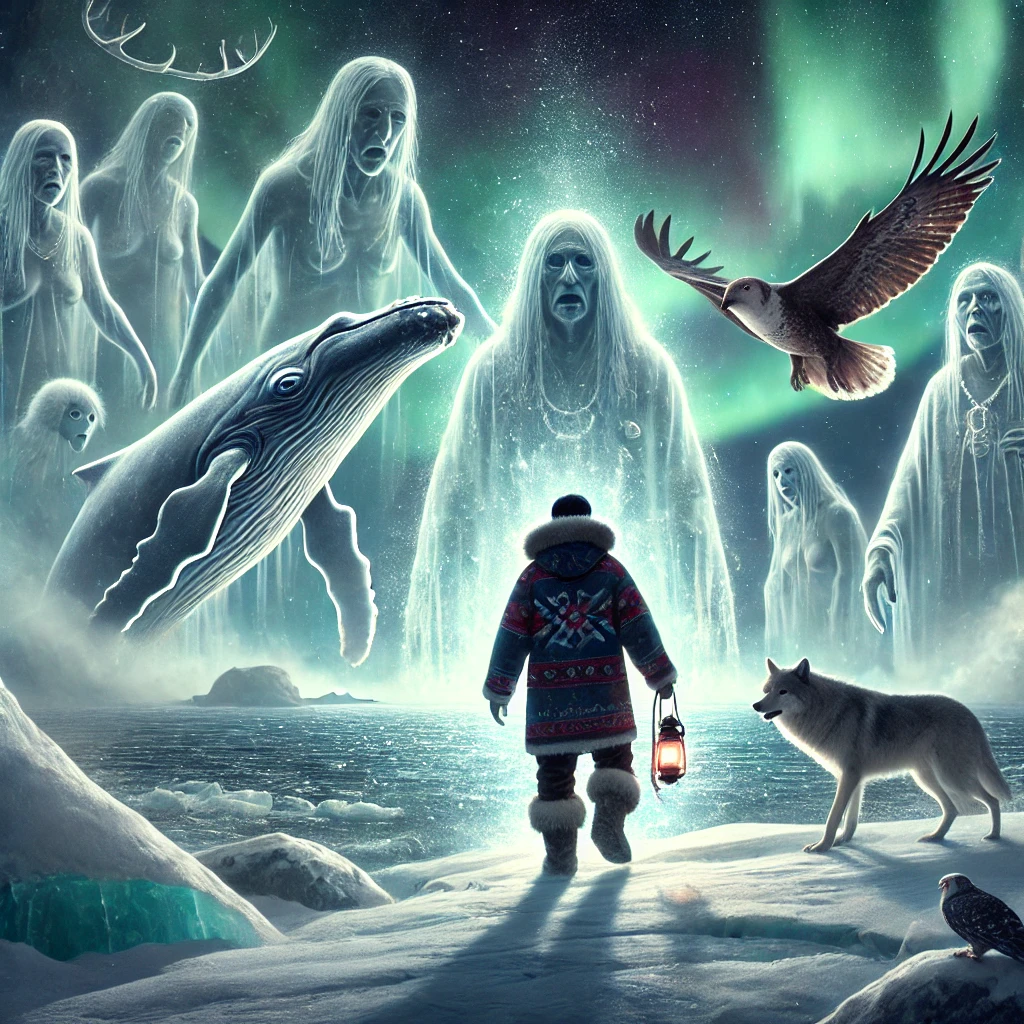
While not a formalized pantheon in the Western sense, certain powerful spirits and deities play pivotal roles in Inuit cosmology. The most prominent and universally recognized is Sedna, the Goddess of the Sea and Marine Animals. Her myth is one of the most compelling and tragic in Inuit lore, varying slightly by region but consistently describing a young woman who, through a series of unfortunate events and betrayal, is cast into the frigid ocean. In her rage and sorrow, her fingers are severed, transforming into seals, walruses, whales, and other sea creatures.
Sedna resides in the depths of the ocean, controlling the availability of marine life, which is crucial for survival in the Arctic. When hunters fail, or when sickness or famine strikes, it is often believed that Sedna is displeased, perhaps due to human transgressions or broken taboos. Her hair is said to become tangled with the spirits of dead animals and human waste, causing her pain and preventing her from releasing the sea creatures. It is the role of the angakkuq (shaman) to undertake perilous spiritual journeys to Sedna’s dwelling, comb her hair, appease her, and persuade her to release the animals once more. This central myth underscores the absolute reliance on the ocean and the critical importance of maintaining spiritual harmony.
Another significant figure is Sila, the personification of the air, weather, and the greater consciousness of the world. Sila is often seen as a vast, impersonal force, encompassing both the visible sky and the invisible breath of life. It is the spirit that provides the air we breathe, but also the devastating blizzards and the relentless cold. While not typically depicted with human-like form, Sila represents the overarching power of the environment and the need for humans to live in accordance with its rhythms and dictates.
Beyond these major figures, the spiritual landscape is populated by countless other spirits, some associated with specific places or phenomena, others known as tuurngaq (spirit helpers or familiars). These tuurngaq are often animal spirits, sometimes grotesque or hybrid creatures, that assist the angakkuq in their spiritual work. There are also malevolent spirits, like the tupilaq, a creature conjured by a sorcerer to harm an enemy, or the qallupilluk, a sea spirit said to kidnap children who wander too close to the ice edge.
The Angakkuq: Bridging Worlds
Central to traditional Inuit spirituality is the angakkuq, or shaman. These individuals are not priests in the conventional sense, but mediators between the human and spirit worlds. Their role is multifaceted and indispensable: healers, diviners, weather controllers, guardians of community well-being, and interpreters of dreams and omens.
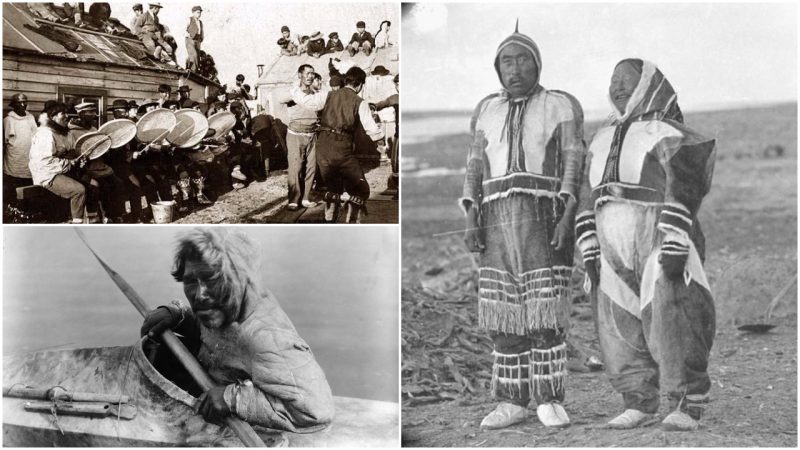
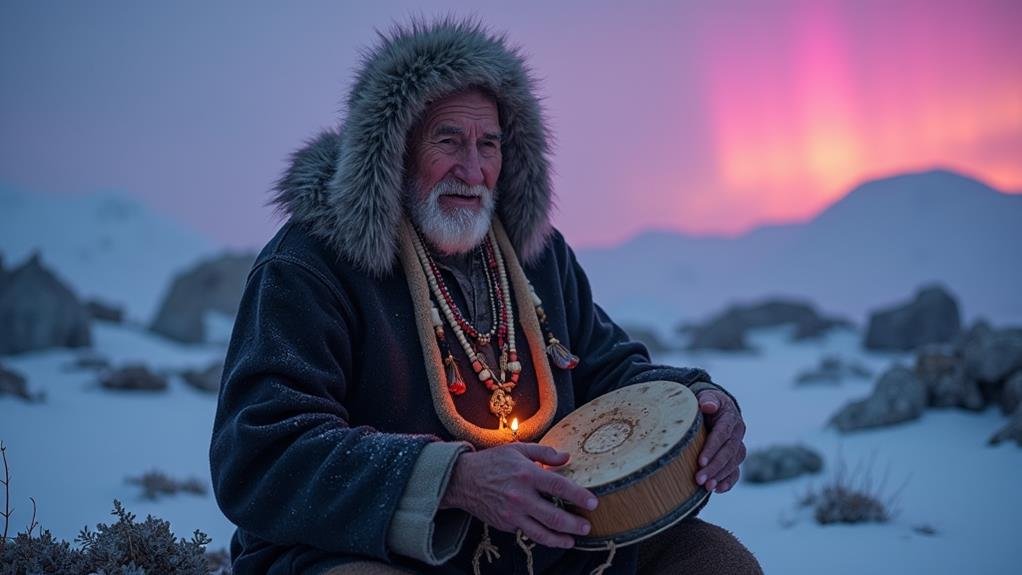
An angakkuq‘s path is often initiated by a calling, a profound spiritual experience, or a period of intense illness or solitude. Through rigorous training, often under the guidance of an older shaman, they learn to induce trance states, typically through drumming, chanting, and fasting. In these altered states, the angakkuq can embark on spiritual journeys, often depicted as flying or traveling through the earth and sea, to interact with spirits. They might seek knowledge from inua, negotiate with powerful deities like Sedna, retrieve lost souls, or battle malevolent forces causing sickness or misfortune.
The tools of the angakkuq are simple but potent: the drum, a direct link to the spirit world; songs and chants, which are specific spiritual pathways; and sometimes masks, which allow them to embody or channel specific spirits. Their power does not come from controlling spirits, but from their ability to communicate, persuade, and navigate the complex spiritual landscape on behalf of their community. The angakkuq is a figure of immense respect, but also of potential fear, as their power can be used for both good and ill.
The Human Soul and the Afterlife
Inuit beliefs about the human soul are complex. While concepts vary, many traditions recognize multiple aspects of the soul. The tarneq is often considered the vital life force, the breath, or the animating spirit. It is believed to leave the body during sleep, dreams, or shamanic journeys. Other soul-parts might be associated with a person’s name, or with specific bodily functions.
Death is seen not as an end, but as a transition. The spirit of the deceased embarks on a journey, often to an afterlife realm, which can be located in the sky, under the earth, or beneath the sea. These realms are not necessarily places of reward or punishment based on earthly deeds, but rather different existences. Some traditions speak of reincarnation, where the tarneq of a deceased person might be reborn into a new child, often indicated by specific birthmarks or personality traits. This belief reinforces the cyclical nature of existence and the enduring presence of ancestors within the community. Respect for the dead is paramount, with specific rituals and taboos observed to ensure the peaceful transition of the spirit and to prevent its lingering to cause harm.
Oral Tradition, Art, and Cultural Expression
The spiritual beliefs of the Inuit are primarily transmitted through a rich oral tradition of storytelling, myths, legends, and songs. These narratives are not mere entertainment; they are repositories of spiritual truth, ethical guidelines, historical accounts, and practical knowledge. Stories like those of Raven, the trickster and creator figure, explain the origins of the world, humans, and animals, and teach lessons about human nature and the consequences of actions. Elders, as keepers of these stories, play a vital role in educating the younger generations about their spiritual heritage.
Art, too, is deeply intertwined with spirituality. Carvings from bone, ivory, and stone depict animals, spirits, and human figures, often capturing moments of transformation or spiritual encounters. Masks, particularly in Yup’ik traditions, are elaborate and powerful ritual objects, used by shamans and dancers to embody spirits, facilitate communication with the otherworld, and bring about healing or abundance. The rhythmic drumming and chanting accompanying dances are not just performances; they are sacred acts designed to invoke spirits, create a communal spiritual experience, and honor the forces that govern their lives.
Resilience in the Face of Change
The arrival of European explorers, traders, and missionaries in the Arctic brought profound and often devastating changes to Inuit societies. The introduction of Christianity, particularly in the 19th and 20th centuries, led to the suppression of traditional spiritual practices, the demonization of angakkuq, and the erosion of ancient beliefs. Residential schools further severed generations from their cultural and spiritual roots, imposing foreign languages and religious doctrines.
Despite these immense pressures, Inuit spirituality has shown remarkable resilience. While many Inuit today identify as Christian, elements of traditional beliefs often persist, either openly or subtly integrated into their contemporary worldview. Elders have played a crucial role in safeguarding knowledge, and there is a growing movement towards cultural revitalization, with younger generations actively seeking to reconnect with their ancestral spiritual practices, languages, and stories.
The core tenets of Inuit spirituality – the profound respect for nature, the interconnectedness of all life, the understanding of a living and conscious world, and the emphasis on balance and reciprocity – remain deeply ingrained. They offer a powerful framework for understanding humanity’s place in the ecosystem, a wisdom that is increasingly relevant in an era of environmental crisis. The echoes of the inua continue to resonate in the ice, reminding us of a spiritual heritage that has allowed a people to thrive in one of the planet’s most challenging yet beautiful environments.


