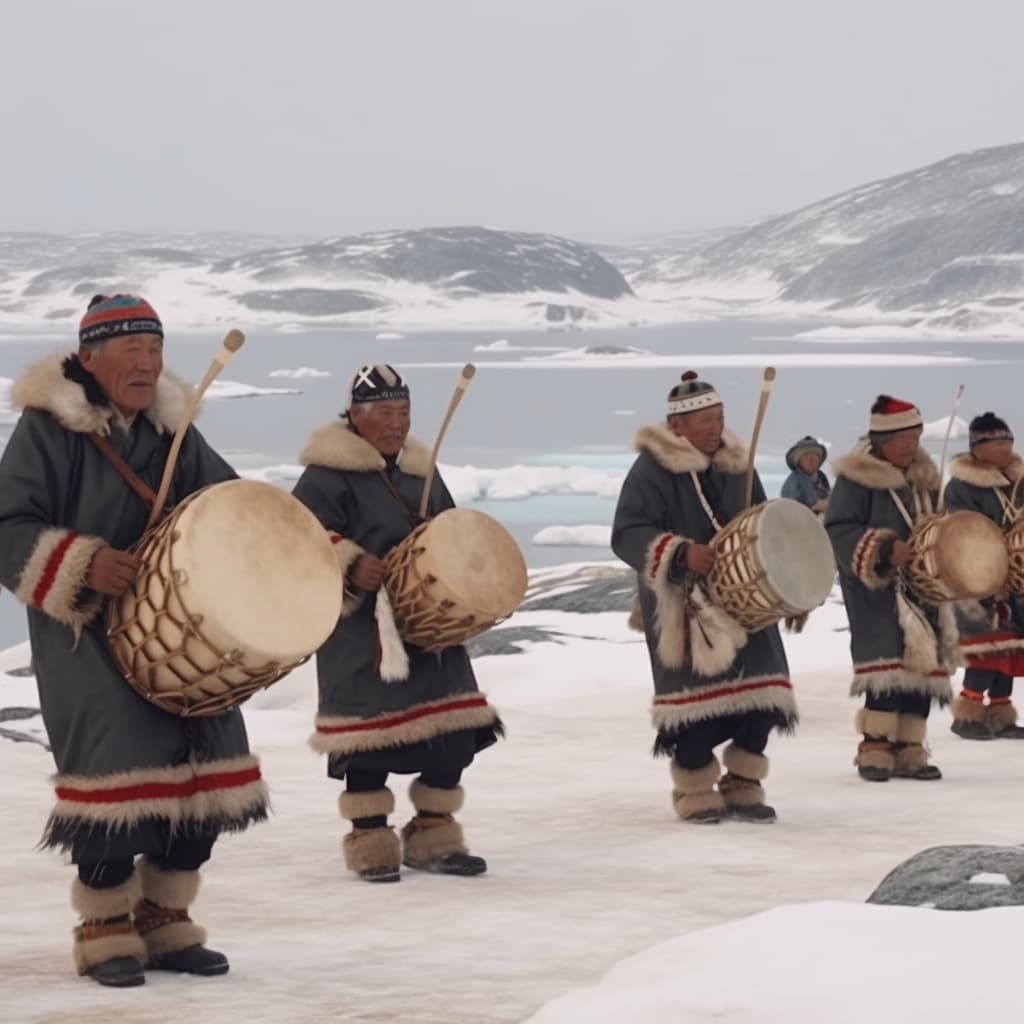

The vast, breathtaking landscapes of the Arctic are home to cultures as rich and resilient as the environment itself. Among these, the traditions of the Inuit people stand out, characterized by a deep connection to nature, community, and an incredibly vibrant artistic expression through music and dance.
Before we delve deeper, it’s important to clarify terminology. While the term ‘Eskimo’ has been historically used, it is often considered outdated and, in some contexts, offensive. The preferred and respectful term for the Indigenous peoples of the Arctic regions of Canada, Greenland, and Alaska is ‘Inuit’ (or specific regional names like Yup’ik, Inupiat). For the purposes of this article, we will primarily use ‘Inuit’ to honor this distinction, acknowledging that ‘Eskimo music and dance forms’ is a common search query.
Inuit music and dance are far more than mere entertainment; they are the rhythmic heartbeat of a culture, serving as vital conduits for storytelling, spiritual connection, historical preservation, and communal bonding. These art forms encapsulate the essence of Arctic life, reflecting both its challenges and its profound beauty.
A Legacy Forged in Ice and Sound: Historical Context
The roots of Inuit musical and dance traditions stretch back thousands of years, evolving alongside the people’s survival in one of the world’s harshest environments. These practices were intrinsically linked to daily life, hunting expeditions, spiritual ceremonies, and social gatherings.
For generations, without a written language in the Western sense, music and dance became primary vehicles for transmitting knowledge. They preserved epic tales of ancestors, hunting techniques, moral lessons, and intricate details about the natural world, ensuring cultural continuity.
The Soulful Sounds: Inuit Music Forms
The sonic landscape of Inuit culture is distinct, often characterized by strong vocalizations and the percussive beat of a single, powerful instrument.
The Power of the Drum: The Qilaut. Central to almost all traditional Inuit musical and dance forms is the drum, known as a qilaut in Inuktitut. Unlike many drums found globally, the Inuit drum is typically a single-sided frame drum, often large, made from animal skin (such as caribou or walrus stomach) stretched over a wooden or bone frame.
The qilaut is held by a handle and struck not on the skin itself, but on the wooden rim or frame, producing a deep, resonant, and often booming sound. This unique method of drumming creates a distinct rhythmic quality, less about complex polyrhythms and more about a steady, hypnotic pulse that grounds the music.
The drum’s significance extends beyond its musical role; it is often seen as a living entity, a conduit to the spiritual world, and a powerful symbol of Inuit identity and resilience. It calls the community together, marks important events, and provides the essential rhythm for dance.
Inuit Throat Singing (Katajjaq). Perhaps the most globally recognized form of Inuit vocal art is throat singing, or katajjaq (in some dialects). This unique vocal technique is predominantly performed by two women, facing each other, often holding hands or arms, and engaging in a playful, guttural vocal competition.
The sounds produced are often imitations of nature – the calls of animals like geese, wolves, or ravens, the sounds of wind, water, or a dog sled. It’s a complex interplay of breathing, vocal cord manipulation, and rhythmic improvisation, with the goal being to outlast or outwit the other singer.
Katajjaq is not typically accompanied by instruments. Its beauty lies in the raw, unadorned power of the human voice, creating intricate harmonies and rhythms through breath and guttural sounds. It’s a performance art that fosters deep connection between the singers and captivates listeners with its primal energy.
Beyond throat singing, other vocalizations include chants, personal songs, and lullabies, often sung solo or communally, reflecting daily experiences, emotions, and connection to the land and spirits.
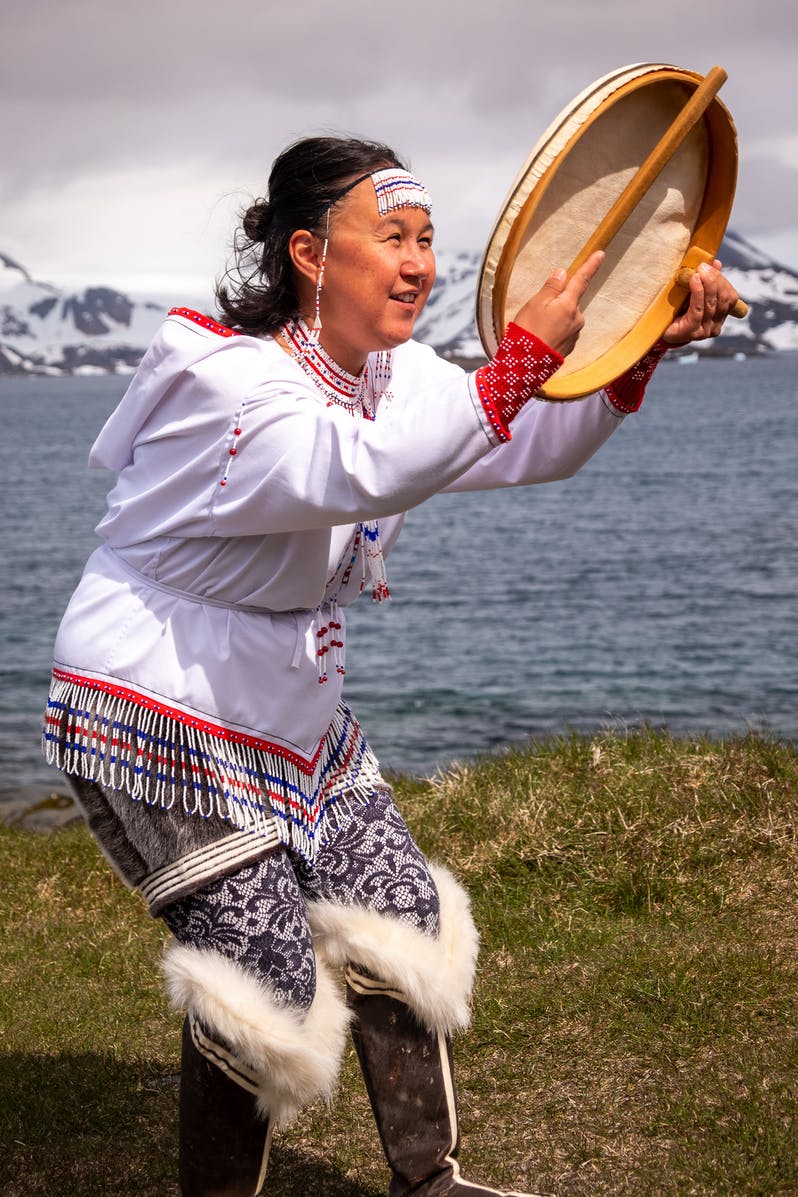

Movement and Meaning: Inuit Dance Forms
Inuit dance is deeply intertwined with its music, particularly the rhythmic pulse of the qilaut. Dances are rarely about elaborate footwork or intricate choreography; instead, they emphasize upper body movement, storytelling, and emotional expression.
Drum Dancing. The most prominent dance form is the drum dance, traditionally performed by a solo male dancer, though women also participate, sometimes in groups. The dancer holds the qilaut and beats it rhythmically while moving. The movements are often subtle yet powerful, involving swaying, bending, and gestures that illustrate the narrative of the song.
The purpose of drum dancing is multifaceted: it can be a form of entertainment, a way to recount a successful hunt, a spiritual invocation, or a means to express deep emotions. The dancer’s movements, facial expressions, and vocalizations (often accompanying their own drumming) combine to create a compelling performance that draws the audience into the story.
Regional variations exist in drum dancing. For instance, the drumming styles and dance movements of the Inupiat in Alaska might differ subtly from those of the Kalaallit in Greenland or the Inuit in Nunavut, Canada, reflecting local traditions and stories.
Storytelling dances are common, depicting scenes from daily life, such as hunting seals or caribou, fishing, or mythological narratives. These dances are highly descriptive, allowing the audience to visualize the events being recounted.
Social dances also play a role, fostering community interaction and celebration during festivals or gatherings, often accompanied by communal singing and drumming, reinforcing bonds and shared identity.
The Heartbeat of the Community: Cultural Significance
Music and dance are essential for maintaining the fabric of Inuit society. They are inherently communal activities, bringing people together for shared experiences that strengthen social bonds and reinforce collective identity.
These traditions serve as powerful educational tools. Younger generations learn about their history, values, and the natural world by observing and participating in performances, ensuring the transmission of cultural knowledge across time.
For many Inuit, music and dance offer a profound spiritual connection. They are pathways to connect with ancestors, animal spirits, and the vast spiritual dimensions of the Arctic world, often used in ceremonies and healing rituals.
The act of performing and experiencing traditional music and dance can also have therapeutic benefits, fostering emotional expression, reducing stress, and promoting overall well-being within communities.
Ultimately, these art forms are a source of immense cultural pride, embodying the resilience, creativity, and unique worldview of the Inuit people. They are a declaration of identity that has endured through centuries of change.
Preservation and Modern Evolution
Like many Indigenous cultures worldwide, Inuit traditions faced significant challenges due to colonialism, residential schools, and the imposition of Western lifestyles. For a period, many traditional practices, including music and dance, were suppressed.
However, in recent decades, there has been a powerful resurgence and revitalization movement. Inuit communities and cultural organizations are actively working to preserve, promote, and teach traditional music and dance forms.
Contemporary Inuit artists are also exploring new expressions, blending traditional sounds and movements with modern genres like pop, rock, and electronic music. This fusion creates innovative art that resonates with new audiences while honoring ancestral heritage.
Educational initiatives, including cultural camps, workshops, and school programs, are crucial in teaching younger generations the techniques and significance of throat singing, drumming, and dancing, ensuring these arts thrive.
Cultural festivals and performances, both within the Arctic and internationally, provide platforms for Inuit artists to showcase their talents, share their stories, and educate a global audience about the richness of their heritage.
Exploring Regional Diversity
It is important to remember that the term ‘Inuit’ encompasses diverse groups across a vast circumpolar region, including the Inupiat of Alaska, the Kalaallit of Greenland, and various Inuit groups across Canada (e.g., Nunavut, Nunavik, Nunatsiavut). Each group possesses unique dialects, storytelling traditions, and, consequently, distinct nuances in their music and dance forms.
Variations can be observed in the specific construction of the qilaut, the styles of throat singing (e.g., higher pitches or different rhythmic patterns), and the specific movements or narratives emphasized in drum dances. This rich diversity underscores the vitality and adaptability of Inuit culture.
The sheer geographical spread of Inuit lands, from Siberia to Greenland, naturally led to the development of localized styles, each reflecting the specific environment, animal life, and communal stories pertinent to that region.
In conclusion, Inuit music and dance forms represent a profound and enduring cultural heritage. From the mesmerizing duets of throat singers to the powerful, resonant beats of the qilaut accompanying a drum dancer’s storytelling, these art forms are living testaments to the resilience, creativity, and deep spiritual connection of the Inuit people.
They are not just performances but vital expressions of identity, community, and a continuum of knowledge that connects past, present, and future generations in the heart of the Arctic. Appreciating these forms means recognizing the strength and beauty of a culture deeply intertwined with its environment and its history.


