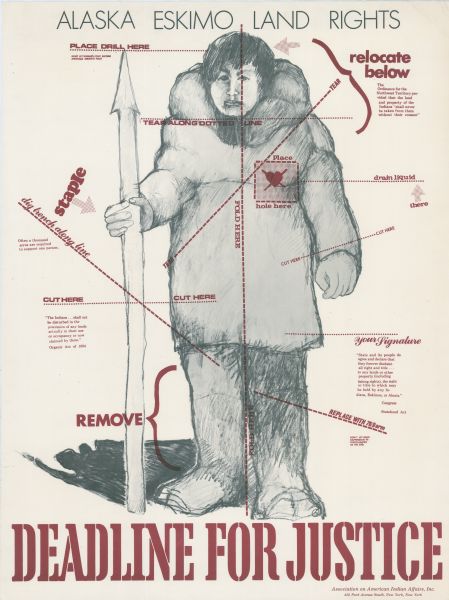

The vast and pristine landscapes of the Arctic have long been home to diverse Indigenous peoples, whose cultures and livelihoods are intrinsically linked to the land, ice, and waters. For centuries, these communities have stewarded their ancestral territories, developing intricate knowledge systems and sustainable practices.
However, with the arrival of European colonizers and the subsequent assertion of state sovereignty, the traditional ownership and rights of these Indigenous peoples were often ignored or actively suppressed. This historical injustice laid the groundwork for the modern era of Indigenous land claims and rights movements.
Understanding these claims is crucial, not just for historical accuracy, but for appreciating the ongoing struggles and triumphs of Indigenous communities in securing their rightful place and control over their homelands in the 21st century.
Addressing Terminology: From ‘Eskimo’ to Inuit and Yup’ik
It’s important to start by addressing the term "Eskimo." While historically used to refer to Arctic Indigenous peoples, it is now widely considered outdated and, by many, offensive. The term originated from an Algonquian word, often translated as "eaters of raw meat," and was not a self-designation.
Today, the preferred and respectful terms are specific to the groups themselves: Inuit in Canada and Greenland, Yup’ik and Iñupiat in Alaska and parts of Siberia, and various other distinct Indigenous identities across the circumpolar North. This article will primarily use "Indigenous peoples" or the specific group names where appropriate.

A History of Dispossession and Resilience
For millennia, Arctic Indigenous peoples lived self-sufficiently, governing their societies and managing resources according to customary laws and traditions. Their territories spanned vast areas, vital for hunting, fishing, trapping, and cultural practices.
The colonial era brought profound disruption. European powers asserted control, often without recognizing Indigenous title or seeking consent. Policies of assimilation, forced relocation, and the imposition of foreign legal systems severed many Indigenous peoples from their traditional lands and ways of life.
Despite these immense pressures, Indigenous communities in the Arctic demonstrated extraordinary resilience. Their deep connection to the land and their cultural heritage fueled a persistent determination to reclaim their rights and assert their sovereignty.
The Genesis of Modern Land Claims
The mid-20th century saw a global awakening to Indigenous rights. In Canada, the United States, and Greenland, Indigenous leaders began to formally challenge the lack of recognition for their ancestral lands and rights. This advocacy led to the development of legal and political processes for addressing these historical grievances.
These modern land claims, often called comprehensive land claims or modern treaties, emerged as a mechanism to clarify, define, and affirm the existing Aboriginal title and rights of Indigenous peoples that had never been extinguished by treaty or conquest.
Key Legal Frameworks Underpinning Indigenous Land Rights
- Aboriginal This refers to the inherent right of Indigenous peoples to their ancestral lands, based on their long-standing occupation and use. It predates and is distinct from Crown or state title.
- Treaty Rights: Where historical treaties exist, they often define specific rights related to land use, hunting, fishing, and other resources. Modern land claim agreements are essentially new treaties that define these rights for areas where no previous treaties were made.
- Self-Determination: The principle that Indigenous peoples have the right to freely determine their political status and freely pursue their economic, social, and cultural development. Land claims often include provisions for self-governance.

Major Land Claim Agreements and Their Transformative Impact
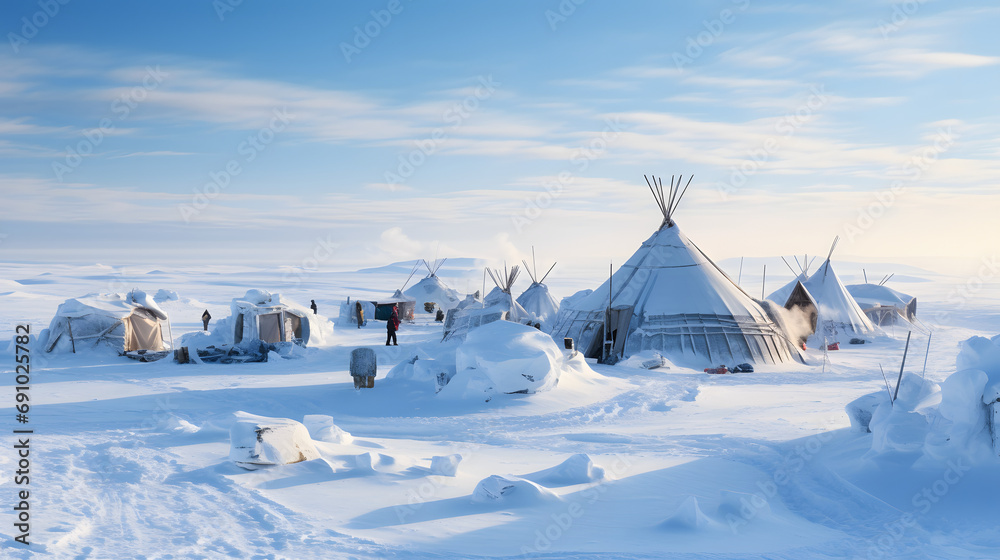
The implementation of land claims has led to significant political and socio-economic changes across the Arctic. These agreements are not merely about land; they encompass a broad spectrum of rights and responsibilities.
Canada: The Nunavut Agreement
One of the most significant examples is the Nunavut Land Claims Agreement, signed in 1993. This agreement led to the creation of Nunavut, Canada’s largest and newest territory, in 1999. It granted the Inuit of Nunavut title to 350,000 square kilometers of land, including subsurface mineral rights to 36,000 square kilometers.
The Nunavut Agreement also established:
- Rights to harvest wildlife throughout the Nunavut Settlement Area.
- Participation in decision-making for land, water, and wildlife management through co-management boards.
- Financial compensation.
- A share of government royalties from resource development on Crown lands.
- Provisions for economic development and Inuit self-government.
This agreement is a powerful example of how land claims can lead to self-determination and a renewed sense of cultural identity.
Other Canadian Inuit Land Claims
Beyond Nunavut, other Inuit regions in Canada have also negotiated comprehensive land claims:
- The Inuvialuit Final Agreement (1984) in the Western Arctic.
- The Nunavik Inuit Land Claims Agreement (2006) in northern Quebec.
- The Labrador Inuit Land Claims Agreement (2005), which established the self-governing Nunatsiavut Government.
These agreements collectively represent a significant portion of Canada’s Arctic territory under Indigenous co-management or ownership.
United States: The Alaska Native Claims Settlement Act (ANCSA)
In the United States, the Alaska Native Claims Settlement Act (ANCSA) of 1971 took a different approach. Instead of creating a political entity like Nunavut, ANCSA extinguished Aboriginal land claims in exchange for 44 million acres of land and a cash settlement of nearly $1 billion.
This land and money were distributed to 12 regional and over 200 village corporations, owned by Alaska Natives. While ANCSA provided significant economic opportunities, it also presented challenges, including the corporatization of Indigenous identity and the complexities of managing corporate assets.
Greenland: Home Rule and Self-Government
Greenland, an autonomous territory within the Kingdom of Denmark, offers yet another model. The Home Rule Act of 1979 and the Self-Government Act of 2009 granted Greenland’s Inuit (Kalaallit) extensive autonomy, including control over natural resources and the right to self-determination, potentially leading to full independence.
This path has allowed Greenland to assert significant control over its land and resources, balancing economic development with cultural preservation and environmental stewardship.
The Broader Scope of Rights Affirmed by Land Claims
- Resource Management: Co-management regimes ensure Indigenous input and often lead to more sustainable practices for wildlife, fisheries, and mineral extraction.
- Environmental Protection: Traditional ecological knowledge is integrated into environmental assessments and conservation efforts, safeguarding sensitive Arctic ecosystems.
- Cultural Preservation: Secure land bases provide spaces for the continuation of traditional languages, practices, and intergenerational knowledge transfer.
- Economic Development: Land claims create opportunities for Indigenous-owned businesses, job creation, and wealth generation within communities.
- Self-Governance: Many agreements provide frameworks for Indigenous governments to assume greater control over local services, education, health, and justice.
Challenges and Ongoing Realities
- Climate Change: Rapid changes in the Arctic environment directly impact traditional land use, hunting routes, and the very existence of some communities.
- Resource Development Pressures: Balancing economic benefits from mining, oil, and gas with environmental protection and traditional land use remains a persistent challenge.
- Socio-economic Disparities: While land claims provide a foundation for progress, many Arctic Indigenous communities still face significant socio-economic disparities.
- Implementation Gaps: Ensuring that the spirit and intent of land claim agreements are fully realized often requires ongoing negotiation and advocacy.
The ongoing legal and political landscape requires constant vigilance and adaptation to new realities, including the increasing strategic importance of the Arctic on the global stage.
The Future of Indigenous Land Rights and Reconciliation
The journey of Indigenous land claims in the Arctic is a testament to the enduring strength and advocacy of its peoples. These agreements are living documents, continually shaping the relationship between Indigenous nations and state governments.
Looking forward, the principles of reconciliation and the implementation of international instruments like the United Nations Declaration on the Rights of Indigenous Peoples (UNDRIP) will continue to guide efforts to uphold and advance Indigenous rights globally.
The recognition and respect for Indigenous land claims are fundamental to fostering genuine partnerships, promoting sustainable development, and ensuring a just and equitable future for all inhabitants of the Arctic.
These claims are not just historical footnotes; they are dynamic frameworks that empower Indigenous peoples to lead their own development, protect their heritage, and contribute their invaluable knowledge to global challenges.
Ultimately, understanding Indigenous land claims and rights is essential for anyone seeking to comprehend the true sovereignty, resilience, and vibrant future of the Arctic’s original inhabitants.
It is a story of justice sought, rights affirmed, and a future built on partnership and mutual respect, demonstrating the enduring power of Indigenous self-determination.


