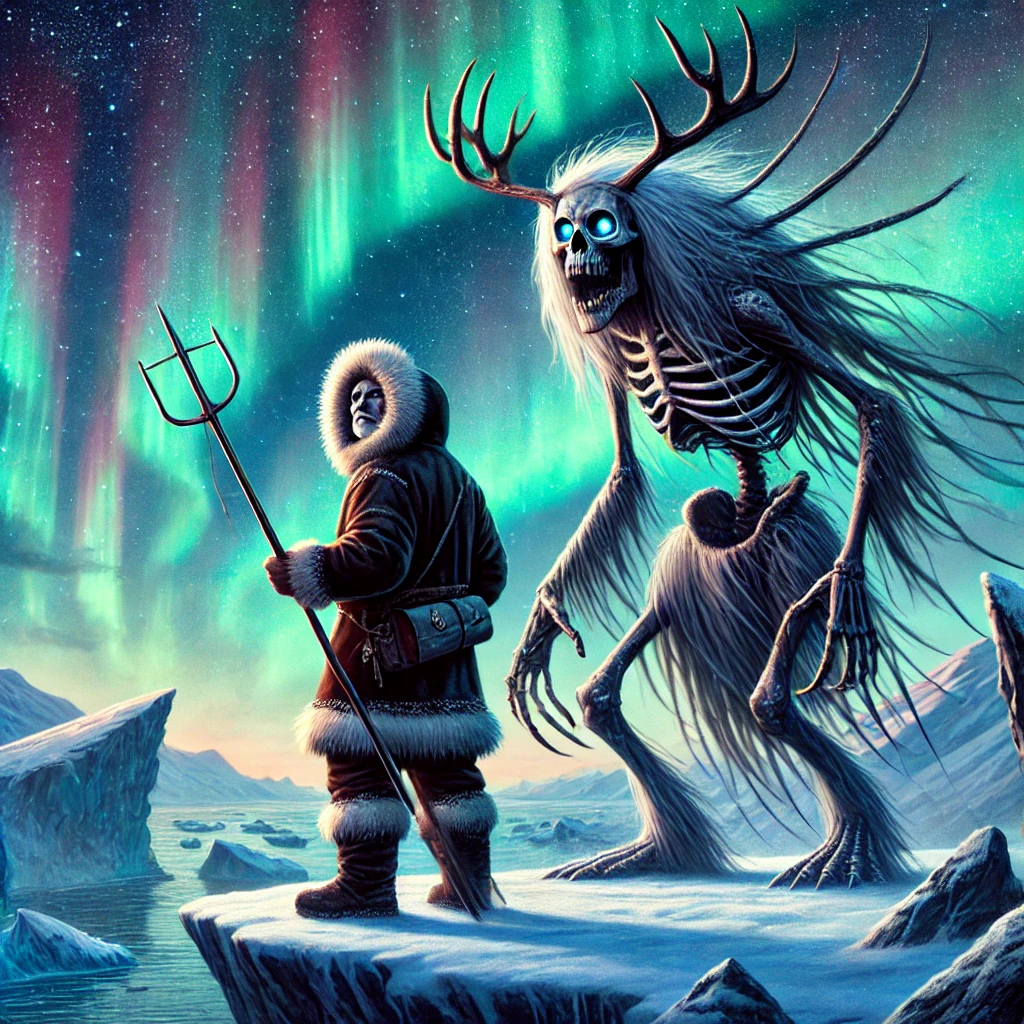

The vast, icy expanse of the Arctic, with its dramatic landscapes and extreme conditions, has long been home to resilient indigenous cultures. Among them, the people often broadly referred to as ‘Eskimo’ – more accurately known as the Inuit across Canada and Greenland, and the Yup’ik in Alaska and Siberia – have forged a profound spiritual connection with their environment. Their rich oral traditions are replete with captivating tales of creation, powerful spirits, mythical creatures, and the delicate balance between the human and supernatural worlds.
Understanding ‘Eskimo folklore’ requires us to look beyond a singular, monolithic culture. While there are common threads, the beliefs and stories vary significantly between distinct groups like the Inuit and Yup’ik, reflecting their unique histories, languages, and adaptations to different Arctic regions. However, a shared reverence for nature and a belief in the animating spirit within all things remain central.
At the heart of these belief systems is animism, the conviction that all objects, places, and creatures possess a distinct spiritual essence. The wind, the ice, the animals they hunt, and even inanimate objects are imbued with an inner life, making the Arctic a vibrant, living tapestry of interconnected spiritual forces.
This interconnectedness meant that survival wasn’t just about physical prowess; it was deeply intertwined with spiritual respect and adherence to ancient customs. Offending a spirit, especially an animal spirit, could lead to failed hunts, illness, or even death, highlighting the critical importance of maintaining harmony with the unseen world.
The Pantheon of Arctic Spirits: Guardians and Guides
One of the most prominent figures in Inuit mythology is Sedna, the powerful goddess of the sea and marine animals. Her tragic story, often involving betrayal and dismemberment, explains the origin of sea creatures and her role as their guardian. Hunters must appease Sedna through rituals and the guidance of a shaman to ensure successful hunts and prevent starvation.
Sedna’s domain is the deep ocean, and she controls the abundance of seals, whales, and fish. When taboos are broken, she withholds the animals, causing famine. It is then the shaman’s duty to journey to her underwater realm, appease her, and comb her tangled hair, which has become matted with the sins of humanity, thereby releasing the marine life.
Another pivotal figure, especially in creation myths, is Raven (Tulugaak). Known as a trickster and culture hero, Raven is often credited with bringing light to the world, creating landforms, and teaching humans essential skills. His stories are characterized by cleverness, mischief, and a touch of chaotic creativity.
The concept of Inua is fundamental to understanding the supernatural world. Inua refers to the spirit or soul residing within every living thing, and sometimes even in places or objects. An animal’s Inua, for instance, could be offended if its body was disrespected after a hunt, potentially impacting future hunting success.
This belief in Inua extends to humans as well. The human soul is complex, often described as having multiple parts, one of which might leave the body during dreams or shamanic journeys. The health and well-being of an individual were directly linked to the state of their Inua.
Shamans: Bridging the Worlds
The Angakkuq, or shaman, held a revered and crucial position within the community. These spiritual practitioners were the intermediaries between the human world and the spirit world. Their abilities included healing the sick, predicting the future, controlling weather, and guiding hunters to game.
The path to becoming an Angakkuq was arduous, often involving a calling through a vision or a near-death experience, followed by years of rigorous training under an elder shaman. They learned to enter trance states, communicate with spirits, and undertake perilous journeys to other realms.
During their spiritual journeys, Angakkuq would often rely on Tuurngait, or spirit helpers. These could be animal spirits, ancestral spirits, or other supernatural entities that aided the shaman in their tasks, providing knowledge, protection, or assistance in manipulating the environment.
Creatures of the Arctic Night: Mythical Beings and Monsters

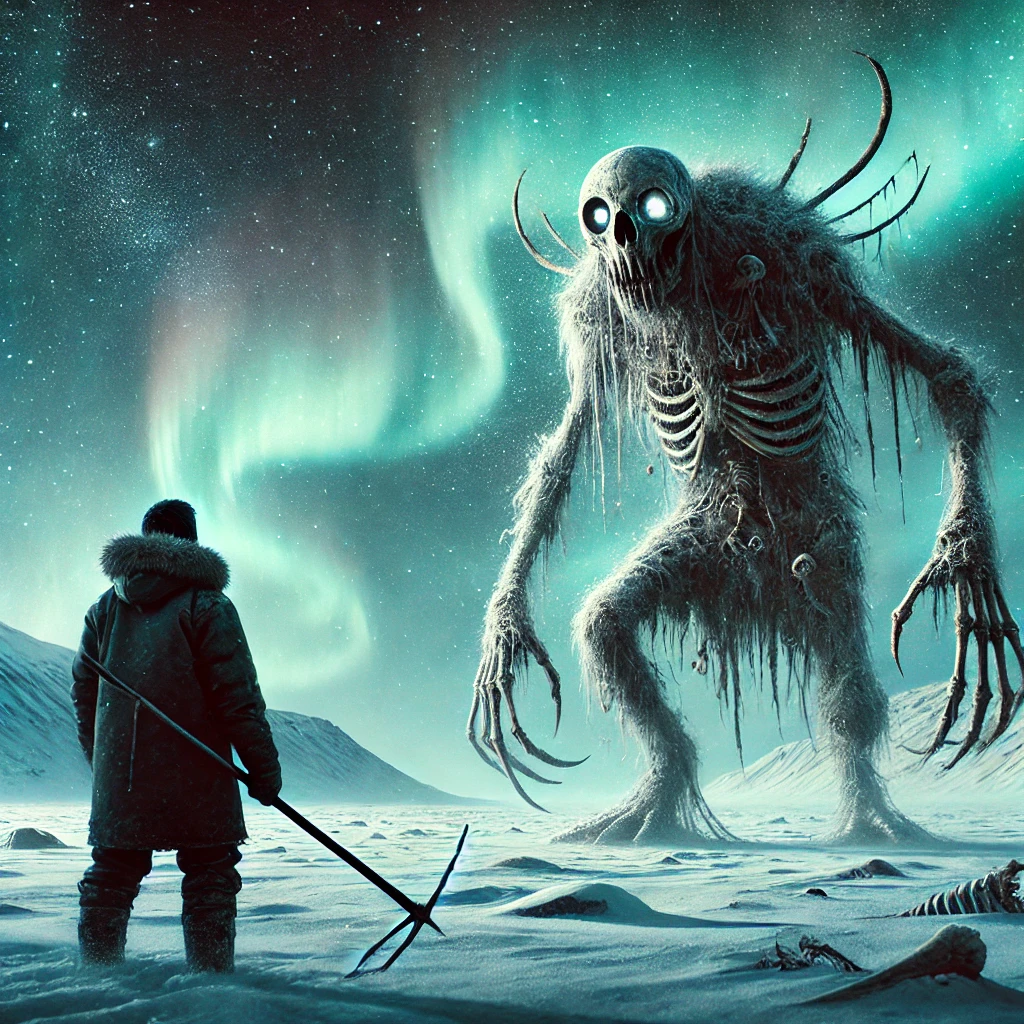
Beyond the benevolent or neutral spirits, Eskimo folklore is also rich with tales of more fearsome supernatural entities. These stories often served to teach caution, explain natural phenomena, or reinforce social norms.
The Qallupilluit (or Qalupalik) is a child-snatching creature that lurks beneath the ice or in the water. With green skin, long hair, and a pouch on its back, it would lure disobedient children too close to the water’s edge and drag them away. This myth effectively taught children to be wary of thin ice and dangerous waters.
Another chilling figure is the Mahaha, a tickling demon that preys on lone travelers. It has long, sharp claws and a perpetually smiling face. The Mahaha will tickle its victims to death, making it impossible for them to breathe or escape. Stories of the Mahaha served as warnings against wandering alone in the vast, desolate landscape.
Less common but equally intriguing are the Adlet, mythical beings that are half-human, half-dog. They are often depicted as fierce and dangerous, living on the fringes of human settlements, and sometimes associated with wild, untamed aspects of nature.
Themes and Lessons Embedded in Folklore
Survival is a pervasive theme. Many myths explain the origins of hunting tools, the behaviors of animals, or the importance of sharing resources. They underscore the precariousness of life in the Arctic and the collective effort required to endure.
Respect for animals is paramount. The belief that animals willingly offer themselves to hunters who show proper respect and follow rituals is central. Disrespecting an animal’s spirit could lead to its Inua refusing to be hunted again, impacting the community’s survival.
Transformation is another recurring motif. Stories often feature humans transforming into animals or vice versa, blurring the lines between species and highlighting the deep spiritual connection shared by all living beings in the Arctic ecosystem.
The importance of storytelling itself cannot be overstated. In a pre-literate society, these narratives were the primary means of transmitting cultural knowledge, moral lessons, history, and spiritual understanding from one generation to the next. They were often told during long, dark winter nights, captivating audiences and reinforcing communal bonds.
The Enduring Legacy of Arctic Beliefs
While modern influences have brought significant changes to Arctic communities, the ancient folklore and supernatural beliefs continue to hold cultural significance. Many elders still recount these stories, ensuring their preservation and teaching younger generations about their heritage.
These traditions offer profound insights into a worldview shaped by an intimate relationship with a powerful and often unforgiving environment. They speak of resilience, respect, and the enduring human quest to understand our place in the cosmos.
The vibrant tapestry of Eskimo folklore and supernatural beliefs serves as a testament to the ingenuity and spiritual depth of the Inuit and Yup’ik peoples. It reminds us that across diverse cultures, humanity shares a fundamental need to connect with the unseen, to find meaning in the mysteries of existence, and to pass on the wisdom of the ages.
From the benevolent Sedna to the mischievous Raven, and from the healing Angakkuq to the cautionary Qallupilluit, these stories are more than mere tales; they are the living breath of a culture deeply attuned to the rhythms and spirits of the Arctic world.


