
The vast, unforgiving landscapes of the Arctic have long challenged human endurance, yet indigenous peoples thrived by mastering their environment. Central to their survival and way of life for millennia was the ingenious practice of dog sledding. More than just a means of transport, Eskimo dog sledding history is a testament to an extraordinary partnership between humans and canines, forging a legacy of resilience, innovation, and deep cultural connection.
This comprehensive article delves into the fascinating origins, evolution, and enduring significance of dog sledding among the Inuit and other indigenous groups of the polar regions. We will explore the specialized breeds, the intricate sled designs, and the sophisticated techniques that allowed these communities to navigate and survive in some of the world’s harshest conditions.
The Ancient Roots: Prehistoric Origins of Mushing
The origins of dog sledding are as ancient as the human presence in the Arctic. Archaeological evidence suggests that dogs were first domesticated in Siberia and later accompanied early human migrations across the Bering land bridge into North America thousands of years ago. These early canines were not merely companions but vital working partners, integral to hunting, hauling, and providing warmth.
It is believed that organized dog sledding, as we recognize it today, began to take shape around 1,000 to 2,000 years ago, evolving from simpler methods of dogs carrying packs or dragging small loads. The need for efficient transportation across vast, snow-covered territories spurred the development of specialized sleds and the systematic harnessing of multiple dogs into a cohesive team.
The Architects of Arctic Travel: Inuit and Indigenous Innovation
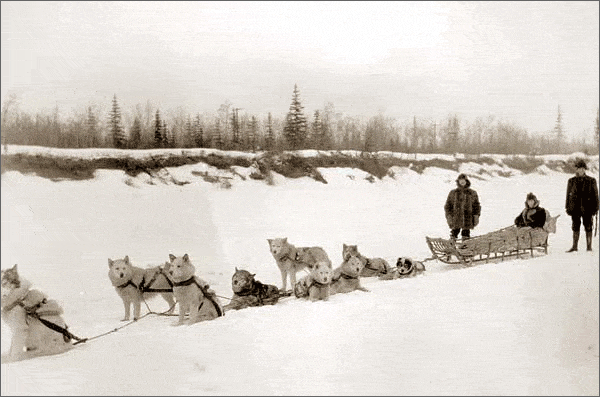
Different indigenous groups across the Arctic, including the Inuit, Yup’ik, Inupiaq, and Athabascan peoples, independently developed and refined dog sledding techniques. The Inuit, in particular, became synonymous with this mode of travel, their lives intricately woven with their sled dogs, often referred to as ‘qimmiq’ in Inuktitut.
For these communities, dog sledding was not a luxury but an absolute necessity. It enabled nomadic hunting parties to pursue game, allowed for the transport of essential supplies and building materials, and facilitated communication and trade between remote settlements. Without the sled dog, life in the extreme North would have been immeasurably more difficult, if not impossible.
The Unsung Heroes: Specialized Sled Dog Breeds
The success of Arctic dog sledding hinged on the incredible capabilities of the dogs themselves. Over centuries, specific breeds were developed and honed for their strength, endurance, intelligence, and resilience in sub-zero temperatures. These animals were not pets in the modern sense but highly valued members of the working family.
- Canadian Eskimo Dog (Qimmiq): One of the oldest and purest Arctic sled dog breeds, known for its immense strength, thick double coat, and unwavering loyalty. Historically, they were the primary power source for Inuit hunters and explorers.
- Greenland Dog: Closely related to the Canadian Eskimo Dog, this robust breed is famed for its hardiness and ability to work tirelessly in harsh conditions. They are a national symbol of Greenland.
- Alaskan Malamute: A powerful, heavy-boned breed, originally developed by the Mahlemut Inuit of Alaska. Malamutes are built for strength and endurance, capable of pulling heavy loads over long distances.
- Siberian Husky: While more famously associated with racing in recent history, Huskies also have a long lineage as working sled dogs in Siberia, prized for their speed and endurance.
These dogs possessed unique adaptations for the cold, including dense undercoats, thick paw pads, and a high metabolism to generate heat. Their pack mentality made them ideal for working in teams, responding to subtle commands from their mushers.
Anatomy of a Sledding System: The Sled and Harness
The traditional sled, known as a ‘qamutik’ among the Inuit, was a marvel of indigenous engineering. Designed to be both sturdy and flexible, it could withstand the brutal impacts of rough terrain and distribute weight evenly across snow and ice. Materials varied by region and availability but often included local wood, whalebone, caribou antler, or even frozen fish for runners.
- Runners: Often made from hardwood, bone, or even ice-coated wood, sometimes sheathed with baleen or ivory for smoother gliding.
- Cross-Slats: Flexible wooden or bone slats connected the runners, allowing the sled to flex over uneven ground without breaking.
- Uprights and Handlebars: Provided stability and control for the musher.
- Lashings: Rawhide thongs or sinew were used to bind components, offering flexibility superior to rigid fasteners.

Harnesses were typically made from sealskin or caribou hide, designed to distribute the pulling force evenly across the dog’s chest and shoulders, preventing injury. The dogs were connected to the main towline (trace line) either in a single file (gang hitch) or fanned out in front of the sled (fan hitch), with the latter being more common in deep, soft snow or when hunting, allowing dogs to find their own path.
Mastering the Arctic: Techniques and Trails
Mushing was an art form, requiring deep knowledge of the terrain, weather, and the individual personalities of each dog. Mushers communicated with their teams using a combination of verbal commands, body language, and the subtle shifting of their weight on the sled. Commands such as ‘Gee’ (right) and ‘Haw’ (left) are universal in dog sledding, guiding the lead dogs.
Navigating the featureless white expanse of the Arctic demanded extraordinary skill. Mushers relied on intimate knowledge of landmarks, prevailing winds, and even the subtle changes in snow texture to stay on course. They learned to read the ice, identify safe crossings, and anticipate potential dangers, making dog sledding a true test of both human and animal intelligence.
Survival and Sustenance: Dog Sledding’s Vital Role
- Hunting and Trapping: Enabled hunters to cover vast distances to find game like caribou, seals, and polar bears, and to transport their harvest back to camp.
- Trade and Communication: Connected isolated communities, allowing for the exchange of goods, news, and cultural practices.
- Relocation: Facilitated the seasonal movement of entire communities in search of resources.
- Emergency and Rescue: In a land with few alternatives, dog teams were crucial for search and rescue missions and transporting the sick or injured.
The relationship between mushers and their dogs was one of mutual dependence and profound respect. Dogs were cared for diligently, fed well, and protected, as their health directly impacted the survival of the human community.
The Age of Transition: From Necessity to Sport
With the arrival of Western explorers, missionaries, and later, modern technology in the 20th century, the role of traditional dog sledding began to shift. Snowmobiles, aircraft, and motorized vehicles gradually replaced dog teams as the primary mode of transportation in many Arctic regions.
This transition led to a significant decline in the traditional use of sled dogs, and some indigenous breeds faced near extinction. However, the spirit of mushing found a new life in sport. Iconic races like the Iditarod Trail Sled Dog Race in Alaska and the Yukon Quest emerged, celebrating the endurance, skill, and historical significance of dog sledding.
Preserving a Legacy: Modern Dog Sledding and Cultural Revival
Today, while not as widespread as a daily necessity, Eskimo dog sledding continues to thrive in various forms. Many indigenous communities are actively engaged in cultural preservation efforts, teaching younger generations the ancient art of mushing. Dog sledding is seen as a vital link to their heritage, fostering a sense of identity and continuity.
Tourism has also played a role in its revival, offering visitors unique opportunities to experience this historic mode of travel and learn about Arctic culture firsthand. Dedicated breeders and enthusiasts work tirelessly to conserve and promote the indigenous sled dog breeds, ensuring their survival for future generations.
Conclusion: An Enduring Partnership
The history of Eskimo dog sledding is a powerful narrative of adaptation, resilience, and an extraordinary partnership between humans and animals. From its ancient origins as a cornerstone of Arctic survival to its modern incarnation as both a sport and a cultural touchstone, the legacy of the sled dog continues to inspire.
It reminds us of the ingenuity of indigenous peoples, their deep connection to the natural world, and the enduring bond forged through shared challenges. The howl of the sled dog across the vast white expanse remains an evocative symbol of the Arctic, echoing a history rich with determination and the spirit of adventure.
Whether for survival, exploration, or sport, the story of Eskimo dog sledding is a timeless testament to a powerful collaboration that enabled life to flourish in one of the planet’s most extreme environments. It is a heritage worth preserving, understanding, and celebrating for generations to come.


