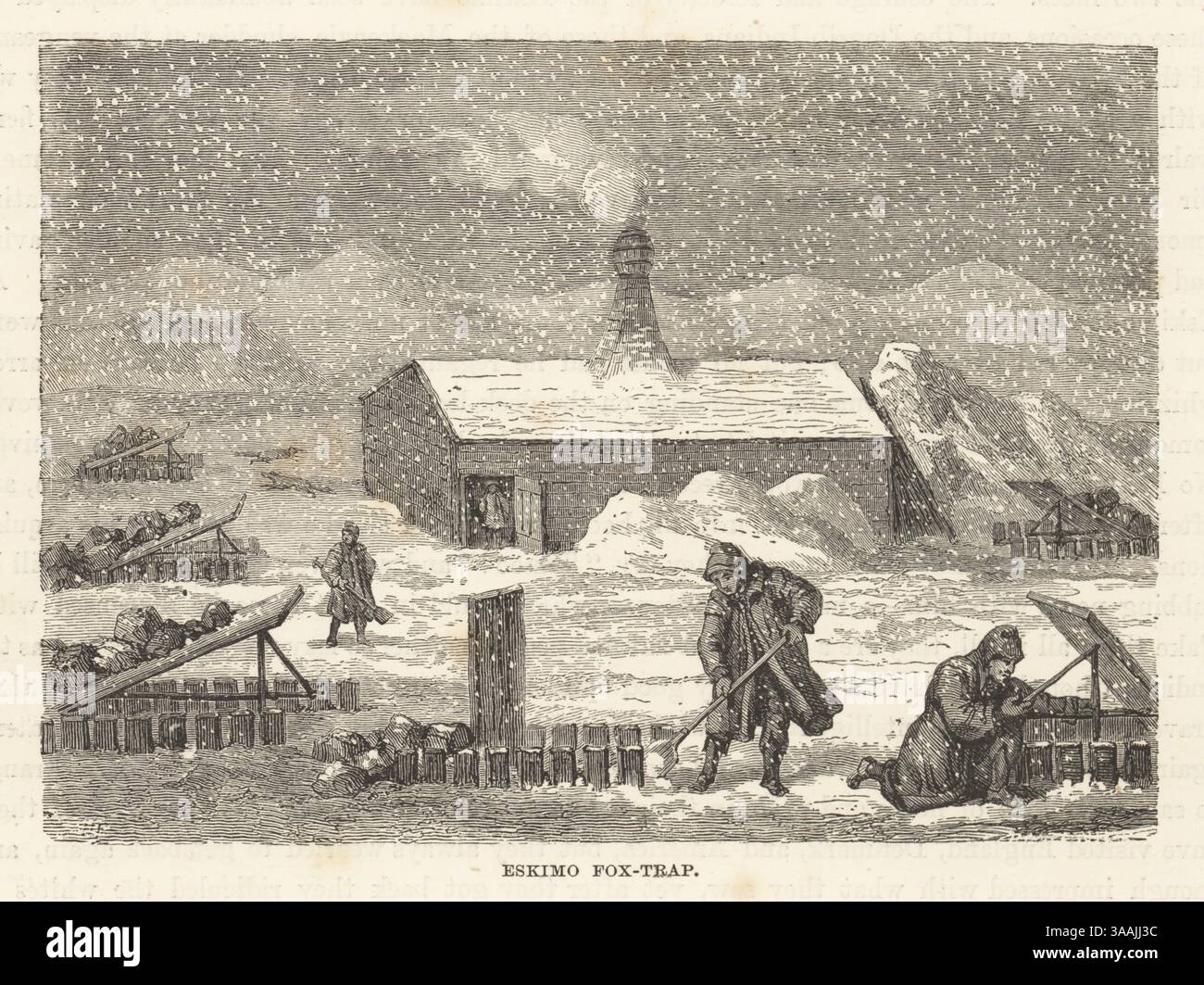
The vast, unforgiving expanses of the Arctic have long been home to resilient communities, whose lives are intricately woven with the land and its creatures. Among the most iconic of these creatures is the Arctic fox, a symbol of survival and adaptability. For the Inuit and other Indigenous peoples of the Arctic, often referred to as Eskimo, the trapping of Arctic foxes is far more than just a means to an end; it is a profound cultural practice, a vital economic activity, and a testament to generations of ecological knowledge.
This comprehensive article delves into the multifaceted world of Arctic fox trapping by Indigenous communities. We will explore its historical significance, the traditional methods employed, the role it plays in modern livelihoods, the ethical considerations, and the ongoing efforts to ensure its sustainability in a rapidly changing world.
Understanding this practice requires appreciating the deep connection between Indigenous peoples and their environment, a bond forged over millennia. It is a story of survival, respect, and adaptation.
A Legacy Forged in Ice: The Historical Context of Arctic Fox Trapping
For thousands of years, the Arctic fox has been a crucial resource for Indigenous communities. Its remarkably warm fur provided essential clothing, protecting against the extreme cold, while its meat could supplement diets. This deep reliance fostered an intimate understanding of the fox’s behavior, migratory patterns, and the delicate balance of the Arctic ecosystem.
Early trapping practices were rudimentary but highly effective, relying on ingenious designs that utilized local materials. These methods were honed through generations, passed down orally and experientially, ensuring that each generation understood the land and its resources.
The arrival of European traders in the 17th and 18th centuries dramatically altered the landscape of Arctic fox trapping. What was once primarily a subsistence activity evolved into a key component of the global fur trade. Indigenous trappers became integral to this burgeoning economy, trading furs for manufactured goods, tools, and foodstuffs.
This shift brought both opportunities and challenges, integrating remote communities into a global market economy but also exposing them to its fluctuations and external pressures. Despite these changes, the fundamental skills and knowledge of trapping remained deeply embedded in the cultural fabric.
Traditional Inuit Trapping Methods: Wisdom of the Elders
Traditional Inuit trapping methods were characterized by ingenuity, resourcefulness, and a profound respect for the animal. These practices were designed not just to catch, but to do so efficiently and with minimal waste, reflecting a holistic worldview.
Deadfall Traps: One of the oldest and most widespread traditional methods involved deadfall traps. These were often constructed from stones or logs, carefully balanced to fall and quickly dispatch the animal when it triggered a bait mechanism. Their construction required significant knowledge of physics and local materials.
Snare Traps: While less common in some very traditional ‘Eskimo’ contexts compared to deadfalls, simple snares made from sinew or baleen were also used, strategically placed along known fox trails. These demanded keen observation and understanding of animal movements.
Knowledge of the Land: Successful trapping was never just about the trap itself. It relied heavily on the trapper’s deep understanding of the environment: reading animal tracks, knowing prime hunting grounds, understanding weather patterns, and identifying natural choke points where foxes would travel.
Preparation of the hides was an equally crucial skill. Once caught, the fox would be carefully skinned, and the hide meticulously cleaned, stretched, and dried. This labor-intensive process ensured the fur’s quality and longevity, making it valuable for clothing or trade.
The Arctic Fox: A Keystone Species and Its Adaptations

The Arctic fox (Vulpes lagopus) is a marvel of evolution, perfectly adapted to thrive in one of the planet’s harshest environments. Its dense, insulating fur, which changes color with the seasons (white in winter, brown/grey in summer), provides unparalleled protection against the cold.
These opportunistic predators play a vital role in the Arctic ecosystem, primarily preying on lemmings, voles, and other small rodents, but also scavenging on larger carcasses left by polar bears or wolves. Their presence is indicative of a healthy and balanced ecosystem.
Are Arctic foxes endangered? No, Arctic fox populations are generally stable and widespread across their circumpolar range. While local populations can fluctuate based on prey availability (especially lemmings), the species as a whole is not considered endangered or threatened, which allows for sustainable harvesting practices in many regions.
Modern Trapping Practices and Regulations: Balancing Tradition with Conservation
Today, Arctic fox trapping continues, but it has evolved significantly. Modern trappers often combine traditional knowledge with contemporary tools and regulated practices to ensure sustainability and animal welfare. Are there regulations on Arctic fox trapping? Yes, absolutely.
Government bodies in countries like Canada, Greenland, Russia, and the United States (Alaska) implement strict regulations governing trapping seasons, trap types, licensing, and reporting requirements. These regulations are designed to:
- Ensure sustainable harvest levels that do not endanger fox populations.
- Promote humane trapping methods.
- Protect other wildlife species.
Humane Trapping: Modern trapping often utilizes certified humane traps, such as ‘Conibear’ style traps, designed to cause rapid and instantaneous death, minimizing suffering. Trappers are often required to check their traps regularly.
Licensing and Training: Trappers must obtain licenses and often undergo training in responsible trapping practices, including trap setting, animal handling, and hide preparation, ensuring adherence to modern standards.
Ethical Considerations and Animal Welfare: A Global Dialogue
Is Arctic fox trapping ethical? This is a complex question that sparks significant debate globally. From an Indigenous perspective, trapping is often viewed as a respectful interaction with nature, a continuation of cultural heritage, and a necessary part of their livelihood. They emphasize sustainable practices and humane treatment.
Animal welfare organizations, however, often raise concerns about the welfare of animals caught in traps, advocating for alternatives or stricter regulations. This dialogue has led to advancements in trap technology and stricter ethical guidelines within the fur industry.
The fur industry has responded with initiatives like the Agreement on International Humane Trapping Standards (AIHTS), which sets benchmarks for trap design and performance to ensure animal welfare. Many Indigenous trappers adhere to or exceed these standards, seeing ethical treatment as part of their traditional respect for animals.
The Economic and Cultural Significance: More Than Just Fur
For many remote Arctic communities, Arctic fox trapping remains a crucial economic activity. The sale of furs provides a vital source of income, especially where other employment opportunities are scarce. This income supports families, allows for the purchase of essential goods, and contributes to the local economy.
Beyond economics, trapping is a powerful cultural anchor. It transmits traditional knowledge, language, and skills across generations. Elders teach younger family members how to read the land, set traps, and prepare hides, reinforcing a deep connection to their heritage and identity. What is the purpose of trapping Arctic foxes? It serves both economic necessity and cultural preservation.
The fur itself holds cultural value, used not only for trade but also for traditional clothing, regalia, and ceremonial items, symbolizing resilience and connection to the Arctic environment.
Challenges and the Future of Arctic Fox Trapping
Arctic fox trapping faces several significant challenges in the 21st century. Climate change is perhaps the most pressing, impacting fox habitats, prey availability (like lemmings), and ice conditions crucial for travel and trapping.
Fluctuations in the global fur market also pose economic instability for trappers. Changing consumer preferences and anti-fur campaigns can depress prices, making the activity less viable for some.
Despite these challenges, the future of Arctic fox trapping is likely to involve a continued emphasis on sustainability, ethical practices, and the integration of traditional knowledge with modern science. Indigenous communities are often at the forefront of advocating for responsible wildlife management.
Efforts to educate the public about the cultural significance and sustainable nature of Indigenous trapping practices are also vital in fostering a more nuanced understanding of this ancient tradition.
Conclusion: A Living Tradition in a Changing World
Eskimo Arctic fox trapping is a practice steeped in history, culture, and an intimate understanding of the Arctic environment. It represents a living tradition that has sustained Indigenous communities for millennia, providing not only economic livelihood but also a powerful connection to their heritage.
While modern practices have evolved to meet contemporary ethical and regulatory standards, the core values of respect for nature, sustainable harvesting, and the transmission of invaluable knowledge remain at its heart. As the Arctic continues to change, the resilience and adaptability demonstrated by both the Arctic fox and its Indigenous trappers will be key to ensuring this unique tradition endures.
Understanding Arctic fox trapping means looking beyond simplistic narratives and appreciating the complex interplay of survival, culture, economy, and environmental stewardship that defines life in the far north.


