
Echoes in the Mountains: The Enduring Saga of North Carolina’s Eastern Band of Cherokee Indians
Nestled amidst the ancient, mist-shrouded peaks of the Great Smoky Mountains, a vibrant and sovereign nation thrives – the Eastern Band of Cherokee Indians (EBCI). Their story is not merely one of survival, but of a profound, unyielding resilience forged in the crucible of unimaginable hardship. It is a narrative woven from the threads of deep ancestral roots, fierce resistance, ingenious adaptation, and a steadfast commitment to cultural preservation against overwhelming odds. The EBCI stands today as a testament to the enduring human spirit, a living embodiment of their ancestral name, "Aniyunwiya" – the Principal People.
Long before European boots ever touched the shores of North America, the Cherokee people inhabited a vast dominion stretching across what is now the southeastern United States, including parts of present-day Georgia, Tennessee, Alabama, and the western Carolinas. Their society was sophisticated, marked by a complex clan system, democratic governance, advanced agricultural practices, and a rich spiritual tradition deeply connected to the land. They were master artisans, skilled hunters, and keen diplomats, their influence extending far beyond their immediate borders. The mountainous region of Western North Carolina, with its abundant resources and strategic defensibility, formed a vital heartland of their ancestral territory.
The arrival of European settlers irrevocably altered the Cherokee world. Initial encounters involved trade and tentative alliances, but quickly devolved into escalating land disputes, disease, and the insidious pressures of assimilation. Through a series of treaties, often coerced and rarely honored, the Cherokee were systematically dispossessed of their lands. By the early 19th century, the relentless westward expansion of the United States, fueled by the cotton boom and the discovery of gold on Cherokee lands in Georgia, reached a fever pitch.
The fateful year of 1830 brought the Indian Removal Act, championed by President Andrew Jackson. This draconian legislation authorized the forced removal of all Native American tribes from their ancestral lands in the southeastern United States to Indian Territory (present-day Oklahoma). Despite the Cherokee Nation’s adoption of a written constitution, a bicameral legislature, and Sequoyah’s syllabary (a written language that brought literacy to the Cherokee people in record time), the U.S. government refused to acknowledge their sovereignty or their right to remain.
A controversial "treaty" – the Treaty of New Echota – was signed in 1835 by a small, unauthorized faction of the Cherokee known as the Treaty Party, without the consent of the vast majority of the Cherokee people or their Principal Chief, John Ross. This illegitimate document ceded all remaining Cherokee lands east of the Mississippi in exchange for land in the west and monetary compensation. Despite widespread protests and appeals, including a landmark Supreme Court victory in Worcester v. Georgia (1832) which affirmed Cherokee sovereignty, the U.S. government proceeded with the removal.


The infamous Trail of Tears, which commenced in 1838, saw approximately 16,000 Cherokee men, women, and children forcibly marched westward, often at bayonet point, in brutal conditions. Over 4,000 perished from disease, starvation, and exposure along the arduous journey. Yet, amidst this horrifying chapter, a remarkable act of defiance and determination unfolded in the mountains of North Carolina, laying the foundation for the Eastern Band.
Crucially, not all Cherokee were removed. A determined faction, numbering perhaps 800 to 1,000 individuals, managed to evade the federal troops. Their survival was a complex tapestry woven from various threads:
- Legal Acumen and a White Ally: Perhaps the most pivotal figure in the formation of the Eastern Band was William Holland Thomas, a white lawyer raised among the Cherokee, fluent in their language, and adopted by Chief Yonaguska. Thomas ingeniously began purchasing land on behalf of the "Oconaluftee Cherokee" – those who had sought refuge in the remote, rugged mountains of Western North Carolina. He used his own funds and later, the funds from the Cherokee Nation’s outstanding claims against the U.S. government, to buy back tracts of land that would eventually form the core of the Qualla Boundary. This land was held in trust for the Cherokee people, a legal maneuver that proved instrumental in their ability to remain.
- Mountain Sanctuary: The dense forests, deep valleys, and towering peaks of the Great Smoky Mountains provided a natural sanctuary. Many Cherokee simply melted into the rugged terrain, hiding from the federal troops.
- Strategic Intermarriage: Some Cherokee, particularly women, had intermarried with white settlers and were therefore not subject to removal under the terms of the treaties.
- The Legend of Tsali: While historically debated, the legend of Tsali embodies the spirit of resistance. Tsali, an elderly Cherokee man, along with his family, resisted capture and eventually surrendered to save his people from further pursuit, agreeing to execution in exchange for allowing others to remain hidden. This story, whether entirely factual or apocryphal, became a powerful symbol of the sacrifices made for their homeland.
Under the leadership of Chief Yonaguska and later his successor, William Holland Thomas, these scattered survivors began to consolidate their presence. They were not a "reservation" in the typical sense, but rather a community built on individually purchased trust lands. After the Civil War, in 1868, these various tracts were formally recognized as the Qualla Boundary, the land base of what would become the Eastern Band of Cherokee Indians. It was a painstaking process, but it cemented their claim to a piece of their ancestral homeland.
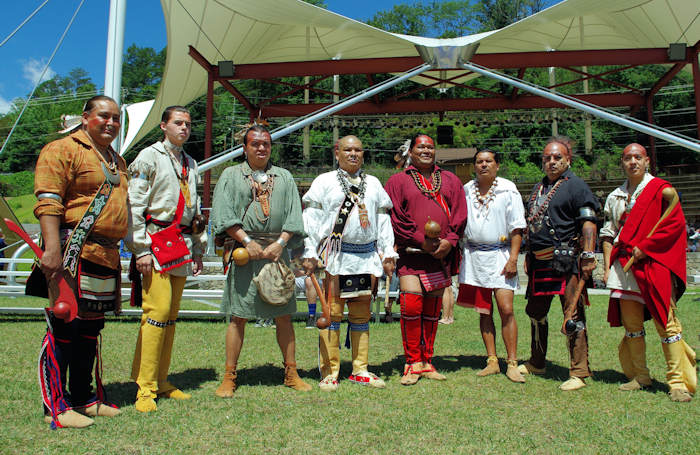

The late 19th and early 20th centuries presented a new set of trials for the newly formed Eastern Band. Poverty was widespread, and the community relied heavily on subsistence farming, timber, and traditional crafts. However, their strategic location at the entrance to what would become the Great Smoky Mountains National Park, established in 1934, opened new avenues for economic development through tourism. Cherokee artisans found a market for their baskets, pottery, and woodcarvings, sharing their rich cultural heritage with visitors. The outdoor drama "Unto These Hills," first performed in 1950, further showcased their history and culture, becoming a staple of regional tourism.
The late 20th century brought a seismic shift for the EBCI: the advent of gaming. In 1997, the Harrah’s Cherokee Casino Resort opened its doors on the Qualla Boundary. This venture proved to be a transformative economic engine, generating unprecedented revenue for the tribe. The casino’s success allowed the EBCI to invest heavily in infrastructure, education, healthcare, and cultural preservation programs for its members. Roads were paved, schools were built, and healthcare facilities improved dramatically. Per capita payments from casino profits provided a measure of financial stability for tribal members, addressing generations of poverty.
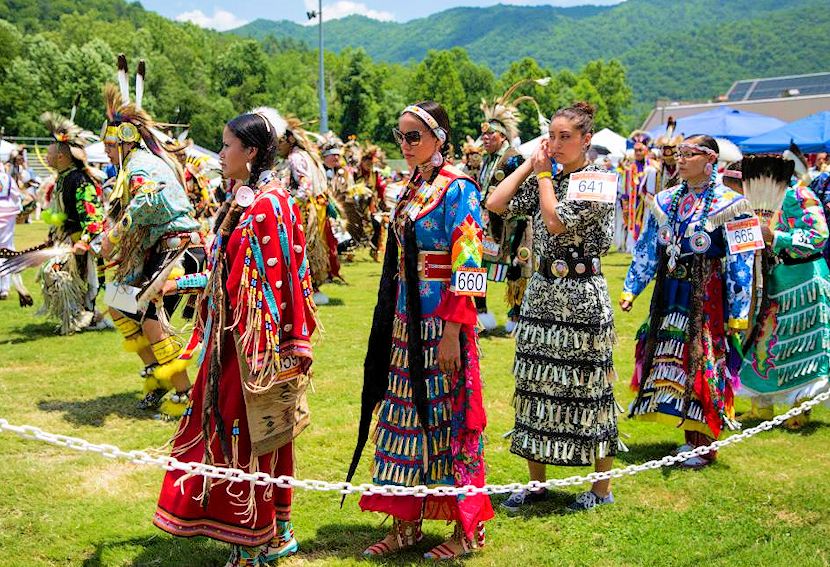
Today, the Eastern Band of Cherokee Indians stands as a beacon of modern tribal sovereignty and self-determination. With a tribal enrollment of over 16,000 members, they operate their own government, courts, police force, and numerous tribal enterprises. Cultural preservation remains a paramount focus. The Cherokee Language Program works tirelessly to revitalize the Tsalagi language through immersion schools and community classes, recognizing that language is the heartbeat of their identity. Traditional arts, ceremonies, and storytelling continue to thrive, connecting contemporary generations to their rich past.
Yet, prosperity brings its own complex challenges. The EBCI grapples with issues common to many communities, including the opioid crisis, balancing economic development with environmental stewardship, and ensuring equitable access to resources and opportunities for all tribal members. The pressures of tourism and the complexities of managing a large enterprise require constant vigilance to maintain cultural integrity.
The story of the Eastern Band Cherokee is more than just history; it is a living narrative of an indigenous people who refused to be erased. Their journey from the precipice of forced removal to a thriving, self-governing nation on their ancestral lands is a powerful testament to their resilience, adaptability, and unwavering commitment to their heritage. As the Oconaluftee River continues to flow through the heart of the Qualla Boundary, carrying the echoes of generations past, the Eastern Band of Cherokee Indians looks to the future with strength, determination, and a profound sense of identity, forever rooted in the majestic mountains they fought so valiantly to call home.


