
Okay, here is a journalistic article about the history of Native American beadwork, approximately 1200 words in English, incorporating interesting facts and a suitable tone.
Beads of Time, Threads of Culture: The Enduring Legacy of Native American Beadwork
From the vibrant regalia gracing powwows to the intricate adornments preserved in museum collections, Native American beadwork stands as a testament to unparalleled artistry, cultural resilience, and a profound connection to the land. More than mere decoration, these shimmering patterns and designs are imbued with history, identity, spirituality, and the very soul of the Indigenous peoples who create them. Tracing its origins from the natural world to the dazzling glass beads of today, the story of Native American beadwork is a vibrant tapestry woven through millennia of innovation, adaptation, and enduring cultural pride.
The Earth’s First Adornments: Pre-Contact Beadwork
Long before the arrival of Europeans, Indigenous peoples across North America were masters of adornment, utilizing materials sourced directly from their environment to create stunning and meaningful "beadwork." While not always beads in the contemporary sense, these early embellishments served similar purposes: signifying status, communicating stories, honoring spiritual beliefs, and beautifying everyday objects.
"The concept of beadwork is ancient, far predating European contact," explains a curator at the National Museum of the American Indian. "Early Native artisans transformed everything from shells and bones to seeds, nuts, porcupine quills, and even copper into decorative elements."
Perhaps the most iconic of these pre-contact materials was the porcupine quill. Quillwork, a meticulous art form practiced primarily by women in the Woodlands and Plains regions, involved softening, flattening, dyeing, and then wrapping, plaiting, or sewing thousands of quills onto leather or birchbark. The natural white and black of the quills were transformed into brilliant hues using natural dyes derived from berries, roots, and minerals. Geometric patterns, animal motifs, and representations of natural phenomena adorned moccasins, pouches, clothing, and ceremonial objects. The patience and skill required for quillwork were immense, making each piece a precious and time-consuming creation.
Another significant pre-contact "bead" was the shell, particularly the wampum. Fashioned from the shells of quahog clams and whelks by Algonquian and Iroquoian peoples of the Northeast, wampum beads were cylindrical, polished, and painstakingly drilled. White wampum represented peace, light, and purity, while purple (darker) wampum signified more serious matters, war, or sorrow. Wampum belts were not merely currency, as often misconstrued, but served as mnemonic devices, historical records, and treaty documents. Each pattern of white and purple beads held specific meaning, recording agreements, historical events, or even personal narratives. "A wampum belt was a living document," notes historian John Borrows. "It recorded alliances, responsibilities, and the collective memory of a people."
The Great Transformation: The Arrival of Glass Beads
The 16th century marked a pivotal turning point in Native American adornment. With the arrival of European traders, a new material entered the Indigenous world: glass beads. Originating primarily from Venice, Italy, these small, colorful spheres quickly captivated Native artisans. Initially, larger "pony beads" (named because they were often transported on pony trains) were traded, followed by the smaller, more versatile "seed beads."
The introduction of glass beads was not a simple replacement of traditional materials; it was a profound revolution. Glass offered an unprecedented palette of vibrant colors, a consistent size, and a durability that natural materials often lacked. Critically, it also offered a significantly faster medium for creation. What might take weeks or months with quills could be accomplished in a fraction of the time with glass beads, allowing for an explosion of creativity and the adornment of a wider array of objects.
Native peoples were discerning traders, recognizing the value of these new materials. Glass beads quickly became a highly prized commodity, sometimes more valuable than furs, influencing trade routes and diplomatic relationships. They were not simply adopted; they were indigenized, integrated into existing aesthetic traditions and cultural practices.
The Golden Age: Plains Beadwork and its Flourishing
The 19th century is often considered the "Golden Age" of Native American beadwork, particularly on the Great Plains. The Plains tribes, with their nomadic lifestyle centered around the horse and bison, developed some of the most iconic and intricate beadwork styles. The vast open spaces and the mobility afforded by horses meant that beadwork became a prominent feature on clothing, horse regalia, tipis, and ceremonial objects, often visible from a distance.

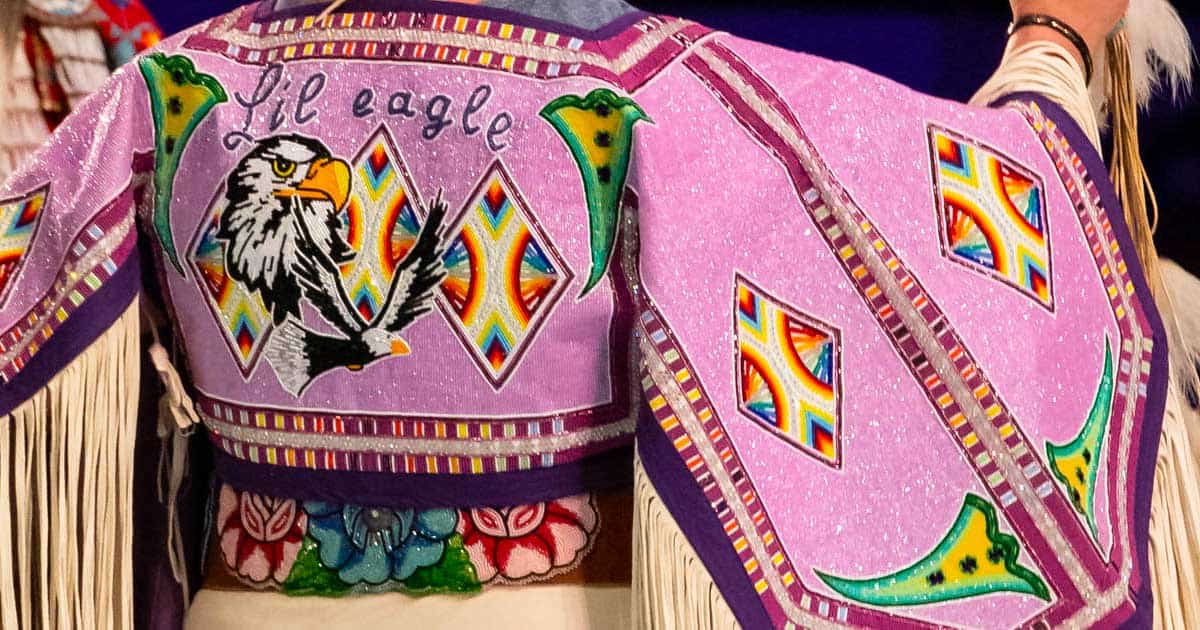
Techniques evolved to suit the new medium. The "lazy stitch," where short rows of beads are stitched down in parallel, creating a ribbed effect, became characteristic of Plains beadwork, particularly among tribes like the Lakota, Cheyenne, and Crow. This technique was ideal for covering large surfaces with bold, geometric designs that often carried deep spiritual meaning, representing natural elements, cosmic patterns, or visions.
Another prevalent technique was the "overlay stitch," where each bead is individually sewn down, allowing for more fluid lines and detailed pictorial representations. The "peyote stitch" (or gourd stitch), a tubular stitch often used for fringes, pipe stems, and amulets, also gained widespread popularity.
Colors and patterns were not random; they were deeply symbolic. A specific combination of colors or a particular design might identify a person’s tribal affiliation, clan, accomplishments, or even convey a prayer or blessing. Red often symbolized blood, life, and the earth; blue, the sky, water, and wisdom; yellow, the sun and prosperity; and white, purity and spirit.
"For Plains people, beadwork was a language," said one Lakota elder. "Every stitch, every color, every design told a story – a story of our family, our tribe, our connection to the Creator."
Beyond Aesthetics: Beadwork as Cultural Narrative
Across all regions and time periods, Native American beadwork has served as a powerful medium for cultural expression. It is a visual language that communicates identity, status, and spiritual beliefs.
- Identity: A person’s beadwork could instantly identify their tribal affiliation, clan, or even specific family lineage. It also marked rites of passage, such as a child’s cradleboard or a warrior’s ceremonial shirt.
- Spirituality: Many designs were imbued with sacred meaning, representing spirit helpers, natural forces, or dream visions. Wearing certain beaded items could be seen as a way to connect with the spiritual world or to receive protection.
- Storytelling: Beadwork often depicted narrative elements, whether abstractly through geometric patterns or more explicitly through animal figures and human forms. These stories could be personal achievements, historical events, or shared cultural myths.
- Social Status: The quantity, quality, and complexity of beadwork often indicated the wealth, prestige, or skill of the wearer and the artist.
Women were, and largely remain, the primary creators of beadwork, passing down techniques and designs through generations. This art form became a crucial way for women to contribute to the cultural and spiritual well-being of their communities, expressing their creativity and maintaining traditions.
Resilience in the Face of Adversity: The 20th Century and Beyond
The late 19th and early 20th centuries brought immense hardship for Native American communities, including forced removal to reservations, the suppression of cultural practices, and the devastating impact of boarding schools designed to "kill the Indian, save the man." During this period, the production of traditional beadwork faced significant challenges. Many artists, however, continued to bead, often adapting their work for the nascent tourist market to generate much-needed income. While some designs were simplified or altered to appeal to non-Native buyers, the core techniques and the spirit of the art endured.
The latter half of the 20th century witnessed a powerful resurgence in Native American art, including beadwork, as Indigenous communities began to reclaim and revitalize their cultural heritage. Younger generations sought out elders to learn traditional techniques, bringing new energy and innovation to the art form.
Today, Native American beadwork is a thriving and dynamic art. Contemporary artists honor traditional patterns and techniques while also pushing boundaries, incorporating new materials, exploring modern themes, and fusing beadwork with contemporary fashion and fine art. Artists like Joyce Growing Thunder Fogarty (Sioux/Assiniboine) and Teri Greeves (Kiowa) are celebrated for their exquisite craftsmanship and innovative designs, bringing traditional forms into dialogue with modern life.
Challenges and the Future
Despite its vibrancy, Native American beadwork faces ongoing challenges. Cultural appropriation, where non-Native individuals or corporations use Indigenous designs without understanding, permission, or respectful acknowledgment, remains a concern. Maintaining the integrity of traditional knowledge and ensuring that the economic benefits of this art accrue to Indigenous communities are also crucial.
However, the future of Native American beadwork shines bright. It is a living art form, constantly evolving yet deeply rooted in ancestral knowledge. Each bead, painstakingly chosen and carefully stitched, continues to carry the prayers, stories, and resilience of a people. From the ancient quill to the dazzling glass, Native American beadwork remains a powerful symbol of identity, a vibrant expression of culture, and an enduring testament to the beauty and strength of Indigenous creativity that transcends time. It is, in essence, a timeless narrative, beaded one precious stitch at a time.


