The vast, resource-rich landscapes of Alaska have long sustained its indigenous peoples, none more so than the Yupik. For millennia, the Yupik have thrived by intimately understanding their environment, developing sophisticated technologies to harness its bounty. Among their most remarkable innovations are the traditional fish traps, structures that embody an extraordinary blend of engineering prowess, ecological knowledge, and sustainable living.
These traps are far more than simple tools; they are a profound expression of Yupik culture, reflecting a deep respect for nature and a communal approach to subsistence. This comprehensive article delves into the intricate world of Yupik fish trap construction, exploring the materials, techniques, cultural significance, and enduring legacy of these ingenious devices.
Understanding the Yupik Way of Life
To appreciate the fish trap, one must first understand the Yupik people. Primarily residing in southwestern Alaska, their lives have historically revolved around the rich marine and freshwater ecosystems. Fish, particularly salmon, whitefish, and smelt, were and remain a cornerstone of their diet, providing essential protein and nutrients for survival in a challenging Arctic environment.
The seasonal cycles dictated much of their activity, with specific times dedicated to hunting, gathering, and, crucially, fishing. This reliance fostered an intimate knowledge of fish behavior, migration patterns, and the characteristics of local waterways, all of which were critical for effective trap design and placement.
The Foundation: Gifts from the Land

Yupik fish traps are a masterclass in utilizing readily available natural resources. The selection and preparation of materials were meticulous, ensuring durability, flexibility, and effectiveness.
Willow branches, often from various species like feltleaf willow, were the primary structural component. These branches possess remarkable flexibility when fresh, allowing them to be bent and shaped without breaking, yet become incredibly strong and rigid once dried.
For lashing and binding, spruce roots were indispensable. Harvested carefully, the outer bark was stripped, and the inner root was split into pliable strips. These strips are exceptionally strong and resistant to rot, making them ideal for securing structural elements even when submerged in water for extended periods.
Other natural fibers, such as tough grasses or even sinew from animals, might also be used for supplementary binding, depending on availability and the specific trap design.
Tools of the Traditional Craftsperson
The construction of these traps required a specialized set of traditional tools. While seemingly simple, these tools were highly effective in the hands of skilled artisans. Knives, often made from slate or bone, were used for cutting and shaping willow branches. Awls, crafted from bone or antler, were crucial for piercing holes in wood or for starting splits in spruce roots.
The entire process, from gathering to construction, was often a communal effort, reinforcing social bonds and ensuring that knowledge and skills were passed down through generations.
Construction Techniques: Weaving Ingenuity
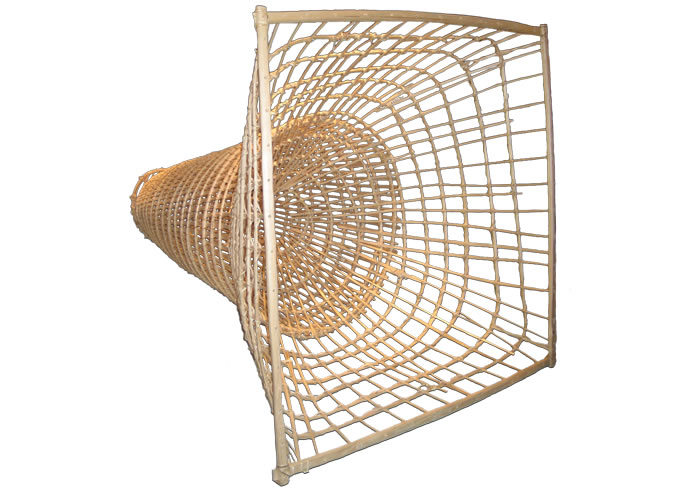
The basic principle behind most Yupik fish traps involves creating a funnel-shaped entrance that allows fish to swim in but makes it difficult for them to find their way out. The construction process was intricate and required considerable skill.

First, the willow branches would be gathered and often soaked or steamed to enhance their flexibility. They would then be carefully bent and woven to form the main body of the trap, creating a basket-like structure. The weaving patterns were not arbitrary; they were designed to be strong, allow water to flow through, and prevent fish from escaping.
The funnel or ‘throat’ of the trap was a critical element. This inverted cone-shaped entrance would be woven precisely, narrowing towards the interior of the main chamber. Once a fish entered, the tapering design and the natural elasticity of the willow made it challenging for the fish to turn around or locate the exit.
Spruce root lashings were used to secure every joint and connection, binding the willow branches together with incredible strength. These lashings were often applied using complex knotting techniques, ensuring the trap could withstand strong currents and the struggles of trapped fish.
Types of Yupik Fish Traps
Yupik communities developed various trap designs, each adapted to specific fish species, water conditions, and locations.
- Basket Traps: These were typically smaller, conical or cylindrical traps, often used for smaller schooling fish like smelt or eulachon (hooligan) in rivers and streams. They could be set individually or in series.
- Weirs: For larger fish like salmon, Yupik people constructed elaborate weirs. These were not single traps but rather complex fence-like structures spanning across rivers or streams, directing migrating salmon into collection pens or smaller basket traps. Weirs often involved driving stakes into the riverbed and weaving willow or other brush between them.
- Box Traps: Some designs resembled rectangular boxes with funnel entrances, deployed in specific river sections or tidal flats.
Strategic Placement and Usage
The effectiveness of a fish trap depended as much on its placement as its construction. Yupik fishers possessed an unparalleled understanding of local hydrology and fish behavior.
Traps were strategically positioned in areas where fish naturally congregated or migrated, such as narrow channels, eddies, or at the confluence of streams. The orientation of the trap was crucial, with the funnel entrance facing upstream to capture fish moving against the current, or downstream to intercept fish on their return journey.
Anchoring methods were robust, often involving large stones, stakes driven into the riverbed, or ropes secured to riverbanks, ensuring the trap remained stable even in strong currents. Regular monitoring and emptying were essential to prevent spoilage and to ensure the sustainability of the harvest.
Cultural Significance and Subsistence Living
Yupik fish traps were integral to the subsistence lifestyle, providing a reliable and efficient means of securing food. The knowledge and skills required for their construction and use were passed down orally and through practical demonstration from elders to younger generations.
The act of building and using traps was often a communal activity, fostering cooperation and strengthening community bonds. It reinforced a deep connection to the land and its resources, instilling a sense of responsibility and stewardship.
For the Yupik, fishing was not merely about sustenance; it was a spiritual endeavor, guided by traditions and a profound respect for the fish and the environment. Ceremonies and protocols often accompanied the first catch, acknowledging the gifts provided by nature.
Sustainability and Environmental Stewardship
Yupik fish traps represent an inherently sustainable fishing method. Unlike nets or modern fishing gear that can indiscriminately catch large quantities, traditional traps often allowed for a more selective harvest.
The design of the traps, particularly weirs, could be modified to allow a certain number of fish to pass upstream to spawn, ensuring the continuation of fish populations. This conscious approach to resource management prevented overfishing and maintained the ecological balance of the waterways.
The materials used were natural and biodegradable, leaving minimal environmental impact. When a trap reached the end of its life, it would naturally decompose, returning to the earth without leaving harmful waste.
Modern Relevance and Preservation Efforts
While modern fishing techniques and equipment have become more prevalent, traditional Yupik fish traps are still used in some communities, particularly for subsistence purposes. The knowledge of their construction remains a vital part of cultural heritage.
Efforts are underway by Yupik elders, cultural organizations, and museums to preserve and revitalize these traditional skills. Workshops, educational programs, and demonstrations help ensure that younger generations understand and appreciate the ingenuity of their ancestors.
Studying Yupik fish traps offers valuable insights into sustainable resource management and traditional ecological knowledge, lessons that hold significant relevance in today’s world of environmental concerns and the need for sustainable practices.
Conclusion: An Enduring Legacy of Ingenuity
The construction of Yupik fish traps is a testament to the remarkable ingenuity, resourcefulness, and deep ecological understanding of the Alaskan Native people. From the careful selection of willow and spruce roots to the intricate weaving and strategic placement, every aspect of these traps reflects a harmonious relationship with nature.
They are not just tools for catching fish; they are cultural artifacts that embody generations of ancestral knowledge, sustainable practices, and a profound respect for the environment. As we look to the future, the lessons embedded in the traditional Yupik fish trap continue to inspire, reminding us of the power of innovation rooted in sustainability and cultural heritage.
The legacy of Yupik fish trap construction stands as a powerful symbol of human adaptability and the enduring wisdom of indigenous cultures, a legacy that continues to enrich and inform our understanding of sustainable living in the Arctic and beyond.


