Guardians of the Grove: Why Sustainable Timber Management and Certification Are Crucial for Our Planet’s Future
The whispers of the forest tell ancient tales of growth, resilience, and interconnectedness. Yet, these venerable ecosystems, vital for life on Earth, face unprecedented threats. From the Amazon’s sprawling canopy to the boreal forests of the north, deforestation and unsustainable logging practices are stripping our planet bare, accelerating climate change, decimating biodiversity, and displacing indigenous communities. In this critical juncture, the concept of sustainable timber management, bolstered by robust certification systems, emerges not just as an ecological ideal but as an economic and social imperative.
For centuries, timber has been a cornerstone of human civilization, providing shelter, fuel, tools, and countless other products. However, the sheer scale of modern consumption, coupled with lax regulations and a lack of foresight, has pushed many of the world’s forests to their breaking point. The Food and Agriculture Organization (FAO) of the United Nations estimates that the world has lost 420 million hectares of forest since 1990, primarily due to agricultural expansion, but illegal and unsustainable logging also plays a significant role. This loss has profound consequences: forests act as critical carbon sinks, absorbing vast amounts of atmospheric carbon dioxide. Their destruction releases this stored carbon, contributing significantly to greenhouse gas emissions. Moreover, forests are biodiversity hotspots, home to an estimated 80% of terrestrial species. Their clearing leads to widespread species extinction, disrupting delicate ecological balances.
The Imperative for Change: Beyond Just Cutting Trees
The shift towards sustainable timber management represents a fundamental re-evaluation of our relationship with forests. It moves beyond simply viewing trees as raw material to be exploited, embracing a holistic perspective that recognizes forests as complex, living systems with ecological, social, and economic values that must be maintained for future generations.
At its core, sustainable forest management involves a suite of practices designed to ensure that the harvesting of timber does not diminish the forest’s long-term health or its capacity to provide ecosystem services. Key principles include:
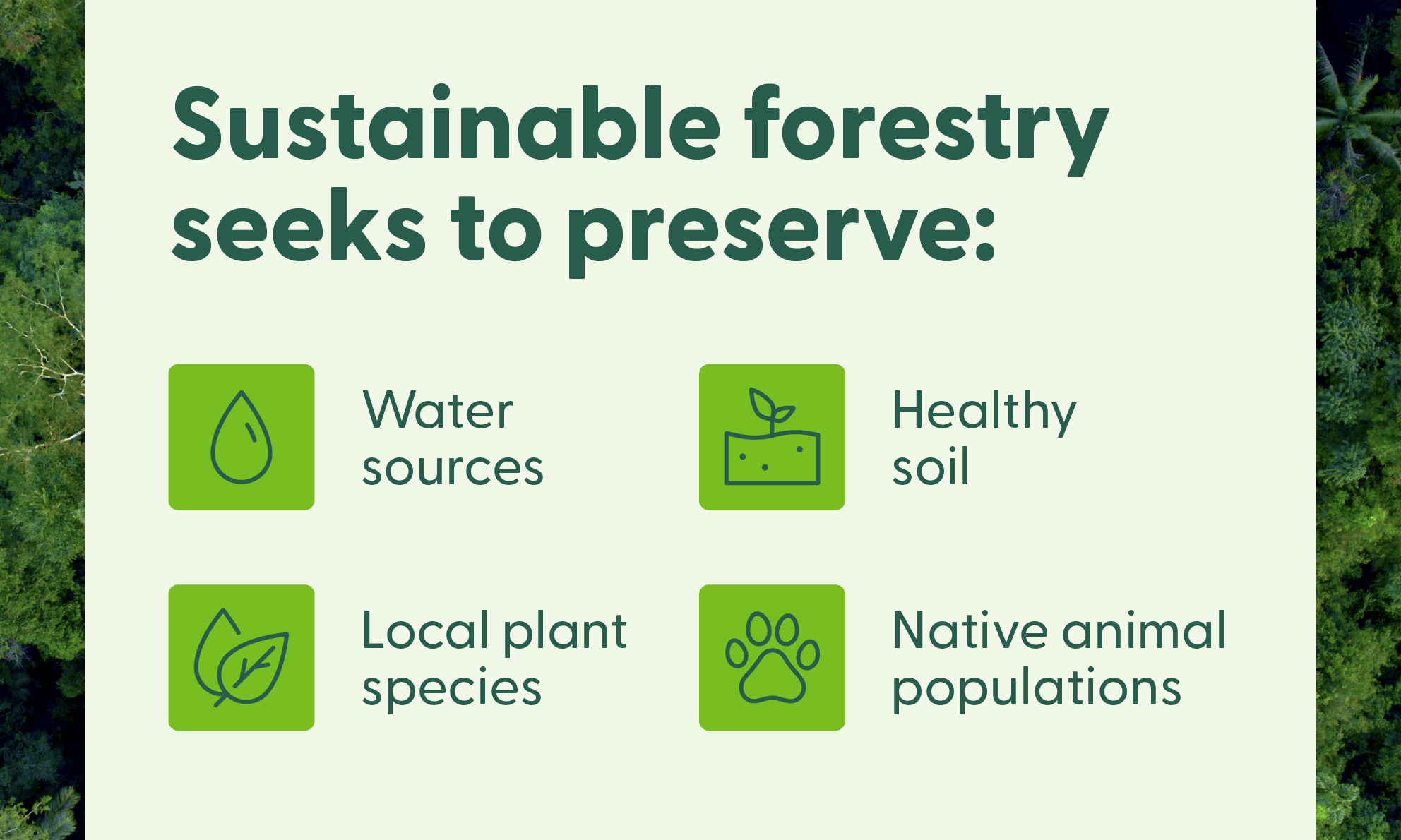
- Maintaining Forest Health and Vitality: This involves protecting forests from pests, diseases, and fires, and ensuring that harvesting practices do not degrade soil quality or water resources.
- Conserving Biodiversity: Sustainable practices prioritize the protection of wildlife habitats, rare species, and genetic diversity within the forest. This might involve setting aside conservation areas, protecting old-growth patches, and avoiding clear-cutting in sensitive areas.
- Sustaining Productive Capacity: Timber harvesting is managed at a rate that allows for natural regeneration and growth, ensuring a continuous supply of forest products without depleting the resource. Techniques like Reduced Impact Logging (RIL), which minimizes damage to residual trees and soil, are often employed.
- Protecting Soil and Water Resources: Careful planning of logging roads and harvesting operations helps prevent erosion, maintain water quality, and protect aquatic ecosystems.
- Maintaining Socio-Economic Functions: Sustainable forestry considers the well-being of local communities and forest workers. This includes respecting indigenous rights, providing fair wages and safe working conditions, and ensuring that local populations benefit from forest resources.
- Legal Compliance and Governance: Adherence to all national and international laws, treaties, and agreements related to forest management is fundamental. This combats illegal logging and promotes transparency.
As Dr. Anya Sharma, a leading environmental scientist, puts it, "Our forests are not just timber factories; they are the lungs of our planet, critical for climate regulation, biodiversity, and the livelihoods of millions. Sustainable management isn’t an option; it’s an ecological imperative that requires balancing human needs with ecological resilience."
The Power of Certification: Building Trust from Forest to Consumer
While the principles of sustainable forest management are well-defined, how can consumers, businesses, and governments be sure that the timber products they purchase genuinely come from responsibly managed forests? This is where third-party certification systems play an indispensable role.
Forest certification provides an independent, verifiable assurance that a forest is managed according to a set of internationally recognized environmental, social, and economic standards. It acts as a transparent mechanism that tracks timber from its origin in a sustainably managed forest through all stages of processing and distribution – known as "Chain of Custody" (CoC) – until it reaches the end-consumer. This allows consumers to make informed choices, differentiating products from sustainable sources from those linked to deforestation and exploitation.
There are two primary international certification systems dominating the global timber market:
- Forest Stewardship Council (FSC): Established in 1993, FSC is widely regarded as the most rigorous and credible certification system. It was created in response to concerns over global deforestation and offers a robust framework of ten principles and 70 criteria that address environmental, social, and economic aspects of forest management. FSC is supported by major environmental NGOs like WWF and Greenpeace. Its iconic "tree tick" logo signifies that the product’s timber comes from forests managed responsibly.
- Programme for the Endorsement of Forest Certification (PEFC): Launched in 1999, PEFC is the world’s largest forest certification system, endorsing national forest certification systems developed by stakeholders within individual countries. While sometimes perceived as less stringent than FSC, PEFC emphasizes a bottom-up approach, allowing national standards to reflect local conditions and priorities, often making it more accessible to small forest owners.
Both systems aim to promote responsible forest management, but their governance structures, stakeholder engagement, and specific standards can differ. Regardless, both provide a vital mechanism for accountability and transparency in the global timber supply chain. "Certification acts as a transparent bridge between the forest and the consumer’s shopping basket," says Dr. Ben Carter, a forestry economist. "It transforms an abstract commitment to sustainability into a tangible, verifiable claim that drives market demand for responsible products."
Benefits Beyond the Trees: A Multi-faceted Impact
The benefits of sustainable timber management and certification extend far beyond the immediate environmental gains:
- Environmental Integrity: Directly reduces deforestation, protects biodiversity, enhances carbon sequestration, and maintains healthy water cycles.
- Economic Viability: Certified forests often achieve better market access, command premium prices, and attract environmentally conscious investors. It helps secure long-term timber supply and promotes responsible business practices.
- Social Equity: Ensures fair treatment of forest workers, respects the rights of indigenous peoples, and contributes to the economic stability of local communities through job creation and revenue sharing.
- Consumer Confidence: Empowers consumers to make ethical purchasing decisions, contributing to a more sustainable global economy.
- Improved Governance: Encourages better forest law enforcement, combats illegal logging, and promotes transparency throughout the supply chain.
Navigating the Complexities: Challenges and Criticisms
Despite their undeniable importance, sustainable timber management and certification are not without challenges and criticisms.
One significant hurdle is the cost of certification, which can be prohibitive for small-scale forest owners, particularly in developing countries. The initial audit, annual surveillance, and adherence to rigorous standards require financial investment and technical expertise that many smallholders lack, potentially limiting their participation and the overall reach of certification.
Another concern is "greenwashing," where companies might use certification as a marketing tool without genuinely committing to its underlying principles, or where less rigorous standards might be exploited. Critics also point to the complexity of global supply chains, where mixing of certified and uncertified wood can occur, making 100% traceability difficult to guarantee.
Furthermore, market demand for certified products, while growing, is not always consistent across all regions and product categories. If consumers and businesses are unwilling to pay a premium for certified timber, the economic incentive for sustainable management diminishes.
Looking Ahead: Innovation and Integration
The future of sustainable timber management and certification will likely involve continuous innovation and greater integration across sectors. Technological advancements, such as blockchain for enhanced supply chain transparency, satellite monitoring for real-time deforestation detection, and genetic research for faster-growing, disease-resistant trees, hold immense promise.
Moreover, there’s a growing recognition that sustainable forestry cannot exist in isolation. It must be integrated into broader land-use planning, climate change mitigation strategies, and rural development initiatives. Collaborative efforts between governments, industry, NGOs, and local communities are essential to overcome existing barriers and scale up sustainable practices globally.
Conclusion: A Collective Responsibility
The journey towards a truly sustainable timber industry is ongoing, fraught with complexities, yet undeniably vital. Sustainable timber management practices, reinforced by robust certification systems like FSC and PEFC, offer a beacon of hope in safeguarding our planet’s invaluable forest resources. They provide a framework for balancing human needs with ecological health, ensuring that the forests continue to breathe, thrive, and provide for generations to come.
As consumers, our choices wield significant power. By demanding certified timber products, we send a clear signal to the market that sustainability matters. As businesses, investing in certified supply chains is not just an ethical choice but a strategic one, building resilience and reputation. As governments, creating supportive policy environments and enforcing stringent regulations are crucial. The future of our forests, and indeed our planet, rests on our collective commitment to transforming the way we source and consume timber – recognizing that every tree we cut must be part of a larger, enduring cycle of life.


