The story of the Seminole Tribe of Florida is one of unwavering resilience, cultural preservation, and a deep connection to the land. Often referred to as the ‘Unconquered People,’ they are a testament to survival against immense historical pressures. Today, their presence in Florida is marked by several vibrant reservations, each playing a crucial role in the tribe’s contemporary life and future.
Understanding the Seminole Tribe requires a journey back in time, tracing their origins from various Native American groups, including Creek, Miccosukee, and others, who migrated into Florida in the 18th century. They forged a new identity, adapting to the unique subtropical environment and developing a distinct culture.
The 19th century brought immense conflict with the United States, culminating in the three devastating Seminole Wars. Unlike many other Native American tribes, a significant portion of the Seminoles resisted forced removal to Oklahoma, retreating deep into the Florida Everglades. This refusal to surrender earned them their moniker as the ‘Unconquered People’.
It was this steadfast determination that allowed them to eventually establish permanent land bases within Florida. These reservations, though often remote and challenging initially, became the bedrock upon which the modern Seminole Tribe of Florida would rebuild and thrive.
Today, the Seminole Tribe of Florida manages six federally recognized reservations spread across the state. Each reservation is a distinct community, yet all are united under the umbrella of the tribal government, working towards common goals of sovereignty, economic prosperity, and cultural continuity.
The Six Pillars: Seminole Reservations in Florida
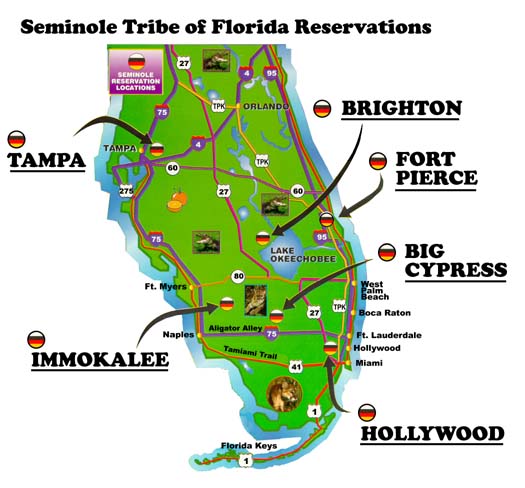
The six primary Seminole reservations in Florida are: Big Cypress, Brighton, Hollywood (Dania), Immokalee, Fort Pierce, and Tampa. Each has its own unique character, history, and economic drivers, contributing to the overall strength and diversity of the tribe.
Big Cypress Reservation: Heart of the Everglades. Located in Hendry and Collier Counties, Big Cypress is one of the largest and most ecologically significant reservations. It spans vast tracts of the Everglades, making it a crucial area for environmental conservation and traditional practices. The Ah-Tah-Thi-Ki Museum, a world-class institution dedicated to Seminole history and culture, is a highlight here, offering visitors an immersive experience into their heritage.
Brighton Reservation: Agricultural Roots. Situated on the northwest side of Lake Okeechobee in Glades County, the Brighton Reservation is known for its strong agricultural traditions, particularly cattle ranching. This enterprise has been a cornerstone of the tribe’s economy for generations, demonstrating their adaptability and resourcefulness.
Hollywood Reservation: Urban Hub. The Hollywood Reservation, also known as the Dania Reservation, is unique for its urban location in Broward County, near Fort Lauderdale. This reservation is a major economic engine for the tribe, home to the iconic Seminole Hard Rock Hotel & Casino Hollywood, a premier entertainment destination.
Immokalee Reservation: Growing Community. Located in Collier County, the Immokalee Reservation is a growing community with a focus on residential development and local services. It represents the ongoing expansion and modernization efforts of the tribe.
Fort Pierce Reservation: Coastal Presence. The Fort Pierce Reservation in St. Lucie County offers the tribe a presence on Florida’s east coast. While smaller, it plays an important role in the geographic distribution and accessibility of tribal services.
Tampa Reservation: Another Urban Center. Similar to Hollywood, the Tampa Reservation in Hillsborough County is another significant urban center, home to the Seminole Hard Rock Hotel & Casino Tampa. Its strategic location makes it a vital part of the tribe’s economic portfolio and a hub for employment.
It is important to note that the Seminole Tribe of Florida is distinct from the Miccosukee Tribe of Indians of Florida, though both share a common ancestry and history of resilience in the Everglades. The Miccosukee Tribe also maintains its own sovereign lands in Florida.
Tribal Governance and Sovereignty

The Seminole Tribe of Florida operates as a sovereign nation, with its own constitution and elected tribal council. This self-governance allows the tribe to make decisions regarding its lands, resources, and people, ensuring the preservation of their unique way of life and cultural identity. The tribal council oversees various departments, from education and healthcare to economic development and environmental protection.
Economic Powerhouse: Gaming and Beyond
Perhaps one of the most visible aspects of the modern Seminole Tribe of Florida is its success in economic development. The tribe was a pioneer in the Indian gaming industry, opening the first high-stakes bingo hall in the United States on its Hollywood Reservation in 1979. This groundbreaking venture paved the way for tribal gaming nationwide.
Today, the Seminole Hard Rock Entertainment brand, owned by the tribe, is a global powerhouse, encompassing hotels, casinos, and restaurants across multiple continents. This success has provided the tribe with significant resources to invest in its communities, infrastructure, and future generations.
Beyond gaming, the Seminole Tribe diversifies its economy through enterprises like citrus groves, cattle ranching, tourism, and various small businesses. This diversified portfolio ensures stability and continued growth for the tribal nation.
Preserving Culture and Heritage
Despite modern advancements, the Seminole Tribe remains deeply committed to preserving its rich culture and heritage. Language programs are vital, ensuring the survival of both the Creek and Miccosukee languages spoken within the tribe. Traditional arts and crafts, such as patchwork clothing, basket weaving, and doll making, continue to be practiced and celebrated.
Ceremonies and traditions, often rooted in their ancestral practices and connection to the land, are integral to tribal life. These cultural expressions provide a vital link to their past and reinforce their collective identity.
The Ah-Tah-Thi-Ki Museum on the Big Cypress Reservation serves as a powerful testament to this commitment. It offers an invaluable resource for tribal members and the public alike to learn about Seminole history, art, and traditions through immersive exhibits and educational programs.
Environmental Stewardship: Guardians of the Everglades
The Seminole Tribe has an inherent and profound connection to the Everglades. For centuries, this unique ecosystem served as their refuge and provided sustenance. Today, the tribe continues its role as a dedicated steward of this fragile environment, actively participating in conservation efforts and advocating for its protection.
Their traditional ecological knowledge offers invaluable insights into managing and preserving the Everglades. The tribe often partners with state and federal agencies on initiatives aimed at restoring water flow, protecting wildlife, and combating invasive species within their ancestral lands and beyond.
Community and Future
The prosperity generated by tribal enterprises is reinvested into the community, funding essential services such as healthcare facilities, educational programs, housing initiatives, and elder care. This commitment ensures a high quality of life for tribal members and promotes sustainable growth.
Educational opportunities are a significant focus, with tribal scholarships and programs supporting members from early childhood through higher education. This investment in human capital is crucial for the tribe’s continued leadership and innovation.
The Seminole Tribe of Florida stands as a powerful example of indigenous resilience, adaptation, and economic self-determination. From their ‘unconquered’ past to their thriving present, they continue to shape their destiny while honoring their ancestors and safeguarding their unique culture.
Visiting a Seminole reservation, particularly the Ah-Tah-Thi-Ki Museum or one of the Hard Rock properties, offers a unique opportunity to learn about this remarkable tribe firsthand. It’s an experience that highlights not just their history, but their vibrant living culture and significant contributions to Florida and the nation.
In conclusion, the Seminole Tribe of Florida’s reservations are more than just land; they are centers of cultural preservation, economic innovation, and community strength. They embody the spirit of a people who refused to be conquered, building a powerful legacy that continues to inspire. Their story is a vital chapter in the tapestry of American history, demonstrating the enduring power of sovereignty and self-determination.


