Okay, here is a 1200-word journalistic article in English about the history of the Potlatch ceremony in the Pacific Northwest.
The Enduring Feast: A Journey Through the History of the Pacific Northwest Potlatch
In the lush, mist-shrouded landscapes where the temperate rainforest meets the tumultuous Pacific, a profound cultural institution once thrived, serving as the very loom upon which the social, political, and spiritual fabric of the Pacific Northwest Indigenous peoples was woven. This was the Potlatch – a ceremony so central to life, so complex in its mechanics, and so misunderstood by colonial powers that its suppression became a bitter symbol of cultural warfare. Yet, the Potlatch endured, a testament to the resilience and deep-rooted identity of nations like the Haida, Tlingit, Kwakwaka’wakw (Kwakiutl), Nuu-chah-nulth (Nootka), and Coast Salish peoples.
More than a mere feast or gift-giving event, the Potlatch was a cornerstone of governance, economics, and spirituality. It was a public declaration of status, an intricate system of wealth redistribution, and a vital means of legitimizing claims to names, territories, and privileges. From the raising of a towering totem pole to the passing of a chief, from a child’s first step to the mourning of a loved one, virtually every significant life event was commemorated, witnessed, and validated through the ritual of the Potlatch.
The Heart of a Culture: What Was the Potlatch?
At its core, the Potlatch was a grand ceremonial feast where a host, typically a high-ranking individual or a lineage, would invite guests from their own community and often from neighbouring nations. The purpose was manifold: to assert or reaffirm one’s social standing, to repay debts incurred from previous Potlatches, to mark transitions, and to redistribute accumulated wealth. The act of giving away valuable goods was not seen as a loss, but as an investment in social capital, enhancing the host’s prestige and obligating the recipients to return the favour with even greater generosity at a future date.
The preparation for a Potlatch could span years, involving the accumulation of vast quantities of food, blankets, furs, canoes, eulachon oil (a rich fish oil), and ceremonial objects. The Kwakwaka’wakw, in particular, were renowned for the sheer scale and dramatic flair of their Potlatches. Pioneering anthropologist Franz Boas, who spent decades documenting the cultures of the Pacific Northwest, particularly the Kwakwaka’wakw, was instrumental in dispelling colonial myths about the Potlatch. He understood that what appeared to outsiders as "reckless extravagance" was, in fact, a highly rational and sophisticated system of social organization.
Boas observed that the Potlatch served as a "credit system" and a "bank" where wealth was publicly displayed, distributed, and thereby circulated. "The main object of the Potlatch," Boas wrote in his seminal work, The Social Organization and the Secret Societies of the Kwakiutl Indians, "is the distribution of property, and the more property a man can give away, the greater is his prestige." This emphasis on generosity as a measure of greatness stood in stark contrast to Western notions of wealth accumulation and individualism.
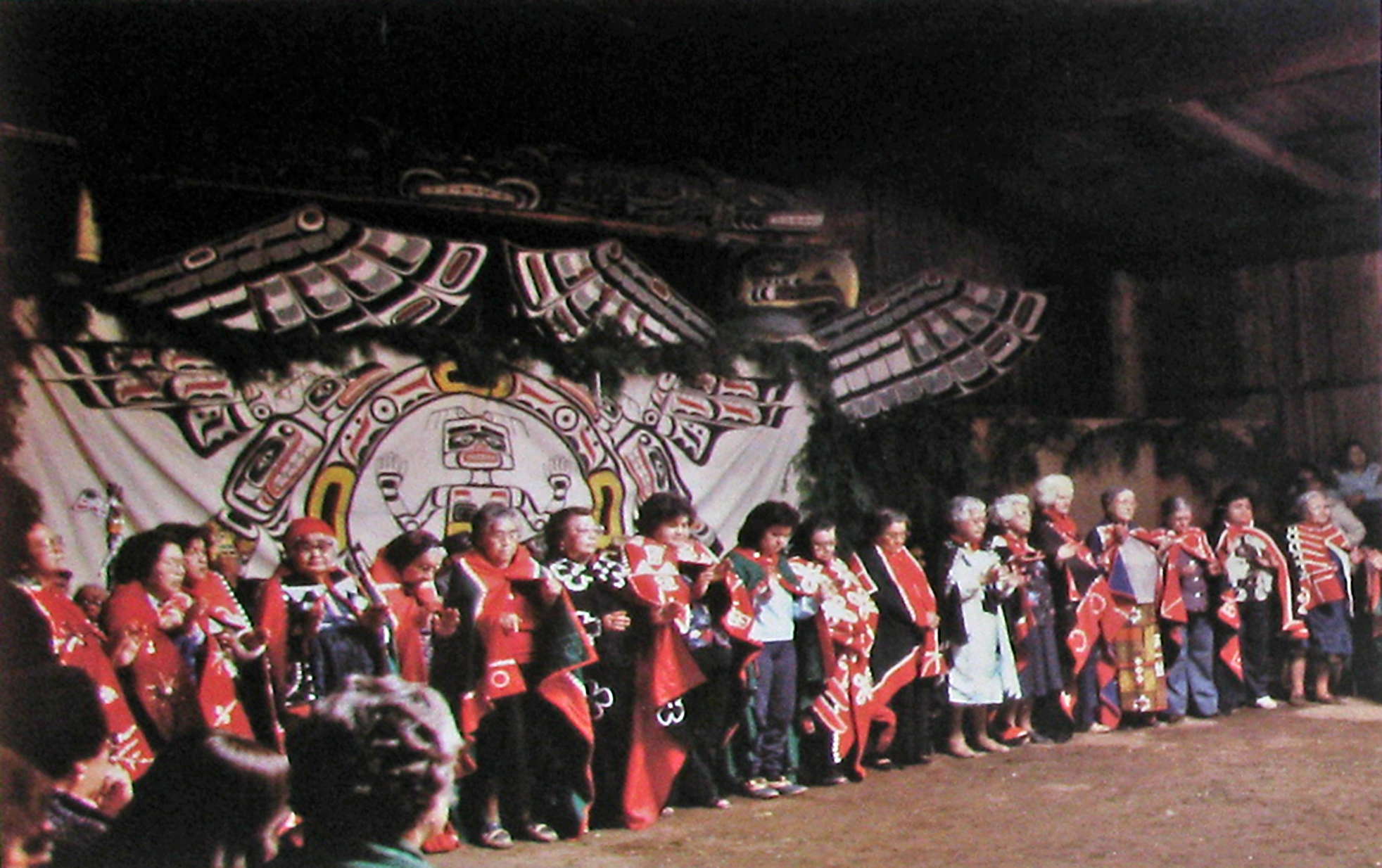
A Potlatch was a multi-day spectacle, filled with elaborate masked dances, powerful songs, compelling oratory, and dramatic theatrical performances. Guests, often numbering in the hundreds, would arrive by canoe, bearing gifts and ready to witness the proceedings. The host would display their lineage’s inherited privileges through dances, songs, and the display of crests on masks, carved objects, and regalia. Crucially, the guests were not merely recipients of gifts; they were witnesses whose presence legally validated the host’s claims and pronouncements. Their acceptance of gifts was an acknowledgment of the host’s status.
One of the most intriguing aspects of some Potlatches, particularly among the Kwakwaka’wakw, was the competitive element, which could sometimes involve the symbolic destruction of wealth. Items like valuable "coppers" – large, shield-shaped pieces of hammered copper, often engraved with crests, whose value could equal thousands of blankets – might be broken and distributed, or even thrown into the sea, to demonstrate immense wealth and disdain for material possessions. This act was not wasteful in the Indigenous worldview; it was a profound assertion of power and a challenge to rivals, daring them to match or exceed the gesture.
Colonial Misunderstanding and the Ban
Before European contact, the Potlatch ensured social stability, resolved disputes, and provided a mechanism for resource sharing among interconnected communities. The arrival of European traders and settlers, however, brought profound changes. Initially, the introduction of new goods like wool blankets, metal tools, and firearms sometimes led to an escalation in Potlatch activities, as new forms of wealth became available to distribute. But this period of adaptation soon gave way to one of severe repression.
Colonial authorities, missionaries, and government agents consistently failed to comprehend the intricate cultural logic of the Potlatch. They viewed it through a lens of Victorian morality and capitalist ideology, deeming it wasteful, barbaric, and an impediment to "progress" and assimilation. Missionaries saw it as a pagan ritual that diverted Indigenous peoples from Christianity and "civilized" labour. Government officials believed it encouraged "idleness" and prevented Indigenous people from becoming farmers or wage earners.
This fundamental misunderstanding culminated in one of the most egregious acts of cultural suppression in Canadian history: the Potlatch Ban. Enacted in 1884 as an amendment to the Indian Act, the ban explicitly prohibited the Potlatch and other traditional ceremonies. The legislation was sweeping and punitive: "Every Indian or other person who engages in or assists in celebrating the Indian festival known as the ‘Potlatch’ or in the Indian dance known as the ‘Tamanawas’ is guilty of a misdemeanor, and shall be liable to imprisonment for a term not exceeding six months and not less than two months."
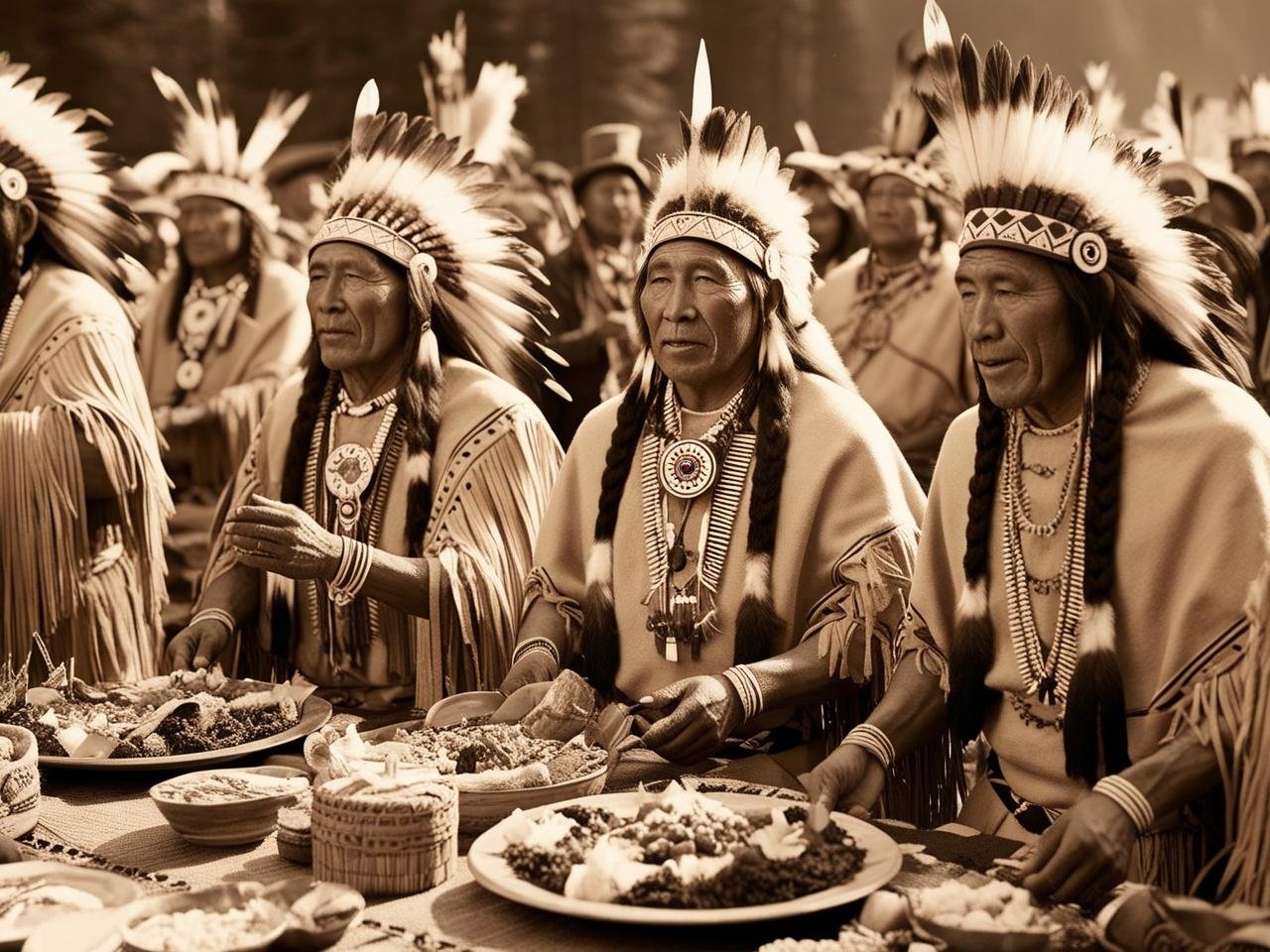+A+tradition+among+Indigenous+coastal+tribes%2C+potlatches+emphasize+sharing+wealth%2C+not+hoarding+it.+By+redistributing+resources+within+the+community%2C+they+strengthen+bonds+and+.jpg "Potlatch ceremony history Pacific Northwest")
For 67 years, until its repeal in 1951, the Potlatch went underground. The ban was rigorously enforced, often with devastating consequences. Ceremonial regalia, masks, and other sacred objects were confiscated by authorities and sold to museums and private collectors, both within Canada and internationally. Families faced imprisonment, fines, and the profound trauma of having their cultural practices criminalized.
One of the most infamous incidents occurred in 1921, when a large Kwakwaka’wakw Potlatch was held at Yuquot (Village Island) in defiance of the ban. Alerted by a missionary, Indian Agent William Halliday arrested 45 people. Twenty-two were ultimately sentenced to prison terms, and a vast collection of priceless ceremonial artifacts – including masks, coppers, and regalia – were seized. These objects were later dispersed to various museums, including the Royal Ontario Museum and the Museum of the American Indian (now part of the National Museum of the American Indian) in New York, becoming symbols of both loss and resistance.
The Struggle for Survival and Revitalization
Despite the draconian measures and the immense pressure to abandon their traditions, Indigenous peoples found ways to keep the spirit of the Potlatch alive. Ceremonies were held in secret, in remote locations, or disguised as other gatherings. Elders passed down knowledge surreptitiously, ensuring that the songs, dances, and protocols were not entirely lost. This period of clandestine practice demonstrated an extraordinary resilience and an unwavering commitment to cultural continuity.
The repeal of the Potlatch Ban in 1951 marked a turning point, albeit a slow one. The damage had been done; generations had been denied their cultural heritage, and much knowledge had been lost. However, the lifting of the legal constraint allowed communities to begin the arduous process of cultural revitalization.
Since the latter half of the 20th century, and particularly in recent decades, the Potlatch has experienced a powerful resurgence. Communities have actively sought the return of confiscated artifacts from museums around the world, recognizing these objects not merely as art but as living embodiments of their history and identity. The U’mista Cultural Centre in Alert Bay and the Nuyumbalees Cultural Centre on Quadra Island, for example, were founded specifically to house and care for repatriated Potlatch artifacts, making them accessible to their rightful owners and serving as vital hubs for cultural renewal.
Today, contemporary Potlatches are held across the Pacific Northwest, embodying both traditional protocols and modern adaptations. They serve as powerful affirmations of Indigenous identity, resilience, and sovereignty. They are places of healing, learning, and celebration, where ancestral knowledge is passed to new generations, languages are spoken, and the deep connections between people, land, and spirit are rekindled. These modern Potlatches also play a crucial role in reconciliation efforts, demonstrating the enduring strength of Indigenous cultures and educating broader society about the rich heritage that was once suppressed.
An Enduring Legacy
From its origins as the bedrock of Indigenous society, through decades of colonial suppression, and into its vibrant contemporary resurgence, the Potlatch stands today not just as a historical artifact, but as a living, breathing testament to the extraordinary resilience and cultural richness of the Pacific Northwest Indigenous peoples. It reminds us that true wealth lies not in accumulation, but in generosity; not in individual gain, but in collective well-being and the strengthening of community bonds. The enduring feast continues, a powerful symbol of identity, survival, and the profound wisdom embedded in ancient traditions.


