The Enduring Echoes: Oral Traditions of Turtle Island Nations
To truly understand the vibrant, complex tapestry of Indigenous nations across Turtle Island (North America), one must look beyond the written word and listen to the enduring echoes of oral traditions. These are not mere "stories" or quaint folklore; they are sophisticated, dynamic systems of knowledge, law, history, spirituality, and governance, meticulously preserved and transmitted across millennia. Far from being primitive, these oral literatures represent highly advanced intellectual achievements, forming the very bedrock of Indigenous identity and worldview.
The term "oral tradition" itself barely scratches the surface of its profound depth and function. For Indigenous peoples, knowledge transmission is a holistic, immersive experience. It encompasses creation narratives, epic historical accounts, intricate legal protocols, ceremonial songs, medicinal formulas, prophecies, ethical frameworks, and detailed ecological observations. Unlike static written texts, oral traditions are living, breathing entities, often performed with specific intonation, gesture, and context that are integral to their meaning. They are mnemonic masterpieces, designed to be remembered, interpreted, and re-enacted, ensuring the continuity of culture and collective memory.
At the heart of these traditions are the knowledge keepers, orators, and storytellers – highly respected individuals who dedicate their lives to mastering and transmitting these vast bodies of knowledge. Their training is rigorous, often spanning decades, involving deep memorization, understanding of complex symbolic language, and the ability to adapt narratives to specific audiences and contemporary contexts while preserving their core integrity. As Anishinaabe Elder Dr. Basil Johnston eloquently stated, "Our stories are not merely entertainment; they are lessons, they are history, they are our laws, our philosophy, our very being."
One of the most critical functions of oral tradition is its role as a comprehensive historical record. Before European contact, and continuing to this day, Indigenous nations meticulously recorded their past through oral narratives. These accounts detail migrations, alliances, battles, treaties, significant environmental shifts, and the genealogies of leaders. For example, the Haudenosaunee (Iroquois Confederacy) maintains an oral history that traces their Great Law of Peace (Kayanerenkó:wa) back hundreds of years, detailing its formation, principles, and the visionary leaders who established it. Wampum belts, intricately woven shells, serve not as written texts themselves, but as powerful mnemonic devices, aiding elders in recalling the precise words and terms of treaties and historical events, making them living documents of immense historical and legal weight.
Beyond history, oral traditions serve as the foundational legal and governance frameworks for many nations. The Haudenosaunee Great Law, for instance, is a complex constitution transmitted orally, outlining democratic principles, responsibilities of leadership, conflict resolution mechanisms, and the rights and duties of individuals and clans. Similarly, many nations hold oral covenants with the land and with other living beings, outlining reciprocal responsibilities and sustainable practices. These "laws of the land" are not abstract concepts but practical guidelines for living in harmony with the environment, passed down through generations.

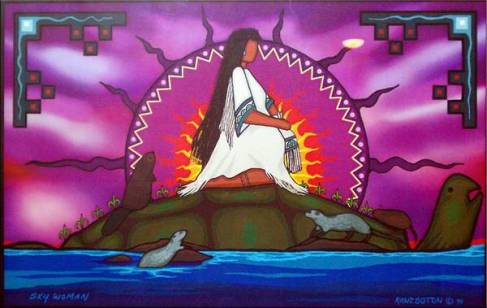
Spirituality and philosophy are intrinsically woven into these narratives. Creation stories, common across all nations, offer profound insights into the origins of the world, humanity’s place within it, and the interconnectedness of all life. They often teach humility, gratitude, respect for the Creator and all of creation, and the importance of balance. The Anishinaabe Seven Grandfather Teachings (Wisdom, Love, Respect, Bravery, Honesty, Humility, Truth), for instance, are ethical principles conveyed through animal stories, guiding individuals toward a virtuous life and fostering strong community bonds. These teachings are not merely moral fables; they are deep philosophical tenets that shape an individual’s worldview and their interactions with the world.
Oral traditions are also vital educational tools, instructing younger generations in practical skills, social etiquette, and responsible stewardship. Children learn about medicinal plants, hunting techniques, navigation, and diplomacy through stories that embed these lessons within memorable narratives. The detailed ecological knowledge held within these traditions is astounding, representing thousands of years of observation and interaction with specific bioregions. Indigenous languages, themselves largely oral, are the primary vessels for this knowledge. Many Indigenous languages are polysynthetic, meaning a single word can convey complex ideas or entire sentences, making direct translation into English often inadequate and underscoring the richness and precision of the original oral forms.
However, the vitality of these traditions has faced immense challenges. The advent of colonialism brought with it devastating policies aimed at eradicating Indigenous cultures, languages, and knowledge systems. Residential and boarding schools, in particular, were designed to sever children from their families, languages, and oral traditions, often through violence and coercion. This deliberate cultural genocide led to significant language loss and the disruption of intergenerational transmission, pushing many ancient traditions to the brink of extinction. The dominant Western paradigm, which prioritized written over oral knowledge, further devalued and misunderstood these sophisticated systems.
Despite these assaults, the oral traditions of Turtle Island nations have demonstrated remarkable resilience. Today, there is a powerful resurgence of efforts to reclaim, revitalize, and transmit these precious legacies. Indigenous communities are establishing language immersion programs, cultural camps, and intergenerational mentorship initiatives to ensure that elders can pass on their knowledge to youth. Digital archives are being created, not as replacements for oral transmission, but as supplementary tools to preserve narratives and languages for future generations. Indigenous scholars and artists are finding innovative ways to share these traditions through contemporary media, from spoken word poetry and theatre to literature and film, ensuring their relevance in a modern world while maintaining their integrity.
For instance, the revitalized use of traditional canoe journeys among Pacific Northwest Coast nations is a powerful example of oral tradition in action. These journeys involve not just the physical act of paddling, but the learning and performance of ancestral songs, stories, and protocols associated with travel, diplomacy, and connection to territory. Each stroke of the paddle, each song sung, reinforces a millennia-old relationship with the land and water, drawing directly from oral histories.
In conclusion, the oral traditions of Turtle Island nations are far more than historical relics; they are living testaments to enduring wisdom, resilience, and profound cultural depth. They offer invaluable insights into sustainable living, ethical governance, and a holistic understanding of the world that holds immense relevance for all of humanity. As the world grapples with environmental crises, social fragmentation, and the search for deeper meaning, the ancient echoes of Turtle Island’s oral traditions offer potent lessons – if only we are willing to listen with open hearts and minds. Respecting and supporting the continued vitality of these traditions is not just about preserving Indigenous culture; it is about enriching the collective human heritage with an irreplaceable body of knowledge and wisdom.


