
The Navajo Nation, known in its native tongue as Diné Bikeyah, represents a vast and historically significant territory spanning across Arizona, New Mexico, and Utah. Understanding its geographical layout is not merely about identifying boundaries on a piece of paper; it’s about appreciating the rich cultural heritage, the challenging yet beautiful landscapes, and the vibrant communities that call this land home. For anyone planning to visit, conduct research, or simply learn more, a reliable Navajo Nation Reservation map is an indispensable tool.
This comprehensive guide aims to shed light on the intricacies of the Navajo Nation map, providing insights into its significance, what to look for, and how to use it effectively for exploration and understanding. Whether you’re a first-time visitor or a seasoned traveler, navigating this expansive indigenous land requires respect, preparation, and a good sense of direction.
The Navajo Nation is the largest federally recognized Native American reservation in the United States, both in terms of land area and population. Its sheer scale is often surprising to those unfamiliar with its dimensions, covering over 27,000 square miles—an area larger than several U.S. states.
Established through treaties and executive orders, the Navajo Nation operates as a sovereign entity with its own governmental structure, laws, and cultural practices. This sovereignty means that visitors are entering a distinct nation, and understanding its geography is a fundamental step in showing respect for its people and traditions.
The reservation’s boundaries encompass a diverse array of geological features, from arid deserts and towering mesas to deep canyons and forested mountains. This varied topography is not just scenic; it has shaped the history, economy, and spiritual beliefs of the Diné people for centuries.
Why is a Detailed Navajo Nation Map Essential? For visitors, a map provides critical information on roads, points of interest, visitor centers, and essential services like gas stations and lodging. Given the remote nature of many areas, cell service can be spotty or non-existent, making a physical map or a downloaded offline map an absolute necessity.
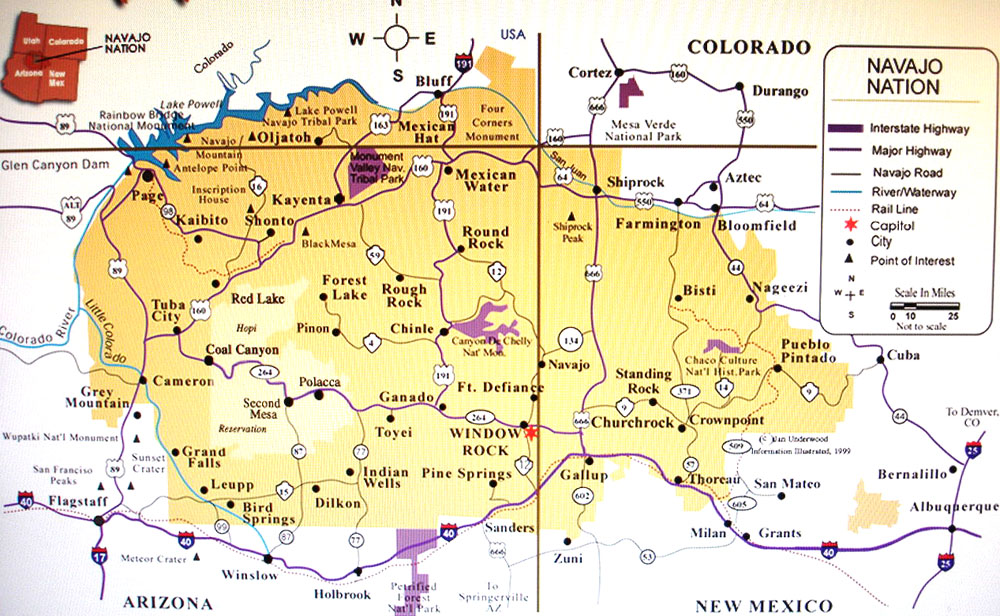
For residents and those working within the Nation, maps are vital for understanding local jurisdictions, locating chapter houses (local administrative units), accessing healthcare facilities, and navigating daily life across vast distances. Researchers and historians rely on maps to trace historical migrations, cultural sites, and land use patterns.
When examining a Navajo Nation map, look for several key features. Major highways such as US-160, US-191, and US-491 are crucial for understanding main arteries. However, be aware that many roads, especially off the main routes, may be unpaved, prone to washouts, or require four-wheel drive, particularly after rain or snow.
The map should clearly delineate community boundaries and identify significant towns. While some are sizable, many are small, remote settlements. Understanding their locations helps in planning travel times and identifying places to resupply.
Prominent natural landmarks are often highlighted, including iconic formations like Monument Valley Navajo Tribal Park, Canyon de Chelly National Monument, and Shiprock Peak. These are not just tourist attractions but places of deep cultural and spiritual significance to the Diné people.
Another important aspect is the identification of chapter houses. The Navajo Nation is divided into 110 chapters, which are the local governmental units. Knowing their locations can be useful for administrative purposes or simply for understanding the decentralized nature of the Nation’s governance.
Navigating Major Communities and Landmarks: The capital of the Navajo Nation is Window Rock, Arizona. Located near the Arizona-New Mexico border, it’s home to the Navajo Nation Council Chambers, tribal offices, and the Navajo Nation Zoo. Its location on the map is central to understanding the administrative heart of Diné Bikeyah.
To the north, straddling the Arizona-Utah border, lies Monument Valley Navajo Tribal Park. This globally recognized landscape is a must-see, and its position on the map helps visitors plan routes from nearby towns like Kayenta, Arizona, or Mexican Hat, Utah.
Further east in Arizona, Canyon de Chelly National Monument offers breathtaking views and a deep dive into ancient pueblo and Navajo history. Chinle is the primary gateway community, and its location on the map provides context for accessing the canyon’s rim drives and guided tours.
Shiprock, New Mexico, dominated by the striking Shiprock Peak (Tsé Bit’a’í), is a significant community in the eastern part of the Nation. Its placement on the map highlights its importance as a regional hub and a gateway to the Four Corners region.
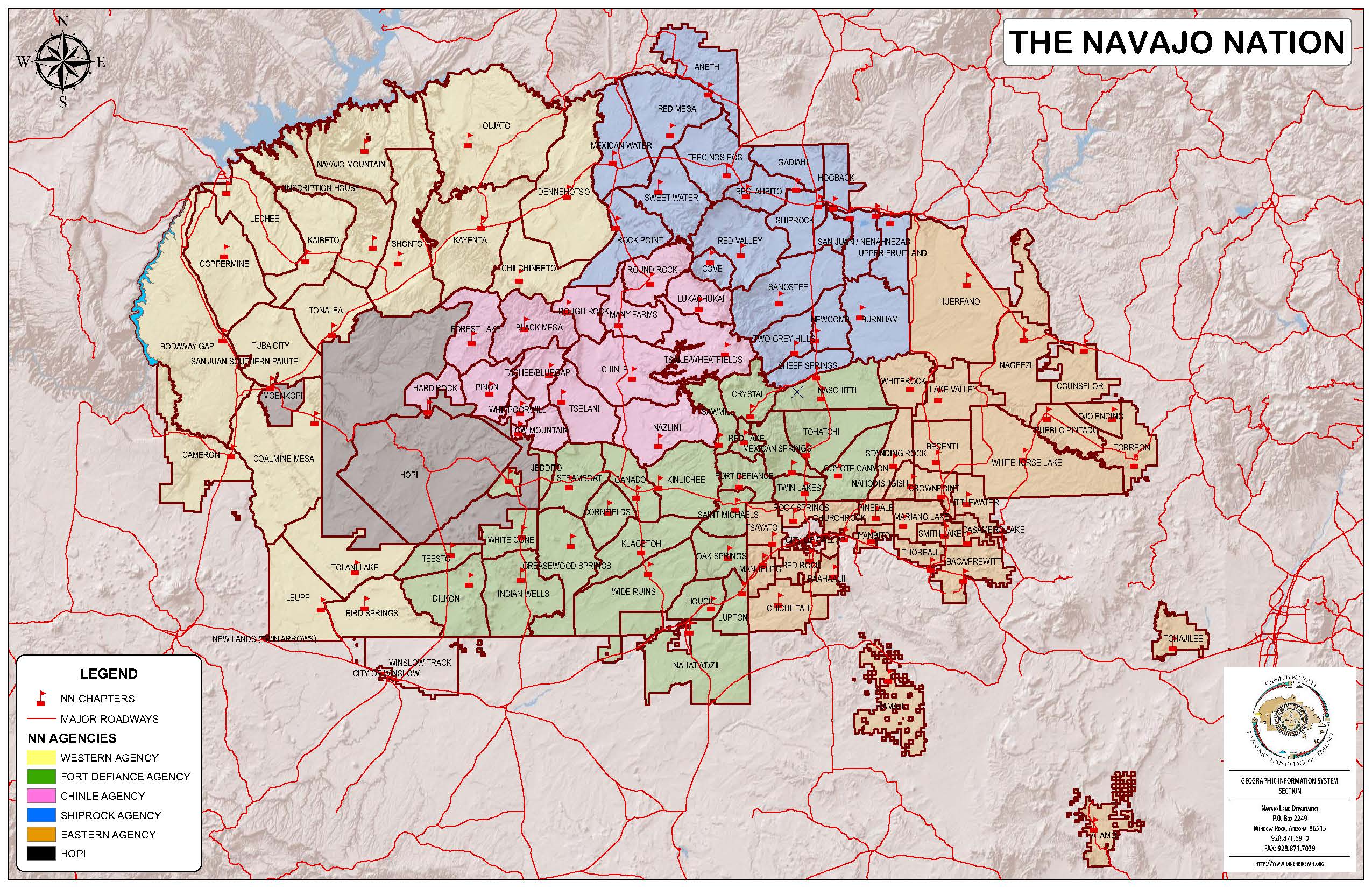
The Four Corners Monument, where Arizona, New Mexico, Utah, and Colorado meet, is a popular tourist destination. While technically on Navajo land, its precise location on the map helps visitors understand its proximity to other tribal lands and major routes.
Other notable communities include Tuba City, Arizona (western Navajo Nation, near the Hopi Reservation), Kayenta, Arizona (a hub for Monument Valley visitors), and Ganado, Arizona (known for its historic trading post). Each dot on the map represents a vibrant community with its own stories and services.
Practical Considerations for Travelers: When using a map to plan your journey, always factor in the vast distances and potentially slower travel times due to road conditions. Many roads are unpaved, and even paved roads can be affected by weather. It’s wise to carry extra water, snacks, and a full tank of gas, as services can be sparse between towns.
Permits are often required for hiking, camping, or accessing certain tribal lands outside of designated tourist areas. A good map will indicate areas where permits might be necessary, and it’s always best to inquire at visitor centers or the Navajo Parks and Recreation department beforehand.
Cell phone service is not guaranteed across the entire reservation. Relying solely on GPS apps can lead to frustration or getting lost in remote areas. A physical map, combined with a compass or a downloaded offline map, provides a crucial backup.
Environmental Awareness: Maps often depict natural features like the San Juan River, Little Colorado River, and various mountain ranges. These features are not merely geographical markers; they are integral to the Diné worldview and ecology. Understanding their placement can enhance appreciation for the land’s natural beauty and its delicate ecosystems.
Where to Find Reliable Navajo Nation Maps: For the most accurate and up-to-date information, official sources are always best. The Navajo Nation Parks & Recreation website often provides downloadable maps. Visitor centers within the Nation, such as those in Window Rock, Monument Valley, or Canyon de Chelly, are excellent places to obtain physical maps and local guidance.
Online resources like Google Maps and other mapping applications can be useful for general navigation, but it’s crucial to download areas for offline use before entering remote regions. Specialized topographic maps can also be beneficial for those planning extensive hiking or backcountry exploration.
Digital vs. Physical Maps: Each has its advantages. Digital maps offer real-time GPS tracking and can be updated easily, but they rely on battery life and signal availability. Physical maps are robust, require no power, and can be annotated, serving as an excellent backup when technology fails.
Ultimately, the best approach is often a combination: use a digital map for primary navigation and a detailed physical map as a reliable backup and for gaining a broader overview of the region. This dual approach ensures you’re prepared for any situation.
Respecting the Land and Culture: As you explore the Navajo Nation using your map, remember that you are a guest on sovereign indigenous lands. Respect private property, sacred sites, and local customs. Always ask for permission before photographing individuals, and adhere to all posted regulations.
The map is not just a tool for navigation; it’s a gateway to understanding a living culture with a deep connection to its ancestral lands. Each road, each community, and each landmark tells a part of the Diné story.
In conclusion, a comprehensive Navajo Nation Reservation map is far more than just lines and labels; it is an invaluable guide to one of the most culturally rich and geographically diverse regions in North America. It empowers visitors to explore with confidence, respect, and a deeper appreciation for the Diné people and their enduring connection to Diné Bikeyah.
By familiarizing yourself with the map’s details, from major highways to remote chapter houses, you embark on a journey that is both geographically enlightening and culturally enriching. Plan your visit thoughtfully, navigate responsibly, and allow the map to guide you through the wonders of the Navajo Nation.


