

Ink on Indigenous Skin: The Enduring Legacy of Native American Tattoo Practices
Beneath the surface of history, etched into the very skin of Indigenous peoples across North America, lies a profound and often overlooked narrative: the ancient and intricate tradition of Native American tattooing. Far from mere decoration, these indelible marks were once vibrant chronicles of identity, spiritual devotion, social status, and a deep connection to the natural world. From the Arctic tundra to the sun-drenched plains, from the dense forests of the Northeast to the Pacific Northwest coast, tattooing served as a living language, a permanent declaration of who one was, where they came from, and what they had achieved.
Yet, this rich tapestry of body art faced a brutal campaign of suppression with the arrival of European colonizers, nearly vanishing under the weight of religious zealotry and forced assimilation. Today, however, a powerful resurgence is underway, as Indigenous communities across the continent reclaim and revitalize these ancestral practices, recognizing them not just as art, but as vital threads in the fabric of their cultural survival and sovereignty.
A Tapestry of Meaning: Pre-Colonial Foundations
To speak of "Native American tattoos" is to encompass an immense diversity of practices, reflecting the thousands of distinct nations that inhabited the continent. Each tribe, often each family or individual, held unique beliefs and aesthetics regarding body modification. What united them, however, was the profound significance imbued in every line, dot, and symbol.
For the Inuit and other Arctic peoples, facial tattoos, particularly for women (known as tunniit or tavlu), were sacred markers of identity, protection, and readiness for the afterlife. Applied through a painstaking skin-stitching technique using sinew and bone needles, these patterns could signify a woman’s marital status, her skills as a seamstress or hunter, or her family lineage. As documented by early explorers, these intricate lines around the mouth, chin, and temples were not just beautiful; they were essential. "The patterns were like a map of a woman’s life, her spiritual journey and connection to her ancestors," notes Alethea Arnaquq-Baril, an Inuit filmmaker whose documentary "Tunniit: Retracing the Lines of Inuit Tattoos" brought this tradition to global attention.


Further south, among the Haida of the Pacific Northwest, tattoos were a direct extension of their sophisticated crest system. Depicting clan animals like the Raven, Bear, Eagle, or Wolf, these tattoos affirmed an individual’s lineage, social standing, and connection to their ancestral stories and territories. Applied by skilled artists using bone tools and pigments derived from charcoal and natural dyes, these crests covered entire bodies, transforming individuals into living representations of their family histories and mythologies.
The Iroquois, Huron, and other Woodland nations utilized tattoos for spiritual protection, healing, and to signify a warrior’s prowess or a hunter’s success. Facial and body markings often depicted celestial bodies, animal spirits, or geometric patterns believed to imbue strength, ward off evil, or commemorate significant life events. Similarly, many Plains tribes employed tattoos for spiritual protection, particularly before battle or during ceremonial rites. These could include specific symbols believed to grant invulnerability or connect the wearer to powerful animal guides.
Tools, Techniques, and the Sacred Act
The methods of tattooing were as varied as the designs themselves. The most common techniques involved:
- Hand-poking: Using a sharp tool—often a bone splinter, thorn, or sharpened stick—dipped in pigment, the skin was repeatedly pricked to deposit the ink.
- Skin-stitching: Prevalent in the Arctic, this involved passing a needle threaded with sinew (often dipped in soot or other pigment) under the skin, creating a continuous line.
- Incision: Less common but also used, this involved cutting the skin and rubbing pigment into the wound.
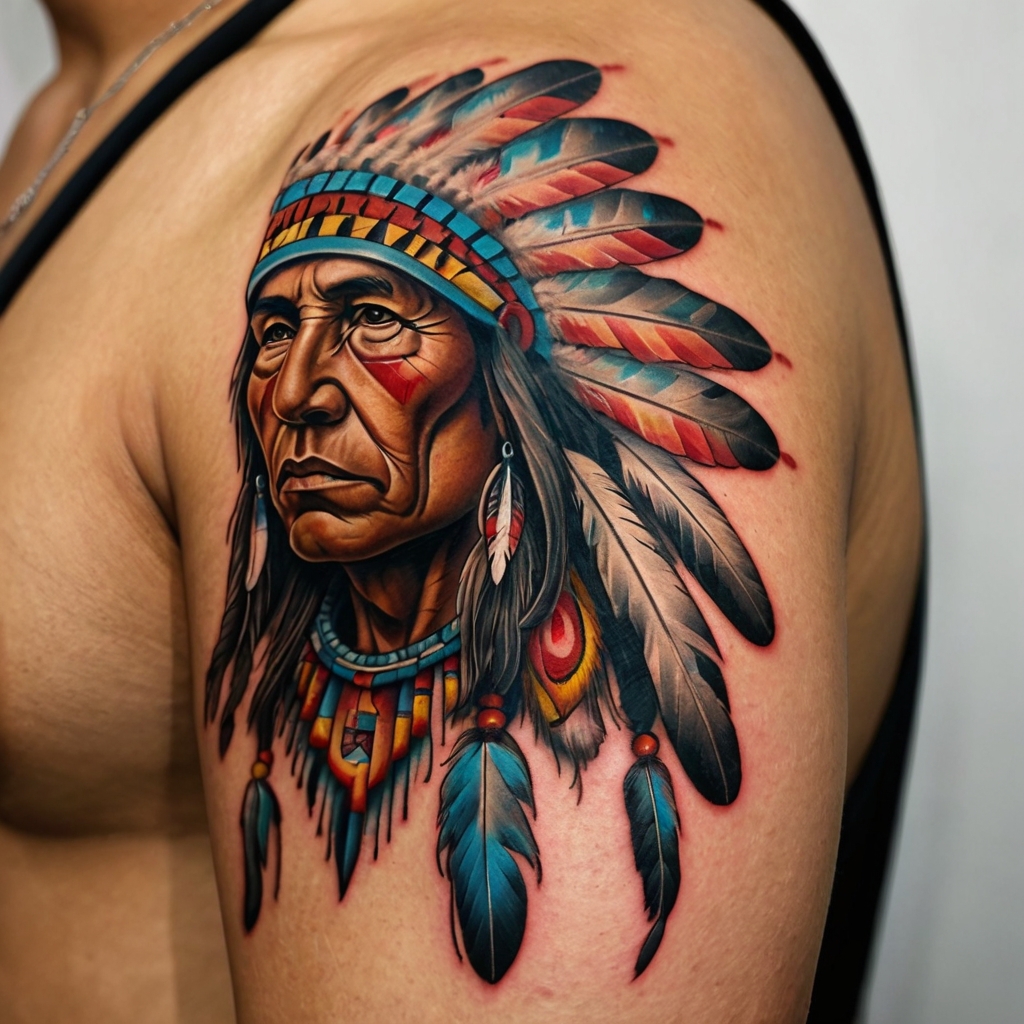

Pigments were derived from the natural world: charcoal, soot from lamps, pulverized minerals like ochre, and plant extracts provided a palette of blacks, reds, blues, and greens. The act of tattooing itself was often a sacred ritual, accompanied by prayers, songs, and ceremonial fasting. It was a painful process, a testament to the wearer’s endurance and commitment, often marking a significant rite of passage, such as puberty, marriage, or the assumption of a new role within the community.
"Our ancestors saw their skin as a canvas for their stories, their lineage, their prayers," explains a contemporary Indigenous cultural practitioner. "Each mark was a connection, a prayer made visible, a permanent testament to their journey and their place in the universe."
The Colonial Shadow: Suppression and Erasure
The arrival of European colonizers marked a tragic turning point for Indigenous tattoo practices. Viewing these body modifications through a lens of Christian piety and racial prejudice, missionaries and government officials condemned them as "savage," "pagan," and "demonic." Jesuit missionaries, among others, frequently documented the practice with disgust, seeing it as evidence of the need to "civilize" Indigenous peoples.
This condemnation quickly escalated into active suppression. As Indigenous communities were forced onto reservations, subjected to residential schools (known as boarding schools in the U.S.), and stripped of their traditional languages and spiritual practices, tattooing became a target. Children were punished, shamed, and sometimes physically abused for displaying or even speaking of these cultural marks. The goal was total assimilation, and anything that visibly asserted Indigenous identity was deemed a threat.
Over generations, the knowledge of specific designs, their meanings, and the techniques used to create them began to fade. Elders, fearing for their children’s safety, often stopped passing down the traditions. The once-vibrant skin-stories went underground, or in many cases, disappeared entirely, leaving behind only tantalizing glimpses in historical records, museum artifacts, and the fading memories of a few, very old individuals. The proud canvas of Indigenous skin was effectively whitewashed, leaving a void where generations of ancestral stories once thrived.
The Seeds of Revival: A Modern Renaissance
The late 20th and early 21st centuries have witnessed a powerful resurgence of Indigenous cultural pride and revitalization across North America. As communities began to heal from the traumas of colonialism and residential schools, there emerged a fierce determination to reclaim lost traditions, including tattooing. This modern renaissance is driven by a deep desire to reconnect with ancestral knowledge, assert cultural identity, and challenge the enduring legacy of oppression.
Indigenous artists, scholars, and cultural practitioners have spearheaded this movement, painstakingly researching historical accounts, examining museum collections, and consulting with elders to piece together the fragments of lost knowledge. For many, this is more than an artistic endeavor; it is an act of decolonization, a reclamation of sovereignty over their own bodies and narratives.
For the Inuit, the revival of tunniit has been particularly poignant. Women, inspired by historical photographs and the stories of their grandmothers, are bravely bringing back the chin lines and facial markings, often undergoing the traditional skin-stitching method. This act is not just a personal choice; it’s a powerful statement of cultural resilience and a visible rejection of colonial shame. "Wearing these marks, I feel connected to my ancestors, to their strength and their wisdom," says a young Inuit woman featured in Arnaquq-Baril’s film. "It’s a way of saying, ‘We are still here. Our culture is alive.’"
Similarly, artists from the Haida, Kwakwaka’wakw, and other Northwest Coast nations are meticulously studying historical crest designs, adapting them to contemporary tattooing techniques while honoring traditional meanings. These tattoos serve as powerful affirmations of clan identity, spiritual connection, and the enduring artistic legacy of their peoples.
Beyond Aesthetics: Healing and Identity
The contemporary Native American tattoo movement is not merely about aesthetics; it is profoundly about healing, identity, and community. For many, receiving a traditional tattoo is a deeply emotional and spiritual experience, a way to mend the broken links to their past and assert their place in the present. It can be a powerful act of self-determination, a visible commitment to cultural continuity in the face of ongoing challenges.
The process often involves ceremony, prayer, and community support, mirroring the sacred nature of the practice in pre-colonial times. Indigenous tattoo artists are not just technicians; they are cultural carriers, healers, and educators, guiding individuals through a process that can be both physically and emotionally transformative.
This revival also raises important discussions about cultural appropriation, emphasizing the critical distinction between appreciation and theft. The focus is on Indigenous peoples reclaiming their own heritage, ensuring that these sacred marks are applied and understood within their proper cultural contexts, by and for their own communities.
Conclusion: Ink as an Enduring Legacy
The history of Native American tattoo practices is a testament to the incredible resilience, creativity, and spiritual depth of Indigenous peoples. From ancient symbols of status and protection to modern declarations of cultural survival, these marks have traversed centuries of change, suppression, and renewal.
Today, as Indigenous artists meticulously poke, stitch, and ink ancestral designs onto new generations, they are not simply replicating patterns. They are reviving a living language, rekindling sacred connections, and asserting their sovereignty over their own bodies and narratives. The ink on Indigenous skin is more than just pigment; it is a permanent declaration of identity, a visible act of decolonization, and an enduring testament to the unbreakable spirit of Native American cultures, written boldly for the world to see. In every line, dot, and image, the ancestors speak, and their stories continue to be told.


