
Oklahoma, often dubbed the ‘Native American Capital of the World,’ holds a distinct and complex history regarding its Indigenous populations. Unlike many other states where reservations were established in a more traditional sense, Oklahoma’s narrative is deeply intertwined with the forced removal of tribes from their ancestral lands and the subsequent creation of Indian Territory. This unique historical context has shaped the present-day understanding and legal status of Native American reservations and tribal sovereignty within the state.
For generations, the concept of ‘reservations’ in Oklahoma was understood differently than in states like Arizona or South Dakota. However, a landmark Supreme Court decision in recent years has dramatically reshaped this perception, affirming the existence of large tribal reservations across much of eastern Oklahoma. This article aims to provide a comprehensive overview of this intricate topic, shedding light on the history, the legal landscape, and the enduring vitality of Oklahoma’s tribal nations.
To truly understand the current situation, one must first appreciate the historical backdrop. The early 19th century saw the implementation of the Indian Removal Act, a devastating policy that led to the forced relocation of numerous Southeastern Indigenous peoples – including the Cherokee, Chickasaw, Choctaw, Muscogee (Creek), and Seminole – to what was then designated ‘Indian Territory.’ This tragic journey is infamously known as the Trail of Tears.
Indian Territory was initially envisioned as a permanent homeland for these and other relocated tribes, where they could govern themselves without interference. Each tribe was allotted specific lands, and they established their own governments, schools, and judicial systems. This period represented a complex balance of forced relocation and a form of self-determination, albeit under the overarching shadow of federal policy.
The late 19th and early 20th centuries brought immense pressure for statehood. The Curtis Act of 1898 and the Dawes Act sought to dismantle tribal governments and communal land ownership, paving the way for Oklahoma’s statehood in 1907. At this point, many believed that the tribal reservations had been disestablished, and tribal jurisdiction largely ceased to exist in the eyes of state law.
This prevailing understanding persisted for over a century, until a pivotal moment in American legal history occurred in July 2020 with the Supreme Court’s decision in McGirt v. Oklahoma. This ruling fundamentally altered the legal landscape, affirming that the Muscogee (Creek) Nation’s reservation, as defined by federal law, was never disestablished by Congress.


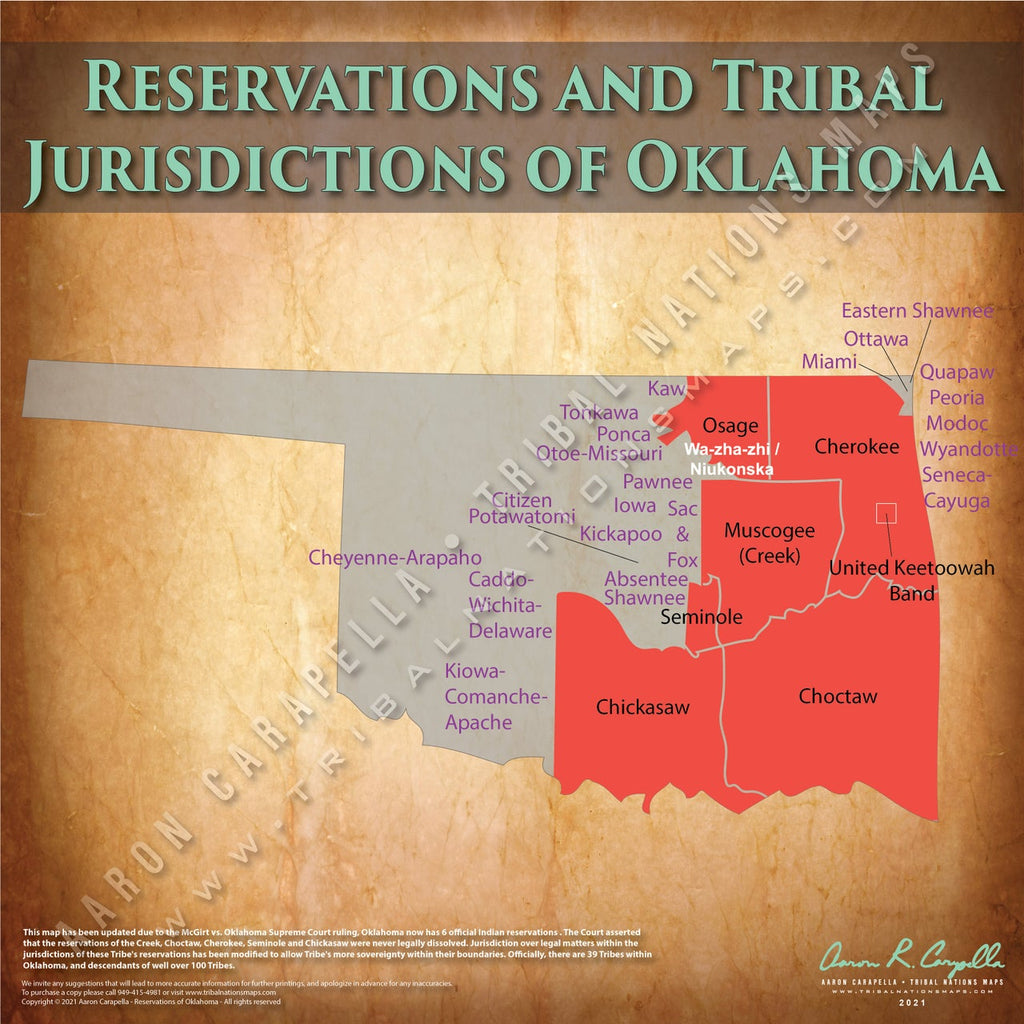
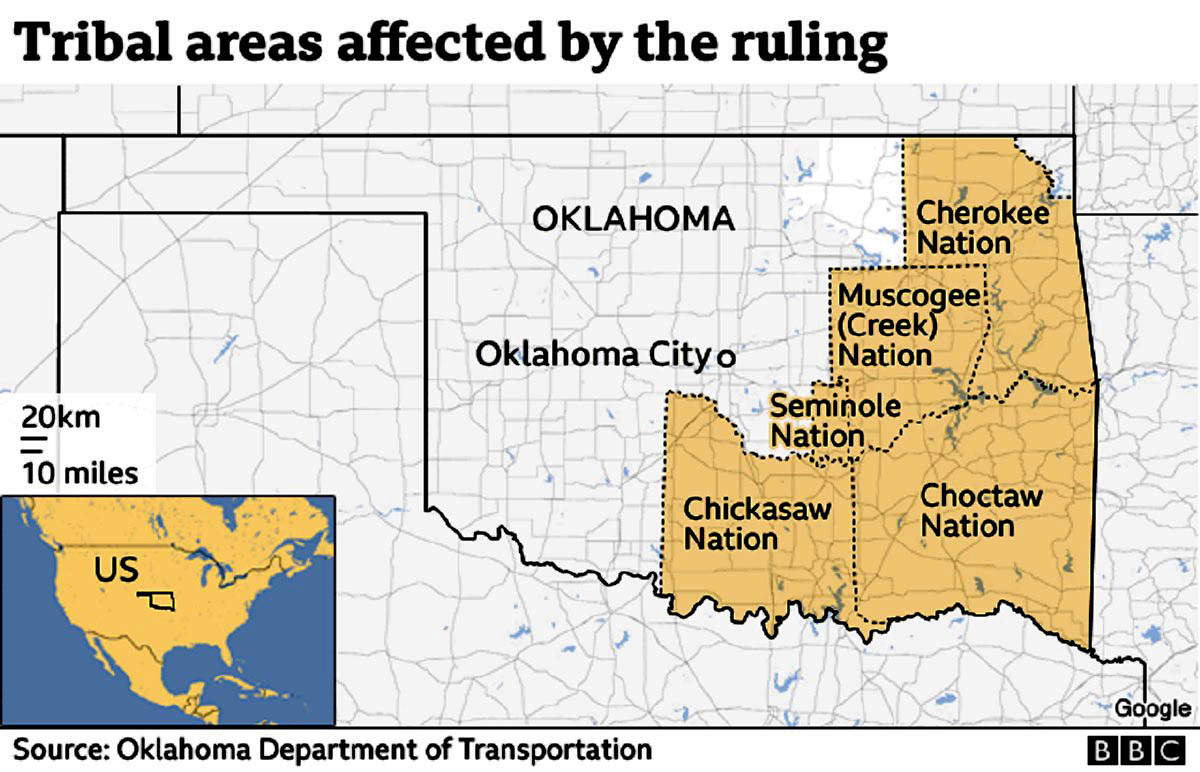
The McGirt decision had profound implications, as it was subsequently applied to the reservations of the Cherokee, Chickasaw, Choctaw, Seminole, and Quapaw Nations, among others. Essentially, it confirmed that vast swaths of eastern Oklahoma remain tribal reservations for the purposes of federal criminal law, meaning that major crimes involving Native Americans on these lands fall under federal or tribal jurisdiction, not state jurisdiction.
This legal shift has been monumental. It underscores the enduring sovereignty of these nations and has led to a re-evaluation of jurisdictional boundaries in areas like law enforcement, taxation, and environmental regulation. While complex in its implementation, the decision has unequivocally reinforced the legal existence of tribal reservations in Oklahoma.
So, what does it mean to have a ‘reservation’ in Oklahoma today? It signifies a federally recognized land area where a tribal nation exercises inherent governmental powers. These areas are not ‘federal land’ in the sense of national parks, but rather lands where tribal governments hold significant jurisdiction over their members and, in some cases, non-members, particularly concerning certain legal matters.
Oklahoma is home to 39 federally recognized tribal nations, each with its unique history, culture, and governmental structure. While the McGirt decision specifically addressed the larger reservations in eastern Oklahoma, all federally recognized tribes maintain a degree of sovereignty and self-governance within their jurisdictional areas.
- Cherokee Nation: The largest tribe in Oklahoma by enrollment, their reservation covers much of northeastern Oklahoma, including cities like Tahlequah and parts of Tulsa. They operate a vast array of services, businesses, and cultural programs.
- Chickasaw Nation: Located in south-central Oklahoma, their reservation includes Ada and Ardmore. Known for their robust economic development and comprehensive services for their citizens.
- Choctaw Nation: Covering southeastern Oklahoma, their reservation encompasses cities such as Durant and McAlester. They are a major economic force and provide extensive healthcare and educational opportunities.
- Muscogee (Creek) Nation: Their reservation, central to the McGirt case, spans central and eastern Oklahoma, including parts of Tulsa and Okmulgee. They are a leader in tribal self-governance and cultural revitalization.
- Seminole Nation of Oklahoma: Their reservation is located in central Oklahoma, around Wewoka. They maintain a strong emphasis on cultural preservation and community development.
- Osage Nation: Their reservation, distinct from the others due to a unique mineral rights history, covers Osage County, the largest county in Oklahoma. They are known for their rich cultural heritage and successful management of natural resources.
Each of these nations, along with dozens of others like the Cheyenne and Arapaho Tribes, Absentee Shawnee Tribe, Citizen Potawatomi Nation, Delaware Nation, and Quapaw Nation, operates as a sovereign government. This means they have their own constitutions, laws, courts, police forces, and executive branches. They are not merely cultural organizations but distinct political entities.
The economic impact of Oklahoma’s tribal nations is immense and often underestimated. They are significant employers, operating diverse enterprises ranging from casinos and resorts to manufacturing, healthcare facilities, agricultural businesses, and energy companies. These ventures generate billions of dollars annually, supporting tribal services and contributing substantially to the state’s overall economy.
Beyond economic contributions, tribal nations are vital stewards of culture and heritage. They invest heavily in programs designed to preserve Native languages, traditional arts, ceremonies, and historical knowledge. Cultural centers, museums, and educational initiatives ensure that the rich traditions passed down through generations continue to thrive.
Visitors to Oklahoma have numerous opportunities to engage with Native American culture. Many tribal nations operate museums, cultural centers, and historical sites open to the public. Events like powwows, stomp dances, and art markets offer immersive experiences into Indigenous traditions. The Cherokee Heritage Center, Chickasaw Cultural Center, and Osage Nation Museum are just a few examples of places where this vibrant heritage is showcased.

Despite their significant achievements and the affirmation of their sovereignty, tribal nations in Oklahoma continue to face challenges. These include addressing historical inequities, improving access to healthcare and education for their members, and navigating complex jurisdictional issues with state and federal governments. However, their commitment to self-determination and community well-being remains unwavering.
Are there reservations in Oklahoma? Yes, following the 2020 Supreme Court ruling in McGirt v. Oklahoma, vast areas of eastern Oklahoma are legally recognized as reservation lands for the Muscogee (Creek), Cherokee, Chickasaw, Choctaw, Seminole, and Quapaw Nations, among others, for federal criminal jurisdiction purposes. While the historical context is unique, these lands now function as reservations under federal law.
What is the largest reservation in Oklahoma? By land area, the Osage Nation Reservation, which encompasses all of Osage County (nearly 2,300 square miles), is often cited as the largest. However, if considering the combined affirmed reservation lands post-McGirt, the collective area of the Cherokee, Choctaw, Chickasaw, Muscogee (Creek), and Seminole Nations covers a significant portion of eastern Oklahoma, totaling millions of acres.
How many reservations are in Oklahoma? While Oklahoma is home to 39 federally recognized tribes, the McGirt decision primarily affirmed the reservation status of the Muscogee (Creek), Cherokee, Choctaw, Chickasaw, Seminole, and Quapaw Nations, with implications for others. The concept of ‘reservation’ in Oklahoma is tied to these specific legal affirmations rather than a uniform, single-definition application across all tribes. Each federally recognized tribe, however, maintains sovereign jurisdictional areas.
Can you live on a reservation in Oklahoma? Yes, you can live within the geographic boundaries of these affirmed reservation lands. If you are an enrolled member of the respective tribe, you may also be eligible for specific tribal housing programs and services. Non-Natives also reside within these areas, just as they would in any other county or city, though certain legal jurisdictions may differ depending on the individuals involved and the nature of the legal matter.
What is the difference between Indian Territory and a reservation? Indian Territory was the larger, historical federal designation for lands set aside for Native American tribes, primarily during the forced removals of the 19th century. Within Indian Territory, specific areas were allotted to individual tribes, often operating as de facto reservations with tribal governments. A ‘reservation’ refers to a specific tract of land held in trust by the federal government for a tribe or tribes, or land areas where tribal sovereignty and jurisdiction are legally affirmed, as is now the case in Oklahoma. While Indian Territory was dissolved with Oklahoma statehood, the underlying reservation status of many tribal lands was, as affirmed by McGirt, never legally extinguished.
What are the 5 Civilized Tribes? The term ‘Five Civilized Tribes’ historically refers to the Cherokee, Chickasaw, Choctaw, Muscogee (Creek), and Seminole Nations. This term originated from non-Native observers in the colonial and early federal periods who noted their adoption of certain European-American customs, including written constitutions, settled farming, and slave ownership. While historically significant, the term can be problematic as it implies a hierarchy of ‘civilization’ and overlooks the rich, complex cultures of all Indigenous peoples. Today, these are recognized as distinct, sovereign nations.
The unique story of Native American reservations in Oklahoma is one of resilience, adaptation, and enduring sovereignty. From the tragic forced removals of the 19th century to the groundbreaking legal affirmations of the 21st, tribal nations have consistently demonstrated their strength and determination to maintain their distinct identities and governmental authority.
The McGirt v. Oklahoma decision has not only corrected a historical legal oversight but has also ushered in a new era of understanding and collaboration. It underscores the vital role tribal nations play in the social, cultural, and economic fabric of Oklahoma, not as relics of the past, but as dynamic, self-governing entities shaping the state’s future.
As we look forward, the relationship between tribal nations, the state of Oklahoma, and the federal government will continue to evolve. This ongoing dialogue is crucial for fostering mutual respect, ensuring justice, and promoting the prosperity of all who call this vibrant state home. Understanding and acknowledging the sovereignty of these nations is paramount to a truly inclusive future.
Oklahoma’s tribal nations are not just a part of its history; they are an integral, living part of its present and future. Their contributions to governance, economy, culture, and community well-being are immeasurable, making Oklahoma a truly unique and significant place for Indigenous peoples in the United States.


