Cosmic Wisdom: The Enduring Legacy of Native American Astronomy and Calendars
For countless generations, long before the arrival of European explorers, the Indigenous peoples of North America looked to the heavens not merely with wonder, but with a profound and sophisticated understanding. The sky above was their calendar, their clock, their guide, and their sacred book – a living tapestry of knowledge that dictated the rhythms of life, from planting and harvesting to hunting, migration, and the timing of ceremonies. Far from being simplistic observations, Native American astronomy and calendrical systems represent a complex, integrated knowledge system that profoundly shaped their cultures, spiritual beliefs, and very survival.
The prevailing Western historical narrative has often overlooked or diminished these achievements, frequently dismissing indigenous knowledge as primitive or superstitious. Yet, a deeper look through the lens of archaeoastronomy – the study of how ancient people understood the sky – reveals an intricate web of astronomical alignments embedded in architecture, rock art, and oral traditions across the continent. This wasn’t astronomy for astronomy’s sake; it was a holistic science, intertwined with the land, the spirit world, and the practical necessities of daily life.
The Sky as a Sacred Text: Ancient Observatories and Alignments
Perhaps one of the most compelling examples of ancient Native American astronomical prowess can be found in the Chaco Canyon region of New Mexico, home to the Ancestral Puebloans (formerly known as Anasazi). Here, monumental structures like Pueblo Bonito, Chetro Ketl, and Kin Kletso stand as silent witnesses to a meticulous understanding of celestial mechanics. The most famous example is the "Sun Dagger" on Fajada Butte. Discovered in 1977, this remarkable solar calendar involves three massive slabs of rock positioned to channel sunlight onto two spiral petroglyphs carved into the cliff face. At the summer solstice, a single "dagger" of light pierces the center of the larger spiral. During the winter solstice, two daggers frame the larger spiral. Equinoxes are also marked with precision, demonstrating a deep comprehension of the sun’s annual journey.
But Chaco Canyon’s celestial connections extend beyond Fajada Butte. Kin Kletso, another great house, is precisely aligned with the summer solstice sunrise. Casa Rinconada, a large kiva, features multiple alignments with solstices and equinoxes, suggesting its use as a significant ceremonial and observational center. These alignments were not accidental; they required generations of keen observation, sophisticated architectural planning, and a profound respect for the sky’s predictable movements. They served as communal calendars, signaling crucial times for planting maize, performing sacred rituals, and gathering for communal events.
Further east, the mound-building cultures of the Hopewell and Mississippian traditions also integrated astronomical knowledge into their monumental earthworks. The Newark Earthworks in Ohio, a vast complex of geometric enclosures built by the Hopewell culture (200 BCE – 500 CE), include an octagonal enclosure whose eight points align with the northernmost rising and southernmost setting of the moon over an 18.6-year cycle. This lunar observatory, perhaps the largest in the world, demonstrates an astonishing level of dedication and precision in tracking complex celestial phenomena.
Similarly, at Cahokia Mounds near modern-day St. Louis, the Mississippian culture (1050–1200 CE) constructed several "Woodhenges" – large circles of timber posts that functioned as solar calendars. The most well-known, Woodhenge III, had central posts that aligned with the rising sun at both the summer and winter solstices, and the spring and autumn equinoxes. These alignments were critical for scheduling planting and harvesting, particularly for their staple crop, corn, and for organizing their highly stratified society.
Calendars Beyond Dates: The Rhythms of Life
Native American calendrical systems were diverse, reflecting the unique environments and cultural practices of each tribe. Unlike linear Western calendars, many indigenous systems were cyclical, mirroring the natural world’s recurring patterns of birth, growth, death, and renewal.
One of the most distinctive calendrical forms is the "Winter Count" of the Lakota and other Plains tribes. These are pictographic histories, often painted on hides, that record a significant event for each year. Each image represents the most memorable occurrence of the past winter-to-winter period, serving as both a historical record and a chronological system. For instance, a Winter Count might depict a particularly harsh winter, a successful buffalo hunt, or a major battle. These visual narratives were recited and interpreted by designated keepers, ensuring the transmission of history and knowledge across generations.
For agricultural societies like the Hopi and Zuni, the precise tracking of the sun was paramount. "Sun Watchers," individuals with specialized astronomical knowledge, would observe the sunrise against prominent landmarks on the horizon. The position of the rising sun would signal the exact timing for planting certain crops, initiating specific ceremonies, and preparing for seasonal festivals. The Zuni, for example, used horizon calendars to precisely determine the summer solstice, a critical marker for their agricultural cycle and the timing of their sacred dances.
The moon also played a vital role in many Native American calendars, with tribes often dividing the year into "moons" rather than months. These lunar cycles were tied to natural phenomena – "hunger moon," "berry moon," "harvest moon," or "leaf-falling moon" – reflecting the changing seasons and available resources. For nomadic hunting tribes, lunar phases might guide nocturnal hunting, fishing, or travel.
Beyond the sun and moon, the stars held immense significance. The Pawnee of the Great Plains, for instance, had an incredibly sophisticated understanding of stellar movements. Their lodges were often aligned to specific constellations, and their creation myths and ceremonial cycles were deeply intertwined with the stars. The bright star Rigel in Orion, and the Pleiades star cluster, were particularly important for agricultural timing and ceremonies. They recognized that the heliacal rising (first appearance at dawn) of certain stars could signal planting times or the arrival of buffalo herds. Their star charts, passed down through oral tradition, were not merely navigational tools but embodied their entire cosmology and social structure.
The Practical and the Profound: A Holistic Worldview
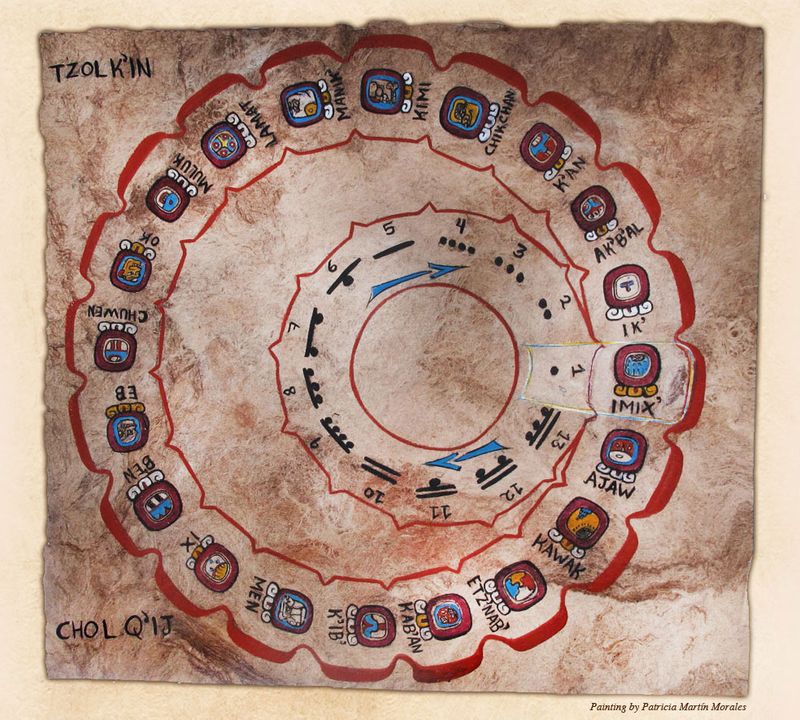
The integration of astronomical and calendrical knowledge into Native American life underscores a profound difference from purely scientific, detached observation. For indigenous peoples, the cosmos was not a distant, abstract entity but an intimate and active participant in their daily existence. The celestial cycles were inextricably linked to the terrestrial world, guiding not only agricultural practices but also hunting seasons, migration routes, and the very fabric of their social and spiritual lives.
Ceremonies were often timed to align with specific celestial events – solstices, equinoxes, full moons, or the appearance of particular constellations. These rituals reinforced the interconnectedness of humans, the earth, and the cosmos, ensuring balance and harmony. The "Sun Dance" of the Plains tribes, for example, is traditionally held during the summer, often around the summer solstice, celebrating renewal and the life-giving power of the sun.
A Legacy Reclaimed and Respected
The systematic disruption of Native American cultures through colonialism, forced assimilation, and the suppression of traditional practices led to the tragic loss of much of this invaluable knowledge. Oral traditions were broken, sacred sites were desecrated, and the intricate connections between sky, land, and culture were severed.
However, in recent decades, there has been a significant resurgence of interest and effort to reclaim, revitalize, and celebrate Native American astronomical and calendrical traditions. Indigenous scholars, elders, and archaeoastronomers are collaborating to decipher the wisdom encoded in ancient sites, interpret surviving oral histories, and reconstruct lost knowledge. This work not only enriches our understanding of human ingenuity but also offers profound insights into sustainable living, ecological balance, and a holistic worldview that remains deeply relevant today.
The legacy of Native American astronomy and calendars stands as a testament to the intellectual sophistication and deep spiritual connection of these cultures. It reminds us that science is not a singular, monolithic endeavor, but a multifaceted human pursuit that manifests in diverse ways across different societies. By looking to the heavens, Native American peoples found not just patterns and predictability, but a profound sense of purpose, identity, and their rightful place within the grand, eternal dance of the cosmos. Their wisdom, etched in stone, painted on hides, and whispered through generations, continues to inspire and inform, reminding us of the enduring power of observing the stars and living in harmony with the rhythms of the universe.


