Indigenous languages are far more than mere communication tools; they are living repositories of culture, history, identity, and traditional ecological knowledge. For Native American communities across Indian Reservations, the preservation and revitalization of these ancestral tongues represent a powerful act of sovereignty, healing, and cultural resurgence.
The challenges facing Indigenous languages are immense, stemming from centuries of colonial policies, forced assimilation, and the devastating legacy of boarding schools. Many languages are critically endangered, with only a handful of fluent elder speakers remaining. However, a powerful movement is underway, driven by tribal nations, educators, and passionate community members dedicated to breathing new life into their linguistic heritage.
This comprehensive article delves into the various facets of language revitalization programs on Indian Reservations, exploring their critical importance, the innovative methods employed, the hurdles they face, and the inspiring successes that are shaping a vibrant future for Indigenous languages.
The Heart of Identity: Why Indigenous Languages Matter
At its core, an Indigenous language is inextricably linked to the cultural identity of its people. It encapsulates unique worldviews, spiritual beliefs, and intricate social structures that are often untranslatable into other languages. Losing a language means losing a significant part of what makes a culture distinct and resilient.
Furthermore, these languages are the vessels for traditional ecological knowledge (TEK), passed down through generations. Names for plants, animals, land features, and weather patterns often describe their uses, behaviors, and relationships within an ecosystem, providing invaluable insights into sustainable living and environmental stewardship.

Beyond cultural and ecological significance, language revitalization has a profound impact on the well-being and mental health of individuals and communities. Reconnecting with one’s ancestral language can foster a stronger sense of self-worth, belonging, and pride, helping to mitigate the effects of historical trauma.
For many tribal nations, language is also a fundamental aspect of self-determination and sovereignty. Speaking one’s own language reinforces cultural autonomy and strengthens the ability of a community to govern itself according to its own values and traditions.
A Historical Perspective: The Erosion of Indigenous Tongues
The current critical state of many Indigenous languages is a direct result of systematic efforts to suppress Native cultures. Beginning with early European contact, and intensifying during the expansion of the United States, policies aimed at ‘civilizing’ Native peoples led to the active discouragement and punishment of speaking Indigenous languages.
Perhaps the most damaging policy was the forced removal of Native children to boarding schools, often far from their homes and families. In these institutions, children were forbidden to speak their native tongues, subjected to physical and emotional abuse if they did, and indoctrinated into English-speaking, Euro-American culture. This created a ‘lost generation’ of speakers and severely disrupted intergenerational language transfer.
The trauma inflicted by these policies led many parents and grandparents to intentionally not teach their children their language, believing it would protect them from discrimination and violence. While understandable, this well-intentioned decision further accelerated language loss, creating a critical shortage of fluent speakers today.
Pillars of Revitalization: Diverse Program Models
Language revitalization programs employ a variety of innovative and culturally appropriate strategies to reverse language shift. These models often work in conjunction, creating a multi-faceted approach to language learning and use.
Language Immersion Schools: These programs are often considered the ‘gold standard’ for producing new generations of fluent speakers. Children are taught all subjects (math, science, history) entirely in the Indigenous language, from early childhood through adolescence. This creates a natural, immersive environment similar to how children acquire their first language.
Master-Apprentice Programs: This model pairs a fluent elder speaker (the master) with a dedicated learner (the apprentice) for intensive, one-on-one language immersion in everyday contexts. The apprentice commits to spending significant time with the master, engaging in daily activities and conversations exclusively in the target language. This is particularly effective for highly endangered languages with few remaining fluent elders.
Community Language Classes: Offered to learners of all ages, these classes provide structured instruction in grammar, vocabulary, and conversation. They are often held in community centers, tribal schools, or online, making language learning accessible to a broader audience. These classes foster a sense of shared purpose and community among learners.
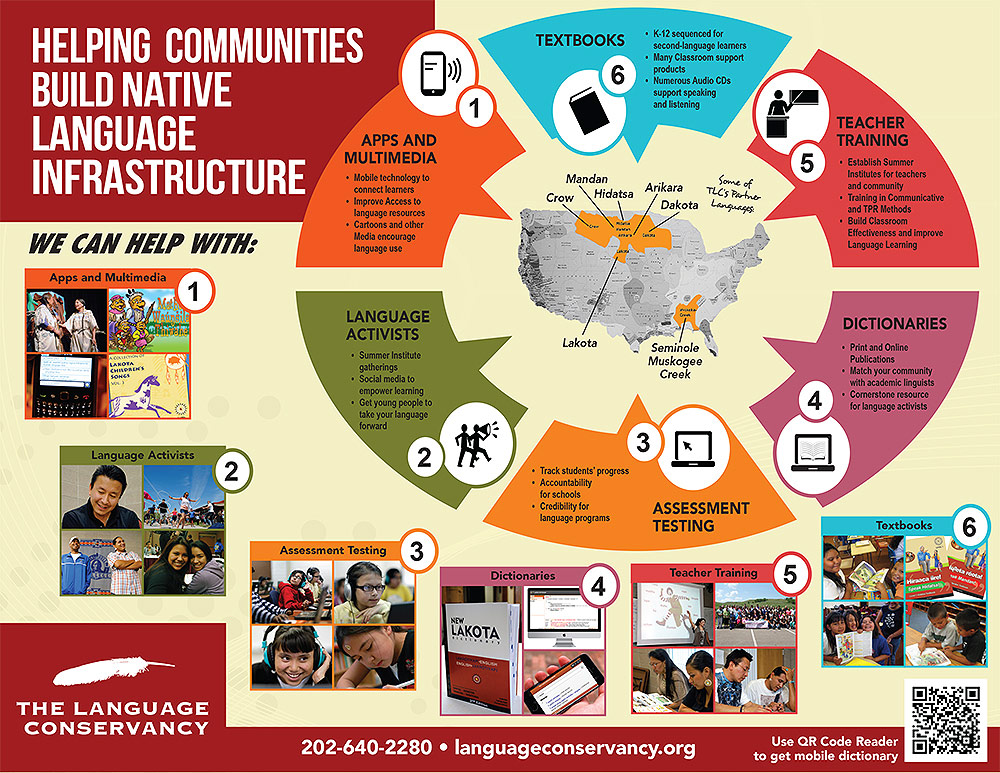
Digital Resources and Online Learning: Technology plays an increasingly crucial role. This includes developing language learning apps, online dictionaries, interactive websites, audio recordings, and video lessons. These resources can reach learners who are geographically dispersed or who have limited access to in-person programs, bridging the digital divide.
Youth Engagement Initiatives: Making language learning appealing and relevant to younger generations is vital. Programs might include language camps, youth leadership programs, creating culturally relevant media (e.g., cartoons, songs, games) in the Indigenous language, or incorporating language into sports and cultural activities.
Documentation and Archiving: For languages with very few speakers, extensive documentation is critical. This involves recording elders speaking, transcribing stories, creating dictionaries, and archiving materials. While not directly revitalizing, it preserves invaluable linguistic data for future generations to learn from.
Navigating the Hurdles: Challenges in Language Revitalization
Despite immense dedication, language revitalization efforts face significant obstacles that require ongoing attention and strategic planning.
Funding Constraints: Sustained funding is a perpetual challenge. Developing and maintaining high-quality language programs, paying fluent speakers and educators, and creating resources are expensive endeavors. Many programs rely on grants, which can be short-term and competitive.
Scarcity of Fluent Speakers: The dwindling number of fluent elder speakers is perhaps the most pressing challenge. As these precious linguistic resources age, the urgency to transfer their knowledge to younger generations becomes critical. This ‘ticking clock’ necessitates rapid and effective learning strategies.
Intergenerational Trauma: The historical trauma associated with language loss can manifest as reluctance or difficulty in learning the language for some community members. Healing and cultural revitalization efforts often need to go hand-in-hand with language learning.
Policy and Infrastructure Support: While federal and tribal governments increasingly recognize the importance of language, consistent policy support, dedicated infrastructure, and legislative protections are still needed to ensure long-term success.
Digital Divide: While technology offers incredible opportunities, access to reliable internet, devices, and digital literacy can be uneven across reservations, potentially limiting the reach of online language resources.
Pathways to Success: Best Practices and Inspiring Examples
Successful language revitalization programs often share common characteristics that contribute to their effectiveness.
Key best practices include:
- Community-led Initiatives: Programs are most successful when they are driven by the community, reflecting their specific needs, cultural values, and linguistic goals.
- Intergenerational Learning: Creating opportunities for elders, adults, and children to learn and use the language together strengthens language transfer and community bonds.
- Creating Language Domains: Encouraging the use of the Indigenous language in everyday settings – at home, in schools, at ceremonies, and in tribal governance – is crucial for normalizing its use.
- Strategic Partnerships: Collaborating with universities, cultural institutions, non-profit organizations, and other tribal nations can provide valuable resources, expertise, and support.
- Leveraging Technology: Thoughtfully integrating digital tools, from language apps to social media campaigns, can expand reach and engage younger learners.
- Culturally Appropriate Pedagogy: Teaching methods should align with Indigenous learning styles and cultural protocols, making the learning experience more effective and respectful.
Examples like the Wôpanâak Language Reclamation Project in Massachusetts, which has produced new first-language speakers after generations of dormancy, or the immersion schools of the Navajo Nation, demonstrate the profound impact of dedicated, sustained efforts.
Funding the Future: Securing Resources for Language Programs
Tribal government investments: Many tribal nations allocate their own resources to language and cultural programs, recognizing their intrinsic value to self-determination.
Federal grants: Programs like those from the Administration for Native Americans (ANA) within the U.S. Department of Health and Human Services, and grants from the National Endowment for the Humanities (NEH), specifically target Indigenous language preservation and revitalization.
Philanthropic organizations and private donors: Non-profits and individuals passionate about cultural preservation often provide crucial funding. Organizations like the First Peoples Fund or the Native American Heritage Fund are examples.
University and institutional partnerships: Collaborations can lead to shared resources, grant applications, and academic support for language documentation and teaching.
The Role of Technology: A Double-Edged Sword
While the digital divide presents challenges, technology also offers unprecedented opportunities for language revitalization. Smartphone apps like ‘Ojibwe Language App’ or ‘Cherokee Language App’ make learning accessible anywhere. Online dictionaries, interactive lessons, and social media groups foster engagement and provide platforms for practice.
Virtual reality (VR) and augmented reality (AR) are emerging as powerful tools for creating immersive language learning environments, allowing users to interact with cultural contexts and objects in the Indigenous language. However, care must be taken to ensure that technology serves the language and culture, rather than diluting authenticity.
Looking Ahead: The Future of Indigenous Languages on Reservations
The commitment of tribal communities, combined with innovative teaching methods and strategic use of technology, is steadily producing new generations of speakers. While the journey is long and arduous, each new fluent speaker represents a victory against historical oppression and a vibrant step toward cultural continuity.
The future envisions a time when Indigenous languages are not only spoken in homes and classrooms but also thrive in public spaces, media, and digital realms, embodying the strength and enduring spirit of Native American nations.
Conclusion
Language revitalization programs on Indian Reservations are profoundly impactful, serving as critical pathways for cultural preservation, identity affirmation, and community healing. Despite historical trauma and ongoing challenges, the dedication of tribal communities, educators, and language advocates is fostering a powerful resurgence.
By embracing diverse program models—from immersion schools to digital platforms—and by securing sustainable funding, these initiatives are ensuring that the ancestral voices of Native America continue to speak, thrive, and enrich the tapestry of global linguistic diversity for generations to come. The effort to revive these languages is not just about words; it’s about reclaiming heritage, empowering futures, and affirming the inherent sovereignty of Indigenous peoples.


