
The Creator’s Game: Unearthing Lacrosse’s Indigenous Soul
Before the roar of stadium crowds, the precision of synthetic sticks, and the global reach of a rapidly growing sport, there was a sacred ritual played on vast, untamed landscapes. A game of unparalleled ferocity, profound spiritual significance, and deep community bonds. This was not merely a pastime but a gift from the Creator, known by names like Tewaaraton among the Haudenosaunee (Iroquois) or Baggataway by the Ojibwe. It was the ancestral heart of what we now call lacrosse, a sport whose very essence is inextricably woven into the fabric of Native American history and identity.
For millennia, across the sweeping plains, dense forests, and winding river valleys of North America, hundreds of distinct Indigenous nations played variations of this stickball game. From the Huron and Cherokee to the Choctaw and Seminole, the game transcended tribal boundaries, albeit with regional adaptations in rules, equipment, and purpose. Its origins are not found in an ancient text or a single historical event, but in the oral traditions, spiritual beliefs, and communal practices passed down through countless generations.
A Sacred Gift: More Than Just a Game
To understand lacrosse, one must first shed the modern lens of competitive athletics and embrace its original, multifaceted purpose. For Native peoples, especially the Haudenosaunee, the game was a sacred gift, a form of worship and a direct connection to the spiritual realm. It was often referred to as "The Creator’s Game" or "The Medicine Game" – terms that speak volumes about its profound significance.
"When we play, we’re not just playing for ourselves," explains Oren Lyons, a Faithkeeper of the Onondaga Nation and a powerful voice for Indigenous rights. "We’re playing for the Creator. We’re playing for the medicine. We’re playing for the people." This sentiment underscores that the game was fundamentally about spiritual well-being, healing, and community strength, not just victory. A match could be initiated to heal the sick, resolve disputes between clans or villages, give thanks to the Creator, or prepare warriors for battle by honing their physical prowess, strategic thinking, and collective spirit.
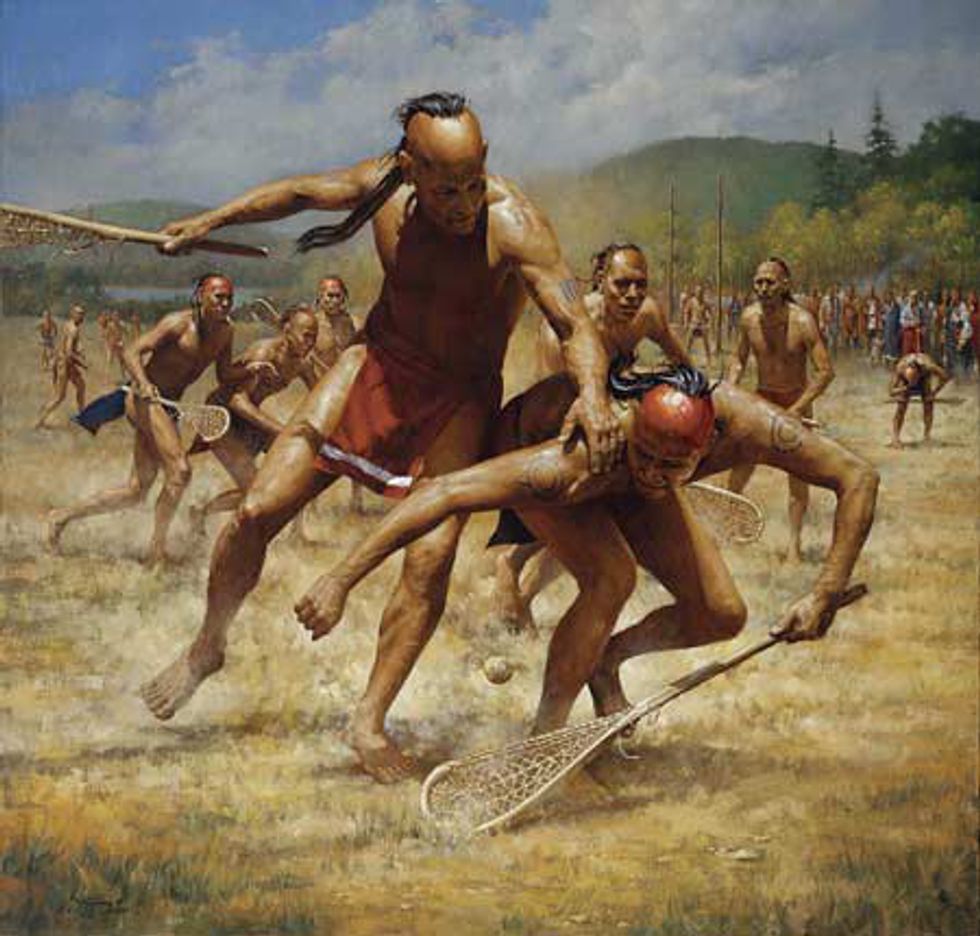
The equipment itself carried spiritual weight. The traditional stick, often carved from hickory or ash, was not merely an implement but an extension of the player, imbued with the spirit of the wood and the prayers of its maker. The ball, typically made of deerskin stuffed with hair or carved from wood, represented the heart of the game, a focal point for the collective energy and intention of the players.
The Grandeur of Pre-Colonial Play
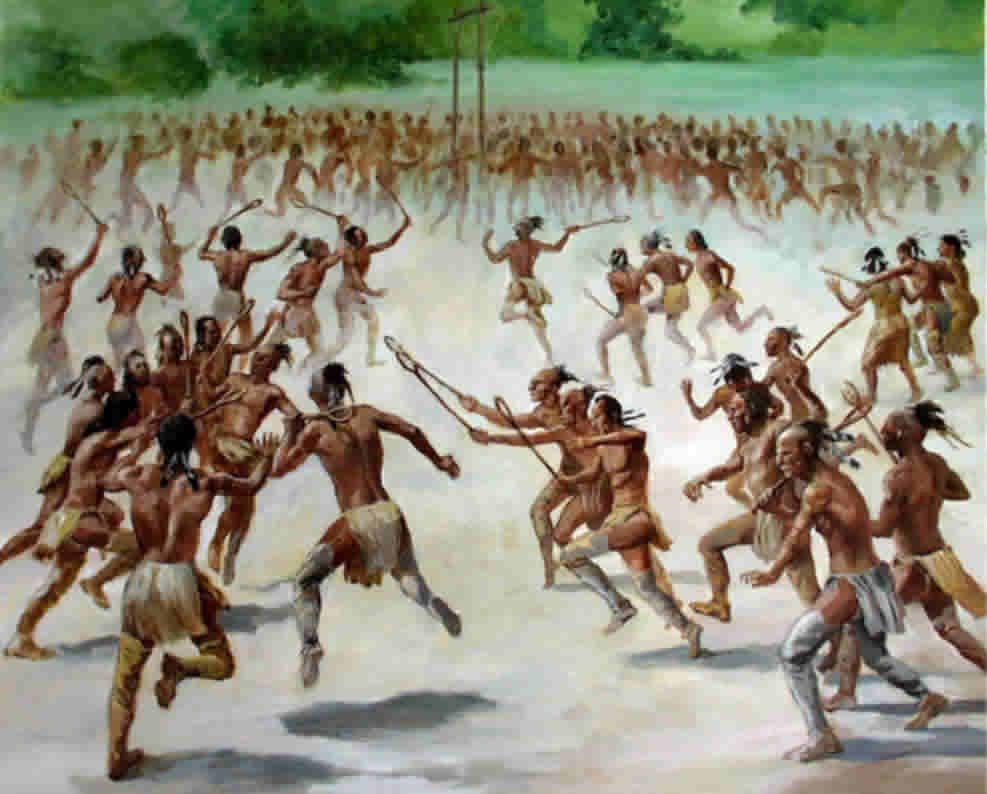
Imagine a lacrosse game from the 16th or 17th century. Forget manicured fields and delimited boundaries. These were contests of epic scale, often involving hundreds, sometimes thousands, of players from entire villages or confederacies. The playing fields could stretch for miles, from one village to another, across rivers and through forests. Games could last from sunrise to sunset, or even over several days, with minimal formal rules beyond the core objective of propelling the ball past a designated goal post or line.
Players, often adorned with body paint, feathers, and minimal clothing, moved with a primal energy. The air would be thick with the sounds of chanting, drumming, and the thundering hooves of human feet. The physical demands were immense, requiring extraordinary endurance, agility, and courage. Injuries were common, but seen as a testament to commitment and bravery, part of the offering to the Creator.
The Jesuit missionary Jean de Brébeuf, encountering the game among the Huron in the 1630s, provided one of the earliest European accounts. He described it as a "fine exercise" and noted its intensity and importance. He observed players "running all together after the ball, and trying to take it from one another." His vivid descriptions offer a glimpse into the raw, unadulterated power of the game.
The European Gaze and the Birth of "Lacrosse"
It was these same French Jesuit missionaries who, upon observing the Indigenous game, gave it the name by which it is now universally known. The traditional stick, with its long handle and netted pocket, reminded them of a bishop’s crozier, a staff carried by a bishop. Hence, they dubbed it "la crosse," meaning "the stick" or "the crozier." This linguistic act, while seemingly innocuous, marked the beginning of a long process of cultural translation, adaptation, and, at times, appropriation.
European fascination with the game grew, initially through observation and later through participation. French colonists, and subsequently British settlers, began to adopt the sport, drawn by its athletic challenge and spectacle. However, as it entered the European sphere, the game began its slow but significant transformation from a sacred ritual into a secular athletic competition.
From Ceremony to Collegiate Sport: A Shifting Identity
The 19th century witnessed the most significant shifts in lacrosse’s trajectory. In the 1860s, a Canadian dentist named William George Beers played a pivotal role in formalizing the rules of the game. Beers, who founded the Montreal Lacrosse Club in 1856, codified the number of players, the size of the field, and the duration of games, making it more accessible and standardized for European audiences. These changes, while crucial for its spread as an organized sport, fundamentally altered its nature.
The spiritual and ceremonial aspects, so central to its Indigenous origins, were largely stripped away in its mainstream adoption. The game became a pursuit of athletic excellence, strategy, and competition, divorcing it from its deep cultural roots. It quickly spread through universities in Canada and the United States, becoming a popular collegiate sport. The fast-paced, high-scoring nature of the game appealed to audiences, and it began its journey towards global recognition.
This period represents a complex chapter in lacrosse’s history. While its formalization led to its international popularization, it also contributed to the marginalization of its Indigenous identity. For a time, the mainstream narrative of lacrosse often overlooked or downplayed its Native American genesis, presenting it simply as a Canadian invention or a modern sport.
Indigenous Resilience and Reclamation: The Iroquois Nationals
Yet, despite this mainstream adaptation, the game never died within Native communities. It continued to be played, cherished, and passed down through generations, often in its more traditional forms. For the Haudenosaunee and other Indigenous nations, lacrosse remained a vital part of their cultural identity, a living link to their ancestors and a powerful expression of their sovereignty.
In the late 20th century, a powerful movement emerged to reclaim and reassert the Indigenous roots of lacrosse on the global stage. The most prominent example is the Iroquois Nationals, the national lacrosse team of the Haudenosaunee Confederacy. Formed in 1983, the Iroquois Nationals represent a profound statement of self-determination and cultural pride. They are the only Indigenous team sanctioned to compete in international competition, playing under their own flag and using their own passports.
Their journey has been fraught with challenges. The team has faced repeated obstacles in gaining recognition as a sovereign nation in international sporting bodies, battling for the right to represent their people, not just as a "team," but as a nation with a distinct cultural and political identity. Their participation in the World Lacrosse Championships, often finishing among the top teams, serves as a powerful reminder of their ancestral connection to the sport and their ongoing vitality as a people.
"We play for our ancestors," states Lyle Thompson, one of the most celebrated Haudenosaunee lacrosse players of the modern era, "We play for the Creator, and we play for the future generations." This echoes the ancient purpose of the game, demonstrating that its spiritual core remains vibrant and relevant today. The Iroquois Nationals are not just athletes; they are cultural ambassadors, carrying the torch of "The Creator’s Game" to the world.
Modern Echoes and Future Horizons
Today, lacrosse is experiencing a surge in popularity, played by millions across continents. As the sport continues to grow, there is a growing awareness and respect for its Indigenous origins. Major lacrosse organizations, universities, and professional leagues are increasingly acknowledging the historical and cultural significance of Native American contributions. The Tewaaraton Award, established in 2000, is given annually to the most outstanding collegiate lacrosse players in the United States, with its name directly referencing the Haudenosaunee term for the game, a powerful symbol of recognition.
The story of lacrosse is a microcosm of the larger narrative of Indigenous resilience in the face of colonization and cultural appropriation. It is a testament to the enduring power of cultural traditions and the unyielding spirit of Native American peoples. From its genesis as a sacred gift, a "medicine game" played on sprawling fields by thousands, to its formalization and global spread, lacrosse has undergone a remarkable evolution.
Yet, through all its transformations, the spirit of "The Creator’s Game" persists. It reminds us that behind every powerful shot, every strategic pass, and every hard-fought victory lies a history far deeper than any scoreline – a history steeped in spirituality, community, and the ancient wisdom of North America’s first peoples. As the game continues to evolve, remembering and honoring its Indigenous soul is not just an act of historical accuracy, but a vital step towards truly understanding and appreciating one of the world’s most dynamic and historically rich sports.


