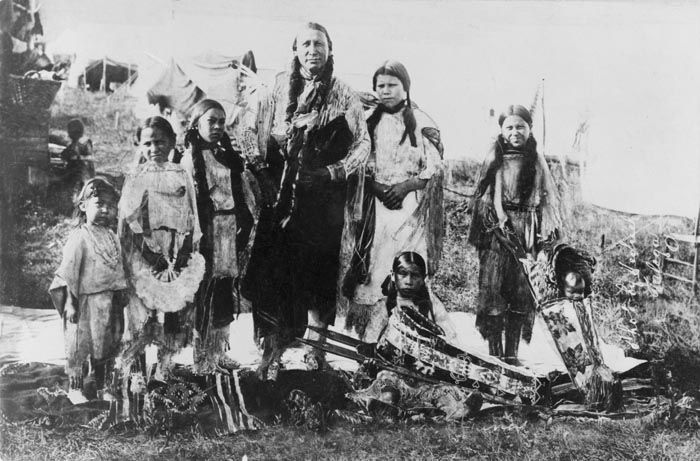
The Enduring Spirit of the Plains: A Kiowa History
The vast, sweeping expanse of the North American Great Plains, a landscape of endless sky and horizon, has for centuries been home to peoples whose lives were intimately intertwined with its rhythms. Among the most iconic of these nations are the Kiowa, a tribe whose history is a powerful saga of adaptation, resilience, conflict, and the enduring strength of cultural identity. From their origins in the northern Rockies to their dominance as equestrian warriors on the southern Plains, and through the profound challenges of reservation life to their vibrant contemporary existence, the Kiowa story is a microcosm of the Native American experience – one marked by profound loss, but ultimately by an unyielding spirit.
From Mountain Valleys to the Buffalo Plains
The Kiowa’s journey to becoming quintessential Plains Indians began far from the buffalo-rich grasslands. Their oral traditions and linguistic evidence point to an ancestral homeland in the intermountain basins of present-day Montana and Wyoming, near the headwaters of the Yellowstone River. Here, they lived a semi-nomadic existence, hunting and gathering, distinct from the Plains culture they would later embody. Pressure from more numerous and aggressive tribes, such as the Crow and Blackfeet, gradually pushed them southeastward.
This migration brought them into contact with a revolutionary technology that would forever alter their destiny: the horse. Acquired through trade with other tribes, who in turn had obtained them from the Spanish colonies to the south, the horse transformed the Kiowa. "The horse came to us like a whirlwind," an elder might have said, "transforming our lives, making us truly free on the vast plains." By the late 17th and early 18th centuries, the Kiowa had become masterful horsemen, their society reoriented around mounted buffalo hunting and warfare. This new lifestyle propelled them into the southern Great Plains, a land of abundant buffalo and warmer climates, where they would forge an indelible identity.
The Golden Age: Masters of the Southern Plains
By the early 19th century, the Kiowa, often allied with the formidable Comanche, dominated a vast territory stretching across what is now western Oklahoma, the Texas Panhandle, and parts of Kansas, Colorado, and New Mexico. This period, often referred to as their "Golden Age," saw the full blossoming of their horse-based culture. Their lives revolved around the immense buffalo herds, which provided not only food but also hides for tipis, clothing, tools, and spiritual objects.
Kiowa society was organized into several bands, each with its own leaders, but united by a shared language, culture, and sacred traditions. Warrior societies, such as the prestigious Kaitsenko (Real Dogs), played a crucial role, instilling bravery, discipline, and a strong sense of honor. Raids for horses and captives were common, a means of accumulating wealth and proving valor.
At the heart of Kiowa spiritual life was the Tai-me (Sun Dance bundle), a sacred collection of objects central to their annual Sun Dance ceremony. This powerful ritual, held in the summer, brought together the scattered bands for communal worship, renewal, and celebration. It was a time for prayers, healing, and reaffirming their connection to the spiritual world and the buffalo. The Kiowa also developed a unique system of historical record-keeping known as winter counts – pictographic calendars painted on hides that chronicled the most significant event of each year, providing a rich, visual history of their past. Leaders like Dohasan (Little Bluff), who served as principal chief for over 30 years, navigated this era with wisdom and diplomacy, even as the first rumblings of American expansion began to be heard.
Collision and Conflict: The Advance of the Frontier
The mid-19th century brought an irreversible shift. As American settlers pushed westward, the Kiowa, like other Plains tribes, found their traditional lands encroached upon and their way of life threatened. The buffalo, their very sustenance, became targets for commercial hunters and a strategic weapon in the U.S. government’s policy of subjugating the Plains Indians.
A series of treaties, often signed under duress and rarely honored by the U.S. government, marked the beginning of the end for the Kiowa’s free-roaming existence. The Treaty of Little Arkansas in 1865 and, most significantly, the Medicine Lodge Treaty of 1867, sought to confine the Kiowa and their allies to a reservation in Indian Territory (present-day Oklahoma). Many Kiowa leaders, including the wise Dohasan, recognized the futility of outright resistance against the overwhelming military might of the United States.
However, others, like the renowned orator and warrior Satanta (White Bear), vehemently resisted. Satanta became famous for his defiant speeches, eloquently articulating the Kiowa’s love for their land and their disdain for the white man’s broken promises. In a powerful speech at Medicine Lodge, he declared:
"I have heard that you intend to settle us on a reservation near the mountains. I don’t want to settle. I love to roam over the prairies; there I feel free and happy, but when we settle down we grow pale and die. I have laid aside my lance, my bow, and my shield, and yet I feel safe in your presence. I have told you the truth. I have no little lies hid about me, but I don’t know whether I can trust the white man or not."

Satanta’s skepticism proved tragically accurate. Despite the treaties, conflicts escalated. The Warren Wagon Train Raid in 1871, led by Satanta, Satank, and Big Tree, was a direct act of defiance against the U.S. military. Though initially successful, it ultimately led to their capture and imprisonment, a severe blow to Kiowa morale and leadership. The Red River War of 1874-75, a final concerted effort by the Kiowa, Comanche, and Southern Cheyenne to defend their way of life, ended in their ultimate defeat. The last free Kiowa bands were forced onto their designated reservation, ushering in an era of profound cultural disruption.
The Reservation Era: A Fight for Survival
Life on the reservation was a stark contrast to the freedom of the Plains. The deliberate extermination of the buffalo herds by the U.S. Army and commercial hunters meant the economic and spiritual foundation of Kiowa life was shattered. Rations were often meager and corruptly distributed. The Kiowa faced intense pressure to abandon their traditional ways, convert to Christianity, and adopt farming, a practice alien to their nomadic heritage.
The Sun Dance, the cornerstone of their spiritual life, was banned by government agents, leading to its suppression for many years. Children were forcibly sent to boarding schools, where their hair was cut, their language forbidden, and their cultural identity systematically attacked in a misguided attempt at "civilization." The pain of this era runs deep in Kiowa memory. As one elder recounted, "They took our land, they killed our buffalo, and then they tried to kill our spirit in those schools."
A brief glimmer of hope emerged with the Ghost Dance movement in the late 1880s, a spiritual revival that promised the return of the buffalo and the ancestors, and the departure of the white man. Though the Kiowa embraced the Ghost Dance with fervor, it ultimately faded, unable to reverse the tide of history.
Despite these immense pressures, the Kiowa demonstrated remarkable resilience. While outwardly conforming to some demands, they secretly maintained their language, oral traditions, and elements of their spiritual beliefs. Leaders like Quanah Parker (Comanche, but influential across tribes) and others encouraged adaptation while preserving identity.
Adaptation and Renewal: The 20th Century and Beyond
The early 20th century saw the Kiowa reservation lands broken up through the allotment policy, further eroding their communal land base. However, this period also marked the beginning of a cultural renaissance. The Kiowa, renowned for their artistic traditions, found new outlets for expression.
The Kiowa Five – Spencer Asah, James Auchiah, Jack Hokeah, Stephen Mopope, and Monroe Tsatoke – were among the first Native American artists to achieve international recognition. Their vibrant, detailed ledger art and murals, depicting traditional Kiowa life, dances, and ceremonies, provided a powerful visual record of their heritage and a bridge between their past and the modern world. Their work, nurtured at the University of Oklahoma, was instrumental in bringing Native American art into mainstream appreciation.
Today, the Kiowa Tribe of Oklahoma is a federally recognized sovereign nation, headquartered in Carnegie, Oklahoma. The 21st century has seen a renewed focus on cultural revitalization, language preservation, and self-determination. Programs are in place to teach the Kiowa language to younger generations, ensuring its survival. Traditional dances, songs, and ceremonies are celebrated with pride, not just as historical reenactments, but as living, breathing expressions of identity. The annual Kiowa Black Leggings Warrior Society dance, for instance, continues to honor their warrior heritage.
The Kiowa have navigated the complexities of modern life, engaging in economic development, managing tribal enterprises, and advocating for their rights. They remember their history, not with bitterness alone, but with a profound understanding of the sacrifices made and the strength demonstrated by their ancestors.
The Kiowa story is a testament to the human spirit’s capacity for endurance. From their distant mountain origins to their glorious reign on the buffalo plains, through the dark chapters of forced assimilation, the Kiowa have held fast to their identity. Their journey reflects the broader narrative of Native America – a narrative of loss and struggle, but also of profound cultural wealth, unwavering resilience, and an enduring presence on the land they call home. The spirit of the Plains, once embodied by the thundering hooves of buffalo and warrior horses, lives on in the hearts and voices of the Kiowa people.


