

The Kickapoo Traditional Tribe of Texas (KTTT) represents a profound narrative of resilience, cultural preservation, and self-determination within the United States. Nestled near the U.S.-Mexico border in Eagle Pass, Texas, their reservation is not merely a geographic location but a living testament to a people who have navigated centuries of displacement, adaptation, and unwavering commitment to their ancestral ways.
This comprehensive article delves into the intricate history, cultural depth, and modern-day achievements of the KTTT, offering insights into one of Texas’s federally recognized Native American tribes. Understanding the Kickapoo’s journey provides a crucial lens through which to view Indigenous sovereignty and the vibrant tapestry of American history.
A Journey Through Time: The Kickapoo’s Historical Odyssey
The Kickapoo people, or ‘Kiikaapoi’ in their own language, have roots stretching back to the Great Lakes region, specifically what is now Wisconsin and Michigan. Their history is marked by a series of migrations, often driven by colonial expansion and conflict, leading them through Illinois, Indiana, Missouri, Kansas, and eventually into Texas and Mexico.
Unlike many tribes, the Kickapoo’s migrations were often deliberate choices to maintain their traditional lifeways and avoid assimilation. This fierce independence and dedication to their culture are hallmarks of their identity.
By the early 19th century, segments of the Kickapoo people had established a significant presence in Texas and Mexico, often living a semi-nomadic existence that allowed them to continue hunting, gathering, and practicing their ceremonies away from encroaching settlements.

Establishing a Homeland: The Texas Reservation’s Genesis
The Kickapoo Traditional Tribe of Texas’s journey to federal recognition and the establishment of their reservation was long and arduous. For decades, many Kickapoo lived in an anomalous legal status, often crossing the U.S.-Mexico border freely, maintaining ties with relatives in both nations.
In the mid-20th century, a concerted effort began to secure a permanent land base and federal recognition for the Kickapoo living in Texas. Many were living in dire conditions under the international bridge in Eagle Pass, highlighting the urgent need for a stable community and access to essential services.
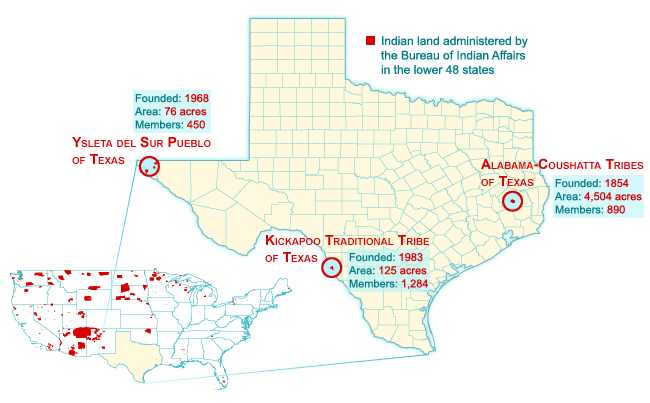
Through tireless advocacy and legal battles, spearheaded by tribal leaders and sympathetic allies, the Kickapoo people achieved a monumental victory. In 1983, the U.S. Congress passed the Kickapoo Traditional Tribe of Texas Act, formally recognizing the tribe and establishing a 125-acre reservation near Eagle Pass.
This federal recognition was a critical step, granting the tribe sovereignty and enabling them to access federal programs and services, laying the groundwork for self-governance and economic development.
Geography and Location: A Cross-Border Identity
The Kickapoo Traditional Tribe of Texas Reservation is situated along the Rio Grande, just south of Eagle Pass, Texas. This strategic location places them directly on the U.S.-Mexico border, a position that has profoundly shaped their history and contemporary identity.
The proximity to Mexico is not merely geographic; it reflects a deep cultural and familial connection. Many Kickapoo tribal members have relatives in the Kickapoo communities in Coahuila, Mexico, and cultural exchange remains vibrant across the border.
The reservation’s landscape, though modest in size, serves as the heart of the community, providing land for homes, tribal administration, and cultural activities. It is a vital anchor for a people who have historically been on the move.

Preserving the Sacred: Kickapoo Culture and Traditions
The Kickapoo Traditional Tribe of Texas is renowned for its steadfast commitment to preserving its ancestral culture. Language, ceremonies, and traditional lifeways are central to their identity.
The Kickapoo language, part of the Algonquian language family, is actively spoken by many tribal members, making it one of the most vital Indigenous languages in the region. Efforts are continuously made to teach the language to younger generations to ensure its continuity.
Traditional ceremonies, often held in private, are integral to Kickapoo spiritual beliefs and community cohesion. These practices connect them to their ancestors, their land, and their unique worldview. Respect for elders and the passing down of knowledge are cornerstones of their societal structure.
The tribe maintains traditional housing styles, such as wikups (domed structures made of saplings and bark) and waki-a-was (rectangular homes), for ceremonial purposes and to educate younger generations about their heritage, even as modern homes house the majority of the population.
Economic Self-Sufficiency: The Lucky Eagle Casino and Beyond
A significant pillar of the KTTT’s economic development and self-sufficiency is the Kickapoo Lucky Eagle Casino Hotel. Opened in 1996, it was the first and remains the only tribal casino in Texas.
The casino’s success has been transformative, providing employment opportunities for tribal members and residents of the surrounding communities, as well as generating crucial revenue for tribal programs and services. This economic engine has allowed the tribe to invest in its future.
Beyond gaming, the tribe continues to explore other avenues for economic diversification, aiming to create a robust and sustainable economy that supports its members’ needs and strengthens its sovereign capabilities. This includes ventures in retail, hospitality, and community services.
Governance and Community Life: A Sovereign Nation
The Kickapoo Traditional Tribe of Texas operates as a sovereign nation with its own distinct governmental structure. A tribal council, elected by tribal members, is responsible for governing the reservation, making decisions that impact the community, and representing the tribe’s interests.
The KTTT provides a range of essential services to its members, including healthcare, housing assistance, educational programs, and cultural preservation initiatives. These services are vital for improving the quality of life and fostering a strong, healthy community.
Education is highly valued, with the tribe often supporting members in pursuing higher education while also emphasizing traditional knowledge and language instruction within the community.
Challenges and Triumphs: An Ongoing Legacy
Despite their many successes, the Kickapoo Traditional Tribe of Texas faces ongoing challenges. Preserving their unique language and culture in a rapidly modernizing world, managing resources, and advocating for their sovereign rights remain continuous efforts.
However, their history is predominantly one of triumph over adversity. The establishment of their reservation, the success of their economic ventures, and their unwavering commitment to cultural heritage stand as powerful examples of Indigenous resilience and determination.
The KTTT continues to be a vibrant and active participant in regional and national dialogues concerning Native American issues, land rights, and cultural preservation.
Visiting and Learning: Engaging with the Kickapoo Heritage
While the Kickapoo reservation itself is generally not open for public tourism outside of designated areas, the Kickapoo Lucky Eagle Casino Hotel welcomes visitors. This provides an opportunity to support the tribe’s economic endeavors and experience a small part of their presence.
For those interested in learning more about Kickapoo culture and history, numerous academic resources, historical societies, and Native American cultural centers offer valuable insights. Respectful engagement and education are key to appreciating Indigenous cultures.
Conclusion: A Beacon of Cultural Strength
The Kickapoo Traditional Tribe of Texas Reservation is more than just a plot of land; it is a symbol of enduring spirit, cultural continuity, and the powerful pursuit of self-determination. From their ancient origins in the Great Lakes to their modern-day home on the Texas border, the Kickapoo people have demonstrated an extraordinary ability to adapt while holding fast to their identity.
Their story serves as an important reminder of the rich Indigenous heritage of North America and the ongoing contributions of Native American tribes to the cultural and economic landscape of the United States. The KTTT stands as a beacon of strength, a testament to a people who have carved out a future while honoring their past.


