

The vast, often stark, landscape of the Arctic has profoundly shaped the worldview and spiritual beliefs of its indigenous inhabitants for millennia. Among these resilient cultures are the Inupiat, whose traditional territories span northern Alaska. Their folklore is not merely a collection of stories but a vibrant tapestry woven from observations of nature, ancestral wisdom, and a deep understanding of the seen and unseen worlds.
For the Inupiat, the supernatural is not a separate realm but an intrinsic part of everyday existence. The harsh realities of Arctic life – the abundance and scarcity of game, the unpredictable weather, the isolation – fostered a profound respect for the spiritual forces believed to govern their world. These beliefs provided comfort, guidance, and explanations for the inexplicable.
Central to Inupiat spiritual understanding is the concept of Inua, the spirit or essence within all living things and even inanimate objects. Every animal, rock, mountain, and body of water possesses its own Inua, a vital spirit that must be respected and understood. This animistic worldview emphasizes an interconnectedness between humans, animals, and the environment.
Traditional Inupiat society relied heavily on oral tradition to pass down these vital stories and beliefs. Elders were the custodians of knowledge, sharing myths, legends, and practical wisdom through captivating narratives that entertained, educated, and reinforced cultural values. These stories are a living legacy, continuing to shape identity and understanding.
One of the most prominent supernatural entities in Inupiat folklore is the Tuunraq (plural: Tuunrat). These are powerful spirits that can be benevolent or malevolent, often acting as helpers or adversaries to shamans. They embody various natural phenomena, animals, or even abstract concepts, reflecting the complex spiritual landscape of the Arctic.
A Tuunraq might manifest as an animal spirit, guiding a hunter to prey, or as a more formidable, sometimes terrifying, being that tests human resilience. The relationship between humans and Tuunrat is often one of careful negotiation and respect, especially for those with spiritual gifts.


The role of the Angakkuq, or shaman, was absolutely crucial in traditional Inupiat society. These revered individuals were the intermediaries between the human world and the spirit world. They possessed the unique ability to communicate with Tuunrat and other spirits, often through trance states, drumming, and chanting.
Angakkuq performed a variety of vital functions: healing the sick, predicting hunting success, ensuring good weather, and even traveling to distant spiritual realms to retrieve lost souls or negotiate with powerful entities. Their spiritual journeys were often perilous, requiring immense courage and spiritual strength.
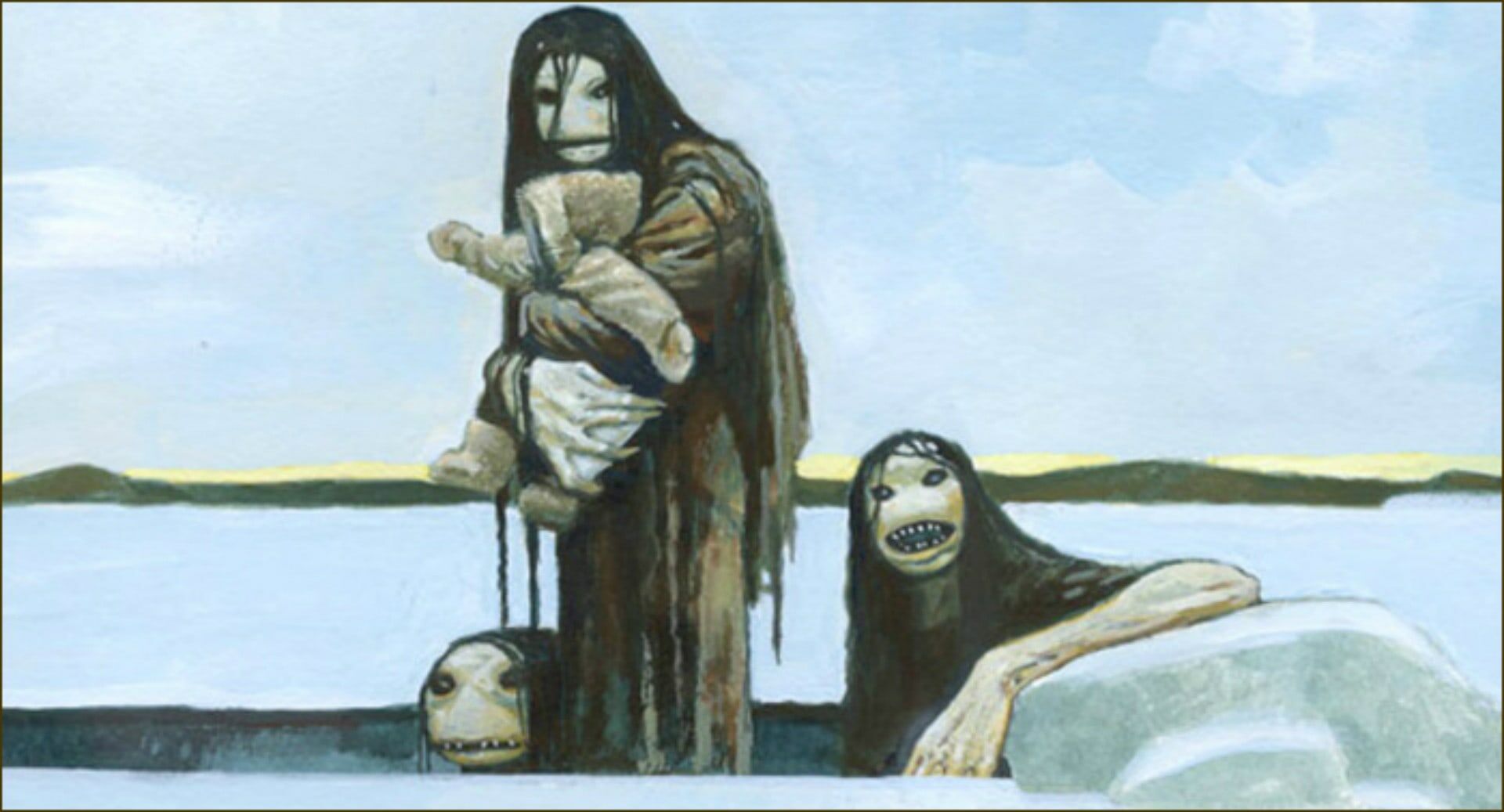
Another fascinating figure in Inupiat folklore, particularly known for its cautionary tales, is the Qalupalik. This sea creature is often described as a humanoid being, sometimes with green skin, long hair, and sharp claws, living beneath the ice or in the water. The Qalupalik is said to snatch children who wander too close to the ice edge or water.
The story of the Qalupalik serves a critical purpose: to teach children about the dangers of the Arctic environment, particularly the treacherous ice and cold waters. It’s a powerful narrative tool, ensuring safety through fear, yet also a captivating part of the broader Inupiat mythological landscape.
The land itself is teeming with spirits and mythical creatures. The Ircenrraq, or ‘Little People,’ are often described as small, elusive beings living in remote areas. They can be mischievous, helpful, or even dangerous, depending on the encounter. Some traditions say they are masters of disguise and can disappear without a trace.
Tales of giant sea serpents, such as the Tizheruk, also populate Inupiat lore. These immense creatures are said to inhabit the deep waters of the Bering Sea and Arctic Ocean, inspiring both awe and fear. Such stories reinforce the vastness and mystery of the ocean, a vital yet dangerous provider for the Inupiat.
The Inupiat worldview is deeply ecological. Hunting, a cornerstone of their survival, is approached with profound reverence. Animals are not merely resources but sentient beings with spirits, and their sacrifice for human sustenance is often accompanied by rituals and taboos designed to show respect and ensure their return.
Breaking taboos, such as disrespecting animal remains or misusing resources, was believed to have serious consequences, potentially leading to bad luck, illness, or even famine. These beliefs fostered sustainable practices and a deep sense of gratitude for the gifts of the land and sea.
The Northern Lights, or Aurora Borealis, hold significant spiritual meaning. While beautiful, they are also seen as a manifestation of spirits, sometimes playing games or communicating with the living. Observing them often evoked a sense of wonder and connection to the vastness of the cosmos.

Dreams are another significant avenue for spiritual communication. Many Inupiat believe that dreams can be prophetic, offer guidance from ancestral spirits, or provide insights into one’s spiritual well-being. Interpreting dreams was an important aspect of spiritual life.
The arrival of Western cultures and Christianity brought significant changes to Inupiat spiritual practices. Many traditional beliefs were suppressed or adapted. However, the core elements of Inupiat folklore and the respect for the spiritual world have persisted, often interwoven with new faiths.
Understanding Inupiat folklore offers invaluable insights into the human spirit’s ability to find meaning, beauty, and resilience in even the most challenging environments. It reminds us of the universal human need to connect with something larger than ourselves and to make sense of the world around us.
The tales of Tuunrat, the wisdom of Angakkuq, and the cautionary lessons of the Qalupalik are more than just stories; they are cultural anchors, embodying the deep historical, environmental, and spiritual connections that define the Inupiat people. They speak to the enduring power of narrative to preserve identity and transmit profound truths.
In summary, Inupiat folklore is a complex and deeply integrated system of beliefs that reflects a profound relationship with the Arctic environment. From the pervasive concept of Inua to the powerful figures of Tuunrat and Angakkuq, and the cautionary tales of creatures like the Qalupalik, these stories provide a rich understanding of Inupiat cosmology, ethics, and survival strategies. They are a testament to the enduring spiritual heritage of one of the world’s most resilient cultures, continuing to inspire and educate through generations.


