

The Arctic, a land of breathtaking beauty and formidable challenges, has forged cultures of incredible resilience and ingenuity. Among these are the Inupiat, indigenous people of northern Alaska, whose rich heritage is eloquently expressed through their ceremonial garments. These are not merely articles of clothing, but living testaments to their connection with the land, their ancestors, and the spirit world.
For the Inupiat, clothing has always been more than just protection against the harsh environment. It is a powerful medium for storytelling, spiritual expression, and the affirmation of identity. Ceremonial garments, in particular, embody generations of knowledge, artistic skill, and deep cultural meaning, reflecting a profound respect for nature and the animals that sustain them.
The severe Arctic climate necessitated an unparalleled mastery of material science and textile artistry. Survival depended on expertly crafted clothing that could provide extreme warmth, durability, and protection from wind, snow, and ice. This practical necessity blossomed into an intricate art form, where every stitch and every material choice carried significance.
At the heart of Inupiat ceremonial garments lies a deep connection to the natural world. The materials used are harvested from the land and sea, each chosen for its specific properties and symbolic value. This sustainable approach reflects a worldview where humans are an integral part of the ecosystem, living in harmony and respect with all living things.
Caribou hide stands as a cornerstone material. Known for its exceptional warmth and lightness, caribou hide is meticulously prepared through a complex tanning process, often involving scraping, stretching, and sometimes smoking. The inner layer provides insulation, while the outer layer offers protection, making it ideal for parkas and trousers.
Seal skin is another vital material, particularly prized for its waterproof qualities and durability. Different types of seals, such as ringed seal, bearded seal, and spotted seal, offer varying textures and thicknesses, used for specific garment components like kamiks (boots) and outer parkas designed for wet conditions.
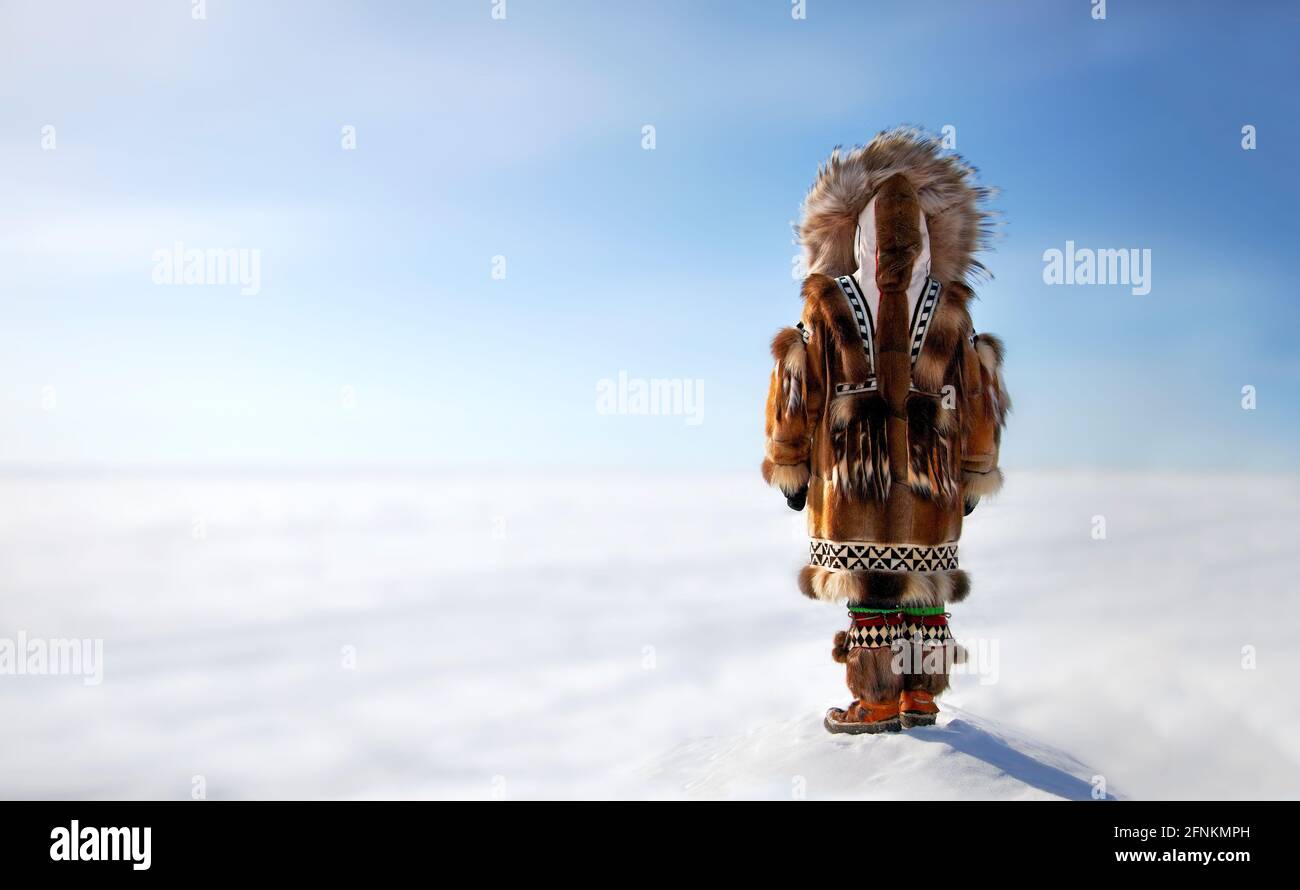

Beyond caribou and seal, other furs contribute to the richness and symbolism of ceremonial attire. Polar bear fur, though rare and highly valued, might be used for trim or specific ceremonial pieces, symbolizing strength and connection to a powerful Arctic predator. Furs from wolves, wolverines, and foxes also add decorative and protective elements.
Even bird skins, particularly from eiders and other waterfowl, find their place in Inupiat textile traditions. Lightweight and warm, they are sometimes used for inner layers or decorative panels, showcasing the Inupiat’s ability to utilize every available resource with ingenuity.
The creation of these garments is an art form passed down through generations, primarily among women. Traditional tools, such as the ulu (a crescent-shaped knife for cutting skins) and bone or ivory needles, were essential. Sinew, painstakingly prepared from animal tendons, served as incredibly strong and durable thread, swelling when wet to create waterproof seams.
The skill involved in cutting, fitting, and sewing hides is extraordinary. Seams are often double-stitched and meticulously sealed, sometimes with a combination of sinew and fat, to prevent moisture penetration. This attention to detail ensures not only the garment’s longevity but also its ability to protect the wearer in extreme conditions.
The Atigi, the traditional Inupiat parka, is perhaps the most iconic garment. Often double-layered – an inner layer with fur facing inwards for warmth, and an outer layer with fur facing outwards for protection – the Atigi is a marvel of Arctic engineering. Ceremonial Atigis are often adorned with intricate patterns, contrasting fur trims, and decorative elements.
Variations in Atigi styles exist across different Inupiat communities and for specific purposes. Some feature elaborate hoods, while others might have unique cuff designs or hem treatments. These subtle differences often convey information about the wearer’s community, family lineage, or status.
Kamiks, the traditional Inupiat boots, are equally crucial. Made from a combination of seal skin for the waterproof sole and legs, and often caribou or other furs for the uppers, kamiks are designed for superior traction and insulation. Ceremonial kamiks can feature intricate beadwork, dyed skins, and decorative stitching.
Mittens and gloves, often made from caribou or seal fur, are essential for maintaining dexterity and preventing frostbite in the Arctic cold. Ceremonial versions might be decorated with beadwork or unique fur patterns, signifying their special use during important events.
Beyond their practical function, Inupiat ceremonial garments are rich with symbolism. Designs, patterns, and adornments are not arbitrary; they are a visual language that communicates beliefs, history, and spiritual connections. These elements often reflect the wearer’s relationship with the animal world, their ancestry, and the spirits.
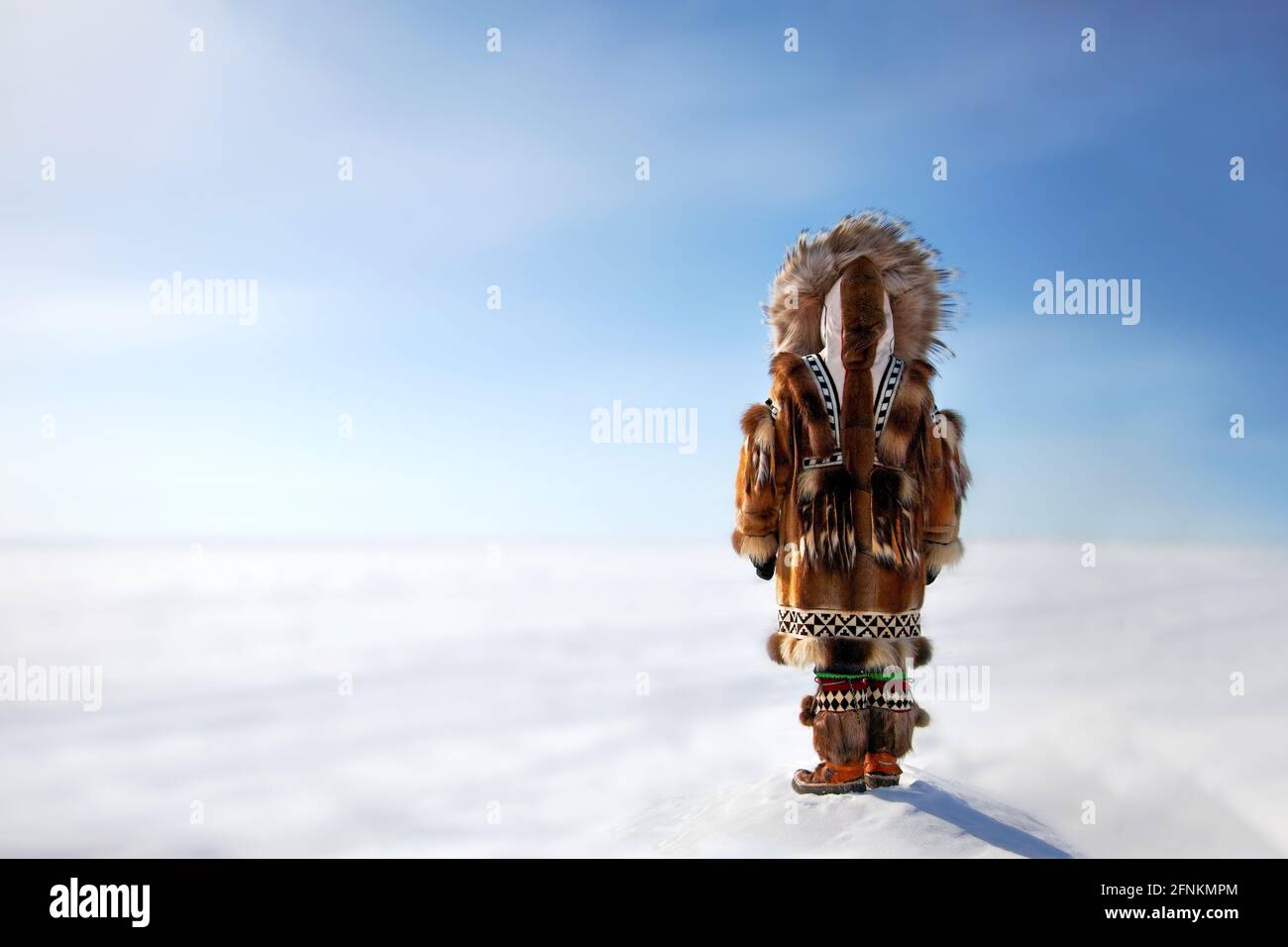

Geometric patterns frequently appear, often inspired by natural elements like ice formations, animal tracks, or the vast Arctic landscape. These patterns can also represent familial lines, community identity, or spiritual pathways. The repetition and symmetry in these designs often hold deep meaning.
Animal motifs are central to Inupiat artistry. Depictions of caribou, seals, polar bears, wolves, and birds are common, reflecting the deep respect and spiritual connection the Inupiat have with these creatures. These motifs can symbolize successful hunting, protection, or the embodiment of certain animal spirits.
Adornments like beadwork (often glass beads acquired through trade, or traditional dentalium shells), small pieces of ivory, bone, or even iridescent beetle wings, add texture, color, and shimmer. These embellishments enhance the visual impact of the garments, especially during dances and ceremonies where movement brings them to life.
Colors, though often subtle and derived from natural dyes, also hold significance. Earth tones, whites, and blacks are prevalent, reflecting the natural palette of the Arctic. The contrast between light and dark furs is often used to create striking patterns and highlight the garment’s structure.
Ceremonial garments play a pivotal role in various Inupiat cultural events, most notably the drum dances. During these powerful gatherings, dancers move to the rhythmic beat of the traditional skin drum, and their elaborate attire becomes an extension of their performance, enhancing the visual and spiritual experience.
The movement of fur fringes, the shimmer of beads, and the rustle of skins all contribute to the sensory richness of the dance. These garments are designed not just for aesthetics but to move with the dancer, creating a dynamic visual spectacle that tells stories and honors ancestors.
In addition to dances, specific garments may be worn for shamanic rituals, connecting the spiritual leader to the spirit world. These garments often incorporate elements believed to offer protection, facilitate communication with spirits, or embody transformative powers.
Rites of passage, such as coming-of-age ceremonies or important community gatherings, also feature distinct ceremonial attire. These garments mark significant life stages and reinforce the individual’s place within the community and their cultural heritage.
The transmission of knowledge regarding the creation of these garments is a vital aspect of Inupiat culture. From a young age, girls learn the intricate sewing techniques from their mothers, grandmothers, and other female elders, ensuring the continuity of this invaluable art form.
However, like many indigenous cultures, the Inupiat faced significant challenges to their traditions due to colonialism, forced assimilation, and the impact of residential schools. The traditional practice of crafting ceremonial garments experienced periods of decline.
In recent decades, there has been a powerful and inspiring revival of Inupiat cultural practices, including the art of traditional garment making. Contemporary Inupiat artists and cultural centers are actively engaged in reclaiming, preserving, and innovating these ancestral skills.
Today, Inupiat artists are not only meticulously recreating historical pieces but also infusing traditional techniques with modern aesthetics, creating breathtaking works that bridge the past and the present. These efforts ensure that the knowledge and skills are passed to younger generations.
The impact of climate change poses new threats to these traditions. Changing migratory patterns of caribou, melting sea ice affecting seal populations, and altered weather patterns challenge the availability and quality of traditional materials, making the preservation of these skills even more critical.
Despite these challenges, the Inupiat continue to practice and adapt their sustainable harvesting methods, ensuring that the resources are utilized respectfully and responsibly. This deep ecological knowledge is integral to their cultural identity and the continuation of their artistic heritage.
While often grouped under the broader ‘Inuit’ umbrella, it’s important to recognize the distinct cultural nuances of the Inupiat compared to other Arctic groups like the Yup’ik or Eastern Inuit. Each group possesses unique garment styles, decorative motifs, and ceremonial practices that reflect their specific environments and histories.
Museums and cultural institutions worldwide play a role in showcasing and preserving historical Inupiat garments, but the most vibrant preservation efforts come from within the Inupiat communities themselves. Workshops, cultural festivals, and community initiatives are crucial for keeping the traditions alive.
The future of Inupiat ceremonial garments is a testament to the resilience and creativity of the Inupiat people. By honoring their ancestors, adapting to contemporary challenges, and nurturing new generations of artists, they ensure that these ‘threads of identity’ continue to weave a rich cultural tapestry.
In conclusion, Inupiat ceremonial garments are far more than mere clothing. They are profound expressions of cultural identity, spiritual connection, and artistic mastery. From the careful selection of natural materials to the intricate sewing techniques and symbolic designs, each garment tells a story of survival, respect, and enduring heritage in the heart of the Arctic.


