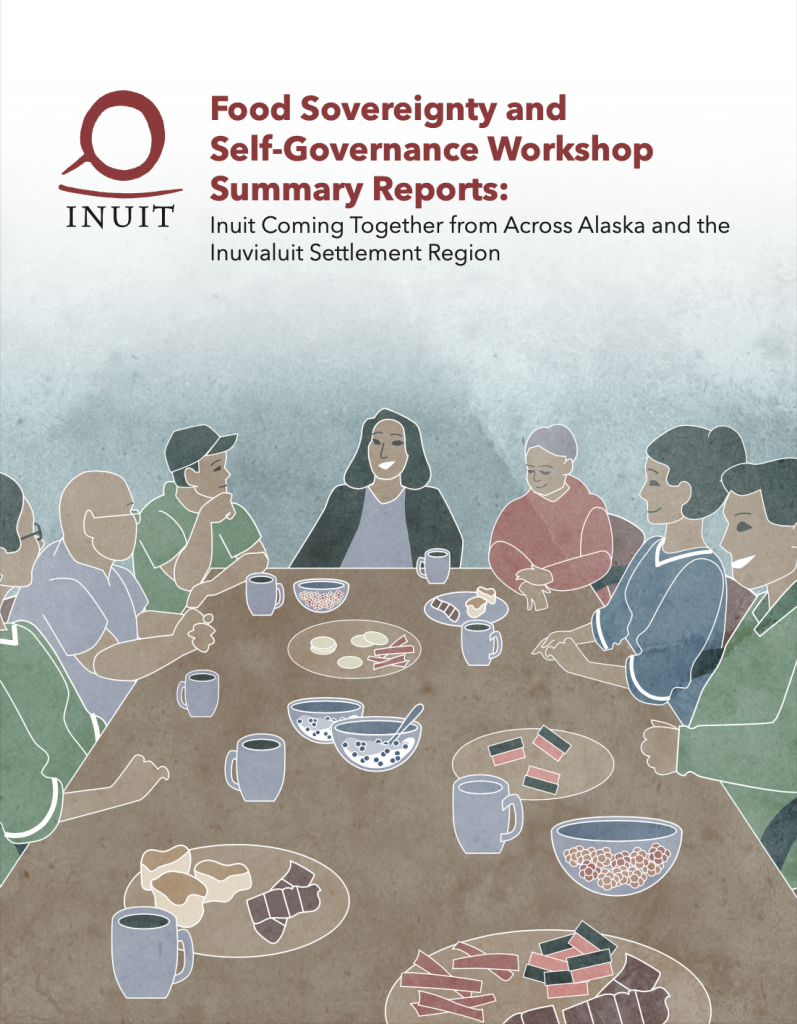
In the vast and challenging landscapes of the Arctic, the concept of food security extends far beyond mere caloric intake. For Inuit, traditional food security is a deeply interwoven tapestry of cultural identity, spiritual connection, social well-being, and profound environmental stewardship. It is a system honed over millennia, allowing communities to thrive in one of the world’s most extreme environments.
This comprehensive article delves into the multifaceted nature of Inuit traditional food security, exploring its historical roots, its contemporary challenges, and the incredible resilience demonstrated by Inuit communities in safeguarding their way of life. We will examine what ‘country food’ truly means, its nutritional and cultural significance, and the threats posed by a rapidly changing world.
What is Inuit Traditional Food Security? A Holistic Perspective
At its core, Inuit traditional food security refers to the consistent access to culturally appropriate, safe, and nutritious traditional foods – often called ‘country food’ or ‘nunaqpaaq’ in Inuktitut – harvested directly from the land, sea, and ice. This includes marine mammals like seals, whales, and walrus; land animals such as caribou and muskox; various fish species; and migratory birds and berries.
However, the concept is far more encompassing than simply having enough to eat. It embodies the entire process: the knowledge required for hunting and harvesting, the sharing networks that distribute food throughout communities, the tools and technologies used, and the spiritual connection to the animals and the land itself. It is a holistic system that sustains not just bodies, but also minds and spirits.
For Inuit, country food is the cornerstone of a healthy diet, providing essential nutrients often lacking or prohibitively expensive in store-bought options in northern communities. Beyond nutrition, it reinforces identity, fosters intergenerational knowledge transfer, and strengthens social bonds through communal hunting, sharing, and feasting.
The Pillars of Traditional Food Security: Sustaining a Way of Life
Several fundamental pillars underpin Inuit traditional food security, each vital to its continuation and strength.
Access to Land, Sea, and Resources: Unrestricted access to traditional hunting, fishing, and gathering territories is paramount. This includes access to ice for travel and hunting, open waters for marine mammals, and tundra for land animals. Any impediment to this access directly threatens food security.
Traditional Ecological Knowledge (TEK): For generations, Inuit have accumulated an unparalleled understanding of the Arctic environment. This Traditional Ecological Knowledge (TEK) encompasses animal behavior, weather patterns, ice conditions, navigation, and sustainable harvesting practices. It is passed down through oral tradition, observation, and direct experience, making it a living, evolving body of wisdom.
Intergenerational Knowledge Transmission: The active transfer of hunting, fishing, and processing skills from elders to youth is critical. This ensures that the expertise, values, and language associated with traditional food acquisition are preserved and adapted for future generations. Without this, the entire system is at risk.
Sharing Networks and Community: Food sharing is a cornerstone of Inuit society. Historically and presently, successful hunts are shared widely within the community, ensuring that everyone, especially elders and those who cannot hunt, has access to country food. These networks are vital for resilience and social cohesion.
Appropriate Tools and Technology: While traditional methods persist, modern tools like snowmobiles, boats, and rifles have been integrated to enhance efficiency and safety in harvesting. The ability to afford and maintain these tools is also a component of contemporary food security.
Threats to Inuit Traditional Food Security: A Changing Arctic
Despite its deep roots, Inuit traditional food security faces numerous significant threats in the 21st century, largely driven by external factors.
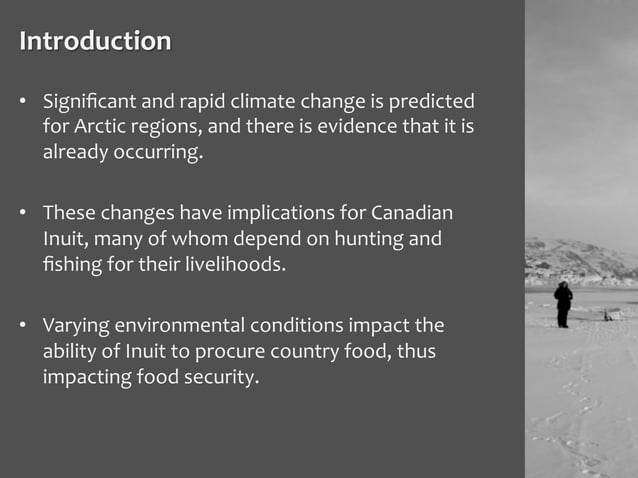
Climate Change: This is arguably the most pervasive threat. Rapid warming in the Arctic leads to:
- Unpredictable ice conditions, making travel and hunting dangerous.
- Changes in animal migration patterns and health.
- Increased severity of storms and weather events.
- Thawing permafrost affecting infrastructure and access.
These changes directly impact the ability to safely and successfully harvest country food.
Economic Factors and Cost of Living: The high cost of living in the North, including fuel for snowmobiles and boats, ammunition, and hunting equipment, creates significant barriers. Many Inuit face economic hardship, making it challenging to participate in traditional harvesting activities, even if the resources are available.
Contaminants and Environmental Pollution: Persistent organic pollutants (POPs) and heavy metals, transported from industrial regions globally, accumulate in Arctic food chains, particularly in marine mammals. While the nutritional benefits of country food generally outweigh the risks, concerns about contaminants can create apprehension and impact consumption.
Policy and Regulatory Frameworks: Historically, colonial policies and modern regulations, often designed without adequate Inuit input, have sometimes restricted access to traditional territories or imposed quotas that do not align with Inuit harvesting practices or conservation principles. This can undermine food sovereignty.
Social and Cultural Shifts: Urbanization, increased reliance on wage economies, and the influence of southern lifestyles can lead to a decline in traditional skills and knowledge among younger generations. This generational gap poses a long-term threat to the continuity of traditional food systems.
The Vital Role of Country Food vs. Store-Bought Alternatives
For many Inuit families, country food is not just preferred; it is a nutritional necessity. Store-bought food in Arctic communities is notoriously expensive, often of lower quality, and limited in variety. Fresh produce, dairy, and lean meats are often prohibitively priced.
Nutritional Superiority: Country food is typically rich in protein, essential fatty acids (like Omega-3s from marine mammals), and vital vitamins and minerals (such as iron, zinc, and vitamin D). These nutrients are crucial for overall health and well-being, particularly in a cold climate.
Health Implications: A shift away from country food towards store-bought, often processed, alternatives has been linked to increased rates of chronic diseases among Inuit, including diabetes, heart disease, and obesity. Re-emphasizing country food is a public health imperative.
Economic Relief: While harvesting country food requires upfront investment in equipment and fuel, a successful hunt can provide food for a family or community for an extended period, significantly reducing reliance on expensive store-bought groceries.
Resilience and Adaptation: Inuit-Led Solutions
In the face of these challenges, Inuit communities demonstrate remarkable resilience and are actively pursuing solutions to strengthen traditional food security.
Community-Based Monitoring: Inuit communities are at the forefront of monitoring environmental changes, often combining TEK with scientific methods to track wildlife populations, ice conditions, and climate impacts. This data is crucial for adaptation strategies.
Food Sharing Initiatives: Traditional sharing networks are being reinforced and modernized through community freezer programs, food banks focused on country food, and organized distribution efforts, ensuring wider access.
Youth Engagement Programs: Initiatives focused on connecting youth with elders to learn traditional hunting, harvesting, and processing skills are vital for intergenerational knowledge transfer and cultural revitalization.
Advocacy for Self-Determination: Inuit organizations are strong advocates for greater control over land and resource management, promoting policies that reflect Inuit values and support their right to self-determination and food sovereignty.
Integration of TEK and Science: Collaborative projects between Inuit knowledge holders and Western scientists are leading to more holistic understandings of environmental changes and more effective conservation and management strategies.
Policy Recommendations and Future Directions
To truly support and enhance Inuit traditional food security, a multi-pronged approach is required, involving governments, research institutions, and Inuit organizations.
Firstly, policies must recognize and uphold Indigenous rights and food sovereignty, ensuring Inuit have primary stewardship over their traditional territories and resources. This means meaningful consultation and co-management frameworks.
Secondly, significant investment is needed to address the impacts of climate change, including supporting community-led adaptation strategies, infrastructure improvements, and research into climate-resilient harvesting methods.
Thirdly, economic disparities must be addressed. Programs that support the high costs associated with traditional harvesting, such as fuel subsidies or equipment grants, can help reduce barriers to accessing country food.
Furthermore, public health initiatives should continue to promote the nutritional and cultural benefits of country food, while also addressing concerns about contaminants through transparent communication and ongoing research.
Finally, supporting educational programs that integrate TEK and facilitate intergenerational learning is crucial for ensuring the long-term viability of traditional food systems and the cultural identity they sustain.
Conclusion: A Path Forward for Nourishment and Culture
Inuit traditional food security is not merely a matter of sustenance; it is the lifeblood of Inuit culture, health, and community well-being. It represents a profound relationship with the Arctic environment, a testament to generations of adaptive knowledge, and a powerful symbol of resilience.
While facing unprecedented challenges from climate change, economic pressures, and socio-cultural shifts, Inuit communities are actively working to preserve and strengthen their food systems. By understanding and supporting these efforts, we can contribute to a future where Inuit continue to thrive, nourished by the land and sea, and sustained by their rich cultural heritage.
The journey towards enhanced Inuit traditional food security is a shared responsibility, demanding respect for Indigenous knowledge, proactive climate action, and policies that empower Inuit self-determination. It is a vital step towards a healthier, more equitable, and culturally vibrant Arctic.


