
In the vast, icy landscapes of the Arctic, where survival is an art and culture is etched into every aspect of life, the Inuit people have long practiced a powerful form of self-expression and spiritual connection: tattooing. These traditional markings, known as Kakiniit or Kakinniit, are far more than mere adornment; they are living narratives inscribed upon the skin, embodying profound meanings, ancestral wisdom, and the very essence of Inuit identity.
For centuries, before the arrival of European missionaries and the subsequent suppression of Indigenous practices, Kakiniit were an integral part of Inuit life. They served as a visual language, conveying stories of spiritual beliefs, personal achievements, community belonging, and protection against the harsh elements and unseen forces.
The art of Inuit tattooing is an ancient tradition, with archaeological evidence suggesting its practice dates back thousands of years. These markings were deeply interwoven with the spiritual fabric of Inuit society, reflecting a worldview where the physical and spiritual realms were inextricably linked. Every line, dot, and symbol carried weight, intention, and a connection to the ancestors.
Traditionally, Kakiniit were predominantly worn by women, though men also bore tattoos, albeit often fewer and in different locations. The application of these tattoos was often a sacred ritual, performed by elder women skilled in the art, using methods passed down through generations.
One of the primary functions of Kakiniit was to mark significant rites of passage in a woman’s life. The onset of menstruation, marriage, and especially childbirth were often commemorated with specific tattoo patterns. These markings signaled a woman’s transition from girlhood to womanhood, celebrating her fertility and her vital role in the perpetuation of the family and community.
For instance, the distinctive lines tattooed on a woman’s chin, often referred to as ‘V’ shapes or vertical lines, were powerful symbols of beauty, maturity, and a woman’s ability to bear children. They were a public declaration of her readiness for life’s responsibilities and her connection to the lineage of strong Inuit women before her.

Beyond rites of passage, Inuit tattoos served as potent protective amulets. It was believed that certain designs, strategically placed on the body, could ward off evil spirits, prevent illness, or ensure good fortune, particularly during hunting and fishing expeditions. The tattoos acted as a spiritual shield in a world full of both visible and invisible challenges.
Many designs also represented a deep spiritual connection to the animal world, which was central to Inuit survival. Motifs depicting animals like seals, caribou, or birds, or symbols inspired by their forms, could invoke the spirit of these creatures, offering strength, guidance, or success in the hunt. This reflected the profound respect and interdependence between the Inuit and their environment.
Achievements and skills were also proudly displayed through Kakiniit. A successful hunter might bear specific marks signifying his prowess, while a woman skilled in traditional crafts could have tattoos celebrating her abilities. These were not merely decorative but served as a testament to an individual’s contribution to the community’s well-being.
The tattoos also functioned as a form of personal and collective identity. They could indicate tribal affiliation, family lineage, or even personal stories and experiences. In a vast and sparsely populated land, these visual cues helped identify individuals and their connections to broader kinship networks.
The traditional techniques for applying Kakiniit were meticulous and often involved considerable pain, which itself was part of the ritualistic experience, demonstrating endurance and strength. The primary method was hand-poking, where a needle (historically made from bone, antler, or sinew) was used to tap soot or lampblack (siniq) into the skin. This soot was often derived from the burning of seal oil, linking the pigment directly to their way of life.
Another distinct method was skin-stitching, or Tunniit, particularly for facial tattoos. This involved a needle threaded with sinew, which was dipped in soot and then pulled underneath the top layer of skin, creating continuous lines. This technique required immense precision and skill, resulting in the characteristic delicate and intricate patterns.
The pain endured during the tattooing process was not merely a side effect; it was an integral part of the spiritual journey. It symbolized resilience, the ability to withstand hardship, and a commitment to the cultural and spiritual significance of the markings. The act itself was a transformative experience.
Common designs included lines on the chin, forehead, and cheeks, often radiating from the mouth or eyes. Lines on the hands and arms were also prevalent, sometimes depicting patterns that resembled fishing nets, hunting tools, or abstract symbols of protection. Dots and circles could represent stars, spirits, or community gatherings.
The facial tattoos, in particular, held immense power and visibility. A woman’s chin tattoo, for example, was considered a mark of profound beauty and cultural pride, a visual declaration of her heritage and strength. These were not merely aesthetic choices but deeply embedded cultural statements.
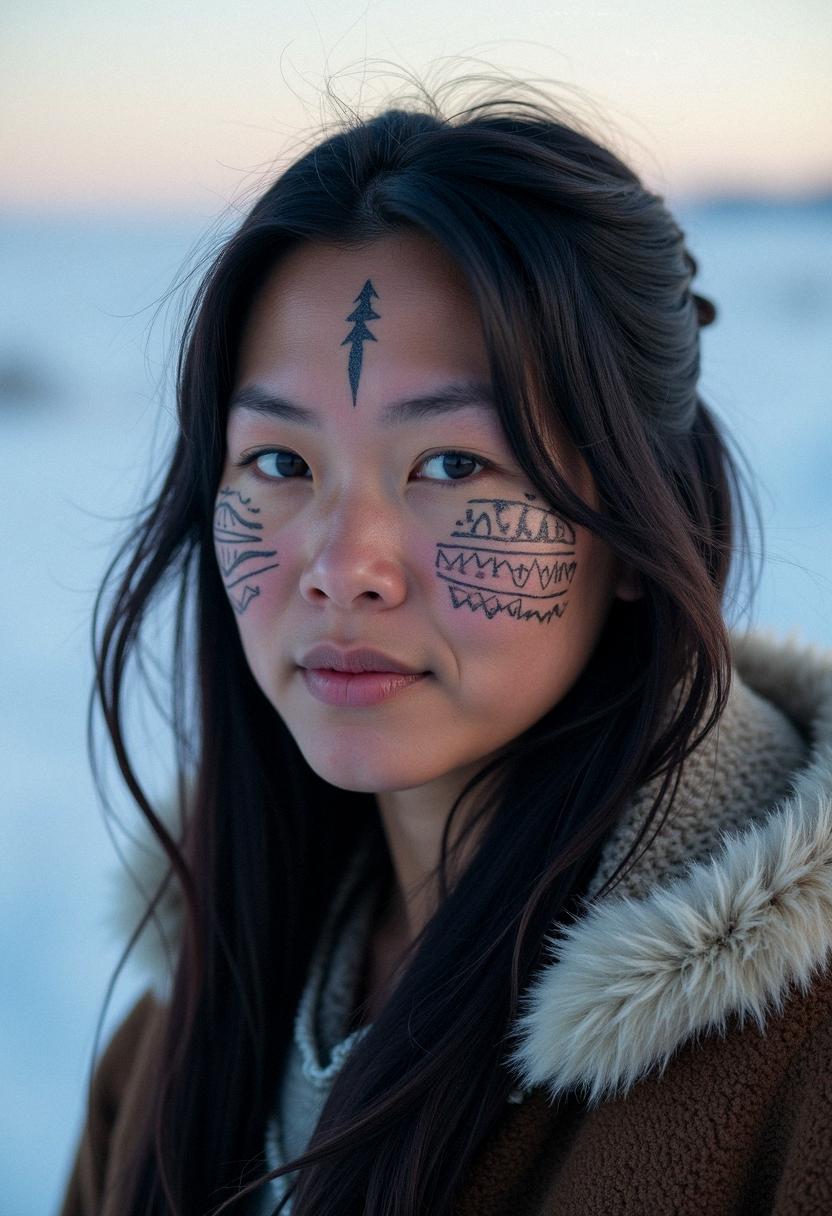
The mid-19th to early 20th centuries brought significant challenges to Inuit tattoo traditions. With the arrival of Christian missionaries, traditional practices like Kakiniit were often deemed ‘pagan’ or ‘savage’ and actively suppressed. Inuit people were pressured, and sometimes forced, to abandon their cultural practices, leading to a near cessation of tattooing for several generations.
This period of suppression led to a tragic loss of knowledge, with many of the specific meanings behind certain patterns fading from collective memory. The last generations of Inuit women to receive traditional facial tattoos in their youth are now elders, and their stories are invaluable in the ongoing efforts to reclaim this heritage.
However, in recent decades, there has been a powerful and inspiring revival of Inuit tattoo traditions. Younger generations of Inuit artists and cultural advocates are actively researching, learning, and practicing Kakiniit, driven by a desire to reconnect with their heritage and strengthen their cultural identity.
This revitalization movement is a testament to the resilience of Inuit culture. Artists like Hovak Johnston and many others have been instrumental in leading workshops, documenting traditional practices, and creating spaces for Inuit women to receive these meaningful tattoos once again.
The process of revival involves extensive consultation with elders, historical research, and a deep respect for the ancestral ways. It’s not just about replicating designs but understanding the underlying philosophy, the spiritual connection, and the cultural context that gives Kakiniit their profound significance.
Today, contemporary Kakiniit artists are bridging the past and present, using both traditional hand-poking and modern tattoo equipment while adhering to the cultural integrity of the designs. This ensures that the art form continues to evolve while honoring its roots.
The resurgence of Kakiniit is a powerful statement of cultural pride and a reclamation of identity in the face of historical trauma. For many Inuit, receiving these tattoos is a deeply emotional and healing experience, connecting them directly to their ancestors and asserting their place in the world.
It also serves an important educational purpose, raising awareness about Inuit culture and traditions globally. These tattoos become visible symbols of a vibrant, living culture that has endured and continues to thrive.
While the revival is primarily for Inuit people, it also sparks conversations about cultural appropriation and the importance of respecting Indigenous traditions. For non-Inuit individuals, appreciating and learning about Kakiniit means understanding their sacred nature and avoiding casual appropriation.
The enduring legacy of Inuit tattoo traditions is a testament to the strength and resilience of a people. Kakiniit are not merely ink on skin; they are living testaments to history, spirituality, and identity, continuing to tell stories, offer protection, and connect generations in the vast and beautiful Arctic.
In summary, Inuit tattoo traditions, or Kakiniit, are profoundly meaningful cultural markers. They signify rites of passage, offer spiritual protection, celebrate achievements, and affirm identity and kinship within Inuit communities. Suppressed for generations, these powerful markings are now experiencing a vibrant revival, symbolizing resilience, cultural pride, and a deep connection to ancestral wisdom. They are a vital part of the ongoing story of the Inuit people, etched forever into their skin and spirit.