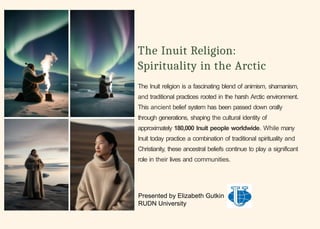

The vast, often unforgiving landscapes of the Arctic have shaped the worldview and spiritual beliefs of the Inuit people for millennia. Far from being a simple religion, the Inuit spiritual system is an intricate tapestry woven from animism, oral traditions, profound respect for nature, and a deep understanding of the interconnectedness of all life.
This comprehensive guide delves into the core tenets of Inuit spirituality, exploring its key figures, practices, and its enduring legacy in contemporary Inuit culture. We aim to provide an informative and respectful overview, shedding light on a belief system that is as rich and resilient as the people who uphold it.
The Animistic Heart of Inuit Spirituality
At the core of Inuit spiritual beliefs lies a profound animistic worldview. This means that all living things—and indeed, many inanimate objects and natural phenomena—are believed to possess a spirit or soul. This is not merely a philosophical concept but a lived reality that dictates interactions with the environment, animals, and other people.
The concept of Inua is central to this understanding. Inua refers to the ‘spirit’ or ‘owner’ of a thing, whether it be a rock, an animal, a mountain, or a person. Every entity has its own Inua, which gives it life, purpose, and a unique essence. This belief fosters a deep sense of respect and caution in all interactions with the natural world.
Closely related is Anirniq, which can be translated as ‘breath’ or ‘soul.’ It is the life force that animates an individual, linking them to the spiritual realm. When a person or animal dies, their Anirniq is believed to continue existing, transitioning into the spirit world.

Key Figures and Spirits in Inuit Mythology
While the Inuit do not worship ‘gods’ in the monotheistic sense, they venerate powerful spiritual entities and mythological figures who embody different aspects of their world and hold significant influence. These figures often appear in traditional stories and provide moral guidance and explanations for natural phenomena.
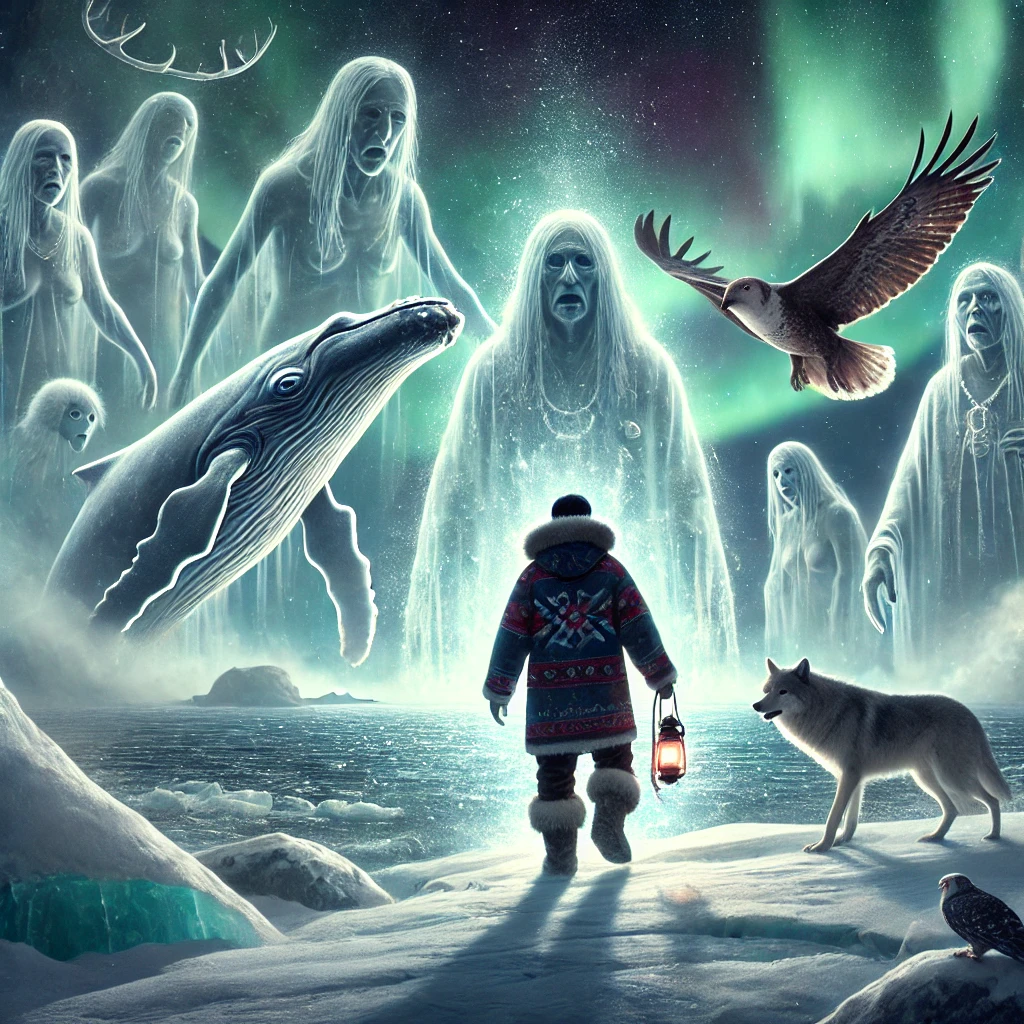
Sedna, the Goddess of the Sea, is perhaps the most well-known and revered figure in Inuit mythology. She is the ‘Mother of the Sea Animals’ and controls the abundance of marine life, which is crucial for the Inuit’s survival. Her story often involves her tragic transformation into a sea spirit after being cast into the ocean, and her fingers becoming the various sea creatures.
Hunters must maintain a respectful relationship with Sedna, observing taboos and performing rituals to ensure her benevolence. When taboos are broken, it is believed that Sedna becomes angered, causing the sea animals to hide. It is then the role of the Angakkuq (shaman) to journey to her underwater realm and appease her.
Sila, the Spirit of the Air and Weather, is another immensely powerful entity. Sila represents the universe itself, the breath of life, and the forces of nature—wind, storms, and calm. Sila is often seen as a benevolent but sometimes unpredictable force, embodying the raw power and beauty of the Arctic environment.
Respect for Sila is demonstrated through careful observation of weather patterns and living in harmony with the land. Sila is also sometimes associated with intelligence and wisdom, influencing human thought and action. Breaking taboos can also anger Sila, leading to harsh weather conditions.
Beyond these major figures, the Inuit spiritual world is populated by a myriad of other spirits, both helpful and malevolent. Tuurngait are powerful spirits that can be either helpful or dangerous. They often serve as spirit helpers for shamans, providing guidance and assistance in their spiritual journeys.
Other spirits include the Qallupilluit, child-snatching creatures said to live under the ice, and various localized spirits associated with specific places or natural features. These stories serve not only as entertainment but also as cautionary tales and ways to teach children about safety and respect for their environment.
The Role of the Angakkuq (Shaman)
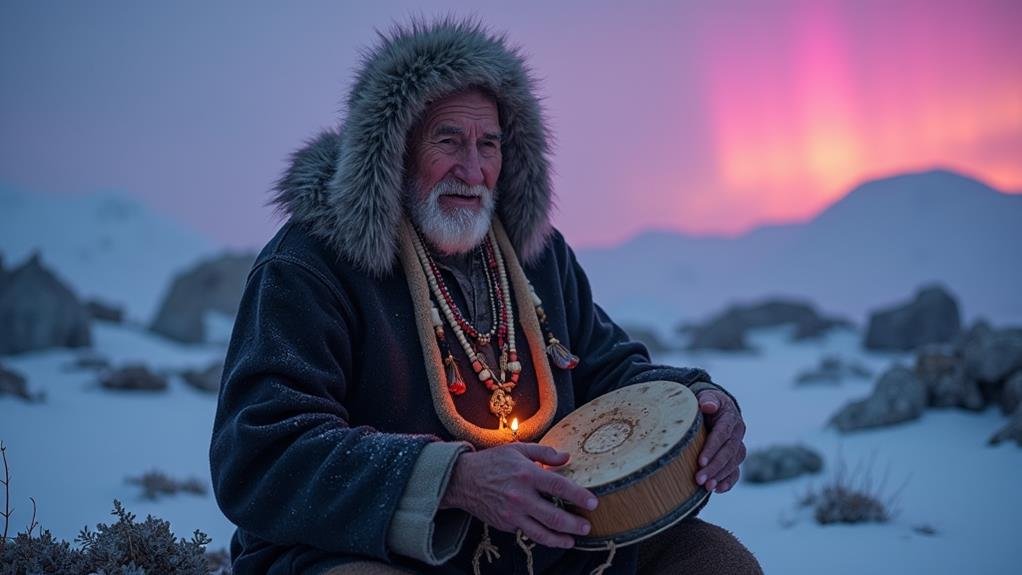

The Angakkuq, or shaman, held a pivotal role in traditional Inuit society. They were the intermediaries between the human world and the spirit world, possessing the ability to communicate with spirits, heal the sick, and influence events.
Becoming an Angakkuq involved a rigorous process, often beginning with a calling or a unique spiritual experience, followed by intense training and isolation. They would learn to enter trance states, journey to other realms (such as Sedna’s underwater home or the celestial sphere), and harness the power of their spirit helpers.
The Angakkuq’s responsibilities were vast: diagnosing and curing illnesses (often attributed to spirit interference or taboo violations), predicting weather, ensuring successful hunts, retrieving lost souls, and mediating disputes. Their power was derived from their connection to the spirit world and their ability to navigate its complexities.
While the role of the Angakkuq has diminished with the advent of Christianity and modern medicine, the reverence for their historical significance and the spiritual wisdom they embodied remains a strong part of Inuit cultural heritage.
Rituals, Taboos, and Respect for Life
Inuit spiritual beliefs are deeply intertwined with daily life through a system of rituals and taboos designed to maintain balance and show respect for the spirits. These practices are not arbitrary rules but practical guidelines for living sustainably in a challenging environment.
Hunting, for instance, was surrounded by numerous rituals. After a successful hunt, specific procedures were followed to honor the animal’s spirit, such as offering fresh water to a seal or whale. This was done to thank the animal for giving its life and to ensure that its spirit would return to Sedna, allowing for future successful hunts.
Taboos often govern specific actions, particularly for women during menstruation or childbirth, or for hunters after killing certain animals. These might include restrictions on eating certain foods, handling specific tools, or performing particular tasks. Breaking a taboo was believed to offend the spirits, leading to misfortune, illness, or poor hunting.
The emphasis on respect extends to all aspects of life. Respect for elders, for community members, for animals, and for the land itself are fundamental tenets. This deep respect fosters a collective responsibility for environmental stewardship and the well-being of the community.
Oral Traditions and the Transmission of Knowledge
Inuit spiritual beliefs and cultural knowledge have historically been passed down through generations via rich oral traditions. Stories, myths, legends, songs, and poems serve as vital vessels for teaching moral lessons, explaining the world, and preserving cultural identity.
These narratives often feature the adventures of mythological heroes, encounters with powerful spirits, and the origins of natural phenomena. They reinforce the importance of humility, resourcefulness, community cooperation, and the profound connection between humans and the environment.
Modernity and the Enduring Spirit
The arrival of European missionaries and colonial influences brought significant changes to Inuit communities, including the widespread adoption of Christianity. For many Inuit, traditional spiritual practices were suppressed or blended with Christian beliefs, leading to unique syncretic expressions of faith.
Today, Inuit culture continues to draw strength from its spiritual roots. The stories of Sedna and Sila, the wisdom of the Angakkuq, and the animistic worldview still inform contemporary art, literature, and the ongoing efforts to protect the Arctic environment and cultural heritage.
Conclusion: A Legacy of Resilience and Connection
The Inuit spiritual belief system is a testament to human resilience, adaptability, and an enduring connection to the natural world. Rooted in animism, it emphasizes the profound respect for all life, the delicate balance between the physical and spiritual realms, and the wisdom passed down through countless generations.
From the powerful sagas of Sedna and Sila to the profound role of the Angakkuq, Inuit spirituality offers a rich tapestry of understanding that continues to inspire and guide. It reminds us of the interconnectedness of all things and the vital importance of living in harmony with our environment, a lesson that resonates globally in our modern world.


