

Canada is home to a rich tapestry of Indigenous peoples, including First Nations, Métis, and Inuit. Among these distinct groups, the Inuit hold a unique cultural heritage and a deep connection to the Arctic and subarctic regions. Understanding the demographics and population trends of the Inuit in Canada is not merely an academic exercise; it is crucial for informed policy-making, resource allocation, and supporting the self-determination and well-being of Inuit communities.
This comprehensive article delves into the latest Inuit population statistics in Canada, drawing primarily from data collected by Statistics Canada. We will explore where Inuit people live, how their population is growing, key demographic characteristics, and the broader context that these numbers reveal about their communities.
Who Are the Inuit? Defining a Distinct Indigenous People
The term ‘Inuit’ refers to the Indigenous people whose homelands span the Arctic regions of Canada, Greenland, Alaska, and Chukotka in Russia. In Canada, the Inuit primarily reside in Inuit Nunangat, a vast homeland comprising four distinct regions, each with its own unique history and governance structures. It is essential to recognize the Inuit as a distinct group, separate from First Nations and Métis, with their own languages, cultures, and traditions.
Inuit Nunangat: The Canadian Inuit Homeland
- Nunavut: The largest and most populous Inuit region, established as a territory in 1999.
- Nunavik: Located in northern Quebec.
- Nunatsiavut: Situated in northern Labrador, Newfoundland and Labrador.
- Inuvialuit Settlement Region: Located in the Northwest Territories.


While the majority of Inuit live within Inuit Nunangat, a significant and growing number also reside in urban centres across southern Canada, reflecting evolving migration patterns and opportunities.
The Latest Numbers: How Many Inuit Live in Canada?
According to the 2021 Census, the Inuit population in Canada reached 70,545 individuals. This represents a notable increase from previous census cycles, demonstrating a consistent growth trend. The Inuit population accounted for 1.7% of the total Indigenous population in Canada and 0.2% of the total Canadian population.
This growth is a testament to the resilience and vitality of Inuit communities, even as they navigate various socio-economic challenges. Understanding the rate of population change is vital for planning future services and infrastructure.
Geographic Distribution: Where Do Most Inuit Live?
- Nunavut: Approximately 31,160 Inuit live in Nunavut, making up about 85% of the territory’s total population. This makes Nunavut the most predominantly Inuit region.
- Nunavik (Quebec): Around 14,040 Inuit reside in Nunavik, accounting for a significant portion of northern Quebec’s population.
- Nunatsiavut (Newfoundland and Labrador): Roughly 2,755 Inuit call Nunatsiavut home.
- Inuvialuit Settlement Region (Northwest Territories): Approximately 3,210 Inuit live in this region.
Beyond Inuit Nunangat, about 19,385 Inuit live outside their traditional territories, primarily in urban centres in southern Canada, such as Ottawa, Edmonton, and Montreal. This urban migration presents unique challenges and opportunities for cultural preservation and service delivery.
Demographic Snapshot: Age, Gender, and Family Structures
The Inuit population is notably younger than the non-Indigenous population in Canada. The 2021 Census data revealed that 29.5% of the Inuit population was under the age of 15, compared to 15.7% for the non-Indigenous population. This youthfulness signifies a strong potential for future growth but also highlights the need for robust educational and youth support services.
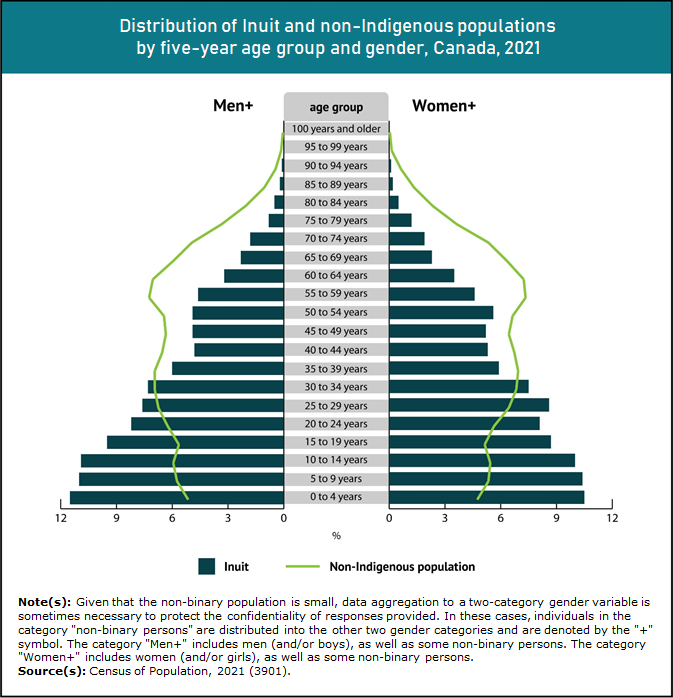

The median age for Inuit was 25.5 years in 2021, significantly lower than the 41.6 years for the non-Indigenous population. This demographic characteristic impacts everything from healthcare planning to workforce development strategies.
Regarding gender distribution, the Inuit population tends to be relatively balanced, mirroring national trends. Family structures within Inuit communities are diverse, often including extended family networks that play a crucial role in cultural transmission and support.
Language and Cultural Preservation: A Vital Statistic
Language retention is a critical indicator of cultural vitality. Inuktitut, along with other Inuit dialects, remains a strong language among many Inuit. Statistics Canada data indicates that a significant proportion of Inuit can speak an Indigenous language, particularly within Inuit Nunangat. For example, in Nunavut, over 65% of the Inuit population reported being able to conduct a conversation in Inuktitut.
Socio-economic Indicators: Beyond Raw Numbers
- Education: While educational attainment among Inuit has been increasing, disparities still exist compared to the non-Indigenous population, particularly concerning post-secondary education.
- Employment: Employment rates vary significantly across Inuit Nunangat and between urban and rural settings. Challenges related to remote economies and access to diversified job markets often impact these rates.
- Income: Income levels for Inuit households generally lag behind the Canadian average, reflecting historical and ongoing systemic inequities.
- Housing: Overcrowding and inadequate housing remain significant issues in many Inuit communities, directly impacting health and well-being.
These statistics underscore the ongoing need for targeted investments and culturally appropriate programs to address these disparities and improve the quality of life for Inuit.
Health and Well-being: Statistical Realities
Health statistics among the Inuit population reveal significant challenges. Life expectancy, while improving, remains lower than the Canadian average. Higher rates of chronic diseases, mental health issues, and food insecurity are prevalent. These disparities are often linked to factors such as limited access to healthcare services, environmental contaminants, and the lasting intergenerational trauma from residential schools and forced relocation.
Understanding these health trends through data is crucial for developing effective public health interventions and culturally sensitive care models. The collection of disaggregated data is vital to accurately identify and address specific health needs within different Inuit regions.
The Impact of Historical Context on Population Trends
It is impossible to discuss Inuit population statistics without acknowledging the profound impact of historical events. Policies such as forced relocations, residential schools, and the imposition of foreign governance structures have had devastating effects on Inuit communities, including disruptions to traditional ways of life, loss of language, and intergenerational trauma. These historical factors continue to influence socio-economic and health indicators today, shaping current demographic realities and challenges.
Challenges in Data Collection and Representation
Collecting accurate and comprehensive data on Indigenous populations, including the Inuit, presents unique challenges. Factors such as the remoteness of many communities, diverse cultural contexts, and historical mistrust of government institutions can complicate data collection efforts. Statistics Canada works in collaboration with Inuit organizations to ensure data is collected in a culturally sensitive and respectful manner.
Furthermore, self-identification plays a crucial role in census data. Fluctuations in self-identification over time can influence reported population numbers, highlighting the importance of consistent methodologies and community engagement.
The Importance of Data for Inuit Self-Determination
- Advocate effectively: Provide evidence-based arguments for necessary resources and policy changes.
- Plan services: Design and deliver culturally appropriate programs in areas like health, education, and housing.
- Measure progress: Track improvements in socio-economic outcomes over time.
- Assert sovereignty: Underpin claims and negotiations related to land, resources, and governance.
The data empowers Inuit to tell their own stories and shape their own futures, ensuring that policies are relevant and responsive to their unique needs and aspirations.
Future Projections and Ongoing Monitoring
Current trends suggest continued growth in the Inuit population, particularly among younger age cohorts. This demographic shift will necessitate ongoing investment in youth programs, educational infrastructure, and employment opportunities tailored to the realities of Arctic communities. Continuous monitoring of these statistics by organizations like Statistics Canada, in partnership with Inuit land claims organizations, will be essential to adapt to evolving needs.
Conclusion: Understanding the Inuit Population for a Stronger Canada
The Inuit population in Canada represents a vibrant and growing segment of the nation’s cultural mosaic. From the latest census data showing significant growth to the nuanced demographic insights regarding age and geographic distribution, these statistics paint a picture of resilience, cultural strength, and ongoing challenges. Understanding these numbers is not just about counting people; it’s about recognizing distinct identities, addressing disparities, and supporting the path towards greater self-determination and well-being for all Inuit.
By continuing to collect, analyze, and disseminate accurate and culturally relevant data, Canada can better partner with Inuit communities to foster a future where their unique heritage thrives and their populations prosper.


