

In the ever-evolving landscape of Search Engine Optimization (SEO), keywords remain a cornerstone of success. However, simply stuffing your content with keywords is no longer effective. A strategic approach involves understanding different keyword categories and how they contribute to your overall SEO goals. This comprehensive guide will break down these categories, providing you with the knowledge to optimize your content for maximum impact.
Why Keyword Categorization Matters
Improved Targeting: By categorizing keywords, you can target specific user intents and tailor your content accordingly.
Enhanced Organization: Categorization helps you organize your SEO efforts, making it easier to track progress and identify areas for improvement.
Better Content Strategy: Understanding keyword categories informs your content strategy, enabling you to create content that resonates with your target audience.
Increased ROI: By focusing on the right keywords, you can attract qualified traffic and increase your return on investment (ROI).

The Main Keyword Categories
1. Informational Keywords
Informational keywords are used by users seeking information about a specific topic. These keywords often include question words like ‘what,’ ‘how,’ ‘why,’ and ‘where.’
Create comprehensive and informative content that answers the user’s questions directly. Use clear and concise language, and incorporate relevant images and videos.
- definition of SEO
- cake baking tips
- explanation of sky color
- Eiffel Tower location
2. Navigational Keywords
Navigational keywords are used by users trying to find a specific website or page. These keywords typically include brand names or specific product/service names.
- Facebook login
- Amazon customer service
- Apple iPhone 13
- Netflix subscription
Ensure your website ranks for your brand name and related terms. Optimize your website’s navigation and internal linking to make it easy for users to find what they’re looking for.

- Facebook account
- Amazon help
- Apple phone
- Netflix plans
3. Transactional Keywords
Transactional keywords are used by users who are ready to make a purchase. These keywords often include words like ‘buy,’ ‘purchase,’ ‘order,’ and ‘discount.’
- buy iPhone online
- purchase running shoes
- order pizza delivery
- discount laptops
Optimize your product pages and checkout process to make it easy for users to complete a purchase. Use compelling calls to action and highlight any discounts or special offers.
- iPhone price
- running shoes sale
- pizza near me
- cheap laptops
4. Commercial Investigation Keywords
Commercial investigation keywords are used by users who are researching a product or service before making a purchase. These keywords often include words like ‘best,’ ‘review,’ ‘comparison,’ and ‘top.’
- best running shoes for beginners
- iPhone 13 review
- compare Samsung vs Apple
- top 10 laptops 2023
Create detailed product reviews, comparisons, and buying guides to help users make informed decisions. Highlight the pros and cons of different options and provide clear recommendations.
- running shoes ratings
- iPhone 13 features
- Samsung vs Apple comparison chart
- best laptops for students
5. Local Keywords
Local keywords are used by users searching for businesses or services in a specific geographic area. These keywords typically include city names or phrases like ‘near me.’
- restaurants near me
- plumbers in New York
- dentists in London
- coffee shops in Paris
Optimize your Google My Business profile and ensure your website includes your address and phone number. Use local keywords throughout your website content and build citations from local directories.
- best restaurants in New York
- emergency plumbers London
- top dentists Paris
- coffee near my location
Advanced Keyword Categorization
1. Short-Tail Keywords
Short-tail keywords are broad and generic, typically consisting of one or two words. They have high search volume but also high competition.
- shoes
- pizza
- hotels
Use short-tail keywords to attract a wide audience and increase brand awareness. Focus on creating high-quality content that ranks for these competitive terms.
2. Long-Tail Keywords
Long-tail keywords are specific and detailed, typically consisting of three or more words. They have lower search volume but also lower competition and higher conversion rates.
- best running shoes for women with flat feet
- order pepperoni pizza online for delivery
- cheap hotels near Times Square New York
Use long-tail keywords to target a specific audience and attract qualified traffic. Create content that answers specific questions and addresses niche interests.
3. Branded Keywords
Branded keywords include your brand name or variations of it. These keywords are essential for protecting your brand reputation and driving traffic to your website.
- Nike shoes
- Domino’s pizza
- Marriott hotels
Ensure your website ranks for your branded keywords and monitor your online reputation. Respond to customer reviews and address any negative feedback promptly.
4. Semantic Keywords
Semantic keywords are related to the main keyword in meaning or context. They help search engines understand the topic of your content and improve its relevance.
- search engine optimization
- keyword research
- link building
- content marketing
Incorporate semantic keywords throughout your content to improve its relevance and ranking. Use a variety of keywords to provide a comprehensive overview of the topic.
How to Identify and Categorize Keywords
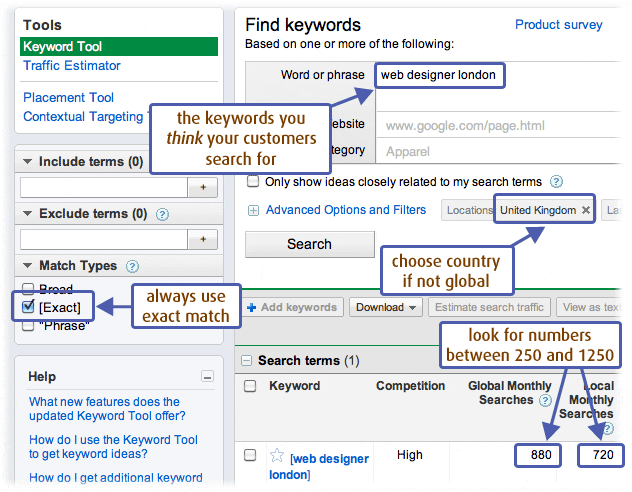
Use keyword research tools like Google Keyword Planner, SEMrush, or Ahrefs to identify relevant keywords for your business.
Determine the search intent behind each keyword. Are users looking for information, navigation, or a transaction?
Assign each keyword to one or more of the categories discussed above (informational, navigational, transactional, commercial investigation, local).
Prioritize keywords based on their search volume, competition, and relevance to your business goals.
Monitor the performance of your keywords and adjust your strategy as needed.
Tools for Keyword Research and Categorization
- Google Keyword Planner
- SEMrush
- Ahrefs
- Moz Keyword Explorer
- Ubersuggest
These tools provide valuable data on search volume, competition, and related keywords, helping you make informed decisions about your SEO strategy.
Common Mistakes to Avoid
Failing to understand the user’s intent behind a keyword can lead to irrelevant content and poor results.
While short-tail keywords can attract a wide audience, they are often too competitive and may not convert well.
Long-tail keywords can drive highly qualified traffic and improve conversion rates, so don’t neglect them.
Stuffing your content with keywords can harm your rankings and damage your reputation.
If you have a local business, ignoring local keywords can result in missed opportunities to attract local customers.
Conclusion: Mastering Keyword Categories for SEO Success
Understanding and utilizing keyword categories is essential for a successful SEO strategy. By categorizing keywords based on intent, length, and relevance, you can create targeted content that attracts the right audience and drives conversions. Remember to use the right tools, avoid common mistakes, and continuously monitor and adjust your strategy to stay ahead of the competition. By mastering keyword categories, you can unlock the full potential of SEO and achieve your business goals.
- Informational Keywords: Answer questions and provide information.
- Navigational Keywords: Help users find specific websites.
- Transactional Keywords: Target users ready to buy.
- Commercial Investigation Keywords: Assist users in researching products.
- Local Keywords: Attract local customers.
- Long-tail Keywords: Target niche audiences with specific queries.


