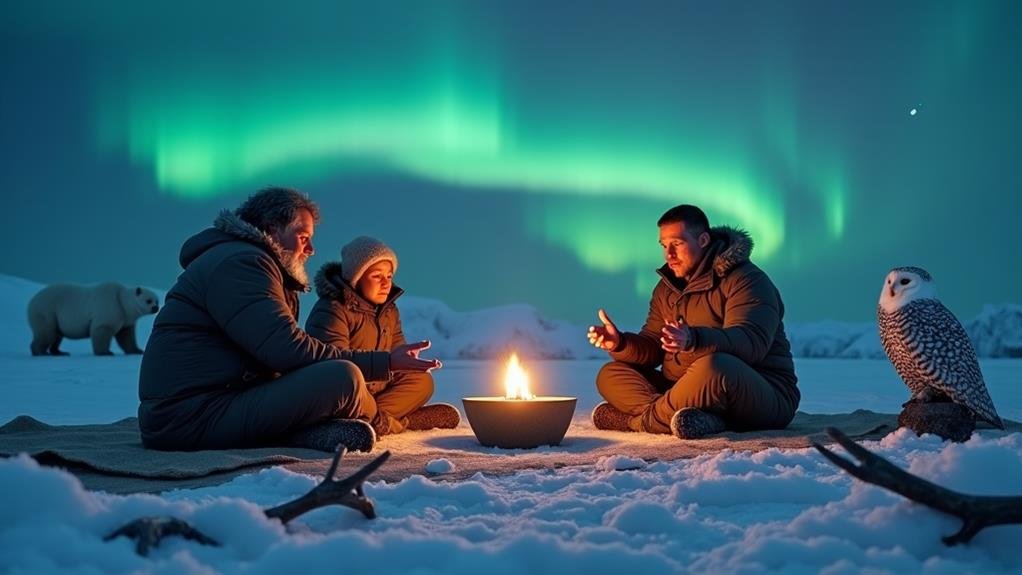
Echoes in the Ice: The Enduring Power of Inuit Storytelling
In the vast, unforgiving expanse of the Arctic, where the sun can vanish for months and survival hinges on profound wisdom and community cohesion, storytelling has never been mere entertainment. For the Inuit, the Indigenous people inhabiting the Arctic regions of Greenland, Canada, and Alaska, their oral traditions are the very bedrock of their culture – a complex tapestry woven from myth, history, ethics, and practical survival knowledge. These narratives, passed down through countless generations, illuminate a worldview intrinsically linked to the land, sea, and sky, serving as an irreplaceable guide in a world that demands constant adaptability and deep respect for nature.
The term "Eskimo storytelling traditions," while used in the prompt, broadly refers to the rich narrative heritage of various Arctic Indigenous groups, primarily the Inuit. For clarity and respect, this article will primarily use "Inuit" to describe these traditions. Their stories are not static texts but dynamic performances, shaped by the teller and the audience, echoing the shifting landscapes and the cyclical rhythms of life and death in the Far North.
The Arctic’s Oral Encyclopedia: Purpose and Pedagogy
At its core, Inuit storytelling is a pedagogical tool, an oral encyclopedia for survival. In a landscape devoid of written language until relatively recently, every piece of critical information—from hunting techniques for seals and whales, navigation across treacherous ice floes, understanding animal behavior, to predicting weather patterns—was embedded within narrative. Elders, revered for their accumulated wisdom, were the living libraries, their memories holding the keys to the community’s past, present, and future.
"Our stories teach us how to live on the land, how to respect the animals, and how to treat each other," explains an Inuit elder from Nunavut. "They are not just stories; they are our laws, our maps, our history books." This sentiment underscores the multi-faceted role of narrative. Beyond practical instruction, stories instilled moral codes, social etiquette, and an understanding of the spiritual world. Tales of generosity, courage, patience, and the consequences of greed or disrespect reinforced communal values essential for group survival in isolation.
The Categories of Narrative: Unipkaat and Qulirat
Inuit oral traditions can be broadly categorized into several forms, though these often overlap and blend during performance. Two significant classifications are unipkaat and qulirat.
-
Unipkaat are ancient myths and legends, often featuring supernatural beings, spirits (inua), and the origins of the world, animals, and human customs. These are often considered sacred, reflecting the deep spiritual connection the Inuit have with their environment. They explain phenomena like the creation of the sun and moon, the emergence of animals from human forms, or the tales of powerful shamans (angakkuq) who could traverse spiritual realms. One of the most famous unipkaat is the myth of Sedna, the Sea Goddess, mistress of marine animals, whose story teaches respect for the ocean and its creatures, and the severe consequences of human transgression. Sedna’s tale, involving a young woman thrown from a kayak and whose severed fingers transform into seals, whales, and fish, is a profound narrative on sustenance, sacrifice, and the delicate balance between humans and the natural world. When hunters struggle, it is believed Sedna is displeased, and a shaman might journey to her underwater realm to comb her hair, appeasing her and releasing the animals.
-
Qulirat are longer folktales, adventures, and personal narratives. These are often more secular, focusing on human ingenuity, heroic deeds, or humorous escapades. They might recount epic journeys, successful hunts, encounters with dangerous creatures, or tales of trickster figures like Raven, who, through cunning and often chaotic actions, brings about change or reveals human follies. Qulirat often highlight the incredible resilience and adaptability of the Inuit, celebrating their ability to thrive in one of the world’s harshest environments. These stories can also be highly localized, featuring specific landmarks, family histories, and community jokes, creating a shared cultural lexicon.
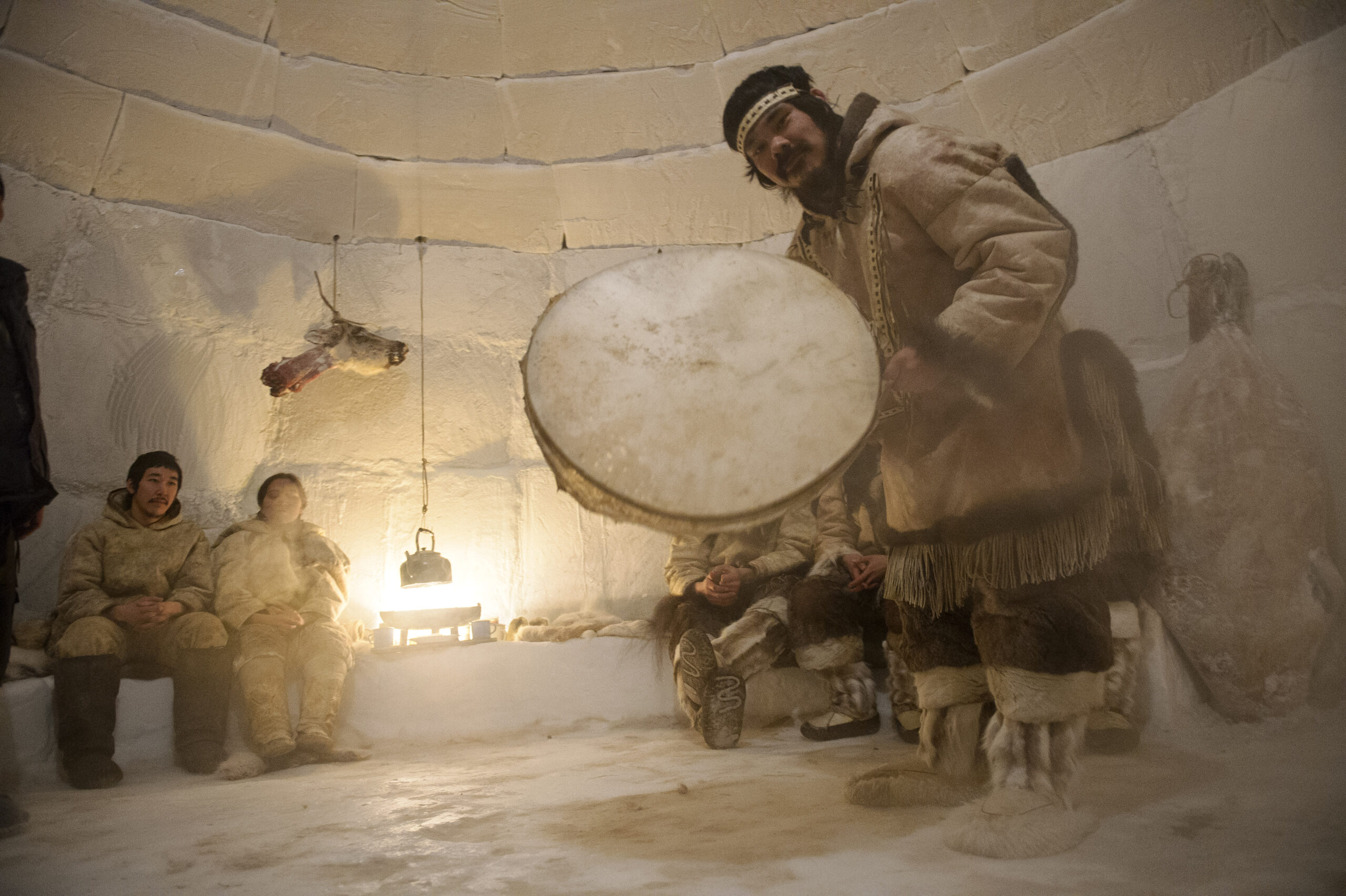
Beyond these, there are also atuq, or songs, which are often integral to storytelling, conveying emotion, invoking spirits, or simply providing rhythmic accompaniment. Performance is key; a master storyteller doesn’t just recite words but embodies the characters, using vocal inflections, gestures, and facial expressions to bring the narrative to life, transforming the listener’s imagination into a vivid Arctic landscape.
The Storyteller’s Craft: A Winter Ritual
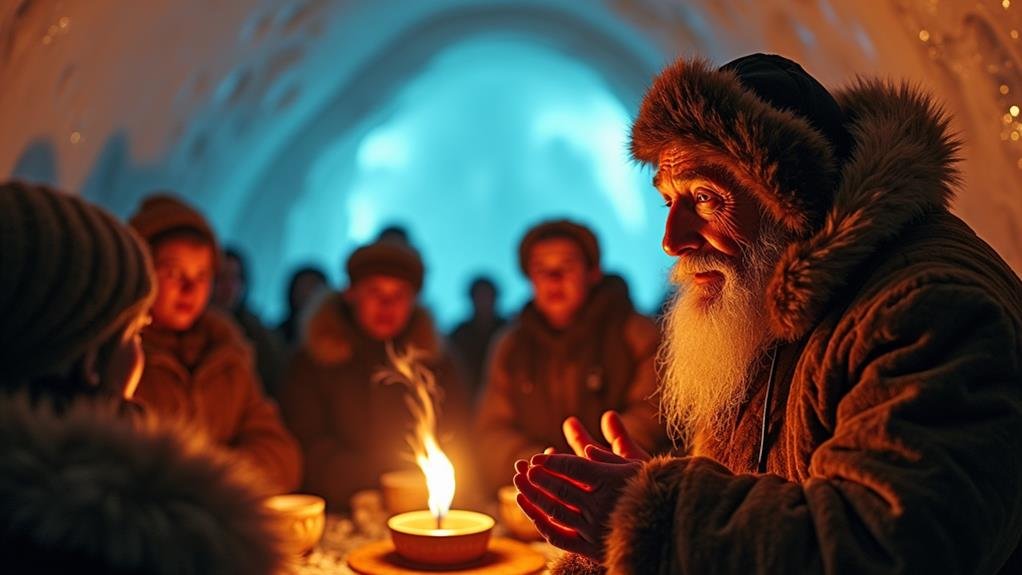
The setting for Inuit storytelling is as evocative as the stories themselves. During the long, dark winter months, when blizzards rage outside and hunting is minimal, families would gather in the warmth of an igloo or a communal dwelling. Under the soft glow of a blubber lamp, the storyteller, often an elder, would hold court. The atmosphere was intimate and communal, with children and adults alike hanging onto every word.
The skill of the storyteller was paramount. They were masters of suspense, timing, and characterization, capable of making listeners shiver with fear during a tale of a monstrous creature or erupt in laughter at a trickster’s antics. Audience participation was encouraged, with listeners interjecting questions, affirming details, or even offering alternative perspectives. This dynamic exchange ensured the stories remained vibrant and relevant, adapted slightly with each telling to resonate with the current generation. The renowned Danish explorer and ethnographer Knud Rasmussen, who spent years documenting Inuit culture in the early 20th century, observed the profound impact of these sessions. He noted how the narratives were delivered with such passion and detail that the listeners felt transported into the story, experiencing the cold, the hunger, the triumph alongside the characters.
Key Themes and Archetypes
Several recurring themes and archetypes permeate Inuit storytelling, reflecting their unique worldview:
- Humans and Animals: The boundary between humans and animals is often fluid. Animals are not merely resources but sentient beings with spirits (inua) and often possess human-like qualities, wisdom, or supernatural powers. Stories frequently depict transformations between human and animal forms, underscoring the deep interconnectedness and mutual respect necessary for survival.
- The Spirit World: The Arctic environment is alive with spirits – in the land, the sea, the sky, and even in everyday objects. Stories often involve encounters with malevolent or benevolent spirits, highlighting the delicate balance that must be maintained to avoid misfortune. Shamans, with their ability to communicate with spirits, are powerful figures in many tales, embodying the spiritual authority and the capacity to heal or harm.
- Resilience and Ingenuity: Given the harsh environment, tales often celebrate human endurance, cleverness, and the ability to adapt. Heroes are not always physically strong but possess intelligence, foresight, and a deep understanding of their surroundings.
- Humor and the Absurd: Despite the struggles, humor is a vital component. Many stories contain witty observations, comical situations, or trickster figures that lighten the mood and provide emotional release, a crucial coping mechanism in a challenging world.
- Justice and Consequence: Many narratives serve as cautionary tales, illustrating the consequences of breaking social taboos, disrespecting elders, or misusing power. They reinforce a moral framework that promotes harmony within the community and with the natural world.
Modern Challenges and Revitalization Efforts
The advent of colonialism, residential schools, and the rapid modernization of the Arctic brought immense challenges to Inuit storytelling traditions. Forced relocation, the imposition of foreign languages and education systems, and the erosion of traditional lifestyles led to a significant decline in oral transmission. Many elders, the primary bearers of these stories, passed away without passing on their full repertoire, leading to what some describe as "libraries burning." The younger generations, exposed to global media and a different pace of life, sometimes lost connection with their ancestral narratives.
However, in recent decades, there has been a powerful resurgence of interest and concerted efforts to revitalize Inuit storytelling. Community leaders, educators, and cultural organizations are working tirelessly to document, preserve, and promote these traditions.
- Language revitalization programs are crucial, as stories are intrinsically linked to the Inuit language (Inuktitut and its dialects).
- Recording and archiving efforts ensure that elder’s stories are preserved for future generations, often through digital platforms accessible globally.
- Contemporary Inuit artists, writers, filmmakers, and musicians are reinterpreting traditional stories for modern audiences, breathing new life into ancient myths. They use traditional narratives to address contemporary issues, creating a bridge between past and present. Authors like Rachel A. Qitsualik-Tinsley and Louise Flaherty have dedicated their careers to retelling Inuit legends for children and adults. Filmmakers like Zacharias Kunuk have brought epic Inuit stories, such as Atanarjuat: The Fast Runner, to international acclaim, showcasing the depth and power of these narratives on a global stage.
- Community-based initiatives are fostering intergenerational knowledge transfer, encouraging elders to share stories with youth in traditional settings. These gatherings reinforce cultural identity and strengthen community bonds.
As Natan Obed, President of Inuit Tapiriit Kanatami (the national Inuit organization in Canada), once stated, "Our stories are not just about who we were; they are about who we are and who we will become." This encapsulates the enduring power of Inuit storytelling: it is a living, breathing tradition that continues to shape identity, impart wisdom, and connect the Inuit to their rich heritage and to each other.
Conclusion
The storytelling traditions of the Inuit are far more than quaint relics of a bygone era. They are a dynamic, essential force that has guided a people through millennia of Arctic existence. These narratives, imbued with wisdom, humor, spirituality, and a profound respect for the natural world, serve as an indispensable cultural anchor in a rapidly changing world. From the mythic journeys of Sedna to the practical wisdom of a hunter’s tale, each story is a testament to the resilience, ingenuity, and deep spiritual connection that defines Inuit culture. As efforts to preserve and revitalize these traditions continue, the echoes of the Arctic night will undoubtedly carry these powerful voices forward, ensuring that the wisdom of the ice endures for generations to come.


