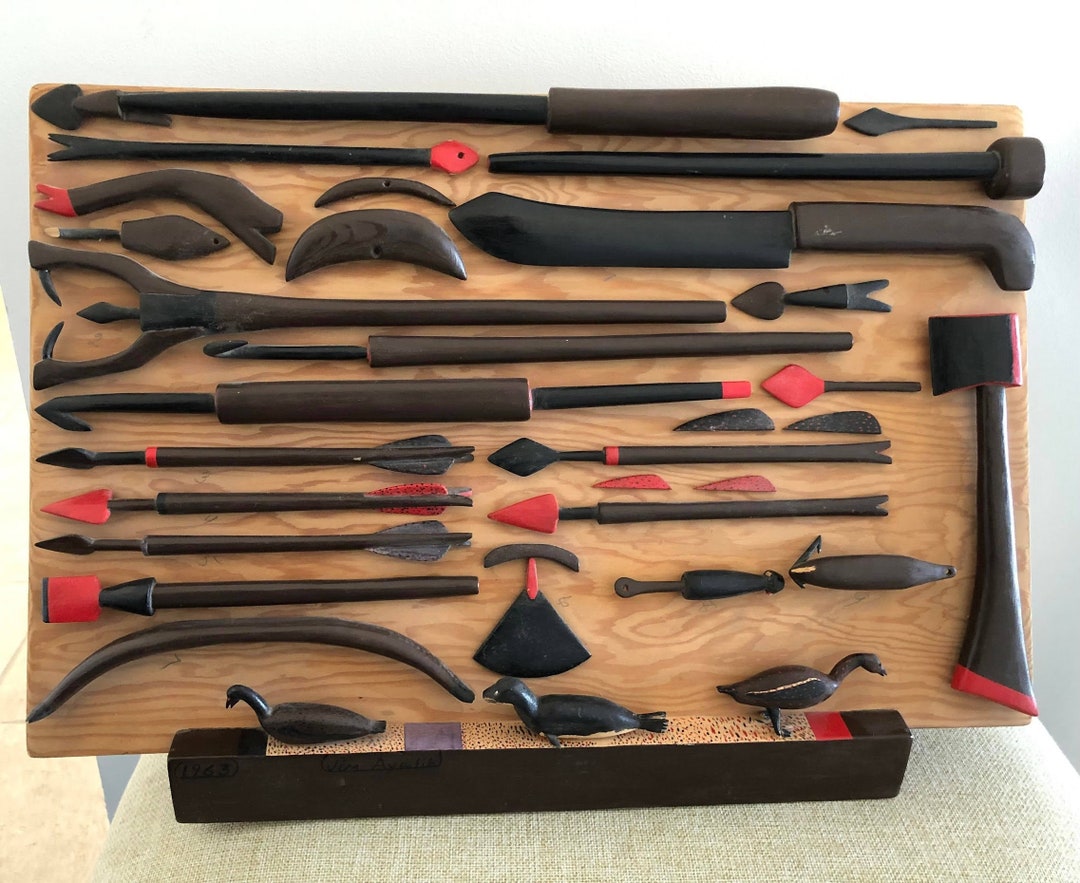
Eskimo carving, an art form deeply rooted in the vast, icy landscapes of the Arctic, represents more than mere aesthetic expression; it is a profound cultural narrative, a link to ancestral wisdom, and a testament to human ingenuity. While the magnificent sculptures themselves often capture our attention, the story of their creation begins with the tools. Understanding the materials from which these essential instruments are forged provides invaluable insight into the enduring legacy of Arctic craftsmanship.
The art of carving among the Inuit and other Eskimo peoples has always been intrinsically linked to their environment. For millennia, carvers have utilized the resources available to them to create not only artistic pieces but also functional objects vital for survival. From hunting implements to daily utensils, the ability to shape raw materials was a cornerstone of Arctic life.
When we speak of ‘Eskimo carving tools materials,’ we are delving into the very essence of resourcefulness and adaptation. The choice of material for a tool dictates its efficacy, durability, and the quality of the work it can produce. This comprehensive guide will explore the traditional and modern materials that have shaped the hands and artistic vision of Eskimo carvers throughout history.
The Foundations: Traditional Eskimo Carving Tool Materials
For countless generations, Eskimo carvers relied exclusively on materials found within their immediate environment. These natural resources were expertly fashioned into tools capable of transforming bone, ivory, antler, and stone into works of art and utility. The selection of these materials was not arbitrary; it was based on an intimate understanding of their inherent properties.
Stone: The Earliest Edge. Stone was among the first and most fundamental materials used for crafting carving tools. Chert, flint, and slate were particularly prized for their ability to be flaked or ground into sharp edges. These materials offered varying degrees of hardness and fracture patterns, allowing for different types of blades and scraping surfaces. A sharp stone blade, meticulously crafted, could cut, scrape, and incise with remarkable precision.
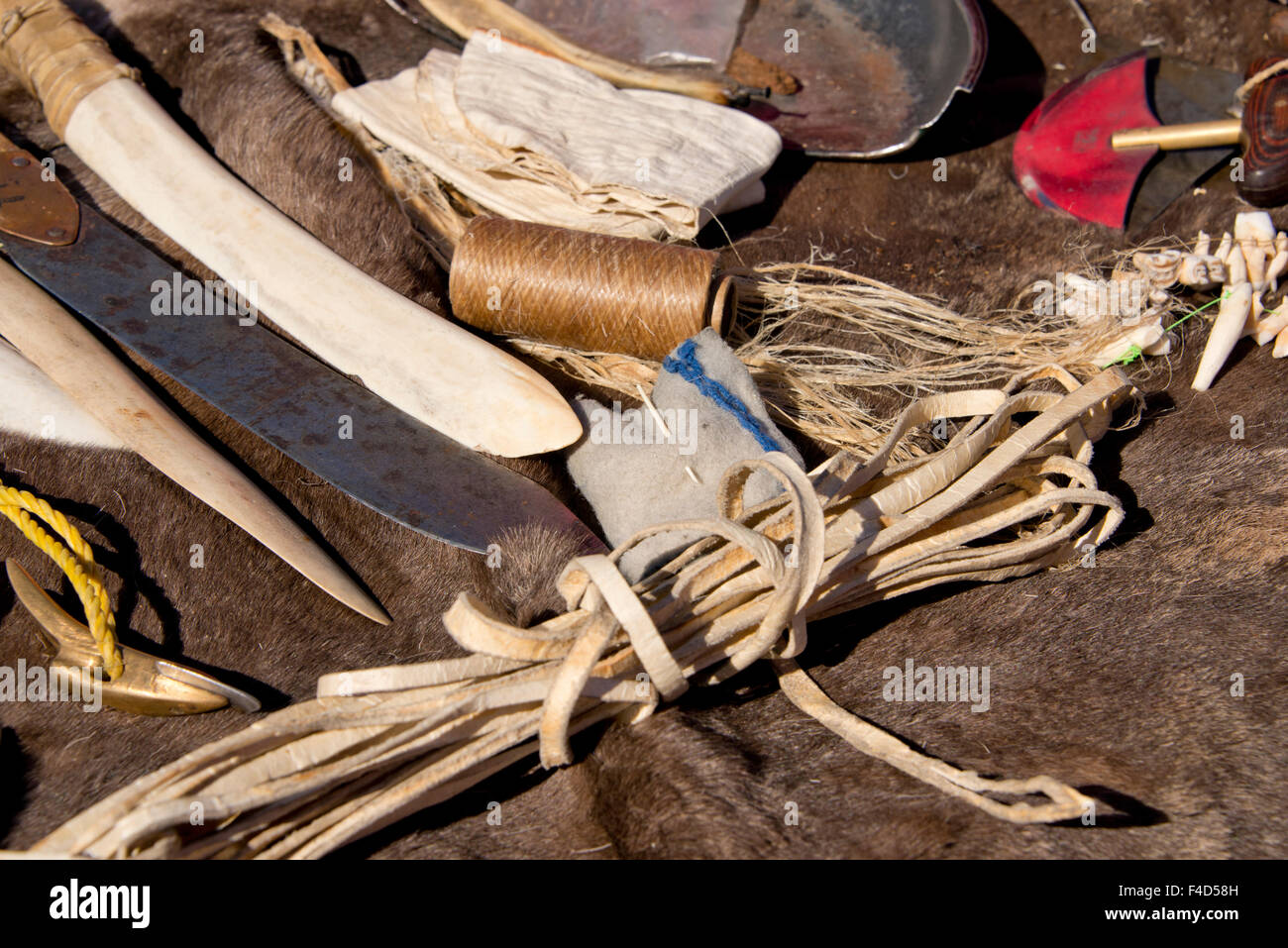
The availability of suitable stone was often a determining factor in early settlement patterns and trade routes. Carvers would seek out specific geological formations known to yield high-quality raw materials, sometimes traveling great distances. The process of shaping these stones into tools was itself an art, requiring skilled percussion flaking or grinding techniques.
Bone and Antler: Versatility from the Hunt. Bone, primarily from caribou, and antler, especially from caribou and occasionally moose, were indispensable for toolmaking. These materials possess a unique combination of strength, flexibility, and workability. They could be ground, scraped, and polished into a variety of shapes suitable for awls, drills, chisels, and handles.
Caribou antler, with its dense outer layer and porous interior, was particularly favored for making handles due to its ergonomic properties and robust nature. Walrus bone, denser and heavier than caribou bone, was also used for heavier-duty tools where greater impact resistance was required. These materials were byproducts of successful hunts, embodying a sustainable approach to resource utilization.
Ivory: A Precious Resource. Walrus tusk ivory and, in some regions, fossilized mammoth ivory, were highly valued. While often considered a primary carving material for sculptures, ivory also played a crucial role in toolmaking, particularly for smaller, finer implements or for ergonomic and decorative handles.
The density and fine grain of ivory allowed for exceptionally sharp points and delicate blades, ideal for intricate detail work. Its smooth surface also made it comfortable for tool handles, providing a good grip even in cold conditions. The use of ivory for tools often reflected the status of the carver or the importance of the tool itself.
Wood: Handles and Hafting. In an environment where trees are scarce, driftwood became a precious commodity. Collected along coastlines, various types of wood were used primarily for hafting (attaching a blade to a handle) and for creating mallets or larger handles. Its lightweight yet sturdy nature made it ideal for providing leverage and comfort.
Evolution and Adaptation: The Integration of New Materials
The arrival of European traders brought a revolutionary shift in the materials available to Eskimo carvers. Metal, particularly iron and later steel, profoundly impacted toolmaking, offering advantages that natural materials could not always match.
Steel, with its superior hardness and ability to hold a sharp edge for longer periods, quickly became a game-changer. Iron and steel blades replaced stone and bone for many cutting and scraping tasks, dramatically increasing the efficiency and precision of carving. Carvers ingeniously repurposed scraps of metal, such as saw blades or files, into bespoke carving tools.

Modern tool handles often incorporate a blend of traditional and contemporary materials. While wood, bone, and antler remain popular for their aesthetic and tactile qualities, synthetic materials like durable plastics and composites are also employed, offering consistent quality and ergonomic designs.
Specific Tools and Their Material Composition
The range of Eskimo carving tools is diverse, each designed for a specific purpose, and their material composition reflects this specialization.
Ulus and Crooked Knives. The ulu, a versatile all-purpose knife, traditionally featured a slate or chert blade, later replaced by steel. Its characteristic crescent shape allows for a rocking motion, ideal for cutting and scraping. Handles were historically made from bone, antler, or wood, providing a comfortable grip. Crooked knives, with their distinctively curved blades, were essential for hollowing out forms and smoothing concave surfaces, almost exclusively featuring steel blades and ergonomic wooden handles.
Scrapers and Adzes. Scrapers, used for removing material and smoothing surfaces, could have blades of sharpened stone, bone, or, more commonly today, steel. Adzes, with their perpendicular blades, were used for rough shaping and removing larger chunks of material. Traditional adze heads were often made from tough stone, hafted onto wooden handles, while modern versions utilize durable steel heads.
Drills and Awls. Essential for creating holes and starting points for cuts, drills and awls traditionally featured sharp points of bone or stone. With the introduction of metal, steel tips became prevalent, offering greater durability and precision. Handles for these tools were typically crafted from wood, bone, or antler.
Files and Rasps. Before metal files, abrasive stones like sandstone were used to grind and smooth surfaces. Today, carvers utilize a wide array of steel files and rasps, ranging from coarse to fine, to refine shapes and prepare surfaces for polishing. Diamond-grit files and burrs are also increasingly common for working with harder materials like serpentine.
Hammers and Mallets. Used for striking chisels or for percussive carving techniques, hammers and mallets were traditionally made from dense stone or hardwood. Modern carvers might use rubber mallets or specialized carving hammers to provide controlled force without damaging the tool handle or the carving material.
Why Material Choice Matters: Properties and Performance
The effectiveness of a carving tool is directly tied to the properties of its constituent materials.
Hardness and Durability: Harder materials like steel and diamond grit can cut through tough carving mediums more efficiently and resist wear, ensuring a longer lifespan for the tool.
Edge Retention and Sharpening: High-carbon steel, for instance, can be sharpened to a razor-fine edge and hold it well, reducing the need for frequent resharpening. The ease with which a material can be resharpened is also a critical factor.
Ergonomics and Comfort in Handles: The material of the handle impacts the carver’s comfort and control. Wood, bone, and antler are often preferred for their natural feel and warmth, while modern composites can offer specific grip textures and balanced weights.
The Impact on the Art Itself
The evolution of tool materials has profoundly influenced the aesthetic and technical possibilities of Eskimo carving. The advent of steel tools allowed for unprecedented levels of detail and refinement.
Precision and Detail: Sharper, more durable steel tools enable carvers to achieve finer lines, more intricate textures, and greater anatomical accuracy in their sculptures, pushing the boundaries of artistic expression. This precision allows for the capture of subtle nuances in animal forms or human expressions.
Speed and Efficiency of Carving: Modern tools can significantly reduce the time required for certain stages of carving, allowing carvers to focus more on the artistic vision and less on the arduous physical labor of shaping raw material.
Addressing Common Questions (People Also Ask)
What materials do Inuit use for carving? Inuit carvers primarily use soapstone (steatite), serpentine, marble, bone (caribou, whale), antler, and walrus ivory for their sculptures. For their tools, they use traditional materials like stone, bone, antler, and wood, increasingly supplemented by modern materials such as various types of steel, industrial wood, and synthetic composites.
What are traditional Inuit carving tools made of? Traditionally, Inuit carving tools were crafted from locally sourced natural materials: various types of stone (chert, flint, slate) for blades and scrapers; bone (caribou, walrus) and antler (caribou, moose) for awls, chisels, and handles; and driftwood for handles and mallets.
How has modern technology influenced Inuit carving tools? Modern technology has brought significant advancements. Steel, in various forms (high-carbon, stainless, tool steel), has largely replaced stone and bone for blades. Power tools, such as rotary tools with diamond-grit bits and sanding discs, are now commonly used for roughing out shapes and achieving smooth finishes, alongside traditional hand tools. Specialized abrasives and sharpening systems also contribute to tool maintenance.
Where do Inuit carvers get their materials? Carvers source their materials from a variety of places. Stone for carvings is often quarried locally or obtained through community-managed sources. Bone and antler are collected from hunted animals. Tool-making materials like wood, bone, and antler are also local. Modern steel and other industrial tool components are purchased from commercial suppliers or adapted from repurposed items.
What is the best material for carving tools? The ‘best’ material depends on the specific task and the carver’s preference. For cutting edges, high-carbon steel is highly valued for its sharpness and edge retention. For handles, wood, bone, or antler offer traditional aesthetics and good ergonomics, while modern composites provide durability and consistent grip. Diamond-grit tools are superior for very hard carving materials. Ultimately, a balanced kit often includes a mix of materials to tackle diverse challenges.
Sustainability and Sourcing
The sourcing of materials for both carvings and tools is a significant consideration. Ethical and legal guidelines govern the use of certain materials, especially marine mammal ivory and bone. Carvers often prioritize sustainable practices, utilizing byproducts of subsistence hunting and adhering to regulations.
The responsible sourcing of materials ensures the continued vitality of the art form while respecting wildlife populations and environmental stewardship. This balance between tradition, innovation, and ethical practice is a hallmark of contemporary Eskimo carving.
Conclusion: A Legacy Forged in Material
The journey through Eskimo carving tool materials reveals a fascinating blend of ancient wisdom and modern innovation. From the primal strength of stone and bone to the refined precision of steel and diamond, each material has played a crucial role in shaping the artistic landscape of the Arctic. These tools are not merely implements; they are extensions of the carver’s will, embodying centuries of knowledge, adaptation, and an unwavering commitment to artistic expression.
The enduring spirit of Eskimo craftsmanship lies not only in the beautiful objects created but also in the ingenuity and resourcefulness with which the very instruments of creation are conceived and maintained. As the art continues to evolve, so too will the materials, forever linking the carver, the tool, and the profound stories etched into the heart of the Arctic.


