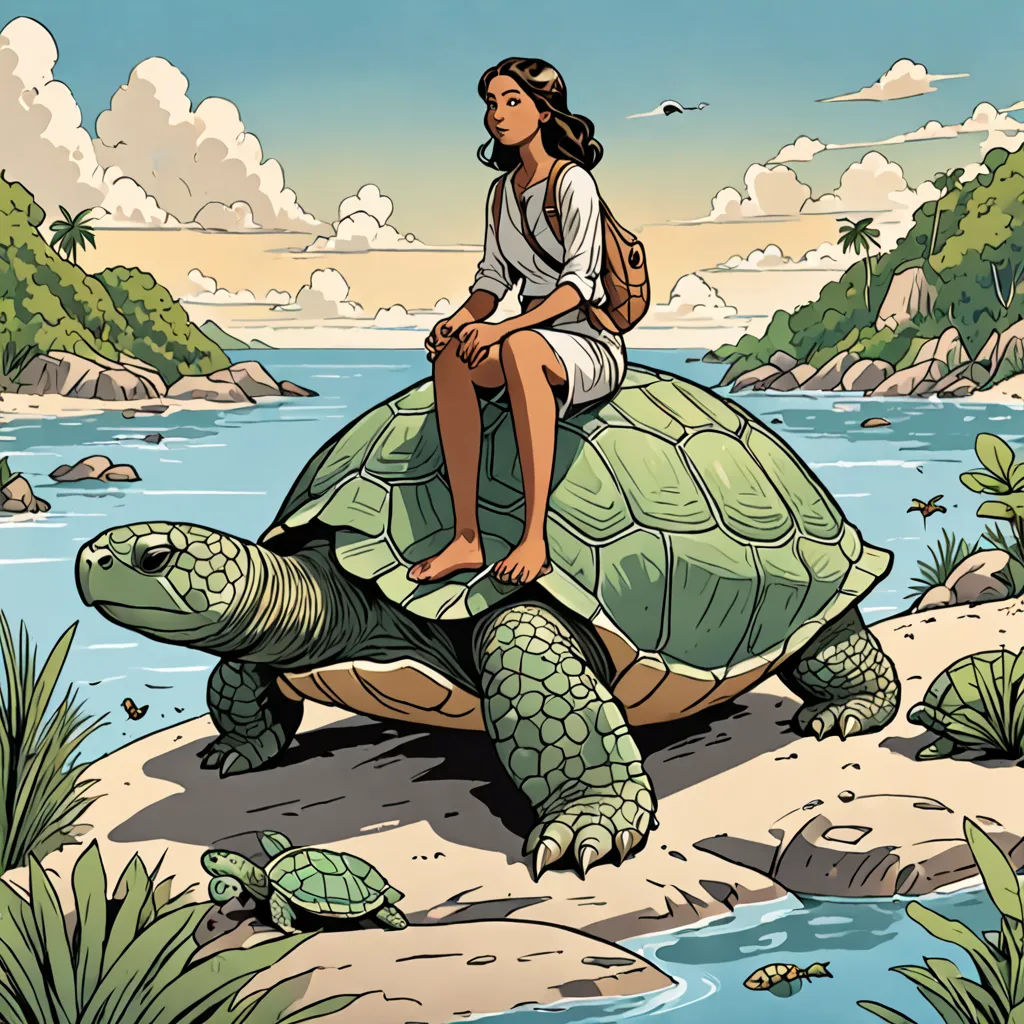
The Enduring Shell: Unpacking the Diverse Creation Stories of Turtle Island
Before North America bore its colonial name, it was, and for many Indigenous peoples remains, Turtle Island – a sacred land born from primordial waters upon the back of a colossal turtle. Far from a singular, monolithic tale, the story of Turtle Island is a rich tapestry woven with countless threads, each distinct Indigenous nation contributing its own vibrant and profound narrative to this foundational myth. These stories are not mere fables; they are living histories, spiritual blueprints, and enduring covenants between humanity, the land, and the cosmos, reflecting a deep respect for the natural world and a complex understanding of creation.
The concept of Turtle Island serves as a powerful counter-narrative to colonial cartography, offering a decolonized understanding of geography rooted in Indigenous sovereignty and identity. While the overarching theme of a world formed on a turtle’s back persists, the details – the protagonists, the challenges, the specific animals involved, and the moral lessons – vary dramatically across the hundreds of Indigenous nations that call this continent home. Exploring these diverse versions reveals not only the incredible richness of Indigenous oral traditions but also the shared values that often underpin them: humility, cooperation, resilience, and an unwavering reverence for the Earth.
One of the most widely recognized versions comes from the Haudenosaunee (Iroquois Confederacy), which includes the Mohawk, Oneida, Onondaga, Cayuga, Seneca, and Tuscarora nations. In their narrative, the world began in a celestial realm called Sky World. Here lived the Sky Woman, Aataentsic, who one day peered through a hole in the Sky World floor, either out of curiosity or by being pushed, and fell towards the vast, dark expanse of water below. As she descended, the water birds – geese, loons, and swans – saw her falling. Filled with compassion, they flew beneath her, breaking her fall and cushioning her descent on their interlocking wings.
Realizing she needed a more stable place to rest, the birds called upon the Great Turtle, who offered his broad, strong shell as a foundation. But a flat shell was not enough; Sky Woman needed earth. One by one, various water animals – the beaver, the otter, the loon – bravely dove into the deep, dark waters to retrieve a piece of earth from the bottom. Each animal tried and failed, resurfacing exhausted, until finally, the tiny, unassuming Muskrat made the attempt. After a long time, the Muskrat resurfaced, barely alive, clutching a tiny bit of mud in its paw. Sky Woman took this small handful of earth, gently spread it around the Great Turtle’s back, and sang sacred songs. Miraculously, the earth began to grow, expanding rapidly until it formed the land we know today as Turtle Island. Sky Woman then gave birth to twins, Good Mind and Bad Mind, whose struggles shaped the world’s features and the duality of human nature. This story beautifully illustrates the power of cooperation, the heroism of the smallest creatures, and the divine origin of the land.
The Anishinaabe peoples (including the Ojibwe, Odawa, and Potawatomi nations) also recount a profound Turtle Island creation story, though with distinct elements. Their narrative often begins with the world submerged beneath a Great Flood, brought about by the trickster-hero Nanabozho (or Wenabozho). After a period of chaos and despair, Nanabozho found himself adrift with a few surviving animals on a log. Realizing a new world needed to be built, he implored the animals to dive into the water and bring up a handful of earth from the depths.

Like in the Haudenosaunee story, many animals attempted this feat – the loon, the beaver, the otter – but all failed, unable to reach the bottom. Finally, the humble Muskrat offered to try. After an agonizing wait, the Muskrat surfaced, unconscious, but clutched in its tiny paw was a small amount of mud. Nanabozho took this mud, breathed life into it, and placed it upon the back of a large turtle that had surfaced nearby. He then began to sing and dance, spreading the earth with his hands. As he did so, the earth began to grow, expanding to form the land, mountains, rivers, and forests of Turtle Island. This version emphasizes Nanabozho’s role as a cultural hero and the transformative power of divine intervention combined with the humility and sacrifice of the animal kingdom.
Beyond these two widely recognized traditions, countless other Indigenous nations hold their own unique creation stories involving a turtle, or similar earth-diver motifs. The Lenape (Delaware) people, for instance, also speak of a Sky Woman (often called First Mother) falling from the Sky World onto the primordial waters, where a giant turtle offers its back as the foundation for the new land. Their story, too, involves animals diving for earth, often culminating in the success of the Muskrat, whose sacrifice provides the foundational soil. The specific details, like the nature of Sky Woman’s fall or the subsequent events of human creation, are distinct, yet the core motif of the turtle as the land’s bearer remains.
Even where the turtle isn’t the central figure, the theme of Earth being formed from humble beginnings or through the efforts of animals is prevalent. Some Creek (Muscogee) traditions speak of a Water Beetle diving to bring up the first mud, which then grows into land, though not explicitly on a turtle’s back. The Cherokee creation story features the Great Buzzard, whose immense wings shaped the valleys and mountains as he flew over the newly formed, soft earth, making it dry and solid. These variations highlight the incredible diversity of Indigenous cosmologies, each tailored to the unique spiritual and geographical landscapes of the respective nations.
What unites these diverse narratives are several profound common threads. Firstly, the primordial water motif signifies a boundless, undifferentiated beginning, from which all life emerges. Secondly, the heroism of the small, unassuming animals – particularly the Muskrat – teaches humility and the idea that even the most vulnerable beings can perform the most significant acts. This contrasts sharply with many Western creation myths that often feature powerful deities or grand, singular acts of creation. Instead, Indigenous narratives often emphasize cooperation and collective effort.
Thirdly, the turtle itself as the foundation symbolizes stability, longevity, and endurance. Turtles are ancient creatures, slow-moving yet incredibly resilient, carrying their homes on their backs. This makes them a fitting symbol for a land that sustains all life and has endured through millennia. The growth of the earth from a tiny speck of mud signifies the potential for abundance from the smallest seed, and the interconnectedness of all life.
The enduring power of the Turtle Island stories extends far beyond their mythological origins. They are fundamental to Indigenous identity, sovereignty, and land rights. To call the continent "Turtle Island" is an act of reclamation, asserting Indigenous presence and prior ownership in the face of colonial renaming and dispossession. These narratives articulate a profound ethic of environmental stewardship, portraying the Earth not as a resource to be exploited, but as a living entity, a sacred mother, and a foundational relative. The Sky Woman, the animals, and the turtle are not just characters; they are teachers, embodying the principles of reciprocity and respect for all living things.
As Robin Wall Kimmerer, a Citizen Potawatomi botanist and author, eloquently states in her book Braiding Sweetgrass, "Restoration is a powerful word. In science, it means returning a system to its original state. For Native people, it means restoring a relationship, rebuilding the capacity for respectful interaction that was once there." The Turtle Island stories are central to this restoration, guiding Indigenous peoples in their continued responsibility to care for the land, just as the animals cared for Sky Woman and the Earth.
In an era of climate crisis, ecological degradation, and ongoing struggles for Indigenous rights, the Turtle Island narrative serves as a potent reminder of humanity’s place within the natural world. It challenges anthropocentric views, advocating for a worldview where humans are but one thread in the intricate web of life, bound by sacred responsibilities to the Earth and all its inhabitants. These diverse stories, passed down through generations via oral tradition, continue to resonate, offering wisdom, hope, and a powerful vision for a future where all beings can thrive on the back of our enduring Turtle Island. Their continued telling is an act of cultural survival, a celebration of resilience, and a profound call for a deeper, more respectful relationship with the land we all share.


