
The Coeur d’Alene Tribe Reservation in Idaho represents a vibrant testament to resilience, cultural preservation, and progressive development. Situated amidst the stunning landscapes of the Pacific Northwest, the reservation is home to the Schitsu’umsh people, whose history stretches back millennia in this region.
Often referred to by their ancestral name, Schitsu’umsh, meaning ‘The Discovered People’ or ‘Those Who Are Found Here’, the Coeur d’Alene Tribe has a profound connection to the land, particularly the vast network of lakes, rivers, and forests that define their traditional territory.
This comprehensive guide will delve into the multifaceted aspects of the Coeur d’Alene Tribe Reservation, exploring its rich history, distinct cultural heritage, modern governance, economic endeavors, and the enduring spirit of its people.
A Glimpse into the Past: The Schitsu’umsh Legacy
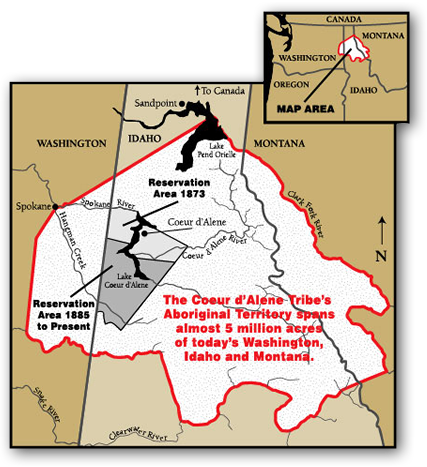
Before European contact, the Schitsu’umsh people thrived across a vast domain spanning over 5 million acres, encompassing parts of what are now Idaho, Washington, and Montana. Their traditional lifestyle was deeply intertwined with the seasons, relying on hunting, fishing, and gathering roots and berries.
The tribe’s strategic location near abundant resources, particularly salmon runs and camas prairies, allowed them to develop a sophisticated societal structure and a rich oral tradition.
The name ‘Coeur d’Alene’ was given to the tribe by French fur traders in the late 18th or early 19th century. It translates to ‘Heart of an Awl,’ a reference to the tribe’s sharp trading skills and shrewd business acumen, a trait that remains evident today.
Despite the immense pressures of westward expansion, treaties, and the establishment of the reservation, the Coeur d’Alene people maintained their identity and sovereignty, adapting to new challenges while holding fast to their ancestral ways.
The Coeur d’Alene Reservation Today: Location and Landscape
The Coeur d’Alene Tribe Reservation is primarily located in northern Idaho, south of the city of Coeur d’Alene, spanning parts of Kootenai and Benewah counties. It encompasses approximately 345,000 acres, with tribal lands strategically positioned around the southern end of the majestic Lake Coeur d’Alene and along the St. Joe River.
The reservation’s landscape is characterized by rolling hills, dense forests, fertile agricultural lands, and breathtaking waterfronts. Key communities within the reservation include Plummer and Worley, which serve as central hubs for tribal operations and community life.
This diverse geography not only provides a stunning backdrop but also underpins many of the tribe’s economic and cultural activities, from forestry to recreation.
Tribal Government and Sovereignty
The Coeur d’Alene Tribe operates as a sovereign nation with its own democratically elected government. The tribal council, composed of elected members, is responsible for governing the reservation, managing resources, and advocating for the best interests of its citizens.
This self-governance is a cornerstone of tribal identity and allows the Coeur d’Alene people to determine their own future, develop laws, provide services, and engage in nation-to-nation relationships with federal and state governments.
The tribe’s commitment to self-determination ensures that decisions regarding land use, economic development, education, and healthcare are made by and for the benefit of the Coeur d’Alene community.
Cultural Heritage: Preserving the Schitsu’umsh Way
Preserving and revitalizing their unique cultural heritage is a paramount focus for the Coeur d’Alene Tribe. The traditional language, Snchitsu’umshtsn, part of the Salishan language family, is actively being taught and promoted through various programs, ensuring its survival for future generations.
Cultural practices, ceremonies, and traditional arts such as basket weaving, beadwork, and storytelling continue to be celebrated and shared. The tribe’s cultural center plays a vital role in educating both tribal members and visitors about the rich history and traditions of the Schitsu’umsh people.
These efforts are not merely about looking to the past; they are about strengthening community identity, fostering pride, and providing a foundation for future generations.
Economic Development: A Vision for the Future
The Coeur d’Alene Tribe has emerged as a significant economic force in northern Idaho, strategically investing in diverse enterprises to create jobs and generate revenue for tribal services and programs.
The most prominent of these ventures is the Coeur d’Alene Casino Resort Hotel, located in Worley, Idaho. This award-winning resort is a major employer and a popular destination, offering gaming, luxury accommodations, fine dining, and entertainment.
Beyond gaming, the tribe’s economic portfolio includes:
- Agriculture and Forestry: Managing vast tracts of land for sustainable farming and timber production.
- Tourism and Hospitality: Developing recreational opportunities and services around Lake Coeur d’Alene.
- Retail and Services: Operating various businesses that serve both tribal members and the broader community.
These enterprises not only provide economic stability but also fund essential services like education, healthcare, infrastructure, and cultural programs, directly benefiting the tribal community.
Education and Healthcare on the Reservation
The Coeur d’Alene Tribe is deeply committed to the well-being and advancement of its members, evident in its dedication to education and healthcare.
The tribe supports various educational initiatives, from early childhood programs to scholarships for higher education, ensuring that tribal youth have access to quality learning opportunities that integrate cultural values.
Healthcare services are provided through tribal clinics and partnerships, focusing on holistic health that addresses physical, mental, and spiritual well-being, reflecting traditional approaches to health.
Environmental Stewardship: Guardians of the Land
As original inhabitants, the Coeur d’Alene Tribe holds an inherent responsibility as stewards of the environment. Their deep connection to the land and water resources, particularly Lake Coeur d’Alene, drives their robust environmental protection efforts.
The tribe actively engages in land management practices that prioritize sustainability, conservation, and the restoration of natural habitats. This includes significant involvement in water quality monitoring and protection of the Coeur d’Alene Basin.
Their advocacy for environmental health often extends beyond reservation borders, influencing regional conservation policies and ensuring the health of ecosystems for all.
Visiting the Coeur d’Alene Reservation
The Coeur d’Alene Reservation welcomes visitors to experience its unique offerings and natural beauty. Whether you’re interested in cultural immersion or recreational activities, there’s much to explore.
Visitors can enjoy:
- The Coeur d’Alene Casino Resort Hotel for entertainment and relaxation.
- Outdoor activities such as fishing, boating, and hiking on tribal lands (with appropriate permits and respect for tribal regulations).
- Learning about tribal history and culture at the Coeur d’Alene Tribal Museum and Cultural Center.
When visiting, it is crucial to remember that you are on sovereign land. Respect for tribal laws, customs, and privacy is paramount. Always seek permission before entering private property or engaging in activities that might impact the environment or local community.
Conclusion: An Enduring Legacy
The Coeur d’Alene Tribe Reservation in Idaho stands as a powerful symbol of an indigenous nation’s enduring spirit, cultural richness, and unwavering commitment to its people and land.
From its ancient roots as the Schitsu’umsh people to its modern-day role as a self-governing, economically dynamic community, the Coeur d’Alene Tribe continues to thrive.
Their story is one of resilience, innovation, and a profound connection to their ancestral homeland, making the Coeur d’Alene Tribe Reservation a truly remarkable and inspiring place.
Understanding and appreciating the Coeur d’Alene Tribe’s journey offers valuable insights into Native American history, sovereignty, and the vibrant future being built by indigenous communities across the nation.


