
The Catawba Indian Nation, a federally recognized tribe with a profound and enduring history, holds a unique place in the tapestry of South Carolina. Their reservation, nestled primarily in York County near Rock Hill, serves as a vibrant testament to centuries of resilience, cultural preservation, and sovereign determination. This comprehensive guide delves into the past, present, and future of this remarkable Native American community.
For those seeking to understand the deep roots of South Carolina’s indigenous heritage, the Catawba Indian Nation offers a compelling narrative. Their story is not merely one of survival but of a thriving people who have navigated immense challenges while steadfastly maintaining their identity and traditions.
Before European contact, the Catawba people, known as the ‘River People’ or ‘Iswa’ (meaning ‘people of the river’), were a powerful and prominent tribe in the Piedmont region of the Carolinas. Their territory spanned vast areas, and their sophisticated agricultural practices, vibrant trade networks, and complex societal structures flourished for millennia.
Archaeological evidence points to a continuous Catawba presence in the region for at least 6,000 years, making them one of the oldest continuously inhabited indigenous groups in North America. Their ancestral lands were rich with natural resources, supporting a prosperous way of life centered around the Catawba River.
The arrival of European settlers in the 16th and 17th centuries dramatically altered the landscape for the Catawba. While initially engaging in trade and forming alliances, particularly with the English, the introduction of foreign diseases like smallpox decimated their population. What was once a population numbering in the thousands was reduced to hundreds.
Despite these catastrophic losses, the Catawba demonstrated incredible fortitude. They consolidated with remnants of other tribes seeking refuge, adapting and surviving in a rapidly changing world. Their strategic alliances played a crucial role in colonial conflicts, including the Yamasee War and the American Revolutionary War, where they often sided with the colonists.

A pivotal moment in Catawba history was the 1763 Treaty of Augusta. This treaty formally recognized a 144,000-acre reservation for the Catawba Nation, establishing a defined homeland. However, this land base was gradually eroded through various agreements and pressures, leading to significant land loss over the subsequent decades.
By the mid-19th century, the Catawba had lost nearly all of their original reservation lands, a process that culminated in the 1840 Treaty of Nation Ford. This agreement saw the Catawba cede their remaining territory to South Carolina in exchange for a small land purchase and a sum of money, leaving them with a mere 800 acres, a stark contrast to their historical domain.
For over a century, the Catawba Indian Nation operated without federal recognition, relying on their internal governance and the support of the State of South Carolina. This period was marked by ongoing efforts to preserve their language, traditional crafts, and cultural practices against assimilation pressures.
The late 20th century brought a new era of hope and determination. After decades of persistent advocacy and legal battles, the Catawba Indian Nation achieved federal recognition on July 2, 1993. This landmark event restored their sovereign status and provided a framework for self-governance and economic development.
The 1993 Federal Recognition Act also included a comprehensive land claims settlement, which provided the Catawba Nation with significant financial compensation and re-established a land base. Today, the Catawba Indian Nation Reservation encompasses approximately 700 acres in York County, South Carolina, serving as the heart of their community.
The Catawba Indian Nation operates as a sovereign government, with its own constitution, elected officials, and judicial system. The tribal government, led by a Chief and an Executive Committee, is responsible for the welfare and administration of the Nation, providing essential services to its members.
The current Chief and Executive Committee work tirelessly to address the needs of their community, from housing and healthcare to education and economic opportunities. This self-governance empowers the Catawba people to determine their own future and uphold their cultural values.
Central to the Catawba identity is their rich cultural heritage. Renowned for their distinctive pottery, a tradition passed down through generations of Catawba women, the Nation actively promotes and preserves its artistic legacy. These unique, unglazed earthenware pieces are a tangible link to their ancestors.
While the Catawba language (Iswa) is critically endangered, significant efforts are underway to revitalize it. Language immersion programs, educational initiatives, and digital resources are being developed to teach Iswa to younger generations, ensuring its survival for future Catawba citizens.
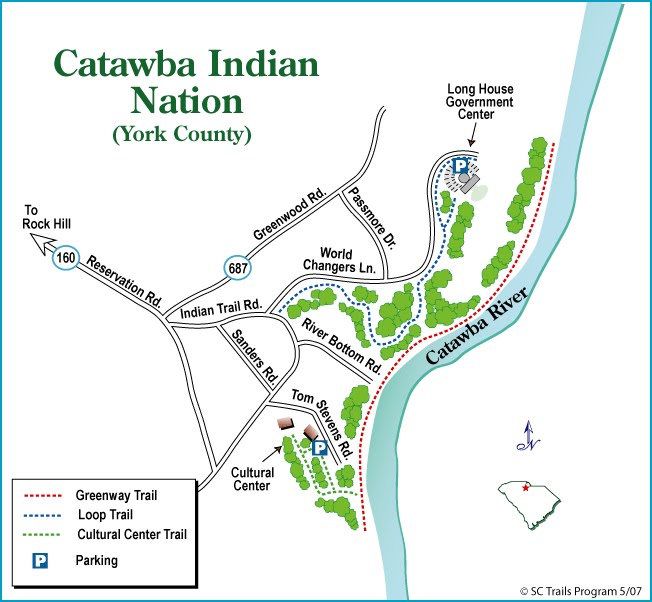
Beyond pottery and language, Catawba culture thrives through storytelling, traditional dances, ceremonies, and community gatherings. These events serve to strengthen cultural bonds, educate members about their history, and celebrate their enduring spirit. The Catawba Cultural Center plays a vital role in these preservation efforts.
Economic development is a cornerstone of the Catawba Nation’s self-sufficiency strategy. A major initiative has been the development of gaming enterprises, including the Catawba Two Kings Casino Resort in Kings Mountain, North Carolina. This venture represents a significant step towards creating sustainable revenue streams and employment opportunities for tribal members and the surrounding region.
Beyond gaming, the Nation explores various economic avenues to diversify its portfolio and enhance community prosperity. These efforts are crucial for providing resources for social programs, infrastructure development, and the overall well-being of Catawba citizens.
The Catawba Nation is deeply committed to the health and education of its members. They operate a tribal health center that provides primary care services, promoting wellness within the community. Educational programs, from early childhood to adult learning, are designed to empower members and prepare them for success.
Scholarship programs and partnerships with local educational institutions further support Catawba students in pursuing higher education. The Nation recognizes that investing in education is paramount to building a strong and capable future for its people.
Life on the Catawba Indian Nation Reservation is a blend of traditional values and modern living. It is a place where community ties are strong, and cultural identity is celebrated daily. The reservation provides a sense of belonging and a foundation for the Catawba people to live, work, and thrive.
The Catawba people maintain a profound spiritual connection to their ancestral lands and the Catawba River. They are stewards of their environment, engaging in conservation efforts and promoting sustainable practices to protect the natural resources that have sustained their people for millennia.
Like all sovereign nations, the Catawba Indian Nation faces ongoing challenges, including issues related to land management, economic diversification, and the continued preservation of their unique culture. However, their history is one of overcoming adversity with remarkable resilience.
Looking forward, the Catawba Nation is focused on strengthening its tribal infrastructure, expanding economic opportunities, and ensuring that future generations remain deeply connected to their heritage. Their vision includes continued growth, self-determination, and a vibrant future for all Catawba citizens.
Visitors interested in learning more about the Catawba Indian Nation can explore resources provided by the Catawba Cultural Center. While the reservation itself is a private community, the Cultural Center often hosts events and offers educational insights into Catawba history, art, and traditions.
The Catawba Indian Nation stands as a powerful example of indigenous resilience and cultural continuity in South Carolina. From their ancient origins as the ‘River People’ to their modern status as a federally recognized sovereign nation, their journey is a testament to an unwavering spirit and a deep commitment to their heritage.
Their story is not just a chapter in South Carolina’s history; it is a living, evolving narrative of a people who have overcome immense challenges, preserved their identity, and are actively shaping their future with strength and determination. The Catawba Indian Nation continues to be a vital and integral part of the South Carolina landscape.
How many Catawba Indians are there? The Catawba Indian Nation has a growing enrollment. While numbers fluctuate, the federally recognized tribe has several thousand enrolled members, both on and off the reservation. Exact figures are maintained by the tribal government.
What is the Catawba Indian Nation known for? The Catawba Indian Nation is well-known for its rich history, unique pottery tradition, resilience in the face of adversity, successful pursuit of federal recognition, and recent economic development efforts, particularly with the Catawba Two Kings Casino Resort.
What tribe is in Rock Hill SC? The Catawba Indian Nation is the only federally recognized Native American tribe with a reservation in South Carolina, and its primary reservation lands are located just east of Rock Hill, SC.
What language did the Catawba tribe speak? The traditional language of the Catawba tribe is Iswa, a Siouan language. While critically endangered, there are ongoing efforts by the Nation to revitalize and teach the Iswa language to younger generations.
Are Catawba Indians still alive? Absolutely. The Catawba Indian Nation is a thriving, federally recognized sovereign nation with a vibrant community of enrolled members who live both on and off their reservation in South Carolina.
What county is Catawba Indian Reservation in? The Catawba Indian Nation Reservation is located within York County, South Carolina. This location places it strategically within the growing Charlotte metropolitan area, influencing its economic and community development.


