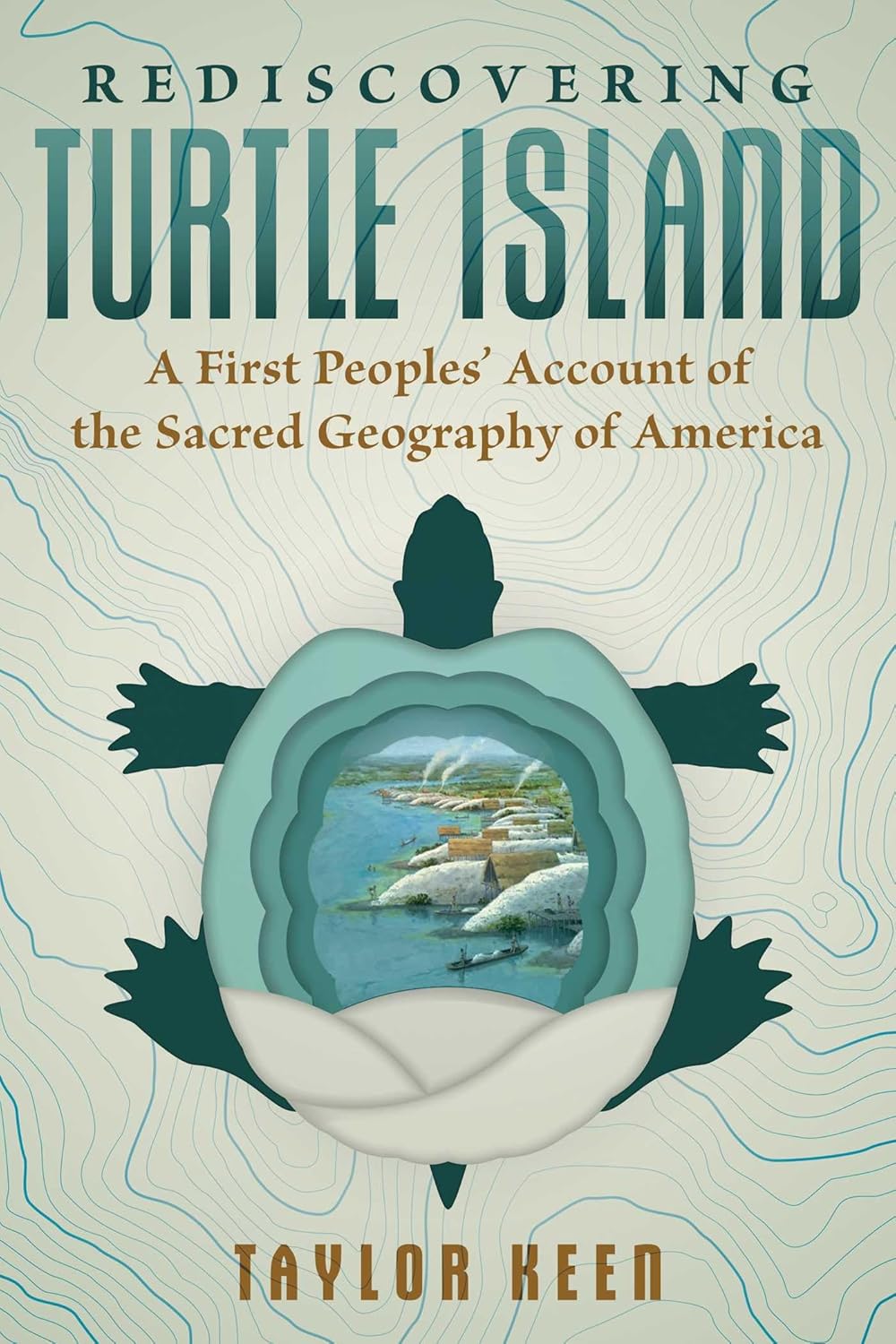
The Living Earth: Unpacking Turtle Island Creation Stories in Print
The land now widely known as North America has, for millennia, been recognized by its Indigenous peoples as Turtle Island – a name imbued with profound spiritual, historical, and cultural significance. Far from being quaint fables, the creation stories associated with Turtle Island are foundational narratives that explain the origins of the world, humanity, societal structures, and the intricate relationship between people and the natural environment. These stories, traditionally passed down through generations via oral traditions, are increasingly finding their way into print, offering vital insights into Indigenous worldviews and asserting their enduring relevance in a contemporary world.
The journey of these narratives from spoken word to written text is complex, marked by both preservation and potential pitfalls. Yet, the growing body of literature—from scholarly anthologies and children’s books to reinterpretations by Indigenous authors—serves as an indispensable bridge, making these sacred teachings accessible while confronting centuries of colonial erasure and misrepresentation.
The Foundation of a World: Sky Woman and the Earth Divers
While the term "Turtle Island creation story" often conjures a singular image, it is crucial to understand that there is no one universal narrative. Rather, hundreds of distinct Indigenous nations across the continent hold their own unique origin stories, each reflecting their specific cultures, geographies, and spiritual beliefs. However, a prominent and widely recognized archetype involves an "Earth Diver" motif, often featuring a celestial being and a host of animal helpers, all culminating in the formation of land upon the back of a giant turtle.
One of the most widely known and influential of these is the Haudenosaunee (Iroquois) creation story. It begins in the Sky World, where a pregnant Sky Woman (sometimes called Atahensic or Iotsitsisonh) accidentally, or purposefully, falls through a hole in the sky. As she descends, two swans catch her and gently lower her onto the back of a Great Turtle, who has risen from the primordial waters. Below her, the water world is vast and featureless. The animals, witnessing her plight, decide she needs a place to stand. One by one, various creatures—the beaver, the loon, the otter—attempt to dive to the bottom of the deep waters to retrieve a handful of earth. They fail, exhausted and breathless. Finally, the tiny muskrat, though initially appearing weak, makes the arduous journey, returning with a pawful of mud just before succumbing to the effort. Sky Woman takes this mud and, with the help of the Great Turtle and the animals, begins to spread it. As she walks and dances in a sunwise direction, the earth expands, growing larger and larger until it forms the land we know today as Turtle Island.

This core narrative, with variations, is echoed across numerous nations, including the Anishinaabeg (Ojibwe, Odawa, Potawatomi), Lenape, and others. For the Anishinaabeg, it is Nanabozho (or Wenabozho), the culture hero, who often plays a role in the earth-diver story, working with the animals after a great flood. The fundamental elements—a water-covered world, a celestial being, animal sacrifice and cooperation, and the central role of a turtle—reverberate through countless Indigenous traditions, emphasizing themes of reciprocity, gratitude, and the interconnectedness of all life.
Beyond the Earth Diver: A Tapestry of Origins
While the Earth Diver narrative is prevalent, other nations tell stories of emergence from underground worlds, or of the creation by powerful beings or spirits who shaped the landscape. The Navajo (Diné) people, for instance, narrate a complex journey of emergence through a series of colored worlds, each with its own challenges and lessons, before finally arriving in the glittering, present world. Their stories emphasize the development of human consciousness, morality, and the establishment of sacred ceremonies and practices.
The Pueblo peoples of the Southwest also share emergence narratives, where humanity ascends from previous worlds, often guided by spiritual figures, carrying with them the knowledge and experiences of those earlier existences. These stories often highlight the importance of specific geographical features—canyons, mountains, rivers—as sacred sites intrinsically linked to their ancestral journeys and cultural identities.
What unites these diverse narratives, whether Earth Diver, emergence, or otherwise, is their function. They are not merely explanations of the past, but living guides for the present and future. They encode moral lessons, define community roles, establish land stewardship responsibilities, and articulate profound spiritual truths about humanity’s place in the cosmos. As Indigenous scholar Robert Warrior noted, these stories are "not just about how things began, but how we should live now."
The Power of the Written Word: Preservation and Reclaiming Narrative
For millennia, these stories thrived in oral traditions, passed down through generations by elders, storytellers, and ceremonial practitioners. The nuances of tone, gesture, and audience interaction were integral to their meaning and power. However, the advent of colonialism brought immense pressure on these traditions. Residential schools, forced relocation, and the suppression of Indigenous languages and cultures led to significant loss. In this context, the decision to commit these stories to print has become a critical act of cultural preservation and revitalization.
Early ethnographic collections, often by non-Indigenous anthropologists, were among the first to transcribe these narratives. While some of these works, such as Franz Boas’s collections or those by James Mooney, provided invaluable records, they also presented challenges. Stories were sometimes decontextualized, fragmented, or filtered through a Western lens, stripping them of their sacredness or reducing them to "myths" in the pejorative sense. The authors often failed to acknowledge the intellectual property or spiritual sensitivity of the narratives, and the original tellers received little to no recognition or benefit.
The modern era, however, has seen a powerful shift. Indigenous authors, scholars, and communities are now taking the lead in collecting, translating, and re-telling their own creation stories. This shift is crucial for several reasons:

- Authenticity and Authority: Indigenous voices ensure the stories are presented with cultural integrity, spiritual respect, and linguistic accuracy, often accompanied by necessary contextual information that was missing from earlier collections.
- Educational Tool: Books on Turtle Island creation stories are becoming vital educational resources, not only for Indigenous youth to connect with their heritage but also for non-Indigenous audiences to learn about the richness and diversity of Indigenous cultures, challenging dominant colonial narratives of history and identity.
- Cultural Revitalization: The act of publishing these stories helps to breathe new life into threatened languages and traditions, fostering a sense of pride and continuity among Indigenous communities.
- Challenging Misconceptions: By presenting these narratives as sophisticated theological and philosophical frameworks, Indigenous authors combat the long-standing stereotype of "primitive" Indigenous beliefs.
Notable Contributions and the Path Forward
Numerous books and collections now stand as testaments to the power and endurance of Turtle Island creation stories. Works like "Traditional Narratives of the Haudenosaunee" by John Mohawk (Sotsisowah) offer deep insights into the Haudenosaunee worldview. Collections such as "American Indian Myths and Legends" by Richard Erdoes and Alfonso Ortiz, while a foundational text, is increasingly being reviewed through a critical lens for its often-generalized approach and lack of specific attribution to individual storytellers. More contemporary and culturally sensitive works, often produced by Indigenous presses, are now filling this gap.
Authors like Leanne Betasamosake Simpson (Michi Saagiig Nishnaabeg), through works such as "As We Have Always Done: Indigenous Freedom Through Radical Resistance," weave creation stories and traditional narratives into contemporary political and environmental discourse, demonstrating their ongoing relevance as frameworks for understanding and responding to modern challenges. While not strictly a collection of creation stories, Robin Wall Kimmerer’s (Citizen Potawatomi Nation) "Braiding Sweetgrass: Indigenous Wisdom, Scientific Knowledge and the Teachings of Plants" profoundly demonstrates how Indigenous origin stories and traditional ecological knowledge are intertwined, offering a path towards respectful coexistence with the natural world. Her work exemplifies how the foundational principles embedded in creation stories inform a living, reciprocal relationship with the land.
Furthermore, children’s books are playing a crucial role in introducing these stories to younger generations. Publishers are increasingly collaborating with Indigenous authors and illustrators to create beautiful, respectful, and engaging retellings that ensure these narratives continue to inspire and educate.
The Enduring Wisdom of Turtle Island
The stories of Turtle Island are more than just accounts of how the world began; they are blueprints for living. They teach us about our responsibilities to the earth, to each other, and to future generations. They emphasize reciprocity, the sacredness of water, the wisdom of animals, and the profound interconnectedness of all life. In a world grappling with environmental crises, social divisions, and a loss of spiritual grounding, the ancient wisdom embedded in these narratives offers invaluable guidance.
As Indigenous elders and scholars consistently remind us, these stories are not static relics of the past. They are living, breathing entities that continue to shape Indigenous identities, inform land stewardship practices, and inspire movements for justice and healing. The proliferation of these stories in books represents a vital step in their journey, not only preserving them for posterity but also ensuring their wisdom resonates far beyond Indigenous communities, inviting all inhabitants of this continent to understand and honor the profound origins of Turtle Island. By engaging with these texts, we are not merely reading stories; we are participating in a timeless conversation about what it means to be human on this sacred earth.


